
The Quantum Enigma of Consciousness: Could Entanglement in the Reticular Formation Be the Key?
Delving into the provocative theories linking subatomic phenomena within critical brain regions to the very fabric of our awareness.
The question of how consciousness arises from the physical matter of the brain is one of science's most profound mysteries. In recent years, some researchers have turned to the strange world of quantum mechanics for potential answers, proposing that phenomena like quantum entanglement might play a crucial role. This exploration specifically considers whether consciousness could emerge from quantum entanglement within the nerve cells or other cellular structures of the reticular formation, a critical brain region.
Highlights: Decoding Consciousness and Quantum Connections
- The Reticular Formation's Vital Role: This complex network in the brainstem is essential for regulating arousal, attention, and sleep-wake cycles, forming a foundational aspect of conscious experience through its widespread neural connections.
- Quantum Entanglement in the Brain: Emerging scientific hypotheses suggest that quantum entanglement—a phenomenon where particles become interlinked and instantaneously influence each other regardless of distance—could occur within specific brain structures, such as the myelin sheaths insulating nerve fibers or the microtubules within neurons. This might offer a mechanism for the rapid, large-scale neural synchronization observed during conscious states.
- Reticular Formation and Quantum Effects - A Plausible Link?: While there is currently no direct experimental proof of quantum entanglement occurring *specifically* within the reticular formation, its dense neuronal composition and fundamental role in maintaining consciousness make it a theoretically plausible candidate site for such quantum processes, should they prove to be a general feature of brain function.
The Reticular Formation: The Brain's Alertness Center
The reticular formation is a diffuse and intricate network of neurons and nuclei extending throughout the brainstem, from the medulla oblongata, through the pons, and into the midbrain. Its name, derived from the Latin "reticulum" (meaning "little net"), aptly describes its web-like structure. Classically, it's understood to be a cornerstone of consciousness, primarily through its ascending component, the Ascending Reticular Activating System (ARAS).
Functions of the Reticular Formation:
- Regulating Arousal and Sleep-Wake Cycles: The ARAS projects signals to the thalamus and cerebral cortex, crucial for maintaining wakefulness and alertness. Damage to this system can lead to prolonged unconsciousness or coma.
- Filtering Sensory Input: It helps to filter the constant stream of sensory information, allowing us to focus on relevant stimuli while disregarding background noise.
- Integrating Information: It serves as a vital integration and relay center, coordinating information flow between various parts of the brain and the spinal cord.
- Modulating Motor Control: Descending pathways from the reticular formation influence muscle tone, balance, and posture.
Traditionally, these functions are explained by classical neurobiological mechanisms: the transmission of electrochemical signals between neurons via synapses. However, the sheer complexity and integrated nature of consciousness have led some to seek explanations beyond these classical models.
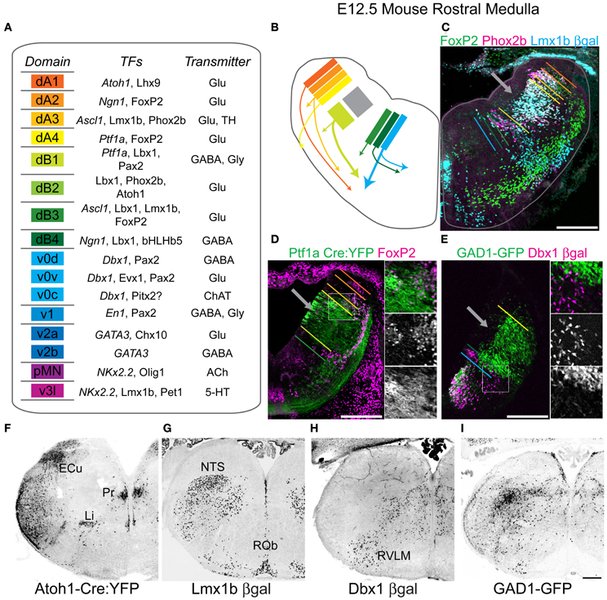
Diagram illustrating the complex neuroanatomical organization of the Ascending Reticular Activating System (ARAS), part of the reticular formation crucial for arousal and consciousness.
Quantum Entanglement: "Spooky Action at a Distance"
Quantum entanglement is one of the most counterintuitive phenomena predicted by quantum mechanics. It describes a situation where two or more quantum particles become linked in such a way that their fates are intertwined, regardless of the physical distance separating them. Measuring a property of one entangled particle instantaneously influences the properties of the other(s). Albert Einstein famously dubbed this "spooky action at a distance." This interconnectedness suggests possibilities for information processing and correlation that go beyond classical physics.
Quantum Theories of Consciousness: A New Frontier
The "quantum mind" or "quantum consciousness" hypothesis proposes that classical mechanics alone cannot fully explain consciousness, and that quantum mechanical phenomena, such as entanglement, superposition, and quantum coherence, are actively involved in brain function at a fundamental level. These theories attempt to address some of the "hard problems" of consciousness, like subjective experience (qualia) and the unity of conscious perception (the binding problem).
Potential Sites for Quantum Processes in Neurons
Myelin Sheaths and Photon Entanglement
Recent research, notably a 2024 study from physicists at Shanghai University, suggests that the myelin sheath—the fatty insulating layer surrounding neuronal axons—could act as a waveguide for photons. They propose that entangled photons could be generated by carbon-hydrogen bonds within the myelin. These entangled photons might then facilitate rapid, long-distance synchronization of neural activity across millions of neurons, a hallmark of conscious processing. This could explain the brain's ability to process information and react with remarkable speed and coherence.
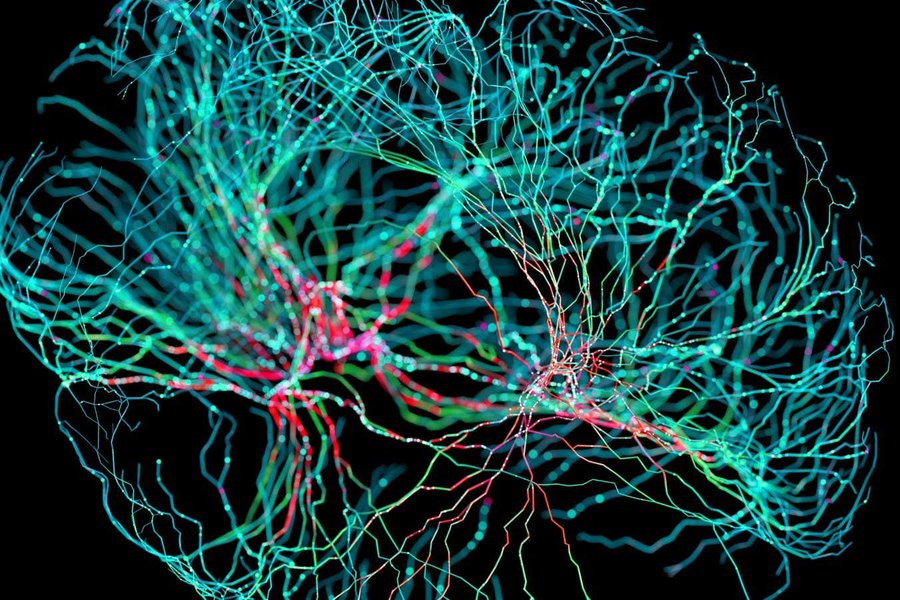
Artistic depiction of nerve fibres, where myelin sheaths could potentially support quantum entanglement.
Microtubules and Orchestrated Objective Reduction (Orch OR)
One of the most well-known, though controversial, quantum consciousness theories is the "Orchestrated Objective Reduction" (Orch OR) model, developed by physicist Sir Roger Penrose and anesthesiologist Stuart Hameroff. This theory posits that consciousness arises from quantum computations occurring within microtubules, which are protein filaments forming the cytoskeleton of neurons. According to Orch OR, electrons within tubulin proteins in microtubules can enter states of quantum superposition and become entangled. The "objective reduction" (collapse of the quantum state) is proposed to be the moment of "proto-conscious" experience, with sequences of these events giving rise to full conscious awareness.

Conceptual image illustrating potential quantum connections and photon entanglement within the human brain, underpinning theories of consciousness.
The Reticular Formation: A Stage for Quantum Consciousness?
So, could the reticular formation be a specific site where quantum entanglement contributes to consciousness? Direct experimental evidence explicitly demonstrating quantum entanglement within the reticular formation's cells is currently lacking. Most research into quantum brain processes focuses on general neuronal structures like myelin or microtubules that are ubiquitous throughout the nervous system.
However, given the reticular formation's crucial role in establishing and maintaining the conscious state and its dense composition of neurons (with their axons and potentially myelin), it is theoretically plausible that if quantum entanglement mechanisms operate generally in nerve fibers or cells, they would also be present and influential within the neural circuits of the reticular formation. Its function as an integrator of widespread brain activity makes it a compelling candidate region where quantum-enhanced synchronization could have significant effects on the global state of consciousness.
Visualizing the Interconnections: A Mindmap of Quantum Consciousness Concepts
To better understand the complex relationships between consciousness, the reticular formation, and quantum entanglement theories, the following mindmap illustrates the key concepts and their proposed connections. It highlights how different elements, from brain structures to specific quantum phenomena and theoretical models, are thought to interact in the emergence of conscious experience.
Subjective awareness, perception, and thought"] P2["Quantum Entanglement
Interconnected particle states influencing each other instantaneously"] P3["Reticular Formation
Brainstem network vital for arousal, attention, and sleep-wake cycles"] RF["Reticular Formation & Quantum Entanglement"] RF1["Classical Role
Neural integration, maintaining wakefulness via Ascending Reticular Activating System (ARAS)"] RF2["Potential Quantum Role
If quantum effects are general in neurons (e.g., in myelin or microtubules), they could occur in RF neurons"] RF3["No Direct Proof Yet
Hypothesized due to its critical function in consciousness and its neuronal composition"] RF4["Importance
Its role in global brain states makes it a candidate for quantum influence"] QT["Quantum Theories of Consciousness"] QT1["General Premise
Quantum mechanical phenomena underlie or contribute to consciousness"] QT2["Proposed Mechanisms in Neurons"] QT2A["Myelin Sheaths
Photon entanglement for rapid neural synchronization (e.g., Shanghai University study)"] QT2B["Microtubules
Quantum computations in Orch OR theory (Penrose-Hameroff)"] QT3["Explanatory Goals
Addressing neural synchronization, the binding problem, and the brain's computational power"] EVI["Evidence & Ongoing Research"] EVI1["Observed Quantum-like Phenomena
Some brain signals resemble entanglement; quantum effects in other biological systems (e.g., photosynthesis)"] EVI2["Statistical Evidence
Studies suggesting entanglement can enhance conscious experience and cognitive performance (e.g., twin studies)"] EVI3["Active Research Initiatives
Institutions like Allen Institute and Google Quantum AI exploring brain-quantum links"] CHA["Challenges & Scientific Skepticism"] CHA1["Decoherence Issue
The brain's warm, wet, and noisy environment is typically disruptive to delicate quantum states"] CHA2["Mainstream Acceptance
Quantum consciousness is still a frontier science, not universally accepted in neuroscience or physics"] CHA3["Need for More Direct Empirical Validation"]
Comparative Plausibility of Quantum Effects in Brain Structures
The following radar chart offers an opinionated assessment, based on the synthesized information, of different neural structures and their potential for hosting quantum phenomena relevant to consciousness. It compares the Reticular Formation cells, Myelin Sheaths, and Microtubules (as per the Orch OR theory) across several dimensions of plausibility and research focus. The scores (1-10, higher is more) reflect current understanding and the speculative nature of the field.
This chart suggests that while myelin sheaths currently show promising theoretical and emerging evidential support for facilitating quantum effects like entanglement for neural synchronization, and microtubules have a strong theoretical link to consciousness via Orch OR, the reticular formation remains a strong candidate for involvement due to its critical role, assuming quantum processes are indeed at play in neurons generally.
Comparing Perspectives: Classical Neuroscience vs. Quantum Consciousness
The debate around quantum consciousness often highlights contrasting views on how the brain generates conscious experience. The table below summarizes some key differences between the classical neuroscientific perspective and the emerging quantum consciousness hypotheses, particularly concerning the potential role of structures like the reticular formation.
| Feature | Classical Neuroscience View | Quantum Consciousness Hypothesis View |
|---|---|---|
| Basis of Consciousness | Emergent property of complex classical neural computations and network activity. | May involve fundamental quantum phenomena (e.g., superposition, entanglement, quantum coherence) within neural structures. |
| Neural Communication | Primarily via electrochemical signals: action potentials and neurotransmitter release across synapses. | Could be augmented by non-local quantum information transfer, such as through entangled photons or coherent quantum states. |
| Information Processing | Largely algorithmic, based on synaptic weights, firing rates, and established neural pathways. | May involve quantum computational processes, potentially offering vastly greater processing capabilities and new forms of computation. |
| Neural Synchronization | Achieved through mechanisms like neural oscillations, feedback loops, and pacemaker neurons. | Quantum entanglement could provide a mechanism for instantaneous or near-instantaneous, widespread synchronization across distant brain regions. |
| Subjective Experience (Qualia) | Arises from highly integrated information processing within specific cortico-thalamic and other brain networks. The exact mechanism is debated. | Specific quantum events (like the "objective reduction" in Orch OR) or the nature of entangled quantum states might be directly linked to the generation of subjective experience. |
| Role of Reticular Formation | Crucially regulates arousal, wakefulness, and attention through established classical neural pathways and neurotransmitter systems. | If quantum effects are inherent to neuronal function, the cells within the reticular formation could participate in quantum processes that contribute to the global state of consciousness it modulates. |
Exploring Further: Quantum Entanglement in Brain Waves
The discussion around quantum effects in the brain is an active area of research. Some studies are beginning to find experimental results that, while not definitive proof, are suggestive of quantum phenomena. The following video discusses findings related to quantum entanglement and human brain waves, offering a glimpse into the cutting-edge research in this fascinating field. It touches upon experimental evidence that some neuroscientists find unexpected and potentially revolutionary for our understanding of consciousness.
Video discussing recent neuroscientific findings related to quantum entanglement in human brain waves and its potential implications for consciousness.
Challenges and the Path Forward
Despite the intriguing possibilities, quantum consciousness theories face significant challenges. The primary hurdle is **decoherence**: quantum states are extremely fragile and tend to collapse into classical states when interacting with their environment. The brain is a warm, wet, and noisy place, which many physicists argue is inhospitable to sustained quantum coherence or entanglement on a scale relevant to neural processing.
However, proponents argue that biological systems may have evolved mechanisms to shield or utilize quantum effects. Discoveries of quantum phenomena in other biological processes, like photosynthesis and avian navigation, lend some credence to this idea. Ultimately, more rigorous experimental evidence is needed to validate or refute the role of quantum entanglement in consciousness and its potential occurrence within structures like the reticular formation.
Frequently Asked Questions (FAQ)
What is the reticular formation and why is it important for consciousness?
What exactly is quantum entanglement?
Is there solid scientific proof that consciousness is a quantum phenomenon?
Why is the brain considered a challenging environment for quantum effects?
What are myelin sheaths and microtubules, and how do they relate to quantum theories of consciousness?
Conclusion
The hypothesis that consciousness could result from quantum entanglement within nerve cells or other cellular components of the reticular formation is a scientifically plausible but as-yet unproven frontier in our quest to understand the mind. The reticular formation's undeniable importance in gating and sustaining conscious states makes it a logical, albeit complex, area to consider if quantum processes are indeed integral to brain function. While classical neuroscience provides robust explanations for many aspects of its operation, the deep mystery of subjective awareness continues to fuel exploration into more unconventional paradigms like quantum consciousness. Future research, combining neuroscience, quantum physics, and advanced experimental techniques, will be crucial in determining whether these fascinating quantum ideas hold the key to unlocking the secrets of consciousness, potentially revolutionizing our understanding of the brain and reality itself.
Recommended Further Exploration
- What are the main challenges faced by quantum theories of consciousness?
- How does the Penrose-Hameroff Orch OR theory specifically propose that microtubules generate consciousness?
- Are there any recent experimental breakthroughs supporting quantum effects in biological systems beyond the brain?
- What is the classical neuroscientific explanation for neural synchronization during conscious states?
References
Last updated May 22, 2025