
Quantum Entanglement: A Bridge to Yesterday, or a Quantum Mirage?
Exploring the intricate dance between "spooky action" and the tantalizing dream of time travel.
The notion of time travel has long captivated the human imagination, often depicted in science fiction as a journey through a temporal vortex. In the realm of quantum mechanics, the peculiar phenomenon of quantum entanglement has emerged as a subject of intense interest, prompting speculation about its potential role in manipulating time itself. But is entanglement truly the key to unlocking time travel, or does its significance lie elsewhere?
Key Insights at a Glance
- Not a Direct Time Machine Key: Current scientific understanding indicates that quantum entanglement does not provide a direct, practical mechanism for physical time travel as commonly portrayed in popular culture.
- Powerful Tool for Simulation: Entanglement is proving invaluable for simulating aspects of time travel, particularly in theoretical scenarios involving Closed Timelike Curves (CTCs), and for exploring how quantum mechanics might resolve paradoxes associated with traveling to the past.
- A Frontier of Theoretical Physics: The connection between entanglement and time remains largely within the domain of theoretical exploration, pushing the boundaries of our comprehension of causality, information, and the fundamental fabric of spacetime.
Understanding Quantum Entanglement: The "Spooky Action"
Quantum entanglement is a counterintuitive phenomenon where two or more quantum particles become linked in such a profound way that their fates are intertwined, regardless of the distance separating them. If you measure a property (like spin or polarization) of one entangled particle, you instantaneously know the corresponding property of its partner(s). Albert Einstein famously dubbed this "spooky action at a distance."
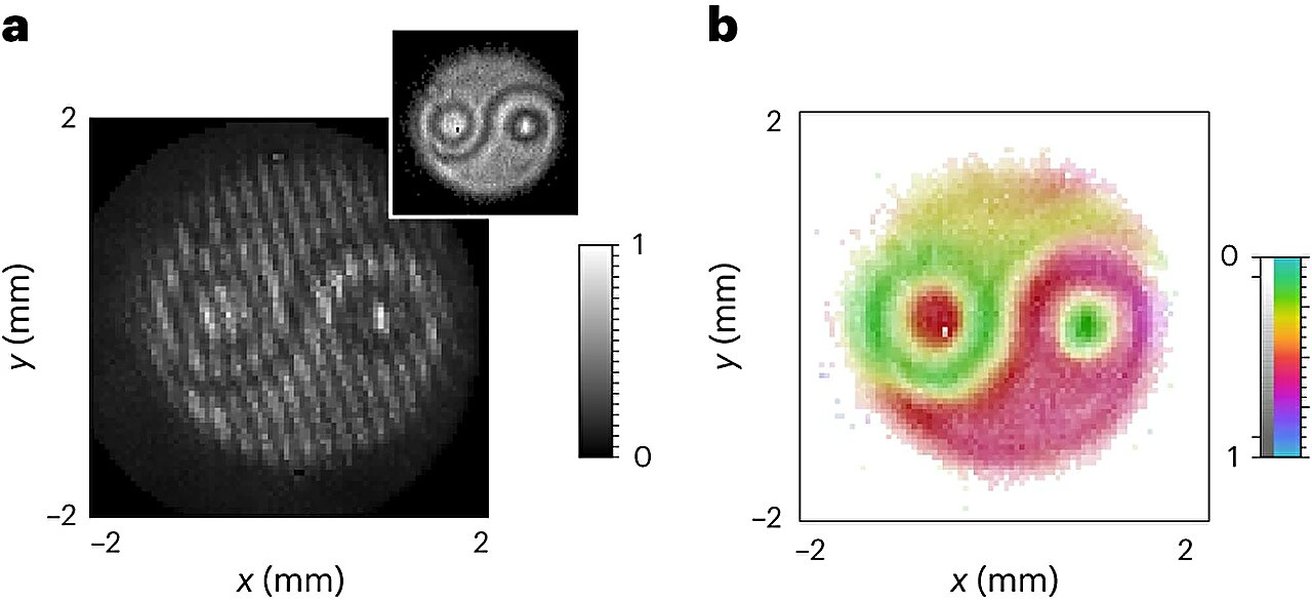
Artistic visualization of entangled photons, showcasing their interconnected nature.
Despite this instantaneous correlation, quantum entanglement does not allow for faster-than-light (FTL) communication of usable information. This is upheld by the "no-communication theorem," which states that while measurements on one particle affect the other, this effect cannot be used to send a deliberate message FTL. This distinction is crucial when considering its implications for time travel.
The Enigma of Time Travel in Physics
The concept of time travel isn't just fodder for fiction; it has roots in established physics, primarily Einstein's theory of General Relativity. This theory describes gravity as the curvature of spacetime caused by mass and energy. Certain solutions to Einstein's field equations predict the theoretical possibility of exotic spacetime structures, such as:
- Wormholes: Hypothetical tunnels connecting distant points in spacetime, or potentially, different points in time.
- Closed Timelike Curves (CTCs): Paths through spacetime that loop back on themselves, allowing an object or information to return to its own past.
While mathematically plausible, the physical realization of such structures faces immense theoretical hurdles, including the need for exotic matter with negative mass-energy density and questions about their stability. Quantum mechanics enters the picture when trying to understand how matter and information would behave under such extreme conditions and how paradoxes, like the infamous "grandfather paradox" (preventing one's own birth by altering the past), might be resolved.
Artistic concept of a time travel device, illustrating the enduring human fascination with manipulating time.
Entanglement's Role in Exploring Time Travel Concepts
While quantum entanglement doesn't offer a blueprint for building a time machine, it plays a vital role in theoretical explorations and simulations of time travel phenomena. Scientists use entanglement to probe the quantum rules that might govern scenarios involving travel through time.
Simulating Time's Arrow: Entanglement and CTCs
Researchers have ingeniously employed quantum entanglement to simulate what might happen if a particle could travel along a CTC. These are not instances of actual time travel but rather laboratory experiments that mimic the conditions and consequences.
Mimicking Retrocausality
Experiments, such as those conducted by researchers at the University of Cambridge, have demonstrated how entanglement can be used to retroactively influence the outcome of a previous quantum measurement in a simulated scenario. In these setups, entangled particles are manipulated such that information gained from measuring one particle at a later time appears to "correct" or determine the state of its entangled partner at an earlier point within the experiment. It's important to note that these simulations often show probabilistic success (e.g., one in four chances of success in some reported experiments) and do not imply control over macroscopic past events.
Theoretical Models
Several theoretical frameworks explore the interplay between quantum mechanics and CTCs:
- David Deutsch's Model (1991): Proposed a quantum mechanical treatment of CTCs suggesting that any particle emerging from a CTC must do so in a self-consistent state, effectively preventing paradoxes by ensuring that only non-paradoxical histories are possible. Entanglement plays a role in defining the quantum states that could traverse such loops.
- Seth Lloyd's Approach: Utilized "post-selection" (selecting specific outcomes after an experiment) and path integrals to develop models where quantum systems can evolve along CTCs. These models also explore how quantum correlations, like entanglement, behave in such scenarios.
Resolving Paradoxes in the Quantum Realm
One of the most significant contributions of quantum mechanics to time travel theory is its potential to resolve paradoxes. Entanglement is often a key ingredient in these proposed resolutions.
Self-Consistency and Quantum Information
Dr. Lorenzo Gavassino's research suggests that if CTCs exist, quantum mechanics could inherently prevent paradoxes. His work indicates that a system traversing a time loop might experience a "reset" in entropy and memory. The quantum state of the system, influenced by entanglement and quantum correlations, would ensure that its journey through the CTC is self-consistent with the overall history, effectively preventing actions that would lead to contradictions. This aligns with the Novikov self-consistency principle, which posits that the probability of any event that would cause a paradox is zero.
Quantum Superposition and Multiple Histories
Some interpretations of quantum mechanics, like the many-worlds interpretation, suggest that a particle can exist in a superposition of states, effectively experiencing multiple "histories" simultaneously. In the context of time travel, this could mean that any action taken in the "past" might lead to a branching timeline rather than altering the original one, thus sidestepping paradoxes. Entanglement would be fundamental to how these different quantum histories are correlated.
"Time-Traveling" Quantum Sensors
In a metaphorical sense, entanglement has enabled the development of "time-traveling" quantum sensors. These devices don't physically travel through time but leverage entanglement to process information in a way that mimics having access to future knowledge to optimize past measurements. For instance, by entangling a probe qubit with an ancilla qubit, measurements on the ancilla after the probe has interacted with a system can provide information that allows for an effective "adjustment" of the probe's initial state, as if one had hindsight. This has potential applications in quantum metrology for enhancing measurement precision.
Abstract imagery conveying the complex and theoretical nature of manipulating or simulating temporal flow.
Visualizing Theoretical Potentials: Entanglement and Time Travel
To better understand the current standing of quantum entanglement in relation to time travel theories, the following radar chart offers a comparative visualization. It assesses different aspects based on current scientific consensus, where a higher score indicates greater strength or feasibility within that specific context. Note that "Hypothetical Physical Time Travel" scores low across most practical metrics due to its speculative nature.
This chart illustrates that while quantum entanglement is a well-established theoretical concept with some utility in information correlation, its direct application to enable macroscopic physical time travel is currently assessed as very low. Its strength lies in facilitating simulations and theoretical models for paradox resolution within the quantum framework of CTCs.
Mapping the Connections: Entanglement, Theories, and Simulations
The relationship between quantum entanglement and time travel is multifaceted, involving fundamental principles of quantum mechanics, theories of spacetime, experimental simulations, and the persistent challenges of paradoxes. The mindmap below provides a visual overview of these interconnected concepts:
and Time Travel"] id1["Quantum Entanglement"] id1_1["'Spooky Action at a Distance'"] id1_2["Correlated Particle States"] id1_3["No Faster-Than-Light
Communication Theorem"] id2["Time Travel Theories"] id2_1["General Relativity (GR)"] id2_2["Closed Timelike Curves (CTCs)"] id2_3["Wormholes (Speculative)"] id3["Entanglement in Time Travel Research"] id3_1["Simulation of CTCs"] id3_1_1["Retroactive Influence
(Probabilistic & Simulated)"] id3_1_2["University of Cambridge
Experiments Example"] id3_2["Paradox Resolution Models"] id3_2_1["Deutsch's Model
(Self-Consistency)"] id3_2_2["Lloyd's Post-Selection
& Path Integrals"] id3_2_3["Gavassino's Research
(Entropy Reset & Memory Erasure)"] id3_2_4["Novikov Self-Consistency
Principle"] id3_3["Temporal Entanglement
(Theoretical Concept)"] id3_4["Quantum Sensors
('Time-Traveling' Metaphor
for Hindsight Optimization)"] id4["Limitations & Critical Challenges"] id4_1["Not Macroscopic Time Travel"] id4_2["Current Efforts are
Simulation, Not Physical Travel"] id4_3["High Failure/Probabilistic
Nature in Simulations"] id4_4["Immense Energy Requirements
(e.g., for Wormholes)"] id4_5["Preservation of Causality"] id5["Future Outlook & Open Questions"] id5_1["Role of Quantum Gravity"] id5_2["Continued Theoretical
Exploration"] id5_3["Potential links to
Beyond Standard Model Physics"]
This mindmap illustrates how quantum entanglement serves as a foundational concept whose properties are leveraged in theoretical frameworks and simulations aimed at understanding the quantum mechanical aspects of hypothetical time travel scenarios, particularly those involving CTCs and the resolution of associated paradoxes.
The Limits of Entanglement in Time Travel
Despite its fascinating properties and utility in simulations, it's crucial to underscore what quantum entanglement currently *cannot* do concerning time travel:
- No Physical Time Travel: Entanglement does not provide a mechanism for sending macroscopic objects (like humans or spaceships) or even individual particles physically through time to the past or future.
- No Controllable Information Transfer Through Time: While entanglement involves instantaneous correlations, it doesn't allow for the deliberate sending of messages backward or forward in time. The simulations of "retroactive influence" are probabilistic and occur within specific quantum experimental setups, not as a general communication channel.
- Causality is Preserved: The principles of quantum mechanics, including entanglement, appear to operate in ways that uphold causality on a macroscopic scale. Theoretical models involving CTCs often incorporate mechanisms (like Deutsch's self-consistency or Gavassino's entropy reset) that prevent paradoxes, ensuring the overall logical consistency of history.
- High Failure Rates and Probabilistic Nature: Experiments simulating time travel effects often report probabilistic outcomes or high failure rates, highlighting the non-deterministic and challenging nature of manipulating quantum systems in this manner.
Comparing Theoretical Models of Quantum Time Travel
Several physicists have proposed models to understand how quantum mechanics might operate in the context of time travel, particularly with CTCs. The table below summarizes some key aspects of these influential theories:
| Theoretical Aspect | David Deutsch's Model | Seth Lloyd's Model | Lorenzo Gavassino's Research |
|---|---|---|---|
| Primary Mechanism | Quantum systems interacting with Closed Timelike Curves (CTCs) | Post-selection and path integrals for histories involving CTCs | Entropy reset and memory erasure within time loops |
| Paradox Resolution | Fixed-point solutions ensure only self-consistent histories occur | Quantum probabilities accommodate consistent histories along CTCs | Quantum mechanics inherently prevents paradoxes by ensuring causal consistency and system reset |
| Role of Entanglement | Implicit in the quantum correlations and state descriptions that must remain consistent | Key for defining probabilities over quantum paths and maintaining correlations in post-selected states | Helps maintain the self-consistent evolution of quantum states within a time loop, ensuring coherence |
| Key Concept | Self-consistent evolution in time loops, preventing paradoxical outcomes | Probabilistic nature of quantum histories allows for time travel without contradictions | Quantization of energy levels for systems on CTCs ensures coherent, self-correcting processes |
| Implication | Time travel along CTCs could be possible without generating paradoxes | Provides a framework for reconciling quantum mechanics with the theoretical possibility of CTCs | The laws of quantum mechanics themselves act as guardians against temporal paradoxes in universes with CTCs |
These models, while differing in their approaches, all suggest that if time travel into the past via CTCs were possible, quantum mechanics would play a crucial role in ensuring that such journeys do not violate fundamental principles of consistency.
Perspectives from a Quantum Mechanic
Dr. Seth Lloyd, a prominent physicist in the field of quantum computation and quantum mechanics, has contributed significantly to the theoretical understanding of time travel within a quantum framework. His work often explores the limits of computation and information processing, including how these concepts might apply to exotic scenarios like CTCs. The following video features Dr. Lloyd discussing the quantum mechanics behind time travel, offering valuable insights into these complex ideas.
In his discussions, Dr. Lloyd often emphasizes that while quantum mechanics allows for the exploration of self-consistent time travel scenarios (where paradoxes are avoided), the physical realization of such phenomena, like creating actual CTCs, remains highly speculative and faces enormous challenges, possibly requiring physics beyond our current understanding, such as a complete theory of quantum gravity.
Current Scientific Standpoint and Future Horizons
As of May 2025, the scientific consensus is that quantum entanglement, while a cornerstone of quantum mechanics and a powerful tool for quantum technologies, is not the key to physical time travel in the way science fiction often portrays. Instead, its significance lies in:
- Theoretical Exploration: Providing a framework for understanding how quantum laws might behave in hypothetical scenarios involving time loops and how paradoxes could be resolved at a quantum level.
- Simulation Capabilities: Enabling laboratory experiments that simulate aspects of time travel, offering insights into causality and information flow in quantum systems.
- Advancing Quantum Technologies: The principles of entanglement are fundamental to quantum computing, quantum communication, and quantum sensing, even if not for time machines.
The ultimate possibility of time travel, especially into the past, remains an open and deeply profound question in physics. Any definitive answer likely awaits breakthroughs in our understanding of quantum gravity (the yet-to-be-formulated theory unifying general relativity and quantum mechanics), the nature of spacetime at the Planck scale, and potentially, physics beyond the Standard Model. For now, quantum entanglement offers a fascinating, albeit indirect, window into these perplexing questions about the nature of time itself.
Frequently Asked Questions (FAQ)
Can quantum entanglement send information faster than light? ▾
No, quantum entanglement cannot be used to send usable information faster than light (FTL). While measuring one entangled particle instantaneously affects the state of its partner, regardless of distance (Einstein's "spooky action"), this correlation cannot be controlled to transmit a specific message FTL. This is known as the no-communication theorem. To know that a change has occurred, information still needs to be exchanged via classical channels, limited by the speed of light.
What is a Closed Timelike Curve (CTC)? ▾
A Closed Timelike Curve (CTC) is a theoretical path in spacetime that, if an object or particle could follow it, would allow it to return to its own past. CTCs are predicted by some solutions to the equations of Einstein's General Relativity, often associated with extreme gravitational conditions like those near rotating black holes or hypothetical structures like wormholes. Their physical existence is highly speculative and debated.
If time travel simulations are possible, why can't we travel through time physically? ▾
Simulating a phenomenon is very different from physically realizing it. Time travel simulations using quantum entanglement model the behavior of quantum information under conditions that *mimic* time travel, often to test how paradoxes might be resolved within quantum theory. Physical time travel, especially for macroscopic objects, faces enormous challenges:
- Energy Requirements: Creating structures like wormholes or manipulating spacetime to form CTCs would likely require unimaginable amounts of energy, possibly involving exotic matter with negative mass-energy density, which has never been observed.
- Stability: Theoretical CTCs and wormholes are often predicted to be incredibly unstable, collapsing before anything could traverse them.
- Unknown Physics: Our current understanding of physics, particularly at the intersection of general relativity and quantum mechanics (quantum gravity), is incomplete. There may be fundamental laws that prevent macroscopic time travel.
What are the biggest challenges to actual time travel? ▾
The primary challenges include:
- Causality Paradoxes: Issues like the grandfather paradox (altering the past to prevent one's own existence) pose logical contradictions that any theory of time travel must address.
- Exotic Matter/Energy: Many theoretical models for time travel require the existence of matter with negative mass or negative energy density, which has not been experimentally confirmed and may not exist.
- Stability of Time Warps: Spacetime structures that might permit time travel, such as wormholes, are predicted to be highly unstable and would likely collapse instantaneously.
- Quantum Gravity: A complete theory unifying general relativity (governing spacetime) and quantum mechanics (governing matter and energy at small scales) is needed to fully understand the conditions under which time travel might be possible, or why it might be impossible.
- Enormous Energy Scales: The energies required to warp spacetime sufficiently for time travel are likely far beyond anything currently achievable.
How does quantum mechanics help resolve time travel paradoxes? ▾
Quantum mechanics offers several conceptual pathways to resolve time travel paradoxes:
- Self-Consistency Principle (Novikov/Deutsch): This principle suggests that any event occurring in a region with CTCs must be self-consistent. In quantum terms, this means that the probability of a paradoxical event occurring is zero. The universe effectively "conspires" to prevent contradictions by only allowing consistent histories. Entanglement ensures that quantum states evolve in a correlated, consistent manner.
- Many-Worlds Interpretation: In this view, any action that could create a paradox might instead cause the timeline to split into multiple parallel universes. The time traveler would simply enter a different timeline, leaving their original timeline unaltered.
- Quantum Superposition and Probabilities: Particles exist in a superposition of states until measured. If a particle travels back in time, its interactions might be governed by quantum probabilities that inherently smooth out or prevent paradoxical outcomes. Dr. Gavassino's work on entropy reset and memory erasure for systems in CTCs is an example, where quantum effects ensure the system behaves consistently.
Recommended Further Exploration
If you are intrigued by the intersection of quantum mechanics and the nature of time, you might find these related queries interesting:
- How does general relativity permit the idea of closed timelike curves?
- What are the main theoretical models for resolving the grandfather paradox in time travel?
- Can quantum entanglement be used for faster-than-light communication, and why or why not?
- What are the latest experimental results in simulating quantum phenomena related to time?
References
Last updated May 13, 2025