
Exploring Enhanced Connectedness in Revision Knee Arthroplasty
Uncover the benefits of increasing implant connectedness for improved outcomes
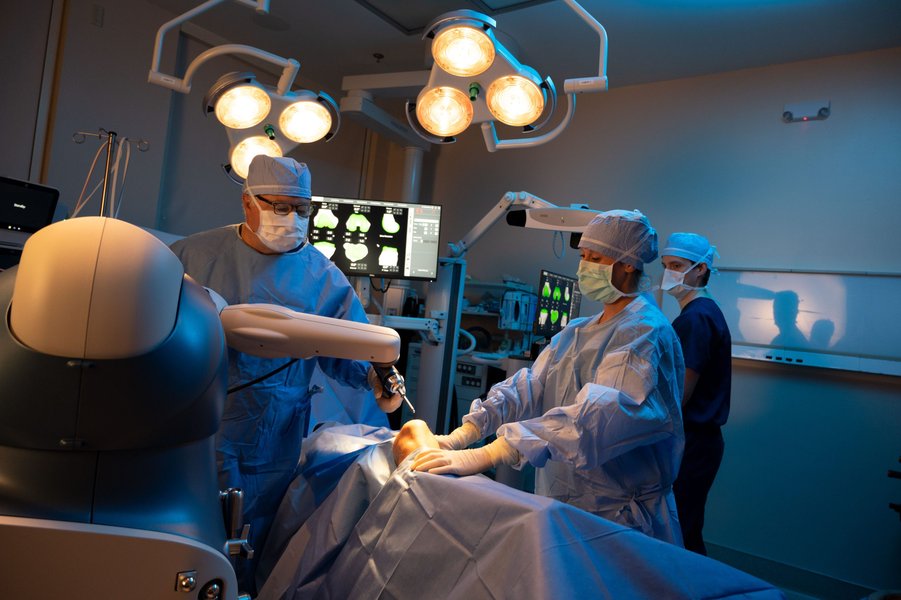
Key Highlights
- Enhanced Stability and Longevity: Increasing connectedness offers better implant fixation, reduces instability, and extends the implant life.
- Optimized Weight Distribution: Improved connectedness significantly mitigates bone loss challenges while ensuring an even weight-bearing capacity across the knee.
- Improved Functional Outcomes: Enhanced surgical precision and reduced complications lead to improved motion, diminished pain, and faster patient recovery.
Overview and Rationale
Revision knee arthroplasty is a complex procedure that often requires an escalation in the degree of connectedness to manage multiple challenges such as bone loss, implant loosening, instability, and soft tissue compromise. With each subsequent revision surgery, there is a growing need to ensure that the implant is securely fixed to the osseous structures while balancing the trade-offs between stability and range of motion. Increasing the degree of connectedness in knee arthroplasty revisions is not only a means of enhancing immediate postoperative stability, but it also contributes to the sustained long-term success of the intervention.
The prevailing argument centers on how enhanced connectedness addresses two critical issues: first, it maximizes implant fixation and minimizes micromotion, which in turn reduces the likelihood of periprosthetic joint infection (PJI); second, it ensures that even in the presence of significant bone loss or compromised ligamentous structures, the implant remains well-seated and functional. By integrating strategies that include better implant designs, increased stem lengths, and the adoption of more constrained implant systems, surgeons can significantly influence patient outcomes.
The various studies and clinical reviews suggest that while an increased degree of connectedness is associated with some potential drawbacks such as reduced range of motion, the benefits outweigh these risks when the approach is tailored to the patient’s unique anatomical and clinical circumstances. Through enhanced connectedness, surgeons are provided with a robust framework for:
- Restoring joint stability
- Compensating for bone defects
- Improving implant longevity
- Minimizing long-term revision risks
Detailed Discussion
1. Clinical Rationale and Patient Outcomes
Revision total knee arthroplasty (TKA) is evolving with a focus on strategies that enhance the connectedness between the implant and the host bone. The goal is to mitigate the main causes of failure, such as implant loosening and instability. Enhanced connectedness has been highlighted as a key factor in:
- Improving Stability: By using implants with increased constraint, surgeons restore stability in patients with extensive soft tissue damage and ligament deficiencies. Restoring stability is essential, as unstable knee joints can lead to abnormal wear patterns and additional revisions.
- Combating Bone Loss: During revisions, significant bone loss is common. Systems with better connectedness are adept at managing these defects by transferring loads more evenly across remaining bone structures.
- Amplifying Implant Durability: Connected systems that monitor loading and micromotion provide data that can be analyzed to predict early signs of implant wear, which can extend the implant's functional lifespan.
- Enhancing Functional Mobility: Patients often experience notable improvements in range of motion (ROM) after revisions that utilize higher degrees of connectedness. Even though a slight trade-off might be observed in ROM, the benefits of pain reduction and stability largely compensate for this deficit.
Moreover, dynamic data acquisition from connected implants, including real-time feedback during the postoperative period, has shown promise in refining the surgical approach continuously. Tailor-made adjustments based upon intraoperative and postoperative real-time imaging helps ensure that implant positioning is optimal.
2. Technical Advantages and Surgical Precision
A significant advantage of increased connectedness in knee arthroplasty revisions is its direct effect on surgical precision. Enhanced implant connectivity supports:
- Accurate Data Collection: By employing advanced imaging systems and digital planning tools, surgeons can perform precise preoperative planning. This contributes to better implant alignment and personalized implant selection based on the patient’s anatomy.
- Real-Time Adjustments: The use of high-constraint implants allows for immediate intraoperative modifications. This is crucial when unforeseen bone defects or soft tissue challenges are encountered, ensuring that the implant is securely fixed.
- Improved Implant Design: Modern revision techniques utilize implants designed with longer stems and increased metal augmentation, which significantly enhance stability. Such designs are essential in bridging the gap between the implant and deficient bone areas.
The surgical technique has evolved to combine a comprehensive preoperative evaluation with state-of-the-art intraoperative guidance systems. Together, these methods ensure that the available bone stock is maximally utilized and that undesired movements of the implant are minimized.
3. Evaluation of Potential Drawbacks
Notwithstanding the numerous benefits, there are inherent trade-offs with increasing an implant's degree of connectedness:
Restrictive Range of Motion (ROM): As the implant becomes more constrained, there exists a potential for limited ROM. However, clinical evaluations suggest that when the enhanced constraint is carefully balanced with proper alignment and the use of long stems, even small reductions in ROM can be clinically acceptable, especially when compared with the benefits of joint stability.
Complexity and Risk of Complications: More complex implant designs and fixation techniques could potentially incur technical complications during surgery. The risks include issues such as periprosthetic fractures or difficulties in future revisions. Nonetheless, these risks are counterbalanced by the reduced frequency of additional interventions when the initial connectedness is optimized.
Trade-Offs in Pain Management: Patients undergoing revisions with increased constraint sometimes experience postoperative pain related to the added implant bulk or minor impingements; however, modern pain management protocols and careful surgical techniques have largely mitigated these concerns.
4. Economic Considerations and Healthcare Efficiency
From a health economics perspective, utilizing highly connected implant systems in revision surgeries has demonstrated cost-effectiveness over time. While the upfront cost of advanced implants and technology-assisted surgeries might be higher, the overall benefit in reducing further revisions and associated complications provides an economically advantageous outcome.
Long-Term Savings: The decreased need for repeated surgical interventions results in substantial savings for healthcare systems. Moreover, lower revision rates directly correlate with reduced inpatient stays and post-surgical rehabilitation demands.
Optimized Resource Utilization: With the advent of connected implant systems, surgeons have better diagnostic and intraoperative tools that lead to more efficient resource utilization. Enhanced connectedness reduces both the length of surgery and associated complications, thus minimizing overall resource investments.
Visual Representations and Data Analysis
Implant Connectedness: A Comparative Overview
The table below summarizes the critical factors that are impacted by increasing the connectedness in revision knee arthroplasty procedures:
| Aspect | Benefits of Increased Connectedness | Potential Challenges |
|---|---|---|
| Stability | Enhanced fixation minimizes micromotion and reduces revision rates. | Slight restriction in the range of motion can occur. |
| Bone Loss Management | Provides improved load distribution and more predictable outcomes in cases of bone defects. | May require advanced implant designs and techniques. |
| Patient Outcomes | Improved joint function, lower pain levels, and faster postoperative recovery. | Complex surgical techniques necessitate careful patient evaluation. |
| Economic Impact | Reduces long-term cost through fewer revisions and faster mobility recovery. | Higher initial implant costs and potential for increased surgical complexity. |
The table clearly encapsulates the multi-faceted benefits of increasing the degree of connectedness in revision knee arthroplasty, providing a holistic view of its advantages and challenges.
Radar Chart Analysis
The radar chart below represents a comparative analysis of various factors impacted by increasing implant connectedness, based on expert analyses. Each dataset corresponds to a different clinical factor, including stability, implant longevity, patient pain reduction, and overall surgical efficacy.
Mindmap of Connectedness Factors
The mindmap diagram below provides an organized visual of the core elements that contribute to the success of increased implant connectedness in revision knee arthroplasty. This diagram shows how stability, bone preservation, patient outcomes, and technical innovations interconnect.
in Revision TKA") "Stability
& Fixation" "Enhanced
Implant Fixation" "Reduced
Micromotion" "Bone Management" "Load Distribution" "Bone Loss
Adaptation" "Functional Outcomes" "Pain Reduction" "Improved ROM" "Surgical Precision" "Data-Driven
Planning" "Real-Time
Feedback"
Additional Multimedia Resource
Video Insight on Revision Knee Arthroplasty
The embedded video below offers a detailed explanation from a leading health provider on the complexities and innovations in revision knee arthroplasty surgeries. This visual resource complements the in-depth discussion on improved implant connectedness, providing both clinical insights and surgical strategies.
Frequently Asked Questions (FAQ)
What does "increasing the degree of connectedness" mean in knee arthroplasty?
This approach involves using implants and surgical techniques that ensure a more secure fixation and integration of the prosthetic components with the patient’s bone. It includes using longer stems, constrained implants, and data-driven planning to minimize micromotion and improve stability.
How does increased connectedness affect long-term implant survival?
By reducing micromotion and ensuring a more even load distribution, increased connectedness minimizes implant wear and loosening. This, in turn, decreases the need for further revisions and enhances the longevity of the implant.
Are there any downsides to using highly constrained implant systems?
While higher constraint implants offer improved stability, they can limit range of motion. However, with modern surgical techniques and tailored patient selection, these limitations are often minimal compared to the benefits achieved in stability and function.
What role does real-time surgical feedback play in this strategy?
Real-time feedback enables surgeons to make intraoperative adjustments, ensuring optimal implant alignment and fixation. This data-driven approach improves surgical precision and contributes to the overall success of the revision procedure.
References
-
Outcomes in Revision TKA - PubMed Central
-
Bone Loss Management in TKA - ScienceDirect
-
Revision TKA for Arthrofibrosis - PubMed Central
- AAOS Revision Knee Replacement - AAOS
- Revision Knee Replacement Overview - Spire Healthcare
Recommended Related Queries
Last updated March 30, 2025