
Unlocking the Secrets of Primes: The Enduring Mystery of the Riemann Hypothesis
Delve into one of mathematics' deepest unsolved problems and its connection to the fundamental building blocks of numbers.
Proposed over 165 years ago by the brilliant German mathematician Bernhard Riemann, the Riemann Hypothesis remains arguably the most significant unsolved problem in pure mathematics. It poses a deceptively simple question about the locations of specific points, known as non-trivial zeros, related to a special function called the Riemann zeta function. However, the answer holds profound implications for our understanding of the most fundamental objects in arithmetic: the prime numbers.
Highlights: Key Insights into the Hypothesis
- Prime Number Distribution: The hypothesis offers a precise description of how prime numbers are distributed along the number line, suggesting they are spread out as regularly as possible.
- The Critical Line: It conjectures that all 'interesting' solutions (non-trivial zeros) of the Riemann zeta function lie on a specific vertical line in the complex plane where the real part is exactly 1/2.
- An Unsolved Million-Dollar Question: Despite vast computational evidence supporting it and numerous attempts, a rigorous proof remains elusive, making it one of the Clay Mathematics Institute's Millennium Prize Problems with a US$1 million reward.
The Heart of the Matter: The Riemann Zeta Function
To grasp the Riemann Hypothesis, we first need to understand the function it concerns: the Riemann zeta function, denoted by ζ(s). This function takes a complex number 's' (a number of the form a + bi, where 'a' and 'b' are real numbers and 'i' is the imaginary unit) as input.
Defining the Zeta Function
For complex numbers 's' where the real part is greater than 1, the zeta function is defined by an infinite sum:
\[ \zeta(s) = \sum_{n=1}^{\infty} \frac{1}{n^s} = \frac{1}{1^s} + \frac{1}{2^s} + \frac{1}{3^s} + \frac{1}{4^s} + \cdots \]Alternatively, it can be expressed as an infinite product over all prime numbers 'p', known as the Euler product:
\[ \zeta(s) = \prod_{p \text{ prime}} \frac{1}{1 - p^{-s}} \]This connection established by Euler is fundamental because it links the zeta function directly to the prime numbers.

Mathematical formulas, like those defining the zeta function, capture deep relationships within numbers.
Analytic Continuation and Zeros
While the definitions above only work when the real part of 's' is greater than 1, Bernhard Riemann showed how to extend the zeta function's definition to almost the entire complex plane using a technique called analytic continuation. This extended function has a single "pole" (a point where it goes to infinity) at s = 1.
Mathematicians are particularly interested in the values of 's' for which ζ(s) = 0. These are called the "zeros" of the zeta function. They come in two types:
- Trivial Zeros: These occur at the negative even integers: s = -2, -4, -6, and so on. They are considered "trivial" because their location is well-understood and easily proven.
- Non-Trivial Zeros: These are the more mysterious zeros. They are known to lie within the "critical strip" – the region of the complex plane where the real part of 's' is strictly between 0 and 1 (0 < Re(s) < 1).
The Hypothesis Stated
Pinpointing the Non-Trivial Zeros
The Riemann Hypothesis is a precise conjecture about the location of *all* the non-trivial zeros of the Riemann zeta function.
The Hypothesis: Every non-trivial zero of the Riemann zeta function ζ(s) has a real part equal to 1/2.
In other words, all these infinitely many complex numbers 's' for which ζ(s) = 0 (and which are not the negative even integers) must lie on a specific vertical line in the complex plane. This line, defined by Re(s) = 1/2, is known as the critical line.
If s = a + bi is a non-trivial zero, the hypothesis asserts that 'a' must be exactly 1/2. So, these zeros would all have the form s = 1/2 + it, where 't' is some real number representing the imaginary part.
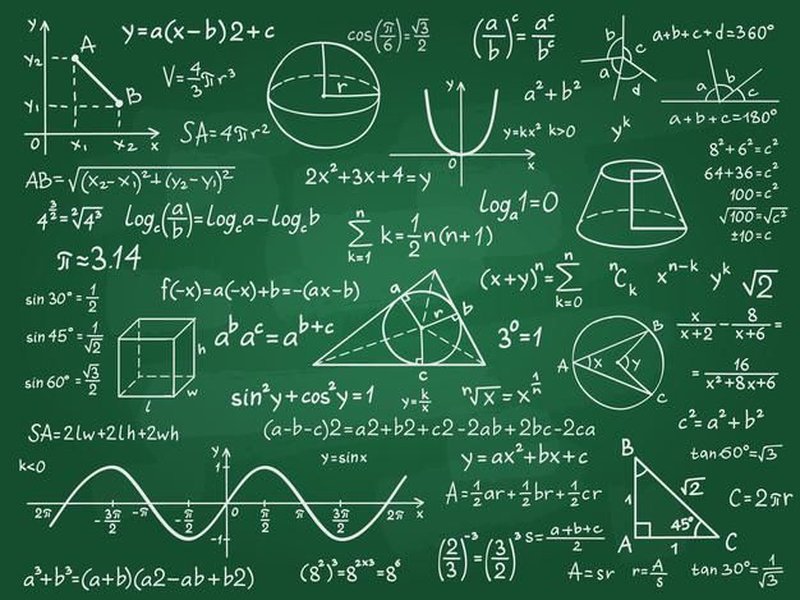
The Riemann Hypothesis makes a specific claim about the solutions to the equation ζ(s) = 0.
Why Does It Matter So Much?
Implications Across Mathematics and Beyond
The Riemann Hypothesis isn't just an obscure question about a complex function; its truth or falsehood has profound consequences, particularly for the distribution of prime numbers.
The Prime Number Theorem Refined
The Prime Number Theorem (PNT) gives an approximation for how many primes exist up to a certain number. It tells us that the density of primes decreases logarithmically. However, this is just an approximation. The Riemann Hypothesis provides the best possible estimate for the *error* in this approximation. If true, it implies that prime numbers are distributed as regularly and predictably as possible, without large, unexpected gaps or clusters.
Foundation for Number Theory
A vast number of theorems and results in analytic number theory have been proven *assuming* the Riemann Hypothesis is true. Proving the hypothesis would instantly confirm all these conditional results, solidifying a large portion of the field. Conversely, disproving it would require mathematicians to re-evaluate many established ideas.
Cryptography and Security
Modern cryptography, including systems like RSA that secure much of our online communication and commerce, relies heavily on the difficulty of factoring large numbers into their prime constituents. While a proof of the Riemann Hypothesis wouldn't directly break RSA, it would provide such a deep understanding of prime distribution that it *could* potentially lead to new insights or algorithms that impact cryptographic security.
Connections to Physics and Other Fields
Intriguing connections have been found between the zeros of the zeta function and concepts in quantum physics, particularly quantum chaos and the energy levels of complex atomic nuclei. Some physicists and mathematicians speculate that the zeros might correspond to the eigenvalues of some yet-undiscovered quantum operator, suggesting a deep link between number theory and the fundamental laws of the universe. Connections to random matrix theory and statistical mechanics have also been explored.
A Millennium Prize Problem
Recognizing its fundamental importance, the Clay Mathematics Institute designated the Riemann Hypothesis as one of its seven Millennium Prize Problems in 2000. A correct proof carries a reward of US$1 million, highlighting its status as one of the most challenging and sought-after goals in modern mathematics.
Visualizing the Connections
The mindmap below illustrates the central role of the Riemann Hypothesis and its connections to various mathematical concepts and applications.
Σ 1/n^s"] id1b["Euler Product:
Π 1/(1 - p^-s)"] id1c["Analytic Continuation"] id2["Zeros of ζ(s)"] id2a["Trivial Zeros
(Negative Even Integers)"] id2b["Non-Trivial Zeros
(0 < Re(s) < 1)"] id2b1["Critical Line
Re(s) = 1/2"] id2b2["Hypothesis:
All non-trivial zeros
are on the critical line"] id3["Implications"] id3a["Prime Number Distribution"] id3a1["Refines Prime Number Theorem (PNT)"] id3a2["Predictable spacing of primes"] id3b["Number Theory"] id3b1["Foundation for many theorems"] id3c["Cryptography"] id3c1["Potential impact on RSA security"] id3d["Connections to Physics"] id3d1["Quantum Chaos"] id3d2["Random Matrix Theory"] id4["Status"] id4a["Unproven"] id4b["Strong Computational Evidence"] id4c["Millennium Prize Problem ($1M)"]
Historical Context and Current Status
Origins in Riemann's Work
Bernhard Riemann introduced the hypothesis in his seminal 1859 paper, "Ueber die Anzahl der Primzahlen unter einer gegebenen Grösse" (On the Number of Primes Less Than a Given Magnitude). While the paper's main goal was related to counting primes, this conjecture about the zeta function's zeros was mentioned almost as an aside, yet it quickly became recognized for its profound depth.
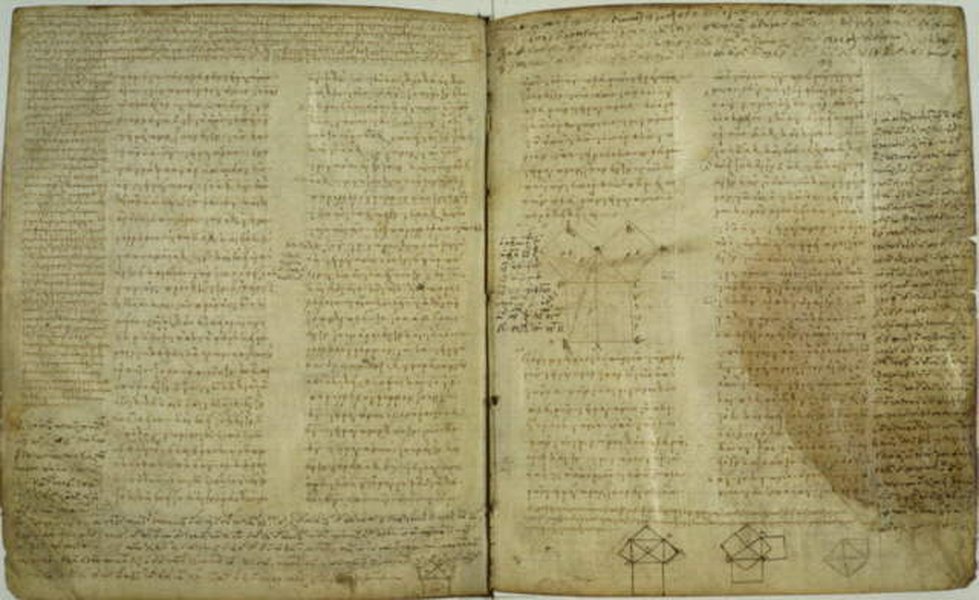
Mathematical inquiry, like that leading to the Riemann Hypothesis, builds upon centuries of exploration.
Modern Efforts and Computational Checks
As of today, Wednesday, 2025-04-16, the Riemann Hypothesis remains unproven. Despite the efforts of many brilliant mathematicians over more than 165 years, no one has produced a rigorous, accepted proof.
However, the evidence *in favor* of the hypothesis is substantial:
- Computational Verification: Using powerful computers, mathematicians have verified that the first more than 10 trillion (1013) non-trivial zeros do indeed lie precisely on the critical line. While this is compelling evidence, it doesn't constitute a proof, as there could theoretically be a zero off the line much further up.
- Partial Results: Some related theorems and weaker versions of the hypothesis have been proven, lending further credence to the main conjecture.
Numerous purported proofs have been published, often on preprint servers like arXiv, but none have so far withstood the intense scrutiny of the mathematical community.
Assessing Aspects of the Hypothesis
The radar chart below provides a visual representation of the perceived strength or significance of various facets related to the Riemann Hypothesis based on current understanding. The scale reflects qualitative assessment rather than precise measurement.
This chart reflects the strong computational support and theoretical importance ('Prime Distribution Insight', 'Foundation for Theorems'), contrasted with the lack of a formal proof ('Accepted Proof Rigor'). The 'Mathematical Consensus' indicates that most experts believe the hypothesis is true. Its potential 'Cryptographic Impact' and 'Interdisciplinary Connections' are areas of active research and speculation.
Key Concepts Summarized
The following table provides a concise overview of the essential terms related to the Riemann Hypothesis:
| Concept | Description |
|---|---|
| Riemann Zeta Function ζ(s) | A function of a complex variable 's', initially defined as Σ 1/ns for Re(s) > 1, linked to prime numbers via the Euler product. |
| Analytic Continuation | A mathematical technique used to extend the domain of the zeta function to almost the entire complex plane. |
| Trivial Zeros | The zeros of ζ(s) located at the negative even integers (s = -2, -4, -6, ...). |
| Non-Trivial Zeros | All other zeros of ζ(s), known to lie in the critical strip (0 < Re(s) < 1). |
| Critical Strip | The region in the complex plane where the real part of 's' is between 0 and 1. |
| Critical Line | The vertical line within the critical strip where the real part of 's' is exactly 1/2 (Re(s) = 1/2). |
| Riemann Hypothesis | The conjecture that all non-trivial zeros of the Riemann zeta function lie on the critical line. |
| Main Implication | Provides the strongest possible bound on the error term in the Prime Number Theorem, implying primes are distributed very regularly. |
Visualizing the Hypothesis
Understanding the Riemann Hypothesis often benefits from visual explanations. The following video from Numberphile features Professor Edward Frenkel discussing the problem and its significance.
This video provides an accessible overview of the zeta function, its connection to prime numbers, and what the hypothesis actually claims about the location of the non-trivial zeros on the critical line. It helps to visualize the concepts involved in this famously difficult problem.
Frequently Asked Questions (FAQ)
What is the Riemann Hypothesis in simple terms?
Imagine the prime numbers (2, 3, 5, 7, 11...) scattered along the number line. The Riemann Hypothesis is a deep mathematical guess about a specific pattern governing how these primes are distributed. It claims that the 'non-trivial zeros' (special points related to a complex function called the Riemann zeta function, which encodes information about primes) all perfectly line up on a specific vertical line (the 'critical line' where the real part is 1/2) in the complex number plane. If true, it means the primes are distributed as smoothly and regularly as possible.
Who proposed the Riemann Hypothesis?
The hypothesis was proposed by the German mathematician Bernhard Riemann in 1859 in his paper "On the Number of Primes Less Than a Given Magnitude."
What is the Riemann zeta function?
The Riemann zeta function, ζ(s), is a function that takes a complex number 's' as input. For values of 's' with a real part greater than 1, it's defined as the infinite sum 1/1s + 1/2s + 1/3s + ... It can be extended to almost all complex numbers and is deeply connected to the distribution of prime numbers through the Euler product formula.
Why are prime numbers important here?
Prime numbers are the fundamental building blocks of integers. The Riemann zeta function inherently encodes information about how primes are distributed. The location of the zeta function's non-trivial zeros dictates the precise nature of this distribution. Proving the Riemann Hypothesis would give us the most accurate possible description of how primes are spread out.
Has the Riemann Hypothesis been proven?
No, as of April 16, 2025, the Riemann Hypothesis has not been proven or disproven. Despite immense effort and substantial computational evidence supporting it (showing the first trillions of zeros lie on the critical line), a rigorous mathematical proof acceptable to the community is still missing. It remains one of the most important open problems in mathematics.
What happens if it's proven true?
If the Riemann Hypothesis is proven true, it would instantly validate hundreds, if not thousands, of other mathematical theorems that currently depend on its assumption. It would confirm that prime numbers are distributed as regularly as possible, providing the best possible error bound for the Prime Number Theorem. While it might not immediately break current cryptographic systems, the deep insights gained into prime numbers could potentially lead to advancements that impact cryptography in the long run. It would be a monumental achievement in mathematics.
References
- Riemann hypothesis - Wikipedia
- Riemann Hypothesis - Clay Mathematics Institute
- Riemann hypothesis | Prime Numbers, Zeta Function & Complex Analysis - Britannica
- The Riemann Hypothesis, explained - Cantor’s Paradise
- The Biggest Problem in Mathematics Is Finally a Step Closer to ... - Scientific American
- What is the simplest way of explaining the Riemann Hypothesis to a layman? - Mathematics Stack Exchange
- A Simple Proof of the Riemann Hypothesis - arXiv.org (Note: Purported proof, not widely accepted)
Recommended Reading
- Explore the intriguing links between the distribution of zeta zeros and quantum mechanics.
- Understand how proving the hypothesis would refine our knowledge of prime density.
- Delve into the mathematical technique used to extend the zeta function.
- Discover the other major unsolved problems in mathematics alongside the Riemann Hypothesis.
Unlocking the Secrets of Primes: The Enduring Mystery of the Riemann Hypothesis
Delve into one of mathematics' deepest unsolved problems and its connection to the fundamental building blocks of numbers.
Proposed over 165 years ago by the brilliant German mathematician Bernhard Riemann, the Riemann Hypothesis remains arguably the most significant unsolved problem in pure mathematics. It poses a deceptively simple question about the locations of specific points, known as non-trivial zeros, related to a special function called the Riemann zeta function. However, the answer holds profound implications for our understanding of the most fundamental objects in arithmetic: the prime numbers.
Highlights: Key Insights into the Hypothesis
- Prime Number Distribution: The hypothesis offers a precise description of how prime numbers are distributed along the number line, suggesting they are spread out as regularly as possible.
- The Critical Line: It conjectures that all 'interesting' solutions (non-trivial zeros) of the Riemann zeta function lie on a specific vertical line in the complex plane where the real part is exactly 1/2.
- An Unsolved Million-Dollar Question: Despite vast computational evidence supporting it and numerous attempts, a rigorous proof remains elusive, making it one of the Clay Mathematics Institute's Millennium Prize Problems with a US$1 million reward.
The Heart of the Matter: The Riemann Zeta Function
To grasp the Riemann Hypothesis, we first need to understand the function it concerns: the Riemann zeta function, denoted by ζ(s). This function takes a complex number 's' (a number of the form a + bi, where 'a' and 'b' are real numbers and 'i' is the imaginary unit) as input.
Defining the Zeta Function
For complex numbers 's' where the real part is greater than 1, the zeta function is defined by an infinite sum:
\[ \zeta(s) = \sum_{n=1}^{\infty} \frac{1}{n^s} = \frac{1}{1^s} + \frac{1}{2^s} + \frac{1}{3^s} + \frac{1}{4^s} + \cdots \]Alternatively, it can be expressed as an infinite product over all prime numbers 'p', known as the Euler product:
\[ \zeta(s) = \prod_{p \text{ prime}} \frac{1}{1 - p^{-s}} \]This connection established by Euler is fundamental because it links the zeta function directly to the prime numbers.
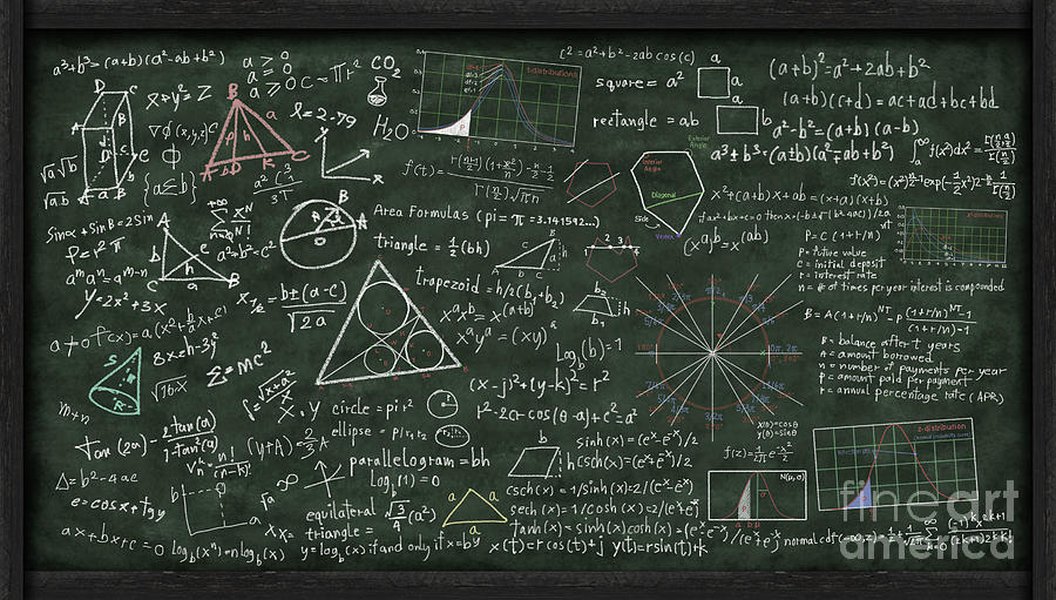
Mathematical formulas, like those defining the zeta function, capture deep relationships within numbers.
Analytic Continuation and Zeros
While the definitions above only work when the real part of 's' is greater than 1, Bernhard Riemann showed how to extend the zeta function's definition to almost the entire complex plane using a technique called analytic continuation. This extended function has a single "pole" (a point where it goes to infinity) at s = 1.
Mathematicians are particularly interested in the values of 's' for which ζ(s) = 0. These are called the "zeros" of the zeta function. They come in two types:
- Trivial Zeros: These occur at the negative even integers: s = -2, -4, -6, and so on. They are considered "trivial" because their location is well-understood and easily proven.
- Non-Trivial Zeros: These are the more mysterious zeros. They are known to lie within the "critical strip" – the region of the complex plane where the real part of 's' is strictly between 0 and 1 (0 < Re(s) < 1).
The Hypothesis Stated
Pinpointing the Non-Trivial Zeros
The Riemann Hypothesis is a precise conjecture about the location of *all* the non-trivial zeros of the Riemann zeta function.
The Hypothesis: Every non-trivial zero of the Riemann zeta function ζ(s) has a real part equal to 1/2.
In other words, all these infinitely many complex numbers 's' for which ζ(s) = 0 (and which are not the negative even integers) must lie on a specific vertical line in the complex plane. This line, defined by Re(s) = 1/2, is known as the **critical line**.
If s = a + bi is a non-trivial zero, the hypothesis asserts that 'a' must be exactly 1/2. So, these zeros would all have the form s = 1/2 + it, where 't' is some real number representing the imaginary part.
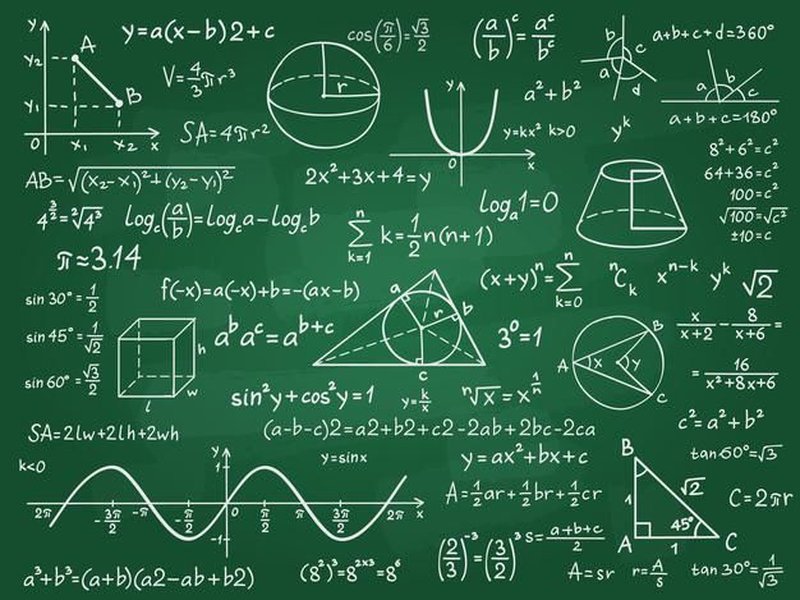
The Riemann Hypothesis makes a specific claim about the solutions to the equation ζ(s) = 0.
Why Does It Matter So Much?
Implications Across Mathematics and Beyond
The Riemann Hypothesis isn't just an obscure question about a complex function; its truth or falsehood has profound consequences, particularly for the distribution of prime numbers.
The Prime Number Theorem Refined
The Prime Number Theorem (PNT) gives an approximation for how many primes exist up to a certain number. It tells us that the density of primes decreases logarithmically. However, this is just an approximation. The Riemann Hypothesis provides the best possible estimate for the *error* in this approximation. If true, it implies that prime numbers are distributed as regularly and predictably as possible, without large, unexpected gaps or clusters.
Foundation for Number Theory
A vast number of theorems and results in analytic number theory have been proven *assuming* the Riemann Hypothesis is true. Proving the hypothesis would instantly confirm all these conditional results, solidifying a large portion of the field. Conversely, disproving it would require mathematicians to re-evaluate many established ideas.
Cryptography and Security
Modern cryptography, including systems like RSA that secure much of our online communication and commerce, relies heavily on the difficulty of factoring large numbers into their prime constituents. While a proof of the Riemann Hypothesis wouldn't directly break RSA, it would provide such a deep understanding of prime distribution that it *could* potentially lead to new insights or algorithms that impact cryptographic security.
Connections to Physics and Other Fields
Intriguing connections have been found between the zeros of the zeta function and concepts in quantum physics, particularly quantum chaos and the energy levels of complex atomic nuclei. Some physicists and mathematicians speculate that the zeros might correspond to the eigenvalues of some yet-undiscovered quantum operator, suggesting a deep link between number theory and the fundamental laws of the universe. Connections to random matrix theory and statistical mechanics have also been explored.
A Millennium Prize Problem
Recognizing its fundamental importance, the Clay Mathematics Institute designated the Riemann Hypothesis as one of its seven Millennium Prize Problems in 2000. A correct proof carries a reward of US$1 million, highlighting its status as one of the most challenging and sought-after goals in modern mathematics.
Visualizing the Connections
The mindmap below illustrates the central role of the Riemann Hypothesis and its connections to various mathematical concepts and applications.
Σ 1/n^s"] id1b["Euler Product:
Π 1/(1 - p^-s)"] id1c["Analytic Continuation"] id2["Zeros of ζ(s)"] id2a["Trivial Zeros
(Negative Even Integers)"] id2b["Non-Trivial Zeros
(0 < Re(s) < 1)"] id2b1["Critical Line
Re(s) = 1/2"] id2b2["Hypothesis:
All non-trivial zeros
are on the critical line"] id3["Implications"] id3a["Prime Number Distribution"] id3a1["Refines Prime Number Theorem (PNT)"] id3a2["Predictable spacing of primes"] id3b["Number Theory"] id3b1["Foundation for many theorems"] id3c["Cryptography"] id3c1["Potential impact on RSA security"] id3d["Connections to Physics"] id3d1["Quantum Chaos"] id3d2["Random Matrix Theory"] id4["Status"] id4a["Unproven"] id4b["Strong Computational Evidence"] id4c["Millennium Prize Problem ($1M)"]
Historical Context and Current Status
Origins in Riemann's Work
Bernhard Riemann introduced the hypothesis in his seminal 1859 paper, "Ueber die Anzahl der Primzahlen unter einer gegebenen Grösse" (On the Number of Primes Less Than a Given Magnitude). While the paper's main goal was related to counting primes, this conjecture about the zeta function's zeros was mentioned almost as an aside, yet it quickly became recognized for its profound depth.
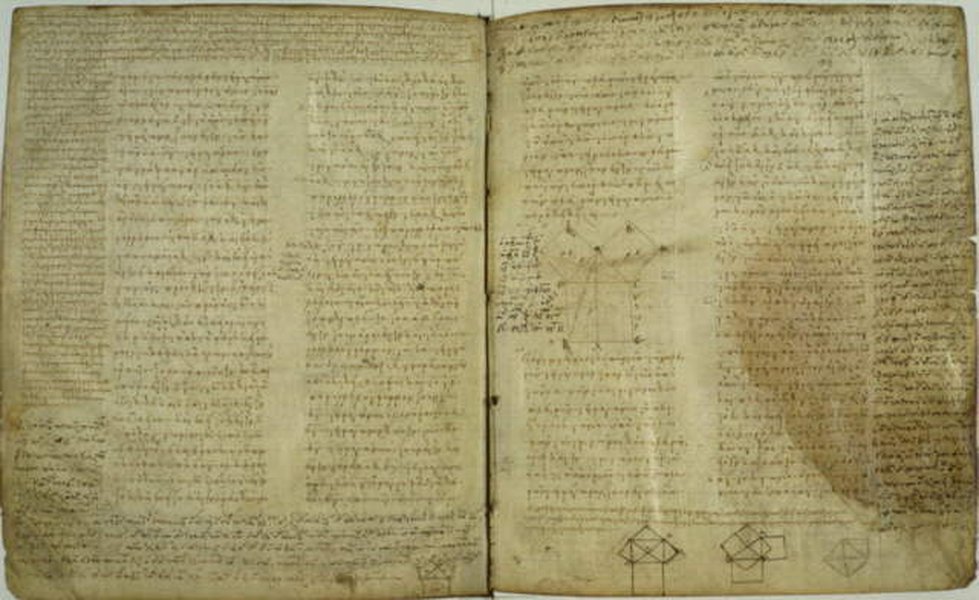
Mathematical inquiry, like that leading to the Riemann Hypothesis, builds upon centuries of exploration.
Modern Efforts and Computational Checks
As of today, Wednesday, 2025-04-16, the Riemann Hypothesis remains unproven. Despite the efforts of many brilliant mathematicians over more than 165 years, no one has produced a rigorous, accepted proof.
However, the evidence *in favor* of the hypothesis is substantial:
- Computational Verification: Using powerful computers, mathematicians have verified that the first more than 10 trillion (1013) non-trivial zeros do indeed lie precisely on the critical line. While this is compelling evidence, it doesn't constitute a proof, as there could theoretically be a zero off the line much further up.
- Partial Results: Some related theorems and weaker versions of the hypothesis have been proven, lending further credence to the main conjecture.
Numerous purported proofs have been published, often on preprint servers like arXiv, but none have so far withstood the intense scrutiny of the mathematical community.
Assessing Aspects of the Hypothesis
The radar chart below provides a visual representation of the perceived strength or significance of various facets related to the Riemann Hypothesis based on current understanding. The scale reflects qualitative assessment rather than precise measurement.
This chart reflects the strong computational support and theoretical importance ('Prime Distribution Insight', 'Foundation for Theorems'), contrasted with the lack of a formal proof ('Accepted Proof Rigor'). The 'Mathematical Consensus' indicates that most experts believe the hypothesis is true. Its potential 'Cryptographic Impact' and 'Interdisciplinary Connections' are areas of active research and speculation.
Key Concepts Summarized
The following table provides a concise overview of the essential terms related to the Riemann Hypothesis:
| Concept | Description |
|---|---|
| Riemann Zeta Function ζ(s) | A function of a complex variable 's', initially defined as Σ 1/ns for Re(s) > 1, linked to prime numbers via the Euler product. |
| Analytic Continuation | A mathematical technique used to extend the domain of the zeta function to almost the entire complex plane. |
| Trivial Zeros | The zeros of ζ(s) located at the negative even integers (s = -2, -4, -6, ...). |
| Non-Trivial Zeros | All other zeros of ζ(s), known to lie in the critical strip (0 < Re(s) < 1). |
| Critical Strip | The region in the complex plane where the real part of 's' is between 0 and 1. |
| Critical Line | The vertical line within the critical strip where the real part of 's' is exactly 1/2 (Re(s) = 1/2). |
| Riemann Hypothesis | The conjecture that all non-trivial zeros of the Riemann zeta function lie on the critical line. |
| Main Implication | Provides the strongest possible bound on the error term in the Prime Number Theorem, implying primes are distributed very regularly. |
Visualizing the Hypothesis
Understanding the Riemann Hypothesis often benefits from visual explanations. The following video from Numberphile features Professor Edward Frenkel discussing the problem and its significance.
This video provides an accessible overview of the zeta function, its connection to prime numbers, and what the hypothesis actually claims about the location of the non-trivial zeros on the critical line. It helps to visualize the concepts involved in this famously difficult problem.
Frequently Asked Questions (FAQ)
What is the Riemann Hypothesis in simple terms?
Imagine the prime numbers (2, 3, 5, 7, 11...) scattered along the number line. The Riemann Hypothesis is a deep mathematical guess about a specific pattern governing how these primes are distributed. It claims that the 'non-trivial zeros' (special points related to a complex function called the Riemann zeta function, which encodes information about primes) all perfectly line up on a specific vertical line (the 'critical line' where the real part is 1/2) in the complex number plane. If true, it means the primes are distributed as smoothly and regularly as possible.
Who proposed the Riemann Hypothesis?
The hypothesis was proposed by the German mathematician Bernhard Riemann in 1859 in his paper "On the Number of Primes Less Than a Given Magnitude."
What is the Riemann zeta function?
The Riemann zeta function, ζ(s), is a function that takes a complex number 's' as input. For values of 's' with a real part greater than 1, it's defined as the infinite sum 1/1s + 1/2s + 1/3s + ... It can be extended to almost all complex numbers and is deeply connected to the distribution of prime numbers through the Euler product formula.
Why are prime numbers important here?
Prime numbers are the fundamental building blocks of integers. The Riemann zeta function inherently encodes information about how primes are distributed. The location of the zeta function's non-trivial zeros dictates the precise nature of this distribution. Proving the Riemann Hypothesis would give us the most accurate possible description of how primes are spread out.
Has the Riemann Hypothesis been proven?
No, as of April 16, 2025, the Riemann Hypothesis has not been proven or disproven. Despite immense effort and substantial computational evidence supporting it (showing the first trillions of zeros lie on the critical line), a rigorous mathematical proof acceptable to the community is still missing. It remains one of the most important open problems in mathematics.
What happens if it's proven true?
If the Riemann Hypothesis is proven true, it would instantly validate hundreds, if not thousands, of other mathematical theorems that currently depend on its assumption. It would confirm that prime numbers are distributed as regularly as possible, providing the best possible error bound for the Prime Number Theorem. While it might not immediately break current cryptographic systems, the deep insights gained into prime numbers could potentially lead to advancements that impact cryptography in the long run. It would be a monumental achievement in mathematics.
References
- Riemann hypothesis - Wikipedia
- Riemann Hypothesis - Clay Mathematics Institute
- Riemann hypothesis | Prime Numbers, Zeta Function & Complex Analysis - Britannica
- The Riemann Hypothesis, explained - Cantor’s Paradise
- The Biggest Problem in Mathematics Is Finally a Step Closer to ... - Scientific American
- What is the simplest way of explaining the Riemann Hypothesis to a layman? - Mathematics Stack Exchange
- A Simple Proof of the Riemann Hypothesis - arXiv.org (Note: Purported proof, not widely accepted)
Recommended Reading
Last updated April 16, 2025