
Understanding the Parable in "Desine" and "Design" by Robert Frost
Exploring the Intricate Layers of Nature, Fate, and Design in Frost’s Work
Key Insights
- Clarification of the Title: There is no record of a poem titled "Desine" by Robert Frost; the intended reference is likely to his poem "Design."
- Parable of the Natural World: The poem "Design" is built around a seeming parable that questions the role of fate, determinism, and the nature of design or intention in the universe.
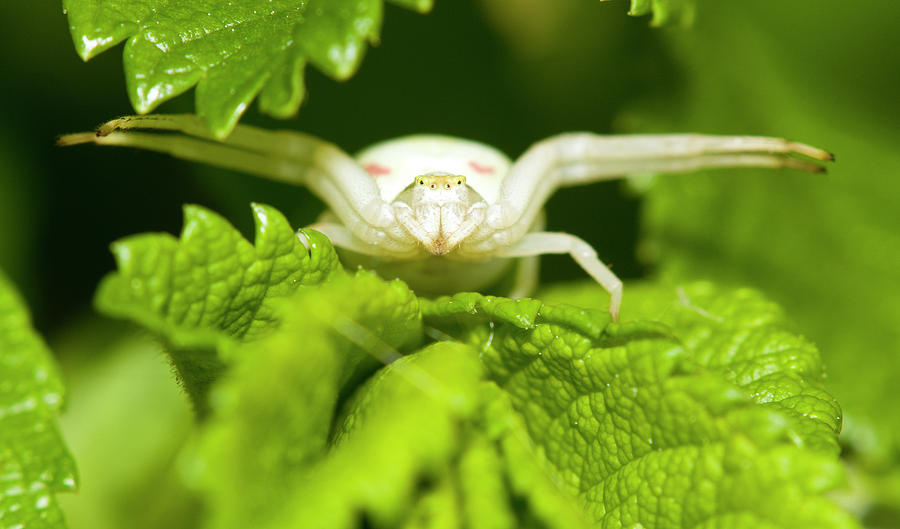
- Interpretative Complexity: The poem employs symbolic imagery—a white spider, a dead white moth, and a white flower—to evoke themes that challenge traditional views of a benevolent creation.
Introduction and Clarification
In discussions surrounding Robert Frost’s work, there sometimes arises confusion over the title "Desine." It is important to note that Robert Frost did not write a poem under the title "Desine." Instead, the poem in question is "Design." The similarity in pronunciation may lead some to erroneously refer to it as "Desine." The analysis below addresses the parable within "Design," synthesizing the prevailing interpretations and reflections provided by literary critics.
Context and Overview of "Design"
"Design" is one of Robert Frost’s most thought-provoking poems, famous for its concentrated imagery and the questioning of natural order. The poem opens with the depiction of a white spider on a white heal-all flower holding a dead white moth. The stark and almost clinical presentation of these elements—white spider, white flower, and white moth—creates an atmosphere where color, once a signifier of purity or innocence, now becomes a marker of something uncanny and unsettling.
Evolution of Interpretation
The central parable in "Design" invites the reader to contemplate whether the encounter between these three seemingly disparate elements is purely coincidental or orchestrated by some underlying principle of order—or disorder—in the universe. The speaker challenges the notion of a benevolent or orderly creator by presenting an unsettling scene that juxtaposes beautiful order with elements of death and decay. This duality forces readers to question the nature of design: is it inherently good, or does it contain aspects of cruelty and indifference?
Detailed Analysis of the Parable
Symbolism and Imagery
A close reading of "Design" reveals that Frost used contrasting symbols deliberately to evoke deeper questions about existence:
White Spider, White Flower, and White Moth
The central image—a white spider holding a white moth on a white flower—is rich with symbolic meaning. White, a color traditionally associated with purity, innocence, and even divinity, is repeatedly invoked; however, its use here is ironic. Instead of representing life or sacred cleanliness, the whiteness in this scenario is tainted by the presence of death, embodied by the lifeless moth. This contradiction beckons the reader to explore whether the natural world operates under principles that are inherently benign or filled with darker, inexplicable forces.
The Paradox of Design
The core of the poem’s parable is encapsulated in the question: "What but design of darkness to appall?" By linking the observed arrangement to the notion of a "design," Frost implies that there may be an underlying plan or intention, yet the design appears to be dark and malevolent rather than orderly or nurturing. This observation challenges conventional ideas of fate and providence. If the universe is governed by design, then the outcomes we observe—such as the predatory nature of the spider—suggest that this design is indifferent or even hostile to human expectations of goodness.
Philosophical and Existential Themes
A major interpretative thread running through the analysis of "Design" concerns its philosophical implications:
Questioning the Role of the Creator
Throughout the poem, the speaker posits a query about the purpose behind the natural order. The unsettling juxtaposition of beauty and death evokes the possibility that, if a designer exists, this entity might be indifferent to or even complicit in the darker aspects of existence. This runs counter to traditional religious and philosophical narratives, which often posit a creator who imbues nature with harmonious and benevolent intent.
Determinism and the Human Condition
Another layer of interpretation considers the role of determinism. By framing the observed moment in a parabolic light, Frost opens up questions regarding fate and whether life’s events are merely the outcomes of predetermined forces. The poem’s reflective tone suggests that even internally tragic moments might be part of a larger tapestry—a design that does not necessarily always reflect human hopes for order and compassion.
The Role of the Observer
An essential element of Frost’s poem is the involvement of the human observer. In questioning the nature of the arrangement, the speaker implies that human senses and perceptions are limited when confronted with the overwhelming complexity of nature’s design. The act of observing and trying to divine meaning from such a striking yet unnerving scene is itself an exercise in the human need to categorize and rationalize the world. Yet, by doing so, the speaker paradoxically underscores the inadequacy of human interpretations when faced with the vast, inexplicable mechanisms of existence.
Tabular Summary of Interpretations
| Aspect | Description | Symbolism/Theme |
|---|---|---|
| Title Clarification | "Desine" does not exist; intended poem is "Design." | N/A |
| Imagery | White spider, white flower, white moth | Use of white to evoke purity tainted by cruelty |
| Central Question | "What but design of darkness to appall?" | Challenges the idea of benevolence in natural order |
| Design and Nature | Interplay of natural elements orchestrated or random | Exploration of fate, determinism, and the role of a creator |
| Observer’s Role | Human attempt to impose meaning on nature’s chaos | Highlights limitations of human perception |
Literary Impact and Interpretive Debate
Frost’s "Design" has been the subject of extensive literary debate, with several readings scrutinizing its use of paradox and irony. Considering both structural analysis and philosophical inquiry, scholars have proposed multiple layers of interpretation. While the primary reading identifies the parable as a meditation on darker undercurrents in nature, alternative perspectives propose that the poem also serves as a commentary on the limitations of human understanding. The rapid succession of ideas encapsulated in the two-part structure of the poem (the octet and the sestet) reinforces the sense of abrupt transition between evidence and interpretation.
Interplay Between Form and Content
The structure of "Design" is significant in shaping its meaning. The poem’s brevity allows for an intense focus on its central image, compelling the reader to linger on the nuances of its symbolism rather than being overwhelmed by extended narrative. The shift in tone from meticulous observation in the first part to a broader existential question in the latter half mirrors the thematic shift from a naturalistic description to a metaphysical inquiry. Frost expertly condenses profound philosophical queries into a compact form, thus reinforcing the notion that simplicity in presentation can mask deep complexity.
Comparative Interpretations
While some critics have noted the poem’s potential as a subtle critique of religious dogma or the anthropomorphic projection of human ideals onto nature, most agree that the ambiguous nature of design—the interplay of beauty and malevolent intent—is at its core. The poem avoids providing a definitive answer; rather, it leaves readers with a series of arresting images and a lingering question about the forces that govern existence. This layered approach encourages multiple readings and sustained reflection, ensuring "Design" remains a central text in Frost’s canon.
Broader Implications in Literary Themes
The themes encapsulated in "Design" resonate with broader literary movements that question the nature of divine providence, chance, and the role of fate in human life. Through imagery and careful phrasing, Frost questions established assumptions regarding the natural order. His work acts as a bridge between the tangible, observable details of nature and the intangible, often contradictory elements of belief and philosophy. In a rapidly changing world, the poem speaks to the human condition: the search for certainty amid pervasive ambiguity.
The Dual Nature of Design
One of the more compelling interpretations of "Design" is its exploration of the dual nature of order in the universe. On the one hand, the spider’s web is a marvel of natural engineering, evoking admiration for its intricate design. On the other hand, it serves a deadly purpose—a means to capture, control, and ultimately end life. This juxtaposition is emblematic of the tensions between order and chaos, a recurring theme not only in Frost’s work but in literature and philosophy at large. By using nature as a canvas for these dualities, Frost positions the poem as a reflection on the inevitability of tragedy as much as on the beauty of the underlying design.
The Role of Interpretation in "Design"
As is common with many of Robert Frost’s poems, much of the richness in "Design" lies in its open-endedness. The ambiguity is a deliberate choice, allowing the audience to project their own interpretive frameworks onto the text. Whether regarded as commentary on religious providence or an exploration of determinism, the parable at the heart of the poem invites continued debate. By refusing to offer a clear-cut resolution, Frost ensures that readers are continually challenged to rethink the interplay between fate, nature, and the notion of a universal design.
Subjectivity and the Reader’s Experience
In engaging with the parable of "Design," each reader embarks on a personal journey towards understanding the forces that govern their perception of the world. The poem’s carefully balanced ambiguity compels the reader to ponder:
- Does the meticulous arrangement of elements in nature imply a higher order that we either fail to see or actively misinterpret?
- Could it be that our expectations of beauty and benevolence are projections that obscure a more complex, perhaps darker reality?
- How does our human experience of life change when confronted with the possibility that design and chance may be inextricably intertwined?
These questions amplify the impact of the poem and underline the importance of sustained reflective inquiry into the nature of existence. Frost’s deliberate use of parable here serves as a mirror reflecting not only the mechanisms of nature but also the limits of human comprehension.
Integrating the Analysis
In synthesizing the key themes and symbolic structures in "Design," it becomes evident that the poem operates on multiple levels:
- Semantic Correction: Acknowledge that "Desine" is a mistaken title and that the intended poem is "Design." This initial correction clarifies subsequent discussions and prevents misinterpretation.
- Central Parable: The poem poses a parable about the nature of design in the universe. The chilling image of a white spider, a dead moth, and a white flower encapsulates a paradox—invoking both natural order and the potential malevolence behind it.
- Existential Inquiry: The poem encourages a deeper reflection on fate, determinism, and the possible existence of an indifferent or even hostile creative force. This fundamental uncertainty challenges traditional, comfortingly deterministic worldviews.
- Ambiguity and Reflection: Frost intentionally leaves the meaning unsettled, inviting readers to engage with the text on a personal level and to find in it reflections of their own experiences and doubts.
Each of these aspects converges to form a robust interpretive framework that invites a thorough re-examination of nature, creation, and ultimately, the human condition. In doing so, "Design" transcends mere description and becomes a profound parable about the ambiguity inherent in life’s order.
References
- Design by Robert Frost - PoemAnalysis
- Analysis of Poem "Design" - Owlcation
- Design Poem Summary and Analysis - LitCharts
- Literary Devices in "Design" - Literary Devices
- Design by Robert Frost - Study.com
Recommended Further Reading
 hommez.wordpress.com
 happopoemouse.blogspot.com
Last updated March 18, 2025