
Architecting a Secure Case Management Platform
A detailed look at the system components and their interactions.
Developing a secure case management platform requires a robust architecture that addresses various aspects of data handling, user access, workflow automation, and security. This response outlines a potential system architecture incorporating the specified components, detailing how they interact to ensure a secure and efficient platform for managing sensitive case information.
Key Architectural Highlights
- Layered Security: The architecture emphasizes security at multiple layers, including user authentication, data storage, data transfer, and audit logging, to protect sensitive case information.
- Decoupled Components: Utilizing technologies like Celery for asynchronous tasks and a REST API for inter-agency communication promotes a decoupled architecture, enhancing scalability and maintainability.
- Comprehensive Auditing: Extensive logging of user actions and system events, combined with audit logs stored securely, ensures accountability and supports compliance requirements.
Core Components and Data Flow
The secure case management platform described involves several interconnected components, each playing a crucial role in the overall system functionality and security. The interactions between these components facilitate the secure processing and management of cases and associated data.
User Interaction and Authentication
User interaction begins with the React user interface. This front-end application provides a dynamic and responsive experience for users to log in, create cases, upload evidence, and interact with the system. Authentication is handled by the Django backend, which implements Role-Based Access Control (RBAC). RBAC is a security model that restricts system access to authorized users based on their roles within the organization. In Django, this can be implemented using built-in features like the Group model and Permission system, or through custom implementations for finer-grained control.
Upon successful authentication, user actions within the platform are meticulously logged. These audit logs are crucial for security monitoring, compliance, and forensic analysis. They record details such as the user who performed the action, the action taken, the timestamp, and the affected resource.
Implementing RBAC in Django
Implementing RBAC in Django typically involves:
- Defining roles (e.g., Case Worker, Supervisor, Administrator).
- Defining permissions (e.g.,
can_create_case,can_view_evidence,can_approve_report). - Assigning permissions to roles.
- Assigning roles to users.
Middleware can be used to check user permissions based on their assigned roles before allowing access to specific views or functionalities.
# Example of permission check in a Django view
from django.contrib.auth.mixins import PermissionRequiredMixin
from django.views import View

class CreateCaseView(PermissionRequiredMixin, View):
    permission_required = 'cases.can_create_case' # Assuming 'cases' app and 'can_create_case' permission

    def post(self, request):
        # Logic to create case
        pass
Audit logs can be implemented using Django signals to capture model changes or middleware to log requests and responses. Libraries like django-auditlog can simplify this process.
Case Creation and Data Storage
Case creation is initiated through forms within the React UI. The data submitted through these forms is sent to the Django backend for processing and validation. Case details are then stored in a PostgreSQL database. PostgreSQL is a powerful, open-source relational database known for its reliability, robustness, and extensive feature set, making it suitable for storing structured case data.
Documents associated with a case, such as initial reports or related files, are uploaded and stored in MinIO. MinIO is a high-performance, distributed object storage system compatible with Amazon S3 APIs. Storing documents in an object storage system like MinIO, separate from the structured data in PostgreSQL, offers scalability and flexibility for handling large volumes of unstructured data.
Alerts related to case creation or initial processing can be generated and sent via Minos. Minos is a hypothetical messaging or alerting system used here to illustrate the platform's ability to notify relevant parties about new cases or important updates.
Data Storage Considerations
Using PostgreSQL for structured data and MinIO for unstructured data aligns with best practices for managing different types of data. This approach optimizes performance and storage efficiency.
For security, access to both PostgreSQL and MinIO should be strictly controlled through credentials managed securely by the Django application. Data encryption at rest and in transit is crucial for protecting sensitive information.
Evidence Management
Evidence, a critical component of any case, is uploaded to MinIO. Similar to case documents, storing evidence in object storage provides scalability and ensures the integrity of the original files. Metadata about the evidence, such as upload date, uploader, and any associated notes, is stored in the PostgreSQL database, maintaining a link between the evidence files and the case data.
A virus scan layer is essential for ensuring that uploaded evidence does not introduce malware into the system. This layer should scan files upon upload before they are made accessible within the platform. Integration with an anti-malware engine is necessary for this functionality.
Version control for evidence is vital to track changes or updates and maintain an immutable history of each piece of evidence. While MinIO can handle versioning of objects, the PostgreSQL database should store records linking specific versions of evidence to audit trails and case timelines.
Securing Evidence
Access to evidence stored in MinIO must be controlled through the Django application, enforcing RBAC permissions. Evidence should be encrypted at rest in MinIO, and access should be over secure connections (HTTPS).
Workflow Management
Case workflows are managed within the Django application, defining the different states a case can transition through (e.g., "Under Review," "Approved," "Closed"). The current state of a case is stored in the PostgreSQL database.
Tasks associated with workflow transitions or case processing, such as sending notifications, generating reports, or assigning cases, are handled asynchronously using Celery. Celery is a distributed task queue that allows the application to offload time-consuming operations to worker processes, improving responsiveness and scalability.
Signed reports or final case documents generated during the workflow are stored in MinIO. The workflow process, orchestrated by Django and executed by Celery tasks, ensures that these documents are generated correctly and stored securely.
Workflow States and Task Management
Defining clear workflow states and transitions in Django models helps standardize the case management process. Celery tasks can be triggered by signals or directly called from Django views or services to perform background operations.
# Example Celery task
from celery import shared_task

@shared_task
def generate_signed_report(case_id):
    # Logic to generate and store signed report in MinIO
    pass
Inter-Agency Communication
For inter-agency collaboration, the platform provides a REST API for secure document upload and data exchange. This API allows authorized external systems to interact with the case management platform. All data transferred via this API must be encrypted to ensure confidentiality and integrity. Using HTTPS with strong TLS configurations is essential.
Alerts related to inter-agency data exchange, such as successful uploads or errors, can be sent via Minos to inform administrators or relevant personnel.
Securing the REST API
The REST API should be secured using authentication and authorization mechanisms. This could involve API keys, OAuth2, or token-based authentication, in conjunction with RBAC to control access to specific endpoints and data.
Legal Summons Generation
When a legal summons is required, the Django application triggers a process via Celery to generate the PDF document. The data for the summons is retrieved from the PostgreSQL database. Once generated, the PDF summons is stored securely in MinIO. Alerts regarding the generation and availability of the summons can be sent via NIC APIs (National Informatics Centre APIs, used here as a placeholder for external government-specific APIs for communication). This integration with external APIs highlights the need for secure communication channels when interacting with external systems.
Secure PDF Generation and Storage
PDF generation should be done securely, potentially in an isolated environment to prevent code injection vulnerabilities. Storing the generated PDF in MinIO ensures it is managed within the secure object storage system.
Dashboards and Reporting
Dashboards are provided through the React UI to offer insights into case metrics, workload distribution, and performance. These dashboards pull data via the Django backend, which queries the PostgreSQL database to retrieve the necessary information. Charts and visualizations are rendered on the front end based on the data received.
Complex or scheduled reports can be generated asynchronously using Celery tasks. These tasks retrieve data from PostgreSQL, format it into reports (e.g., PDF, CSV), and store the generated reports in MinIO. Users can then access these reports from the platform.
Secure Data Retrieval for Dashboards
Data retrieval for dashboards and reports must adhere to the user's RBAC permissions, ensuring that users only see data they are authorized to access.
Logging and Auditing
A comprehensive logging and auditing strategy is fundamental to the platform's security. All actions performed by users, as well as significant system events (e.g., login attempts, data access, file uploads), are logged. These logs are initially stored in the PostgreSQL database.
Regular SSL checks are performed to ensure that all connections to the platform are secure and encrypted, protecting data in transit. The collected logs are periodically sent to a secure node for long-term storage and analysis. This secure node could be a dedicated log management system or a secured file server, ensuring that audit trails are preserved and protected from tampering.
Centralized and Secure Logging
Centralizing logs on a secure node facilitates monitoring, analysis, and incident response. Implementing safeguards to prevent unauthorized modification or deletion of logs is crucial for maintaining an accurate audit trail.
Architectural Diagram Overview
The following table provides a simplified overview of the core components and their primary functions within the secure case management platform architecture:
| Component | Primary Function | Key Technologies/Considerations |
|---|---|---|
| React UI | User Interface, Interaction | Frontend Development, User Experience |
| Django Backend | Application Logic, Authentication, RBAC, API Endpoints | Python, Django Framework, RBAC Implementation |
| PostgreSQL Database | Structured Case Data Storage, Audit Logs | Relational Database, Data Schema Design, Security Configuration |
| MinIO Object Storage | Document and Evidence Storage | Object Storage, S3 Compatibility, Security Configuration |
| Celery Task Queue | Asynchronous Task Processing, Workflow Automation | Distributed Task Queue, Workers, Broker (e.g., Redis, RabbitMQ) |
| Minos | Internal and External Alerting | Messaging/Alerting System |
| Virus Scan Layer | Malware Detection for Uploaded Files | Integration with Anti-Malware Engine |
| Secure Node | Centralized Log Storage and Analysis | Log Management System, Secured Storage |
| NIC APIs | External Government API Integration | Secure API Communication, Data Formatting |
Visualizing the Architecture
Understanding the flow of data and interactions between components is crucial. While a detailed diagram would typically be rendered visually, we can describe the key connections.
Imagine a central Django backend acting as the orchestrator. The React UI communicates directly with the Django backend. The Django backend interacts with the PostgreSQL database for reading and writing structured data, including audit logs. It also interacts with MinIO for storing and retrieving documents and evidence. Celery workers, managed by the Django backend, perform background tasks, which might involve interacting with PostgreSQL (e.g., updating case states) or MinIO (e.g., storing generated reports).
The Virus Scan Layer sits between the user uploads (via React UI and Django) and the storage in MinIO, ensuring scans occur before persistence. The REST API provides an interface for external systems to interact with the Django backend, which then processes the requests and interacts with other components as needed. The legal summons process involves Django triggering Celery tasks to generate PDFs, which are then stored in MinIO, with alerts potentially sent via NIC APIs. Dashboards in the React UI are populated by data retrieved by the Django backend from PostgreSQL.
All interactions involving data transfer should be secured using SSL/TLS. Logs from the Django backend and potentially other components are sent to the secure node for centralized storage and analysis.
Security Considerations Across the Architecture
Security is woven into every layer of this architecture. Beyond RBAC and audit logging, several other security measures are vital:
Data Encryption
Sensitive data should be encrypted at rest in PostgreSQL and MinIO. Data in transit between components (e.g., between Django and PostgreSQL, Django and MinIO, React and Django, Django and external APIs) must be encrypted using TLS/SSL.
Input Validation and Sanitization
All data received from the user interface and external APIs must be rigorously validated and sanitized to prevent injection attacks (e.g., SQL injection, cross-site scripting).
Secure Configuration
All components, including Django, PostgreSQL, MinIO, Celery, and the secure node, must be securely configured according to best practices, minimizing the attack surface. This includes restricting network access, disabling unnecessary services, and managing credentials securely.
Regular Security Audits and Testing
The platform should undergo regular security audits, vulnerability scanning, and penetration testing to identify and address potential weaknesses.
Intrusion Detection and Monitoring
Monitoring system logs on the secure node for suspicious activity is crucial for detecting and responding to security incidents in a timely manner.
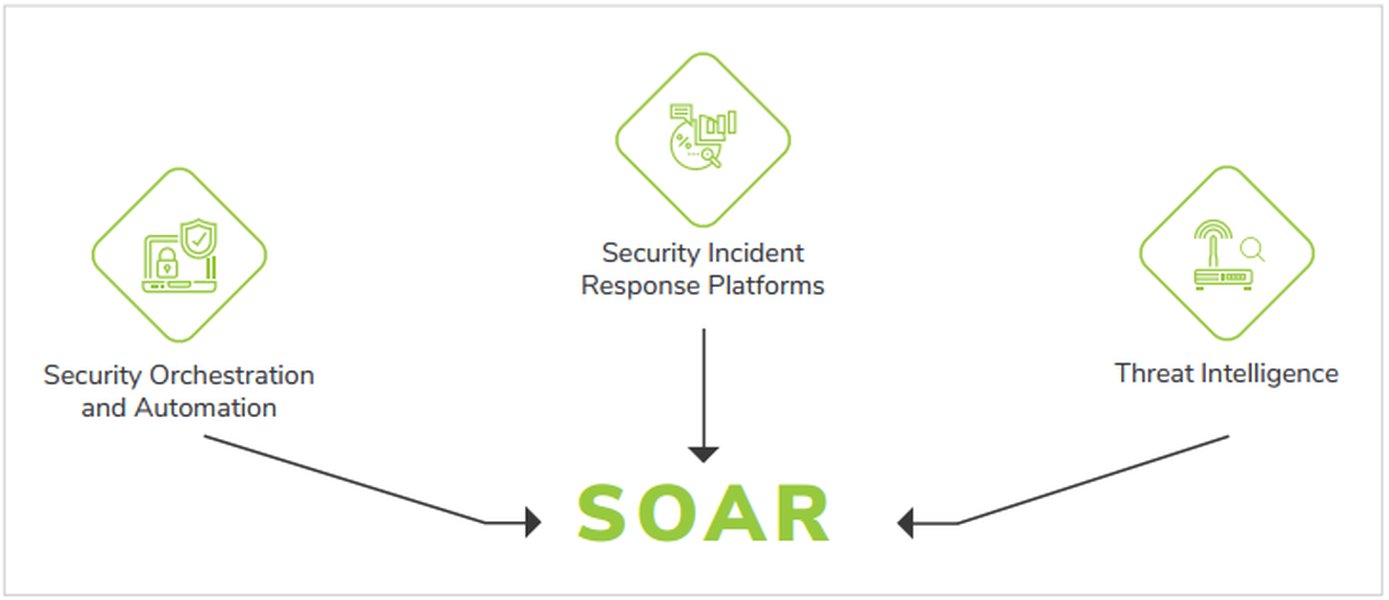
Example of a SOAR platform, highlighting the integration of security tools and workflows.
Scalability and Performance
The proposed architecture incorporates elements that support scalability:
-
Celery: By offloading tasks to a distributed task queue, the Django application can handle a larger number of concurrent user requests.
-
MinIO: Object storage systems like MinIO are designed for scalability and can handle large volumes of data.
-
PostgreSQL: PostgreSQL can be scaled vertically (more powerful server) or horizontally (replication and sharding) to handle increased database load.
-
Decoupled Components: The separation of concerns allows individual components to be scaled independently based on their specific load.
Frequently Asked Questions
What is Role-Based Access Control (RBAC)?
Role-Based Access Control (RBAC) is a method of restricting system access to authorized users. It is based on the principle of assigning permissions to specific roles, and then assigning users to those roles. Users are granted access based on their assigned roles, not on their individual identities.
Why use separate storage for structured and unstructured data?
Using separate storage systems like a relational database (PostgreSQL) for structured data and object storage (MinIO) for unstructured data (documents, evidence) allows each system to be optimized for its specific data type. Relational databases are excellent for querying and managing structured relationships, while object storage is highly scalable and cost-effective for storing large volumes of unstructured files.
What is the role of Celery in this architecture?
Celery is used as a distributed task queue to perform asynchronous and background tasks. This prevents the main Django application from being tied up with long-running operations, improving the responsiveness of the user interface and allowing the system to handle more requests concurrently. Examples of tasks handled by Celery include generating reports, sending notifications, and processing legal summons.
How is inter-agency communication secured?
Inter-agency communication via the REST API is secured through encryption of data in transit using HTTPS/TLS. Additionally, authentication and authorization mechanisms (e.g., API keys, OAuth2) are used to ensure that only authorized external systems can access the API and perform permitted actions.
References
Last updated May 9, 2025