
Unlocking Precision: Your Expert Guide to Mastering Software Project Estimation
Concrete strategies to accurately forecast project size and duration, paving the way for success.
As a Master Software Development Expert, I understand the critical challenges a new company faces, especially when it comes to accurately estimating project size and duration. Inconsistent estimates can lead to significant issues: missed deadlines, budget overruns, strained resources, and ultimately, stakeholder dissatisfaction. To guide your company towards estimation mastery, this comprehensive plan outlines concrete steps and methodologies, drawing upon industry best practices.
Highlights: The Cornerstones of Accurate Estimation
- Meticulous Scope Definition is Paramount: A crystal-clear understanding of project requirements and boundaries is the bedrock of any reliable estimate. Without this, all subsequent efforts can be flawed.
- Employ a Blended Approach to Techniques: No single estimation method is universally perfect. Combining techniques like Bottom-Up, Parametric, and Three-Point Estimation, tailored to your project's specific context, yields more robust results.
- Foster a Culture of Continuous Learning and Data-Driven Decisions: Systematically collect historical data, involve your team in the estimation process, and regularly review and refine your estimates to continuously improve accuracy.
Phase 1: Laying a Solid Foundation
The accuracy of your project estimates is directly proportional to the clarity and detail established at the project's inception. Skipping or rushing these foundational steps is a common precursor to estimation failure.
Meticulous Scope and Requirements Definition
Understanding What Needs to Be Built
The journey to accurate estimation begins with a deep, unambiguous understanding of the project's scope. This involves:
- Comprehensive Requirements Gathering: Engage proactively with all stakeholders to elicit and document detailed functional and non-functional requirements. This includes user stories, use cases, design specifications, wireframes, and any compliance or technical constraints. Incomplete requirements are a primary source of estimation error.
- Formal Documentation: Ensure all gathered requirements are formally documented and agreed upon. This creates a shared understanding and a baseline against which changes can be managed.
- Scope Boundary Setting: Clearly define what is in scope and, just as importantly, what is out of scope. This is crucial for preventing "scope creep" – the uncontrolled expansion of project requirements – which can invalidate initial estimates.
- Structured Discovery Phase: Consider implementing a dedicated discovery phase before development. This phase, involving tech leads, project managers, business analysts, and designers, focuses on defining the problem, exploring potential solutions, and validating assumptions, providing invaluable input for estimation.
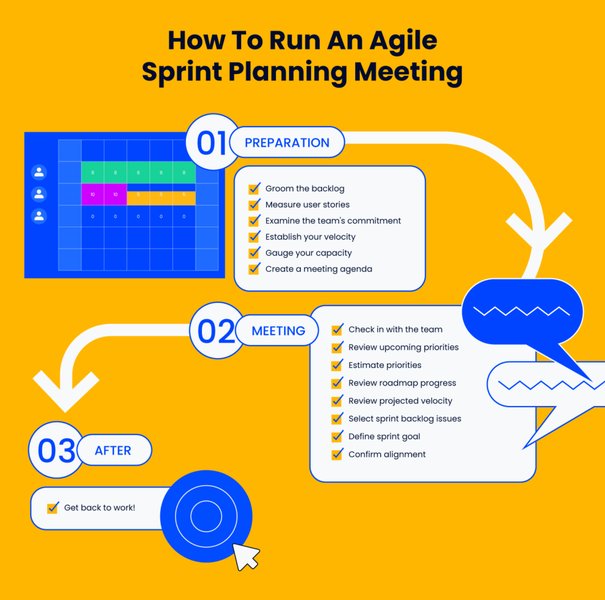
Visualizing project tasks and requirements is a key part of scope definition and planning.
Work Breakdown Structure (WBS): Deconstructing Complexity
Breaking Down the Elephant
Large, monolithic projects are notoriously difficult to estimate. A Work Breakdown Structure (WBS) is a hierarchical decomposition of the total scope of work to be carried out by the project team to accomplish the project objectives and create the required deliverables.
- Hierarchical Decomposition: Divide the project into smaller, more manageable components or "work packages." Each lower level represents an increasingly detailed definition of the project work.
- Granular Task Identification: Continue breaking down work packages into specific tasks that are small enough to be understood, managed, and estimated with reasonable accuracy.
- Identifying Task Dependencies: As part of the WBS, map out the dependencies between tasks. Understanding which tasks must be completed before others can begin is essential for realistic schedule estimation.
Phase 2: Selecting and Applying Estimation Techniques
With a clear scope and WBS, your company can now apply various estimation techniques. The most effective approach often involves using a combination of methods to cross-validate and refine estimates.
A Toolkit of Estimation Methods
Here are several proven techniques your team should become proficient in:
- Bottom-Up Estimation: Each task or work package identified in the WBS is estimated individually, and these estimates are then aggregated to produce a total project estimate. While time-consuming, it's generally the most accurate if tasks are well-defined.
- Top-Down (Analogous) Estimation: This method uses historical data from similar past projects as a basis for estimating the current project. It's quicker but relies heavily on the genuine similarity between projects and the accuracy of past data. Best used for early, high-level estimates.
- Parametric Estimation: This technique uses statistical relationships between historical data and other variables (e.g., lines of code, function points, square footage in construction) to calculate an estimate. For example, if a past project required 10 hours per function point, and the current project has 50 function points, the estimate would be 500 hours. Its accuracy improves as your historical database grows. The COCOMO (Constructive Cost Model) and Function Point Analysis (FPA) are examples relevant to software.
- Three-Point Estimation (PERT): This method addresses uncertainty by considering three estimates for each task:
- Optimistic (O): The best-case scenario.
- Pessimistic (P): The worst-case scenario.
- Most Likely (M): The most realistic scenario.
- Expert Judgment: Leverages the experience and insights of seasoned team members or external consultants. Techniques like the Wideband Delphi method involve a group of experts providing estimates anonymously, followed by iterative discussion and re-estimation until a consensus is reached. This helps mitigate individual biases.
- Story Point Estimation (Agile): In Agile methodologies, teams assign "story points" to user stories based on relative effort, complexity, and uncertainty, rather than absolute time. Team velocity (story points completed per iteration) is then used to forecast completion.
Comparing Estimation Techniques
The following table summarizes key characteristics of common estimation techniques, helping you choose the right tool for the right job:
| Technique | Description | Best Suited For | Pros | Cons |
|---|---|---|---|---|
| Bottom-Up Estimation | Breaking down project into smallest tasks, estimating each, then aggregating. | Projects with well-defined tasks and scope. | High accuracy, detailed understanding of work. | Time-consuming, requires full task breakdown. |
| Top-Down (Analogous) | Using historical data from similar past projects to estimate the current one. | Early-stage estimation, projects similar to past ones, limited detail available. | Quick, inexpensive, good for initial ballparks. | Accuracy depends heavily on similarity of projects and data quality. |
| Parametric Estimation | Using statistical relationships between historical data and project variables (e.g., cost per function point). | Projects with quantifiable components and available, reliable historical data. | Objective, scalable, accuracy improves with more data. | Requires good historical data and well-defined parameters. |
| Three-Point Estimation | Calculating Optimistic (O), Pessimistic (P), and Most Likely (M) estimates for tasks. Expected Time = (O + 4M + P) / 6. | Projects with inherent uncertainty and risk, complex tasks. | Accounts for uncertainty, provides a risk-adjusted estimate. | Can be subjective in defining O, P, M values if not based on data. |
| Expert Judgment | Relying on the experience and intuition of one or more experts. Techniques like Delphi can structure this. | Unique projects, situations lacking historical data, complex technical challenges. | Leverages deep experience, can be quick for individual opinions. | Prone to individual biases, consistency can be an issue without structured methods like Delphi. |
| Function Point Analysis (FPA) | Measuring software size based on functionality delivered to the user (inputs, outputs, inquiries, files, interfaces). | Business applications, projects where functionality is the primary driver of size. | Language/technology independent, good for comparing project sizes and productivity. | Can be complex to learn and apply consistently, initial setup can be intensive. |
| Story Point Estimation | (Agile Method) Relative sizing of user stories based on combined effort, complexity, and uncertainty. | Agile projects, iterative development environments. | Fosters team collaboration and shared understanding, focuses on relative effort, adaptive to change. | Requires team experience for consistency, velocity can fluctuate initially. |
Visualizing Technique Attributes
Different estimation techniques possess varying strengths. The radar chart below offers a visual comparison of some key techniques based on attributes like potential accuracy, initial effort required, dependency on historical data, ability to handle complexity, and scalability. This can help your team decide which technique(s) might be most appropriate for different situations.
Phase 3: Incorporating People, Process, and Risk
The Human Element: Team Involvement and Expertise
Collaborative Estimation
Estimation should not be a siloed activity performed by a single individual. Involving the entire project team, especially those who will be doing the work, brings several benefits:
- Diverse Perspectives: Different team members bring varied experiences and insights, leading to more well-rounded and realistic estimates.
- Increased Buy-in and Ownership: When team members participate in creating estimates, they are more likely to feel ownership and commitment to meeting them.
- Accurate Assessment of Abilities: Consider the specific skills, experience levels, and historical productivity of the team members who will be assigned to tasks. This helps tailor estimates to the actual capacity of your team.
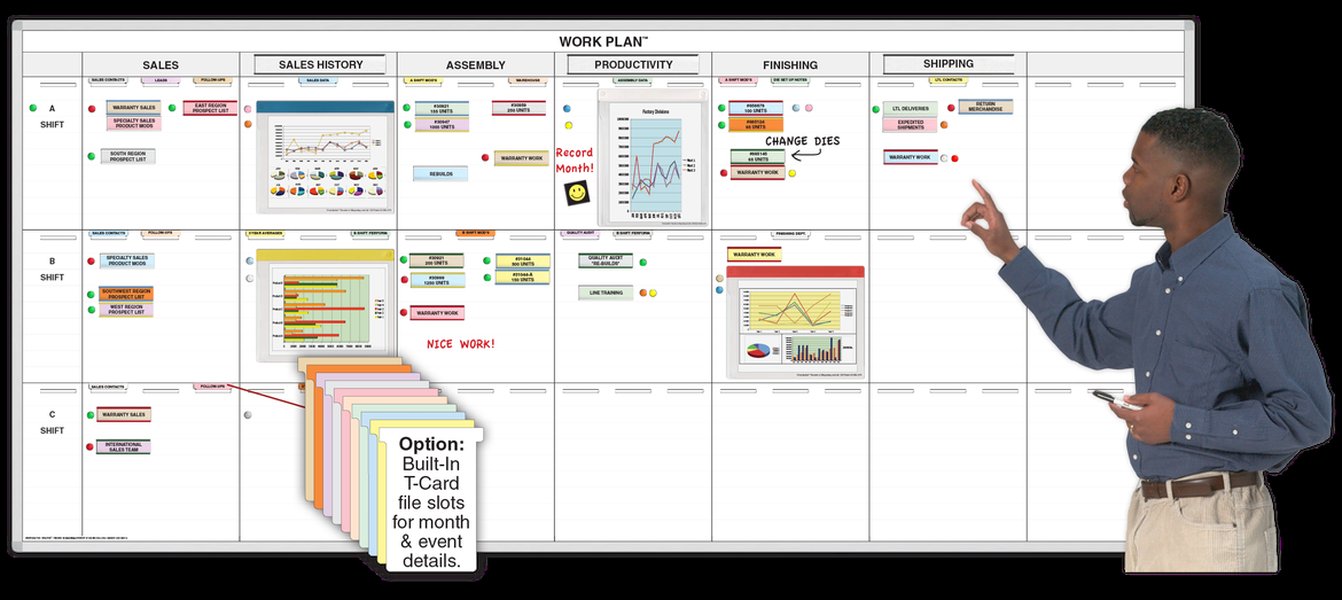
Collaborative planning tools can facilitate team involvement in breaking down tasks and estimation.
Accounting for Risks and Uncertainties
Preparing for the Unexpected
Software development is inherently uncertain. A robust estimation process must acknowledge and plan for potential risks:
- Risk Identification: Proactively identify potential risks that could impact project size, effort, or schedule. These can include technical challenges, unclear requirements, resource unavailability, third-party dependencies, or even cognitive biases in estimation.
- Risk Quantification: Where possible, quantify the potential impact of identified risks on time and cost.
- Contingency Planning and Buffers: Incorporate contingency reserves (buffers) into your project schedule and budget to account for unforeseen issues. The amount of buffer should be proportionate to the level of project risk and uncertainty. Avoid hiding buffers within individual task estimates; manage them transparently at the project level.
- Document Assumptions: Clearly document all assumptions made during the estimation process. If an assumption proves incorrect, it can significantly impact the estimate, so tracking them is vital for later review and adjustment.
Phase 4: Leveraging Data and Tools
The Power of Historical Data
Learning from the Past
One of the most potent ways to improve estimation accuracy is by systematically collecting and analyzing data from past projects:
- Build a Knowledge Base: Maintain a repository of data from completed projects. This should include initial estimates, actual effort and duration, project size (e.g., function points, story points), complexity factors, and lessons learned.
- Analyze Patterns and Trends: Use this historical data to identify patterns, calibrate estimation models (like parametric ones), and understand your team's actual productivity rates under various conditions.
- Inform Future Estimates: Base new project estimates on this empirical data rather than solely on gut feelings. This makes your estimates more defensible and reliable over time.
Utilizing Estimation and Project Management Tools
Software to Support the Process
Various software tools can streamline and enhance your estimation process:
- Project Management Software: Tools like Jira, Microsoft Project, Asana, or Wrike offer features for task breakdown (WBS), scheduling, resource allocation, progress tracking, and often, reporting functionalities that can help analyze historical data.
- Time-Tracking Software: Implementing accurate time-tracking is crucial for gathering data on actual effort spent on tasks. This data feeds back into your historical database, improving future estimates.
- Specialized Estimation Tools: Some tools are specifically designed for software estimation, incorporating models like COCOMO or facilitating Function Point Analysis.
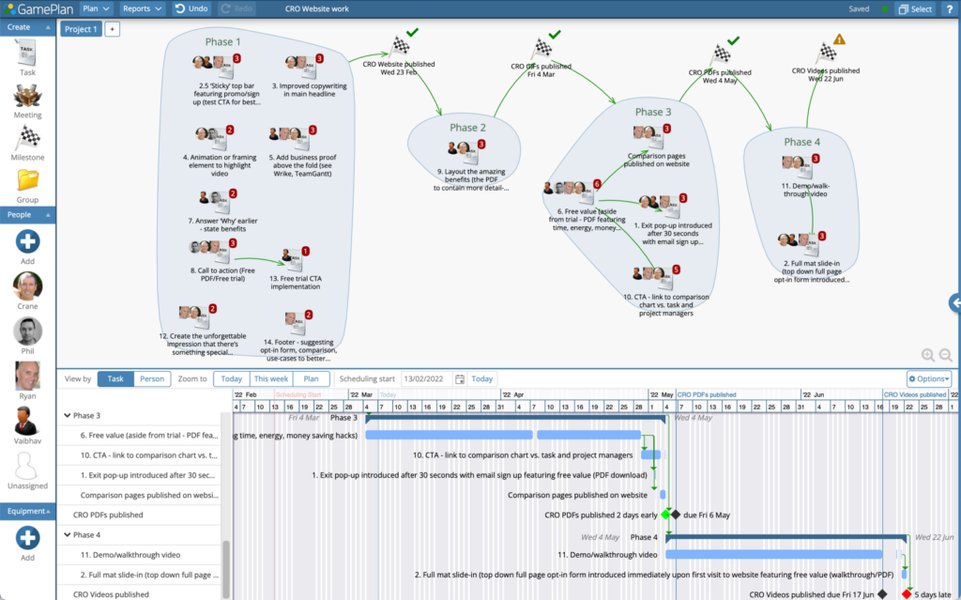
Project management tools with features like Gantt charts help visualize timelines and track progress against estimates.
Visualizing the Path to Estimation Mastery: A Mindmap
The journey to improved project estimation is multifaceted. This mindmap provides a holistic overview of the key areas and actions your company should focus on. It illustrates how foundational planning, diverse techniques, people processes, data utilization, and continuous improvement all interconnect to build a robust estimation capability.
Phase 5: Continuous Improvement and Iteration
Project estimation is not a one-time activity set in stone. It's an iterative process that should evolve with the project and your company's experience.
Regular Monitoring and Adjustment
Estimates are Living Documents
- Track Progress: Continuously monitor project progress against your established estimates. Identify deviations early.
- Revise Estimates Periodically: As more information becomes available, uncertainties are resolved, or scope changes occur, revisit and revise your estimates. This is akin to how weather forecasts are updated as more data comes in. Clearly communicate any changes to stakeholders.
- Agile Adaptability: If using Agile methodologies, sprint reviews and retrospectives provide natural checkpoints to assess progress, velocity, and adjust future sprint forecasts.
Learning from Experience
Closing the Feedback Loop
- Post-Project Reviews (Lessons Learned): After each project (or major phase), conduct a review to compare initial estimates with actual outcomes. Analyze significant discrepancies to understand their root causes.
- Document Lessons: Capture these lessons learned and integrate them into your estimation processes, historical database, and team training.
- Refine Processes: Regularly update your company's estimation guidelines, checklists, and templates based on these learnings. A high estimation error doesn't always mean poor estimation ability; it could indicate unforeseen complexity or that more functionality was delivered than initially planned—understanding *why* is key.
Expert Insights on Software Development Time Estimation
Understanding the nuances of estimating software development time is a common challenge. The video below provides valuable perspectives and practical advice on how to approach this complex task, reinforcing many of the principles discussed.
This video discusses the perennial question of estimating software development time, touching upon managing software projects and the difficulties involved. It emphasizes that estimation is a guess that improves with more information, aligning with the iterative approach we've outlined. It also hints at the importance of clear scope and considering various factors that influence development time.
Frequently Asked Questions (FAQ)
What is the most common mistake new companies make in project estimation?
How often should project estimates be revised?
Is it better to overestimate or underestimate project size and duration?
What role does "scope creep" play in estimation accuracy?
How can a new company build up historical data for estimation quickly?
Conclusion: Embarking on the Path to Estimation Excellence
Improving project size and duration estimation is an ongoing journey, not a one-time fix. For a new company, establishing a disciplined approach from the outset is crucial. By meticulously defining scope, strategically employing a mix of estimation techniques, fostering team collaboration, diligently tracking and leveraging historical data, managing risks proactively, and committing to continuous learning and refinement, your company can significantly enhance its ability to produce reliable and accurate project estimates. This mastery will not only improve project outcomes but also build credibility with stakeholders and pave the way for sustainable growth and success.
Recommendations for Further Exploration
To deepen your understanding and refine your company's estimation capabilities, consider exploring these related queries:
- What advanced risk management techniques can be applied to software project estimation?
- How can a new software company effectively implement Function Point Analysis from scratch?
- What are the best practices for managing stakeholder expectations when communicating project estimates and uncertainties?
- How does the varying experience and skill level of a development team impact software estimation accuracy?
References
Last updated May 21, 2025