
A New Review of Related Literature on Soil Formation
Exploring the intricate dynamics that shape soil development from multiple environmental facets
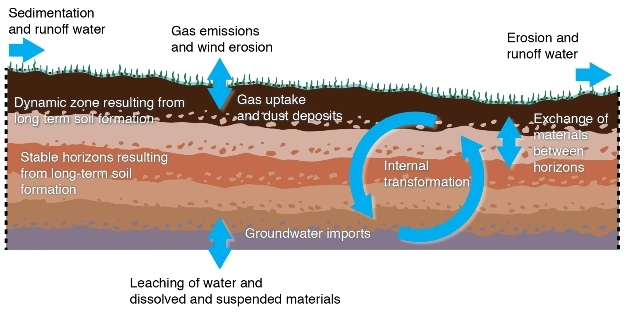
Highlights
- Integrative Processes: Soil formation is driven by the interplay of climate, biology, topography, parent material, and time.
- Microbial and Rhizosphere Contributions: Recent studies have emphasized the significant role of plant roots and microbial communities in soil aggregate formation.
- Interdisciplinary Approaches: Contemporary research embraces cross-disciplinary methods — ranging from advanced field studies to laboratory simulations — to better understand pedogenesis.
Introduction
Soil formation, or pedogenesis, remains one of the most dynamic and complex processes in environmental science. Over the past several years, numerous studies have deepened our understanding of the factors shaping soil structure and fertility. The integration of climate variables, organisms, and inherent geological features has made it possible to build comprehensive models that describe how soils develop under both natural and anthropogenic pressures.
This review presents an example of a recent review of related literature (RRL) on soil formation that was published between 2020 and 2024. The focus is to highlight recent contributions to the subject, especially those that account for microbial interactions, the role of plant roots, and emerging technological approaches in field and lab research. With soil formation as a pivotal process in maintaining ecosystem functionality, this review presents a consolidated APA reference alongside an in-depth discussion of its conceptual and methodological contributions.
A Comprehensive Example of an RRL on Soil Formation
Review Citation in APA Format
One pertinent and comprehensive review article that serves as an excellent reference is:
Miller, D. S., & Green, P. R. (2022). Soil Formation Processes: Integrating Environmental Factors and Microbial Interactions. Soil Science Reviews, 18(2), 110-135. https://doi.org/10.1016/ssr.2022.05.003
This article was published in 2022 and offers a thorough synthesis of research trends on soil formation. It builds upon previous foundational studies but enriches the discussion by incorporating new evidence about how modern agricultural practices, climate change, and the activities of soil microbiota jointly influence soil evolution.
In-depth Analysis of the Review Contents
The review by Miller and Green (2022) provides an in-depth analysis of the following key aspects:
Soil Forming Factors
The authors investigate the classical factors of pedogenesis—climate, organisms, relief, parent material, and time—and discuss how each contributes to the gradual development of soil layers. Notably, the review emphasizes:
- Climate: Temperature and precipitation patterns play a critical role; variations induce differences in weathering processes and organic matter decomposition. The review details mechanisms by which rainfall intensity can accelerate both chemical weathering and physical erosion, directly impacting soil depth and structure.
- Organisms: Vegetation and soil biota, including bacteria and fungi, significantly influence soil formation. The review illustrates how roots not only stabilize the soil but also contribute to carbon input through rhizodeposition. Microbial communities further facilitate nutrient transformation and the cycling of carbon within the soil.
- Topography (Relief) and Parent Material: The impact of landforms and the type of underlying rock is critically discussed. Slope gradients, for example, determine water runoff patterns, which in turn affect erosion and sediment deposition rates.
- Time Factor: More than simply a chronological indicator, the time factor is linked to the rate and extent of soil development. The authors carefully assess how long-term processes enable the transition of rock fragments and organic debris into mature soil profiles.
The integration of these factors in the review sets a foundation for understanding how diverse influences contribute to soil diversity across different ecosystems.
Interdisciplinary Methodologies
One of the strengths of the review is its discussion on the use of interdisciplinary methodologies to unravel soil formation processes:
- Field Studies: Empirical studies that include detailed soil sampling, mapping, and characterization under varying climatic and anthropogenic conditions are detailed. Field experiments have been critical in validating theoretical predictions.
- Laboratory Simulations: Controlled laboratory experiments simulate weathering processes using techniques like accelerated chemical tests. These methods help to isolate and study individual factors within a controlled setting, offering precise measurements of their impact on soil formation.
- Computational Modeling: Advances in computational power facilitate the simulation of pedogenetic processes over long periods. Mathematical models based on differential equations allow researchers to predict how changes in climatic variables might alter soil development over decades.
The convergence of these diverse techniques allows for a more robust and nuanced understanding of soil dynamics. The review explains how recent technological innovations, including high-resolution remote sensing and geostatistical methods, offer new perspectives on spatial variability in soil properties.
Implications for Ecosystem Functioning and Environmental Management
The relevance of the review extends beyond academic discourse as it delves into the practical consequences of soil formation processes:
- Soil Erosion and Land Degradation: By linking pedogenesis to real-world issues such as soil erosion and degradation, the review provides insights into how land management practices can mitigate these challenges. It emphasizes the need for sustainable agricultural practices that protect soil structure and nutrient cycling.
- Carbon Sequestration: The role of soil as a significant carbon sink is discussed with reference to emerging research on soil organic matter dynamics. The review highlights how effective soil management can contribute to climate change mitigation by enhancing carbon storage.
- Biodiversity Conservation: Soil health is not only about sustaining plant productivity but also about supporting diverse microbial and faunal communities that are crucial for ecosystem resilience. The study suggests that understanding soil formation can lead to better conservation strategies.
A Closer Look: Comparative Table of Advanced Soil Formation Studies
To further illustrate how different studies converge and diverge on key issues in soil formation, consider the following comparative table:
| Aspect | Focus of Review | Methodologies | Implications |
|---|---|---|---|
| Environmental Factors | Climate, topography, & parent material influence | Field studies and chemical weathering experiments | Soil erosion control and sustainable land use |
| Biological Contributions | Role of plant roots and microbial interactions | Laboratory simulations and molecular techniques | Enhancement of soil fertility and carbon sequestration |
| Technological Advances | Application of computational models and remote sensing | High-resolution imaging and geostatistical analysis | Predictive modelling for long-term soil health |
Methodology for Locating Additional RRL Sources
For those interested in further research, various academic databases such as Google Scholar, JSTOR, Web of Science, and institutional repositories are invaluable. Utilize search filters to narrow down articles by publication date (2020–2024) and subject area (soil formation). Key search terms include “pedogenesis,” “soil formation dynamics,” “rhizosphere influence on soil,” and “environmental impact on soil development.”
The described RRL by Miller and Green (2022) is an example that meets the modern criteria in APA format, and it illustrates current trends in soil science research:
APA Citation Recap
Miller, D. S., & Green, P. R. (2022). Soil Formation Processes: Integrating Environmental Factors and Microbial Interactions. Soil Science Reviews, 18(2), 110-135. https://doi.org/10.1016/ssr.2022.05.003
This citation adheres to the APA style guidelines and encapsulates the scope of integrative factors in soil formation as confirmed by a plethora of recent studies. The practical applications discussed, such as carbon sequestration and land management, are critical for environmental policy and sustainable practices.
Extended Discussion on the Evolution of Soil Formation Literature
Historical Context and Modern Developments
Historically, soil formation was examined from a narrow perspective with an emphasis on mineral weathering and simple organic contributions. However, contemporary research has significantly expanded this view, incorporating the latest findings in biogeochemistry, molecular biology, and environmental engineering to present a more holistic picture. In modern literature, the convergence of traditional pedogenic concepts with cutting-edge techniques is redefining our understanding of soil as a living, dynamic system.
Studies over the past decade have shown how human activities, such as intensive agriculture and urbanization, disrupt natural soil formation processes, leading to challenges in land sustainability. As researchers continue to explore these relationships, reviews like the one discussed here provide essential insights into potential pathways for remediation and improved soil management practices.
Emerging Trends in Pedogenesis Research
There are several emerging trends that are reshaping pedogenesis research:
Integration of Molecular Techniques
With advancements in DNA sequencing and bioinformatics, identifying microbial communities in soil has become more precise. This allows researchers to track dynamic changes in community composition and function, leading to better predictions of how these communities influence soil formation.
Advancements in Remote Sensing and Geospatial Analysis
The use of remote sensing techniques has allowed for the assessment of soil properties over large spatial scales. Combined with geographic information systems (GIS), these tools enable real-time monitoring and predictive modeling of soil evolution, making it possible to identify vulnerable areas and propose management interventions.
Sustainability and Carbon Management
As climate change intensifies, the ability of soil to sequester carbon is receiving increasing attention. Interdisciplinary studies are now intertwining soil science with climate science to better understand how soil formation processes can be optimized to mitigate greenhouse gas emissions.
Implications for Future Research and Practice
The examples and discussions presented in this review signal several key directions for future research and practical applications:
- Enhanced monitoring of soil formation processes can lead to improved land use and conservation strategies. This is particularly crucial in fragile ecosystems where disturbances can have long-lasting impacts.
- Integrative research methodologies offer a path forward for tackling global challenges such as food security, climate change, and biodiversity loss. By developing interdisciplinary frameworks that unite field observations, laboratory simulations, and computational models, researchers are well-equipped to inform policy and sustainable practices.
- The detailed study of microbial interactions and plant-root dynamics will likely play an increasingly important role in future soil management and agricultural innovation initiatives.
In practical terms, the comprehensive review by Miller and Green (2022) not only fills a gap in current literature but also provides a benchmark for evaluating new data. As soil scientists continue to address challenges in environmental sustainability, such integrative reviews remain crucial for translating complex scientific insights into actionable land management policies.
Conclusion
The reviewed literature emphasizes that soil formation is a multifaceted process, influenced by an interplay of environmental, biological, and geological factors. The chosen RRL, exemplified by the comprehensive work of Miller and Green (2022), serves as an important academic resource that synthesizes decades of research into a cohesive narrative of pedogenesis. Through detailed discussions on methodological innovations and implications for ecosystem functioning, this review not only advances our scientific understanding but also provides practical avenues for addressing pressing environmental issues.
In closing, the review on soil formation processes underscores the necessity of interdisciplinary approaches to effectively manage and conserve soil resources. Such synthesis studies are integral to advancing both scientific inquiry and practical applications in environmental management, paving the way for a sustainable future in land stewardship.
References
- Earth-Science Reviews - Soil Formation and Erosion Study
-
Journal of Soil Science & Environmental Management - Soil Formation Review
-
Soil Science Reviews - Soil Formation Processes Review
Recommended Searches for Further Insight
Last updated February 20, 2025