
Review of Related Literature on Soil Formation in APA Format
An In‑Depth Analysis of Pedogenesis and Its Influencing Factors
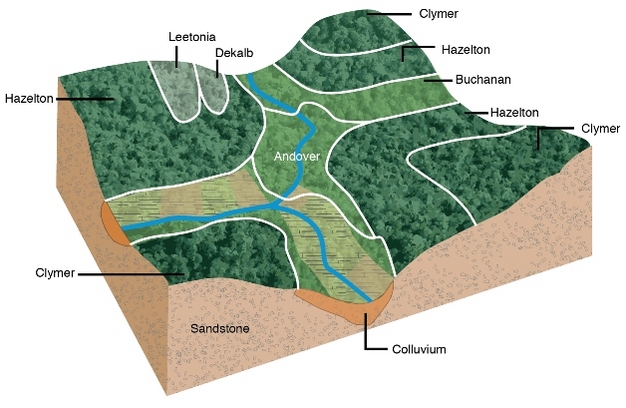
Key Highlights
- Comprehensive Factors: The literature emphasizes multiple driving factors such as parent material, climate, topography, biological activity, and time that collectively influence soil formation.
- Interdisciplinary Approaches: Research integrates chemical weathering, biological processes, and anthropogenic impacts, highlighting the evolving scope of pedogenesis studies.
- APA Format and Credible Sources: Foundational works by Jenny (1941) and subsequent contemporary studies are systematically formatted in APA style, ensuring academic rigor.
Introduction
Soil formation, or pedogenesis, is a vital natural process that shapes landscapes and underpins ecosystem sustainability. The process is intrinsically complex, governed by a confluence of factors that interact over geological time scales. This comprehensive review of related literature (RRL) in APA format integrates core themes and recent advancements in the field, offering an expansive overview from classical seminal works to modern interdisciplinary research. The review not only encapsulates the interplay of genetic factors—such as parent material, climate, topography, biological activity, and time—but also delves into how human interventions have shifted soil dynamics in the current era.
Historical Foundations
Seminal Contributions
The foundations of soil science rest on early contributions that elucidated the basic principles of soil formation. One of the most influential works in this discipline is that of Jenny (1941), who established a quantitative model explaining the interplay of soil-forming factors. His work posited that soil formation is not a linear process but rather an integrative phenomenon influenced by both abiotic and biotic variables. This model laid the groundwork for subsequent research by providing a systematic framework to assess how various factors such as climate and parent material contribute to the development of soil horizons.
The Role of Parent Material and Weathering
Parent material—the raw geological substrate from which soil is derived—plays a pivotal role in determining soil characteristics. The process begins with the physical and chemical weathering of rocks, transforming them into finer particles that eventually form soil. Weathering processes are categorized into physical disintegration and chemical decomposition. Physical weathering includes actions like freeze-thaw cycles and abrasion, whereas chemical weathering involves processes such as oxidation and hydrolysis. Research indicates that the mineralogical composition of the parent material sets the initial conditions for nutrient availability and subsequent soil chemical properties.
Physical Weathering
Physical or mechanical weathering breaks down rocks into smaller fragments without altering their chemical composition. This process is often driven by climatic factors—particularly temperature fluctuations—that cause expansion and contraction of rock material.
Chemical Weathering
In contrast, chemical weathering transforms the mineral components of rocks through interactions with water, acids, and other chemicals present in the environment. This process is essential for the gradual release of essential nutrients and minerals that contribute to soil fertility.
Influence of Climate and Topography
Climatic Impacts on Soil Formation
Climate is universally acknowledged as one of the primary forces governing soil formation. Temperature, precipitation, and seasonal variations considerably influence weathering rates and the biological activity within the soil profile. Warm, moist conditions generally accelerate both physical and chemical weathering, leading to rapid soil development. Conversely, arid regions exhibit slower soil formation due to limited moisture availability, which restrains the chemical reaction processes.
Moreover, climatic conditions determine the types of vegetation that colonize an area, thereby influencing the composition of organic matter within the soil. The accumulation of organic residues from plants and microorganisms contributes significantly to the formation of humus, an integral component of soil structure and fertility.
Topographical Considerations
Topography, encapsulating factors such as slope, aspect, and elevation, affects soil formation by altering drainage patterns, erosion rates, and moisture retention. Steep slopes tend to promote erosion, which in turn can strip away nutrient-rich topsoil, while flat expanses are more likely to retain organic matter and water. Such topographic influences yield distinct variations in soil depth and texture across landscapes.
Biological Processes in Soil Formation
Role of Flora and Fauna
Biological activity is a critical component of soil formation, encompassing the actions of plants, animals, and microorganisms. Vegetation contributes by stabilizing soil structure through root growth and enhancing organic matter content via leaf litter and other plant residues. Soil organisms such as bacteria, fungi, and invertebrates decompose organic materials, facilitating nutrient recycling that supports further soil development.
Microbial Contributions
Microorganisms in the soil accelerate the breakdown of organic matter, releasing nutrients that promote plant growth. Their metabolic activities contribute to the formation of soil aggregates, which are essential for maintaining soil structure and improving water retention capacity.
Faunal Impact
Animals, ranging from earthworms to larger vertebrates, play a role in mixing soil layers and redistributing organic material. Their burrowing activities help increase the porosity of soil, aiding in aeration and water movement, both critical for sustaining the living soil ecosystem.
The Temporal Dimension of Pedogenesis
Time as a Central Factor
Time is an essential but often underestimated parameter in soil formation. The process of pedogenesis unfolds over extended periods—often spanning centuries to millennia. The protracted nature of soil formation allows cumulative effects of weathering, organic input, and structural changes to manifest fully. Additionally, soil properties evolve with time as they approach dynamic equilibrium under given climatic and topographic conditions.
The longevity of soil formation processes also implies that modern soils contain imprints of historical climatic events and past vegetation communities, thus serving as archives of environmental change over geological time scales.
Anthropogenic Effects and Modern Perspectives
Human Impact on Soil Formation
In recent decades, human activities have come to exert a profound influence on naturally occurring soil formation processes. Urbanization, deforestation, agriculture, and industrial operations have fundamentally altered the landscape, often leading to accelerated soil erosion, contamination, and the disruption of natural soil development cycles. The concept of "anthropedogenesis" has emerged to describe soil formation predominantly influenced by human actions, illustrating the significant impact that anthropogenic factors have on soil properties.
Studies indicate that while human activity can sometimes enhance soil fertility through practices like composting and nutrient management, it typically disrupts the balance of natural processes and contributes to the degradation of soil health over the long term.
Conservation and Soil Health
Recognizing the critical importance of soil health for ecosystem sustainability and agricultural productivity, conservation practices have been developed to mitigate the adverse effects of human activities. Approaches such as contour plowing, no-till farming, crop rotation, and the integration of cover crops are employed to protect soil structure, enhance organic matter accumulation, and reduce erosion.
The intersection of soil conservation and sustainable development is integral to modern environmental management and plays a pivotal role in addressing challenges such as food security and climate change mitigation.
Interdisciplinary Approaches and Modern Research
Advances in Pedogenesis Research
Contemporary research in pedogenesis has evolved to embrace interdisciplinary approaches, combining insights from soil science, geology, ecology, and environmental engineering. Modern methods leverage advanced technologies such as remote sensing, geospatial analysis, and machine learning to quantify soil properties and predict soil formation patterns. These technological advancements facilitate a more nuanced understanding of the spatial and temporal variability of soils across diverse landscapes.
For example, studies applying quantitative models have refined the classical concepts introduced by Jenny (1941), providing empirical validation and extending theoretical frameworks to account for variable climatic and anthropogenic influences. Researchers are increasingly focusing on digital soil mapping and predictive modeling to better manage soil resources in the context of global environmental change.
Table: Soil Formation Factors and Characteristics
| Factor | Description | Impact on Soil Formation |
|---|---|---|
| Parent Material | Geological substrate subject to weathering processes | Determines mineral composition and nutrient baseline |
| Climate | Encompasses temperature, precipitation, and humidity | Accelerates weathering and organic matter accumulation |
| Topography | Landscape features like slope, aspect, and elevation | Modulates erosion, water retention, and soil depth |
| Biological Activity | Involves plants, microbes, and fauna | Enhances soil structure, fertility, and nutrient cycling |
| Time | Duration over which soil processes occur | Allows for the accumulation of soil horizons and stabilization of properties |
This table succinctly captures how each major factor contributes uniquely, yet in an integrated manner, to the formation of soil. Such interdisciplinary approaches are essential for a holistic understanding of soil dynamics.
Synthesis of the Literature in APA Format
APA-Compliant Structuring
The APA format is universally utilized across academic disciplines for its clarity and consistency in citation. In the preparation of a comprehensive RRL on soil formation, adherence to APA style underscores the rigorous academic foundation of the review. Properly formatted citations enable cross-referencing among seminal research sources—ranging from Jenny’s early model (1941) to contemporary studies investigating anthropogenic influences on soil dynamics.
An APA-compliant review is organized to highlight discussion of thematic areas including parent material/weathering, climatic and topographic influences, biological contributions, and the effects of human activities on soil formation. Each section is structured in an orderly manner, with in-text citations and a corresponding reference list ensuring precision and transparency for further scholarly inquiry.
Constructing a Comprehensive RRL
A well-constructed RRL in APA format involves more than merely compiling references; it requires synthesizing diverse perspectives and empirical findings into a coherent narrative that captures the evolution of thought within the field. Researchers often begin by discussing the foundational theories, and then delineate how subsequent studies have reaffirmed, refined, or challenged these early concepts. This rigorous approach provides the following benefits:
- Clarity: Clearly defined sections ensure that each major soil-forming factor is discussed systematically.
- Integration: Combining classical models with modern interpretations highlights the evolution of ideas, underscoring the dynamic nature of soil science.
- Critical Analysis: The synthesis encourages a robust critique of historical theories in the light of new evidence, offering insights into potential areas for future research.
Example Application
In an academic paper, a researcher might begin by summarizing Jenny's quantitative model and then address how recent studies have expanded the model to include human-induced perturbations. By ensuring that both seminal and modern perspectives are presented side by side, the review not only serves as an academic record of evolution but also as a framework for identifying gaps in the current understanding of pedogenesis.
Modern Challenges and Future Directions
Emerging Trends in Soil Research
Despite the extensive body of literature, several challenges persist in the field of soil formation research. Contemporary studies are increasingly focused on understanding the interplay between natural processes and anthropogenic influences. As human activities continue to alter landscapes at an unprecedented scale, the need for adaptive soil management strategies becomes critical. Emerging trends include the application of computational modeling, geospatial analysis, and big data techniques to predict shifts in soil properties under future climate scenarios.
Furthermore, interdisciplinary research continues to bridge the gap between theoretical models and practical applications. For example, coupling machine learning algorithms with traditional modeling techniques has enabled the development of more accurate soil maps, which are essential for agricultural planning, environmental conservation, and sustainable land management.
Recommendations for Future Research
Future research should focus on:
- Longitudinal Studies: Implementing long-term monitoring of soil properties to better understand temporal changes and the cumulative effects of human activity.
- Integrative Modeling: Developing hybrid models that combine physical, chemical, and biological data to predict soil formation under various environmental scenarios.
- Climate Adaptation Strategies: Investigating how soil management practices can be tailored to mitigate the impacts of climate change on soil health and agricultural productivity.
- In-Situ Analyses: Integrating field studies with laboratory experiments to quantify the rates of soil formation and weathering under different environmental conditions.
Addressing these areas will not only refine our understanding of pedogenic processes but also guide policy and practice in soil conservation and land use management.
Conclusion and Final Thoughts
In summary, the formation of soil is a multifaceted process driven by an intricate interplay of factors, including parent material, climate, topography, biological organisms, and time. Early foundational theories laid by Jenny (1941) remain influential, yet modern investigations have broadened the scope to account for the significant impact of anthropogenic changes. Contemporary research emphasizes the need for interdisciplinary approaches, integrating chemical, physical, and biological insights to form a holistic view of soil dynamics.
The structured review presented here, in APA format, not only synthesizes classical research with cutting-edge developments but also provides a roadmap for future investigations. By understanding the dynamic nature of pedogenesis and the array of influences acting upon it, researchers and practitioners can better address challenges related to soil degradation, conservation, and sustainable land management. This integrative perspective is crucial for ensuring that soils, one of our most valuable natural resources, are preserved and managed effectively for future generations.
References
- Agropedogenesis – humankind as the sixth soil-forming factor - Biogeosciences
-
The Human Impact on All Soil-Forming Factors during the Anthropocene - PMC
-
Soil Health Literature - NRCS
- Soil Formation by Ecological Factors: Critical Review - American Journal of Agricultural and Biological Sciences
-
Soil Formation - Agricultural and Biological Sciences - ScienceDirect
-
Soil Formation - Earth and Planetary Sciences - ScienceDirect
- The Human Impact on All Soil-Forming Factors during the Anthropocene - Environmental Science & Technology
- Quantifying the Importance of Soil‐Forming Factors Using Machine Learning - Journal of Geophysical Research: Earth Surface
-
The nature and properties of soils - Wiley
-
The effect of time on the weathering of silicate minerals - Chemical Geology
Recommended Queries for Further Exploration
Last updated February 20, 2025