
Unlocking the Power Within: How to Calculate Energy Using E=mc²
Einstein's iconic equation reveals the immense energy stored in mass. Let's explore how to use it.
Albert Einstein's equation \( E = mc^2 \) is arguably one of the most famous formulas in the world, yet its profound simplicity often belies a deeper understanding. You've asked how to "solve for E," and the good news is that the equation, as written, is already set up to do just that! This equation provides a direct method to calculate the total energy (E) contained within a certain amount of mass (m).
Essential Insights into E=mc²
Key Takeaways at a Glance
- Already Solved for Energy: The equation \( E = mc^2 \) is inherently structured to calculate energy (E). Your task is to input the values for mass (m) and the speed of light (c).
- Mass-Energy Equivalence: The formula establishes that mass and energy are two forms of the same fundamental entity and can be converted into one another.
- Immense Energy Potential: Due to the speed of light (c) being a very large number (and then squared!), even a tiny amount of mass is equivalent to a vast quantity of energy.
Deconstructing the Iconic Equation: E = mc²
Introduced by Albert Einstein in 1905 as a cornerstone of his theory of special relativity, \( E = mc^2 \) revolutionized physics by linking mass and energy. Let's break down its components:
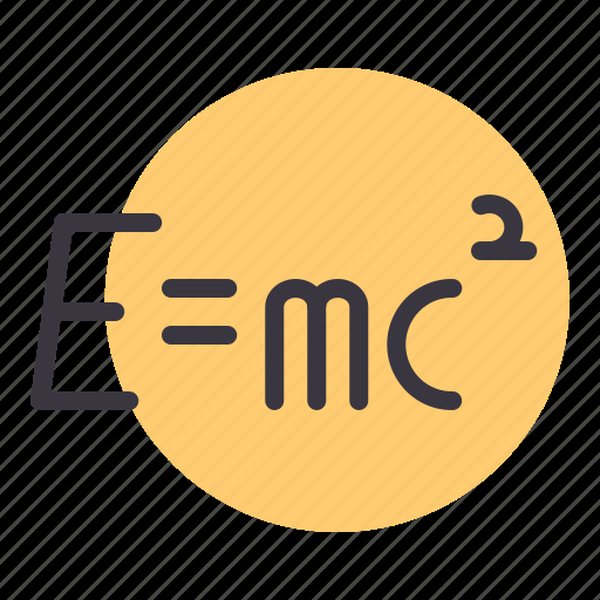
A visual representation of the E=mc² formula.
-
E: Energy
E represents energy. In the International System of Units (SI), energy is measured in joules (J). This 'E' specifically refers to the rest energy of an object – the total energy an object possesses solely due to its mass, even when it is stationary.
-
m: Mass
m represents mass. In SI units, mass is measured in kilograms (kg). It's crucial to use kilograms for calculations to ensure the energy result is in joules.
-
c: The Speed of Light in a Vacuum
c represents the speed of light in a vacuum, a fundamental physical constant. Its value is approximately \( 299,792,458 \) meters per second (m/s). For most calculations, this is often rounded to \( 3.00 \times 10^8 \) m/s.
-
c²: The Speed of Light Squared
The term c² means the speed of light multiplied by itself. Squaring this already enormous number results in an even larger value: \[ c^2 \approx (3.00 \times 10^8 \, \text{m/s})^2 = 9.00 \times 10^{16} \, \text{m}^2/\text{s}^2 \] This massive constant is why a small amount of mass can be converted into such a tremendous amount of energy.
Calculating Energy: The Step-by-Step Process
Applying the Formula to Find E
Since \( E = mc^2 \) is already solved for E, "solving" it involves substituting the known values of mass (m) and the speed of light (c) into the equation to find the energy (E). Here's how:
-
Identify the Mass (m)
Determine the mass of the object in question. Ensure this mass is expressed in kilograms (kg). If the mass is given in other units (like grams or pounds), you must convert it to kilograms first. For example, \( 1 \text{ gram} = 0.001 \text{ kg} \).
-
Use the Value for the Speed of Light (c)
The speed of light, c, is a constant: \( c \approx 3.00 \times 10^8 \) m/s.
-
Square the Speed of Light (c²)
Calculate \( c^2 \): \[ c^2 = (3.00 \times 10^8 \, \text{m/s})^2 = 9.00 \times 10^{16} \, \text{m}^2/\text{s}^2 \]
-
Multiply Mass by c²
Multiply the mass (m, in kg) by the value of \( c^2 \) you just calculated. The result will be the energy (E) in joules (J). \[ E = m \times (9.00 \times 10^{16} \, \text{m}^2/\text{s}^2) \]
Example Calculation: Energy in 1 Kilogram of Mass
Let's calculate the energy equivalent of a 1 kilogram mass (m = 1 kg):
Using the formula \( E = mc^2 \):
1. Mass (m) = 1 kg
2. Speed of light (c) \( \approx 3 \times 10^8 \) m/s
3. Speed of light squared (c²) \( = (3 \times 10^8 \text{ m/s})^2 = 9 \times 10^{16} \text{ m}^2/\text{s}^2 \)
4. Energy (E) = \( 1 \text{ kg} \times (9 \times 10^{16} \text{ m}^2/\text{s}^2) \)
\[ E = 9 \times 10^{16} \text{ joules} \]This calculation vividly demonstrates that even a single kilogram of mass, if fully converted, would yield an enormous amount of energy – 90 quadrillion joules!
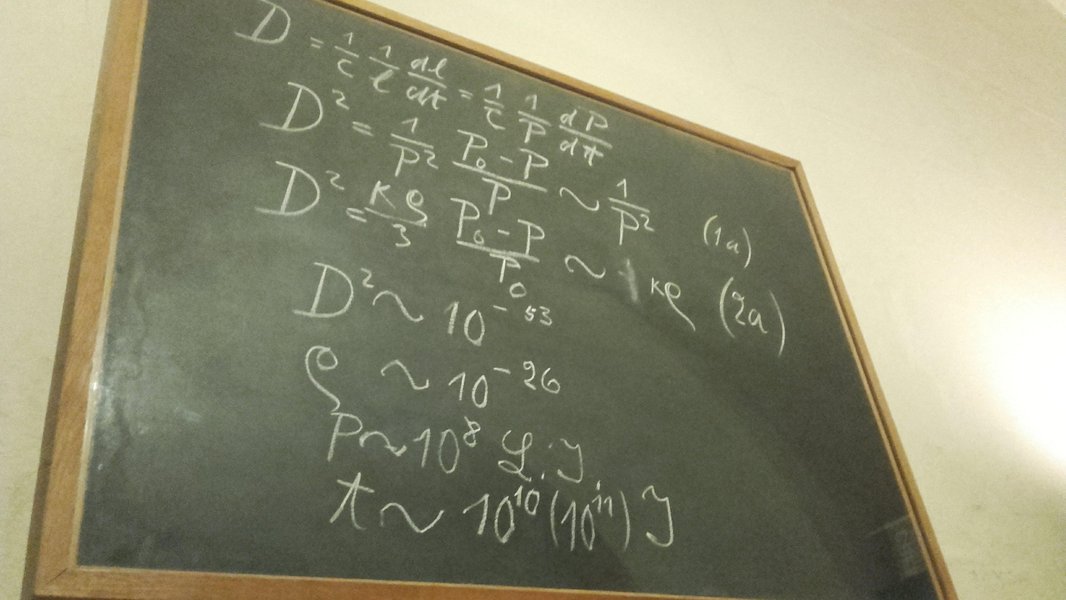
A glimpse into history: Equations written by Albert Einstein in 1931, showcasing his work on cosmology. While not E=mc² itself, it reflects the profound thinking of the era.
Visualizing Mass-Energy Equivalence
Conceptual Comparison of Energy Potential
The following chart provides a conceptual illustration of how different factors related to mass-energy conversion might compare. It's not based on precise data but aims to visualize the relative scales and considerations involved in understanding \(E=mc^2\)'s implications. The "datasets" represent different hypothetical small masses, and the axes represent qualitative aspects of their energy potential and conversion.
This chart helps to understand that while the theoretical energy yield increases with mass (all scaled by the immense \(c^2\) factor), the practical aspects of conversion and application involve complex physics. The "Impact of c² Factor" is uniformly high because it's the core multiplier in the equation.
The Broader Significance of E=mc²
More Than Just an Equation
The equation \( E = mc^2 \) has far-reaching implications beyond simple calculation:
- Foundation of Nuclear Physics: It explains the enormous energy released in nuclear reactions, such as fission (in nuclear power plants and atomic bombs) and fusion (the process powering the Sun and stars). In these reactions, a small amount of mass is converted into a large amount of energy.
- Understanding the Universe: The equation is fundamental to understanding processes like star formation, supernovae, and the conditions in the early universe after the Big Bang, where mass and energy were interconverted on cosmic scales.
- Particle Physics: In particle accelerators, energy is converted into matter, creating new particles. This is a direct demonstration of \( E = mc^2 \) in reverse, so to speak (more accurately, energy creating mass).
- Rest Energy: It's crucial to remember that \( E = mc^2 \) typically refers to the rest energy. If an object is moving, it also possesses kinetic energy, and the full relativistic energy equation is \( E^2 = (m_0c^2)^2 + (pc)^2 \), where \( m_0 \) is the rest mass and \( p \) is the momentum. For an object at rest (\( p=0 \)), this simplifies to \( E = m_0c^2 \).
Mapping the Concepts of E=mc²
A Mindmap Overview
This mindmap provides a visual summary of the key concepts interconnected by Einstein's famous equation, illustrating its central role in physics and its various implications.
Mass-Energy Equivalence"] id1["E
Energy (Joules)"] id1a["Rest Energy"] id2["m
Mass (Kilograms)"] id2a["Intrinsic property of matter"] id3["c
Speed of Light (m/s)"] id3a["Universal Constant
~3 x 10⁸ m/s"] id3b["c²
Large Multiplier
~9 x 10¹⁶ m²/s²"] id4["Albert Einstein"] id4a["Special Theory of Relativity (1905)"] id5["Implications & Applications"] id5a["Nuclear Energy
(Fission & Fusion)"] id5b["Particle Physics"] id5c["Astrophysics
(Stars, Big Bang)"] id5d["Understanding Matter"] id6["Calculation"] id6a["E = m * c²"] id6b["Input m (kg)"] id6c["Use c² value"] id6d["Output E (Joules)"]
Illustrative Energy Conversions
Putting Numbers into Perspective
The following table shows the calculated rest energy for various masses. This helps to appreciate the colossal amount of energy locked within even small quantities of matter.
| Mass (m) | Mass in Kilograms (kg) | Energy (E) in Joules (J) (using c ≈ 3 x 10⁸ m/s) | Approximate Energy Equivalent (for illustration) |
|---|---|---|---|
| 1 milligram (mg) | \(1 \times 10^{-6}\) kg | \( (1 \times 10^{-6}) \times (9 \times 10^{16}) = 9 \times 10^{10} \) J | Energy to run a 100W lightbulb for ~28.5 years |
| 1 gram (g) | \(1 \times 10^{-3}\) kg | \( (1 \times 10^{-3}) \times (9 \times 10^{16}) = 9 \times 10^{13} \) J | Roughly the daily energy consumption of a small city |
| 1 kilogram (kg) | 1 kg | \( 1 \times (9 \times 10^{16}) = 9 \times 10^{16} \) J | Comparable to the yield of a very large nuclear weapon (approx. 21.5 Megatons of TNT) |
| A small coin (e.g., 5 grams) | \(5 \times 10^{-3}\) kg | \( (5 \times 10^{-3}) \times (9 \times 10^{16}) = 4.5 \times 10^{14} \) J | Could power thousands of homes for a year |
Note: These equivalents are highly approximate and assume 100% mass-to-energy conversion, which is not practically achievable in most scenarios outside of specific particle-antiparticle annihilations. Nuclear reactions typically convert only a small fraction of mass into energy.
Further Explanation: E=mc² Visualized
Understanding Mass-Energy Equivalence
The concept of mass and energy being interchangeable is one of the most profound insights from modern physics. The video below offers a simple and clear explanation of what \(E=mc^2\) means and its significance.
This video provides a clear explanation of the meaning and implications of E=mc².
In essence, the video explains that mass itself is a highly concentrated form of energy. When we say \(E=mc^2\), it's not just that mass can be converted to energy, but that mass is energy. The \(c^2\) term acts as the conversion factor, highlighting how much energy is packed into even a tiny speck of matter. This understanding underpins many technological advancements and our comprehension of the cosmos.
Frequently Asked Questions (FAQ)
What does E stand for in E=mc²?
E represents the total energy of an object at rest, known as its rest energy. It is typically measured in joules (J).
What does m stand for in E=mc²?
m represents the mass of the object, specifically its rest mass. It is measured in kilograms (kg) for calculations consistent with SI units for energy (joules).
What does c stand for in E=mc²?
c represents the speed of light in a vacuum. It's a universal constant approximately equal to \(3 \times 10^8\) meters per second (m/s) or about 186,300 miles per second.
Why is 'c' squared (c²) in the equation?
The speed of light is squared (\(c^2\)) because of the way energy and momentum are related in Einstein's theory of special relativity. Mathematically, it arises from the derivation of the formula. This squaring results in an extremely large number, which signifies that a very small amount of mass contains a huge amount of intrinsic energy.
Can all mass be converted into energy easily?
While \(E=mc^2\) shows the equivalence, converting 100% of mass into energy is not easily achievable for ordinary matter. Such complete conversion happens in specific circumstances, like matter-antimatter annihilation. Nuclear reactions (fission and fusion) convert a small fraction of mass into energy, but this is still substantial due to the \(c^2\) factor.
Recommended Further Exploration
Delve Deeper into Related Concepts
- What are the practical applications of nuclear fission and fusion?
- How did Albert Einstein derive the equation E=mc²?
- What is rest energy versus kinetic energy in relativistic physics?
- Explore the role of E=mc² in understanding the Big Bang and stellar evolution.
References
Sources for This Information
Last updated May 9, 2025