
Designing Effective Stormwater Reservoirs for Impermeable Developments
Strategies for Mitigating Runoff and Enhancing Water Quality in Urban Environments
Key Insights into Stormwater Reservoir Design
- Impervious Surfaces are the Problem: Urbanization replaces natural landscapes with hard surfaces like roads, roofs, and parking lots, drastically reducing water infiltration and increasing stormwater runoff, leading to flooding, erosion, and pollution.
- Reservoirs as Crucial Solutions: Stormwater reservoirs, particularly retention ponds, are engineered systems designed to capture, store, and gradually release runoff, mitigating flood risks and improving water quality by allowing sediments and pollutants to settle.
- Integrated Design is Key: Successful stormwater management combines structural solutions like reservoirs with green infrastructure and low-impact development (LID) practices to mimic natural hydrological cycles and maximize environmental benefits.
The proliferation of impermeable surfaces in urban and suburban developments poses significant challenges to natural hydrological cycles. When rain falls on asphalt, concrete, and rooftops, it can no longer infiltrate the ground as it would in natural environments. This leads to an increased volume and velocity of surface runoff, which can overwhelm traditional drainage systems, cause flash flooding, severe erosion, and carry pollutants into waterways. Designing effective reservoirs for stormwater mitigation in these impermeable developments is crucial for managing these impacts, protecting infrastructure, and preserving environmental health.
Understanding the Challenge: Impermeable Surfaces and Their Impact
Impervious surfaces are materials that prevent water from soaking into the ground. These include concrete, asphalt, rooftops, and compacted soils. As urban areas expand, these surfaces increasingly replace natural landscapes, which previously absorbed and filtered rainfall. The consequences of this shift are multi-faceted:
- Increased Runoff Volume and Velocity: Without natural absorption, precipitation rapidly becomes surface runoff, moving quickly across hard surfaces. An acre of pavement can generate 10-20 times more runoff than an acre of grass, drastically increasing the volume of water entering drainage systems.
- Elevated Flood Risk: The sudden influx of large volumes of water can overwhelm storm sewers and natural channels, leading to flash floods and property damage.
- Erosion and Sedimentation: The high velocity of runoff erodes stream banks and other land surfaces, carrying large amounts of sediment into waterways. This sedimentation degrades aquatic habitats and can make water turbid.
- Water Quality Degradation: As stormwater flows over impervious surfaces, it picks up a variety of pollutants, including oils, chemicals, fertilizers, pesticides, trash, and pathogens. This nonpoint source pollution is a leading cause of water quality impairment in receiving water bodies.
- Reduced Groundwater Recharge: By diverting water away from the soil, impervious surfaces diminish the natural replenishment of aquifers, affecting local water tables.
The Role of Stormwater Reservoirs in Mitigation
Stormwater reservoirs are engineered structures designed to capture, store, and gradually release stormwater runoff. Their primary goals are to control peak runoff rates, reduce flooding, prevent erosion, and improve water quality. These systems are essential components of stormwater management strategies, particularly in areas with significant impervious development.
Types of Stormwater Basins
While often used interchangeably, there are distinct types of stormwater basins, each with specific design considerations and benefits:
- Detention Basins (Dry Ponds): These basins temporarily hold stormwater runoff and release it slowly over a period (e.g., 24-72 hours) to a downstream water body. They are typically dry between storm events and are primarily designed for flood control and peak flow reduction.
- Retention Basins (Wet Ponds): Also known as wet detention basins or stormwater management ponds, these structures maintain a permanent pool of water. They serve multiple functions:
- Flood Control: They provide additional storage capacity above the permanent pool to attenuate peak flows during large storm events.
- Water Quality Treatment: The permanent pool allows for sedimentation, where suspended solids and associated pollutants settle out. Aquatic vegetation within the pond further enhances pollutant removal and nutrient uptake.
- Habitat Creation: Well-designed retention ponds can create valuable wetland habitats for various flora and fauna.
- Aesthetic and Amenity Value: When integrated into landscape design, they can enhance the visual appeal of a development and offer recreational opportunities.
- Infiltration Basins: Designed for permeable soils, these basins aim to direct stormwater into the ground, promoting groundwater recharge and pollutant removal through natural filtration. They are less suitable for highly impermeable developments or areas with high water tables.
Key Design Considerations for Stormwater Reservoirs
Designing an effective stormwater reservoir for impermeable developments requires careful planning and adherence to specific guidelines. The objective is not just to store water but to integrate the reservoir seamlessly into the landscape while maximizing its ecological and functional benefits.
Sizing and Capacity
The capacity of a stormwater reservoir is a critical design parameter. It must be large enough to handle runoff from a "design rainfall event"—a storm of a specific intensity and duration (e.g., 2-year, 10-year, or 100-year storm event). Factors influencing sizing include:
- Contributing Watershed Area: The total area of impervious and pervious surfaces that drain into the reservoir.
- Runoff Coefficient: A measure of how much rainfall becomes runoff, which is significantly higher for impervious surfaces.
- Design Storm Frequency: The return period of the storm event the reservoir is designed to manage.
- Regulatory Requirements: Local and state regulations often mandate specific release rates and storage volumes.
The sizing of a stormwater reservoir is often determined through hydrological modeling, such as using the EPA's Storm Water Management Model (SWMM), which simulates basin runoff for various rainfall series. This helps in determining the required reservoir capacity and the optimal duration time and intensity of the design rainfall.
This radar chart visually compares the effectiveness of different stormwater management approaches across various performance metrics. It highlights that retention ponds offer a comprehensive solution by excelling in flood control, water quality improvement, and erosion prevention, while also providing habitat and aesthetic benefits. Detention ponds are strong in flood control but less impactful on water quality. Green infrastructure, including rain gardens and permeable pavements, demonstrates superior performance in water quality, erosion prevention, and groundwater recharge, making them ideal complements to larger reservoir systems.
Outlet Structures and Flow Control
Reservoirs must have engineered outlet structures to control the release rate of stored water. This typically involves a riser with an orifice (or multiple orifices) at different elevations to allow for gradual release. An emergency spillway is also crucial to safely convey excess flow during extreme storm events, preventing damage to the basin structure.
Sediment Storage and Maintenance Access
Stormwater often carries suspended sediments. Reservoirs, especially retention ponds, are designed to allow these sediments to settle. Adequate sediment storage capacity must be incorporated into the design, and provisions for regular maintenance access (e.g., for dredging) are essential to preserve the reservoir's capacity and function.
Water Quality Treatment Features
For retention ponds, features that enhance water quality are vital:
- Permanent Pool: The depth and volume of the permanent pool impact sedimentation efficiency.
- Aquatic Vegetation: Plants along the shoreline and within the pond enhance filtration, nutrient uptake, and provide habitat.
- Forebay: A smaller, deeper section at the inlet can be designed to capture coarser sediments, making maintenance easier.
- Uplands and Buffer Areas: Vegetated buffers around the pond filter runoff before it enters the main body of water.
Safety and Aesthetics
Reservoirs should be designed with public safety in mind, especially in urban settings. This includes safety benches along the shoreline, appropriate fencing where necessary, and clear signage. From an aesthetic perspective, integrating the pond into the landscape with native plantings can make it an attractive amenity rather than just a functional structure.
Integrating Reservoirs with Green Infrastructure and LID
While reservoirs are effective, a holistic approach to stormwater management often involves combining them with "green infrastructure" or "low impact development" (LID) practices. These approaches aim to mimic natural hydrologic processes and manage stormwater closer to its source.
This video provides an excellent introduction to Stormwater Control Measures (SCMs), including dry detention ponds, wet retention ponds, permeable pavement, and bioretention areas. It details how these different SCMs function to manage stormwater runoff, explaining their design principles and maintenance considerations. Viewers can gain a comprehensive understanding of various strategies used in stormwater management by watching this video.
Examples of Integrated Stormwater Management Practices
To maximize the effectiveness of a stormwater management system for impermeable developments, consider incorporating these elements:
- Permeable Pavements: Using materials like porous asphalt, porous concrete, or permeable pavers for driveways, patios, and parking lots allows water to infiltrate through the surface rather than run off. This reduces runoff volume and recharges groundwater.
- Rain Gardens and Bioretention Areas: These are landscaped depressions planted with native vegetation designed to collect, filter, and slowly infiltrate stormwater runoff from roofs, driveways, and other impervious surfaces. They are effective at removing pollutants and reducing peak flows.
- Green Roofs: Vegetated rooftops absorb rainfall, reduce runoff volume, and cool buildings. They contribute to water retention and evapotranspiration.
- Rain Barrels and Cisterns: These collect rainwater from rooftops for later use (e.g., irrigation), directly reducing the volume of runoff entering the drainage system. Overflow devices can direct excess water to other LID features.
- Vegetated Swales: Broad, shallow, vegetated channels that convey stormwater while allowing for some infiltration and filtration of pollutants.
- Tree Planting: Trees can significantly decrease peak water discharge during storms by intercepting rainfall, slowing its flow to the ground, and holding water within their canopies.
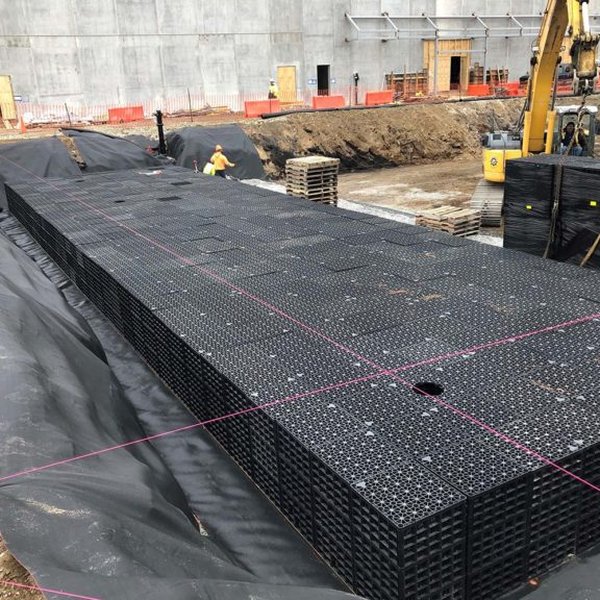
Underground stormwater storage systems, such as R-Tank modules, offer space-saving solutions for managing runoff beneath permeable surfaces or other developed areas, allowing for efficient land use.
Designing for Resilience and Sustainability
Modern stormwater management is about more than just moving water away quickly; it's about managing water as a valuable resource. Incorporating sustainable practices ensures that reservoirs and associated infrastructure are resilient to changing climate patterns and contribute positively to the environment.
| Approach | Primary Benefit | Mechanism | Suitability for Impermeable Developments | Environmental Impact |
|---|---|---|---|---|
| Retention Ponds | Flood control, water quality, habitat | Permanent pool, sedimentation, biological uptake | High (effective for large areas) | Positive (can create ecosystems) |
| Detention Ponds | Flood control, peak flow reduction | Temporary storage, controlled release | High (effective for large areas) | Neutral to moderate (less water quality benefit) |
| Permeable Pavement | Groundwater recharge, runoff reduction | Infiltration through porous materials | High (parking lots, driveways) | Positive (reduces runoff, recharges aquifers) |
| Rain Gardens / Bioretention | Pollutant removal, runoff reduction, aesthetics | Filtration through soil media, plant uptake | Medium (smaller scale, distributed) | Highly Positive (mimics natural processes) |
| Green Roofs | Runoff reduction, temperature moderation | Rainfall absorption by vegetation and substrate | Medium (building rooftops) | Positive (reduces heat island effect) |
This table provides a concise overview of different stormwater management approaches, their benefits, mechanisms, and suitability for impermeable developments, helping to inform integrated design decisions.
Challenges and Future Directions
Despite the advancements in stormwater management, challenges remain. These include the significant uncertainty in runoff modeling due to varied rainfall intensities and durations, which can affect the accuracy of reservoir sizing. Additionally, the need for regular maintenance of stormwater infrastructure, including sediment removal from ponds, is critical to ensure their long-term effectiveness. Public awareness and participation are also essential, as individual actions regarding pollutants can significantly impact stormwater quality.
Future directions in stormwater management emphasize integrated water management (IWM) or water-sensitive urban design (WSUD). These approaches aim to treat stormwater not as a waste product to be disposed of, but as a potential resource that can augment potable water supplies and improve the health of waterways. Innovations continue in developing cost-effective hybrid green/gray stormwater control solutions, combining traditional infrastructure with nature-based elements.
Frequently Asked Questions
What is stormwater runoff?
Why are impermeable surfaces a problem for stormwater management?
What is the difference between a detention pond and a retention pond?
What is green infrastructure in stormwater management?
How does a stormwater reservoir improve water quality?
Conclusion
Designing effective stormwater reservoirs for impermeable developments is a multifaceted endeavor that is critical for managing the impacts of urbanization. By implementing a combination of engineered solutions like retention and detention basins alongside green infrastructure practices, communities can significantly reduce flood risks, mitigate erosion, improve water quality, and foster healthier ecosystems. The shift from simply diverting water to managing it as a valuable resource through integrated and sustainable approaches is essential for building resilient urban environments in the face of increasing imperviousness and changing climate patterns.
Recommended Further Reading
- Explore how urbanization changes natural water cycles and increases runoff.
- Discover how nature-based solutions can effectively manage stormwater.
- Learn about the detailed engineering and ecological aspects of designing retention ponds.
- Understand how hydrological modeling tools assist in stormwater system design.