
Is Our Modern World Driving Us Mad? Erich Fromm's Unsettling Diagnosis
Exploring the core ideas of "The Sane Society" and its critique of contemporary life.
Published in 1955, Erich Fromm's "The Sane Society" remains a startlingly relevant and profound critique of modern industrial capitalist society. Building upon his earlier work, "Escape from Freedom," and engaging with thinkers like Freud and Marx, Fromm, a renowned psychoanalyst and social philosopher, turns the lens of psychological analysis not just on the individual, but on society itself. He poses a provocative question: What if the very structure of our society is fundamentally "insane," actively hindering human well-being and fostering widespread psychological distress?
Key Insights from "The Sane Society"
- Critique of Societal Sanity: Fromm argues that widespread conformity and shared psychological issues within a society do not equate to collective mental health. Modern capitalism, he contends, cultivates a "pathology of normalcy."
- Failure to Meet Human Needs: The book identifies core existential needs (relatedness, rootedness, transcendence, identity, frame of orientation) that capitalist structures systematically frustrate, leading to alienation and unhappiness.
- Vision of a Humane Alternative: Fromm outlines the characteristics of a "sane society"—one organized around human well-being, cooperation, creativity, and authentic connection, rather than profit and consumption.
The Central Argument: A Society Against Human Nature?
Fromm's central thesis is radical: contemporary Western society, particularly under industrial capitalism, is fundamentally incompatible with the deep-seated psychological needs of human beings. He argues that a society's "sanity" should be judged by its capacity to foster the mental health and full development of its members. By this measure, he finds modern society severely lacking.
The Pathology of Normalcy
Fromm challenges the very definition of normalcy. He posits that just because certain behaviors or psychological traits—like excessive competitiveness, consumerism, or emotional detachment—are common, it doesn't make them healthy. In fact, he argues that society often normalizes pathological traits required for its own functioning. This "pathology of normalcy" means millions can share the same form of mental illness without it being recognized as such. True sanity, Fromm suggests, involves awareness, productive connection to the world, and authentic selfhood, not just adaptation to societal demands.
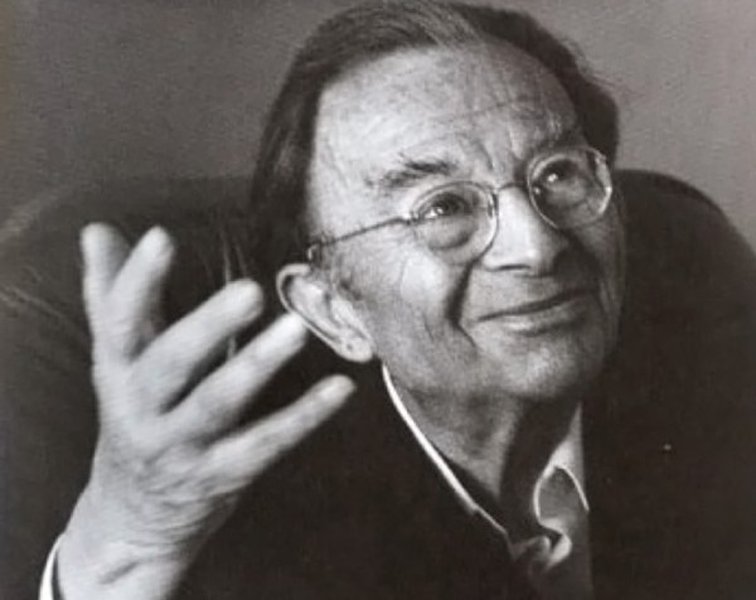
Erich Fromm, psychoanalyst and social philosopher.
The Rise of the "Robot"
A key danger Fromm identifies is the transformation of individuals into automatons or "robots." In a society prizing efficiency, predictability, and consumption, people risk losing their individuality, creativity, and capacity for genuine feeling. They conform passively, pursue externally defined goals (like wealth and status), and become alienated from their own experiences and potential. Fromm warns, "The danger of the past was that men became slaves. The danger of the future is that men may become robots." This state of alienated conformity, he believed, leads not to contentment but to a deep sense of boredom, meaninglessness, and potentially, destructiveness.
The Five Essential Human Needs
Fromm anchors his critique in a theory of fundamental human needs, arguing that their fulfillment is crucial for psychological health. Modern society, he claims, actively thwarts these needs:
- Relatedness: The need to connect with others through love, understanding, and shared experience, overcoming separateness. Modern society often fosters superficial interactions or isolation.
- Transcendence: The drive to rise above our animal nature, not passively accepting existence but actively shaping it through creativity or, destructively, through hate. Capitalism often channels this into production and consumption.
- Rootedness: The need for a sense of belonging, connection to a community, tradition, or place, providing security and grounding. Industrialization and mobility often sever these roots.
- Sense of Identity: The need to feel like a unique individual, an "I," distinct from others. Conformist pressures and the "marketing orientation" (seeing oneself as a commodity) undermine authentic identity.
- Frame of Orientation and Devotion: The need for a stable way of understanding the world and one's place within it, providing meaning and direction. Rationalized, fragmented modern life can make finding a coherent worldview difficult.
When these needs go unmet, Fromm argues, individuals experience anxiety, alienation, and despair, seeking escape through various unhealthy mechanisms like blind conformity, destructive behavior, or neurotic symptoms.
Capitalism's Psychological Toll
Fromm directs much of his critique specifically at the psychological effects of 20th-century capitalism. He sees it not merely as an economic system but as a force shaping human character and relationships.
Alienation as a Defining Feature
Alienation is a core concept for Fromm. Under capitalism, he argues, individuals become alienated in multiple ways:
- From their work: Labor is often repetitive, meaningless, and controlled by others, reducing the worker to a cog in a machine.
- From the products of their labor: Workers have little connection to or control over what they produce.
- From each other: Relationships become instrumentalized or competitive; genuine connection is replaced by superficiality or indifference.
- From themselves: People lose touch with their authentic feelings, desires, and potential, adopting a "marketing orientation" where self-worth is based on perceived market value and conformity.
- From nature: Industrial society creates a significant disconnect from the natural world.
Consumerism and Conformity
Capitalism requires predictable consumers whose tastes can be manipulated. It fosters a culture of consumerism where happiness is equated with acquiring material goods. This focus on "having" over "being" distracts from genuine fulfillment and encourages conformity, as individuals strive to fit in and possess what society deems desirable. Individuality and critical thinking are discouraged in favor of passive consumption and adherence to norms.

Visual representation related to Fromm's philosophical inquiries.
Visualizing Fromm's Core Concepts
The following diagram illustrates the key relationships between Fromm's critique of modern society, the essential human needs he identified, and his vision for a Sane Society.
What Would a "Sane Society" Look Like?
Fromm doesn't just diagnose the illness; he outlines the characteristics of a healthy, or "sane," society. Such a society would be structured to actively support human flourishing and psychological well-being.
Core Principles
A sane society, according to Fromm, would prioritize:- Human Needs: Its economic, political, and social structures would be designed to fulfill the essential human needs for relatedness, rootedness, transcendence, identity, and meaning.
- Cooperation and Solidarity: It would emphasize mutual support and collective well-being over competition and exploitation.
- Productive Activity: Work would be meaningful and creative, allowing individuals to express their potential, rather than being purely a means to an end.
- Authenticity and Individuality: It would encourage genuine self-expression, critical thinking, and the development of unique identities, rather than demanding conformity.
- Rational Authority: Authority would be based on competence and mutual respect, enabling growth, rather than irrational authority based on power and domination, which stifles it.
- Love and Reason: These would be guiding principles in personal and social life, fostering connection and understanding.
Fromm suggested that achieving such a society might involve elements of humanistic or communitarian socialism, focusing on decentralized power, active citizen participation, and an economic system oriented toward human welfare rather than unlimited growth and profit.
Comparing Societal Tendencies: A Conceptual Radar
This chart visualizes the contrasting characteristics of the 'Insane' (Modern Capitalist) Society as critiqued by Fromm, and his vision of a 'Sane' Society, based on the fulfillment of human needs and potential. The scores are conceptual, representing Fromm's assessment rather than empirical data.
As the chart suggests, Fromm saw contemporary society as high in alienation, conformity, and materialism, while falling short in fulfilling fundamental needs like relatedness, rootedness, creative transcendence, individuality, and providing a coherent sense of meaning. His ideal "Sane Society" represents the inverse – a social structure designed to minimize alienation and maximize human potential and connection.
Navigating the Book: Structure and Key Arguments
"The Sane Society" systematically builds its case across several chapters. While a full chapter-by-chapter breakdown is extensive, the following table highlights the progression of Fromm's argument:
| Chapter Focus | Key Arguments & Concepts |
|---|---|
| Ch 1: Are We Sane? | Introduces the question of societal sanity, challenging definitions of "normalcy." Argues that adaptation to a sick society is not health. |
| Ch 2: Can a Society Be Sick? | Develops the concept of the "pathology of normalcy." Argues that entire societies can be structured in ways that impede human growth and foster mental illness. |
| Ch 3: The Human Situation | Outlines Fromm's theory of human nature and the five fundamental existential needs (Relatedness, Transcendence, Rootedness, Identity, Frame of Orientation). Critiques Freudian instinct theory. |
| Ch 4: Mental Health and Society | Connects the fulfillment or frustration of human needs directly to mental health outcomes within a given social structure. Discusses "robotism" as a consequence of alienation. |
| Ch 5: Man in Capitalistic Society | Provides a detailed critique of mid-20th-century capitalism's impact on human character, focusing on alienation, the marketing orientation, and the reduction of individuals to commodities. |
| Ch 6-7: Other Diagnoses & Answers | Examines alternative societal models and critiques simplistic solutions to social ills, emphasizing the need for fundamental change. |
| Ch 8: Roads to Sanity | Proposes pathways toward a Sane Society, including economic and political changes (e.g., humanistic communitarian socialism), cultural shifts, and the importance of individual awareness and responsibility. |
| Ch 9: Conclusion | Reiterates the dangers of alienation and robotism, ending on a note of cautious optimism that humanity can consciously choose to build a society aligned with its true needs. |
Understanding Fromm's Concept of Human Needs
A core element of "The Sane Society" is Fromm's identification of fundamental human needs that transcend basic survival instincts. The following video provides an overview of these five needs, which Fromm believed must be met for psychological well-being.
As explained in the video and the book, Fromm saw these needs—for connection, creativity, belonging, individuality, and meaning—as inherent to the human condition. His critique stems from the observation that modern society, particularly under capitalism, systematically obstructs the healthy fulfillment of these very needs, leading to the widespread "insanity" he diagnosed.
Frequently Asked Questions (FAQ)
What is the main argument of "The Sane Society"?
The main argument is that modern industrial capitalist society is fundamentally "insane" because its structure and values (e.g., consumerism, competition, conformity) alienate individuals and fail to meet essential human psychological needs (relatedness, rootedness, transcendence, identity, frame of orientation), leading to widespread mental distress and unhappiness. A truly "sane" society would be organized to foster human well-being and potential.
How does "The Sane Society" relate to "Escape from Freedom"?
"The Sane Society" is considered a continuation or extension of Fromm's earlier work, "Escape from Freedom" (1941). While "Escape from Freedom" explored how people flee from the anxieties of modern freedom into conformity or authoritarianism, "The Sane Society" delves deeper into the specific social and economic structures (primarily mid-century capitalism) that create the conditions for this alienation and hinder the development of a healthy personality.
What does Fromm mean by "alienation"?
For Fromm, alienation is a central problem of modern society. It refers to a state of separation or estrangement. Individuals can become alienated from their work (seeing it as meaningless toil), from the products they create, from nature, from other people (treating them as means to an end), and most importantly, from themselves (losing touch with their true feelings, desires, and potential, adopting a persona dictated by social expectations – the "marketing orientation").
Is Fromm anti-capitalist or socialist?
Fromm is highly critical of the psychological and social effects of industrial capitalism as he observed it. He believed its emphasis on profit, competition, and materialism led to alienation and dehumanization. He advocated for a "humanistic communitarian socialism," which emphasized decentralization, worker participation, cooperation, and organizing society around meeting human needs rather than maximizing profit. However, he was also critical of authoritarian forms of state socialism prevalent at the time.
Is "The Sane Society" still relevant today?
Many readers find "The Sane Society" remarkably relevant today. Issues Fromm raised, such as consumerism, alienation in work, the pressure to conform, the search for meaning, social isolation, and the potential dehumanizing effects of technology and large-scale systems, continue to be significant concerns in contemporary society. His critique of basing self-worth on marketability and his call for a society focused on human well-being resonate with current discussions about mental health, work-life balance, and sustainable living.
Recommended Further Exploration
- What are Erich Fromm's five basic human needs in detail?
- How does Erich Fromm define alienation in modern society?
- Compare Erich Fromm's ideas with Freud's view of civilization.
- What practical steps did Fromm suggest for creating a Sane Society?
References

 historicalunderbelly.files.wordpress.com
 notbadmoviereviews.wordpress.com
 articlesfactsstats.wordpress.com
Last updated April 28, 2025