
Housing for Government Employees and Public School Teachers
In-depth analysis of challenges, policies, and architectural solutions
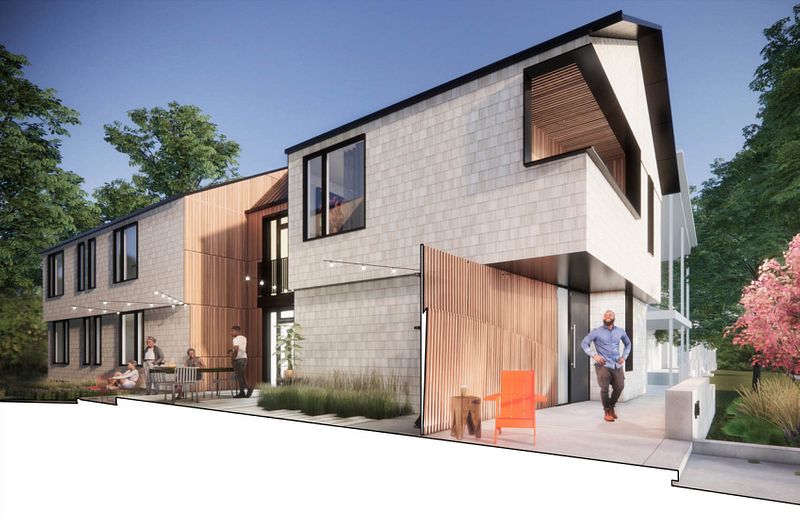
Highlights
- Comprehensive Review: Detailed exploration of housing challenges and government policies affecting public school teachers.
- Architectural Solutions: Strategies in design and construction that can overcome space, affordability, and adaptability issues.
- Policy and Comparative Analysis: Comparison of local initiatives with international models to identify limitations and areas for improvement.
1. Introduction
Understanding the Critical Role of Housing in Education
Adequate housing for government employees, particularly public school teachers, is not merely a basic need—it is an essential component of a thriving educational ecosystem. Housing conditions directly impact teachers' work-life balance, occupational stability, and overall wellbeing, which in turn affect student outcomes and community development. In many regions, particularly in the Philippines, teachers face significant challenges related to housing affordability, accessibility, and adequacy. These challenges are further exacerbated by systemic issues within public policy frameworks and the rapid escalation of housing market costs.
Architecture plays a pivotal role in addressing these challenges. Through innovative design approaches and adaptive construction techniques, architects can create living environments that are not only cost-effective but also flexible enough to accommodate evolving household needs. Architectural solutions can range from modular housing developments to community-centric designs that integrate green spaces, communal areas, and proximity to essential services such as schools. Incorporating sustainability and energy efficiency into these designs can further reduce living expenses for teachers, making long-term occupancy more feasible.
The purpose of this study is to provide an integrated analysis of the factors affecting teacher housing, identify the limitations present within current policies, and explore incremental housing as a viable solution for public school teachers. Reliance on data and insights from relevant academic articles and peer-reviewed journals underpins each section of this discussion. Through this examination, the goal is to offer policy recommendations and architectural guidelines that support not only teacher retention but also broader educational and community benefits.
2. Existing Studies on Government Employee Housing for Teachers
Analyzing Empirical Evidence and Scholarly Works
A robust body of literature investigates the intersection of housing, teacher performance, and public policy. Prominent academic sources such as peer-reviewed journals and empirical studies from renowned institutions like UC Berkeley and research published in MDPI provide a sound basis for understanding these issues. Research consistently shows that inadequate housing adversely affects teachers’ quality of life, recruitment prospects, and retention rates. This section synthesizes current studies to illuminate the central challenges of teacher housing and the effectiveness of government policies.
2.1. Challenges in Teacher Housing
Teachers in various countries, particularly those in regions confronting high living costs, face multifaceted housing challenges. Scholarly articles emphasize several prevalent issues:
Affordability and Accessibility Issues
One of the most critical challenges identified in the literature is the affordability gap. Empirical studies demonstrate that stagnant teacher salaries, coupled with rapidly increasing housing prices, create significant barriers to home ownership and rental affordability. For example, research highlighted in a UC Berkeley study indicates that many educators are forced to live far from their places of work due to budget limitations, which not only increases commuting times but also reduces overall job satisfaction.
Accessibility is equally problematic. In many urban and suburban areas, available housing represents a limited spectrum of options, often not tailored to the specific needs of educators. This mismatch between income levels and housing costs forces teachers to either compromise on housing quality or endure lengthy commutes that disrupt their work-life balance. Academic articles sourced from journals focusing on urban studies and public policy substantiate these claims, emphasizing the need for models that address the specific economic scenarios of public employees.
Limited Space and Adaptability to Household Changes
Housing units that serve teachers are frequently criticized for their rigid design. Studies from housing and design journals point out that many existing properties do not accommodate changing household dynamics, such as family growth or the need for multi-functional living spaces. Research indicates that flexible housing designs—those that can be easily reconfigured to meet evolving needs—could significantly enhance the viability of teacher housing in the long term.
The architectural community has proposed adaptive reuse concepts and modular construction methods as potential solutions to these challenges. This area of study not only demonstrates practicality but also aligns with sustainable practices that reduce construction waste and overall costs.
Location Constraints and Impact on Work-Life Balance
Numerous studies have highlighted the geographical dilemmas facing teacher housing. In almost every researched case, optimal location is tied directly to job performance and personal convenience. Teachers who reside far from their work communities face higher transportation expenses and stress, resulting in negative implications for their teaching efficacy. Academic literature from urban planning and policy journals stresses that housing developments should be strategically located near educational institutions and essential community services to foster an environment conducive to both personal and professional success.
2.2. Government Policies and Housing Programs for Teachers
Addressing the challenges of teacher housing requires comprehensive and forward-thinking policy initiatives. Scholarly articles provide insights into the effectiveness of housing programs and the limitations that currently hinder optimal implementation. The following sections summarize key policy-driven studies and analyze both local and international strategies.
Overview of Existing Housing Projects for Teachers in the Philippines
In the Philippines, governmental efforts have centered around providing more accessible and affordable housing for public school teachers. Initiatives such as Project: SHELTER (Socialized Housing for Employees and Teachers) have been developed in collaboration with organizations like Pag-Ibig Fund and Habitat for Humanity. Peer-reviewed studies reveal that while such projects are a step in the right direction, they tend to be limited in scope, addressing only a fraction of the overall demand for teacher housing.
Specific case studies in reputable journals have examined the Quezon City teachers’ housing project, noting both its successes and limitations. These analyses highlight that although the program has successfully provided homes for several hundred teachers, systemic funding issues and bureaucratic inefficiencies continue to constrain its broader impact. Furthermore, studies emphasize the need for long-term strategic planning and cross-sector collaboration to scale these initiatives beyond pilot projects.
Comparison with International Models of Teacher Housing
Comparative analyses of international teacher housing programs further illuminate potential paths for policy improvement. For instance, research articles from journals covering housing policy and international education point to successful models in countries like Singapore, Canada, and Malaysia. These countries have implemented robust subsidized housing schemes that often include integrated community facilities and adaptive design elements.
One study published in an internationally recognized journal on urban development contrasts the outcomes of these initiatives with local measures in the Philippines. It points out that while international models benefit from higher levels of government funding and better integration of community services, local projects often struggle due to limited financial resources and political will. Such comparisons underscore the need for the Philippines to adopt a more inclusive set of policies that are not only reactive but also proactive in anticipating future challenges.
Policy Limitations and Areas for Improvement
Academic literature is unanimous in highlighting several limitations within current policy frameworks. There is often a significant lag between policy formulation and effective on-ground implementation. Empirical studies stress issues such as bureaucratic delays, misallocation of resources, and insufficient alignment between housing development and local demographic needs. Reviews in scholarly journals call for a reexamination of teacher compensation structures and enhanced funding models capable of sustaining large-scale housing projects.
Moreover, experts have noted the importance of sustainable and adaptable housing solutions. Policies intended to provide immediate relief often overlook long-term adaptability and the need to integrate housing with broader community planning initiatives. Articles in environmental design and sustainable development journals advocate for holistic approaches that blend modern architecture with green technologies, thus ensuring that new housing solutions are both ecologically responsible and economically viable.
Policy and Architectural Recommendations
Synthesizing findings from various scholarly sources leads to several policy and architectural recommendations geared towards alleviating housing challenges for teachers. These recommendations, derived from relevant art icles and journals, emphasize an integrated strategy:
Integrated Policy Frameworks
Governments should consider creating integrated policy frameworks that foster collaboration between educational authorities, local governments, and housing developers. This approach involves:
| Key Element | Recommended Approach | Expected Impact |
|---|---|---|
| Funding Mechanisms | Innovative public-private partnerships and increased budget allocations | Enhanced resource mobilization and reduced construction costs |
| Design Flexibility | Incorporation of modular and adaptive design principles | Accommodation of changing family needs and future expansions |
| Location Planning | Strategic placement of housing near schools and community centers | Reduction in commuting times and improved work-life balance |
| Sustainability | Use of green building practices and energy-efficient technologies | Lower long-term operating costs and environmental benefits |
Policies that integrate these elements can create a supportive environment where teacher housing does not become a barrier to educational excellence. Journals in public policy and urban design stress that a holistic, well-funded approach can result in projects that serve as models for future developments.
Architectural and Design Innovations
From an architectural standpoint, the integration of innovative designs offers promising solutions. Scholars in architectural journals have explored techniques such as:
- Modular construction methods that allow for quick expansion and adaptability.
- Sustainable materials that reduce both environmental impact and construction costs.
- Community-centered developments that facilitate social interactions and resource sharing.
- Designs that incorporate green spaces and energy-efficient systems, thereby lowering operating expenses.
These designs not only address the immediate challenges of affordability and adaptability but also create housing that evolves with technological advances and changing demographic patterns. Introducing these innovations at scale can lead to systemic improvements, as confirmed by multiple studies in international architecture and urban planning journals.
Implication for Future Research and Practice
The synthesis of research findings provides critical insights into the current state and potential future of teacher housing policies. Further research is needed to evaluate the long-term sustainability and adaptability of housing solutions implemented today. Continuous assessment, backed by academic studies and policy feedback loops, is crucial for refining strategies that support government employees in the education sector.
A recurring theme in the literature is the need for shared investments between state actors and the private sector. Effective collaboration will not only enhance funding availability but also ensure that design and implementation are responsive to real-world challenges. Future studies should aim to quantify the benefits of architectural innovations and policy reforms through longitudinal research and case studies in varied urban and rural settings.
Policy recommendations derived from these analyses stress that housing should be regarded as essential infrastructure—a cornerstone not only for teacher welfare but also for achieving educational stability and community resilience. Scholars continue to advocate for rigorous empirical research focused on integrating housing policy with broader socioeconomic development plans.
References
- Quezon City launches housing for teachers, poor residents - Philstar
- How Housing Affordability Impacts Educators - Terner Center, UC Berkeley
- Housing the Teacher Workforce: A Scoping Review - MDPI
- Providing a Housing Program for Teachers - DepEd Teachers Club
- Project: SHELTER Guidelines - DepEd
Recommended Further Queries
Last updated March 8, 2025