
Unveiling the Subtle Tapestry: A Formal Linguistic Dive into Tigrinya's Enderta, Shire, and Raya Dialects
Explore the intricate phonetic, lexical, and grammatical distinctions that define these vibrant Ethiopian Tigrinya variants.
Tigrinya, an Ethio-Semitic language spoken primarily in Eritrea and the Tigray Region of northern Ethiopia, exhibits fascinating dialectal diversity. This formal comparison delves into three specific Ethiopian Tigrinya dialects: Enderta, Shire, and Raya. By examining the provided text samples, we can illuminate the phonological, morphological, and lexical variations that characterize each, offering a window into the rich linguistic landscape of the region.
Key Distinctions at a Glance
- Distinct Soundscapes: Each dialect presents unique phonetic features, from the articulation of specific consonants like /ħ/ and /χ/ to particular vowel qualities and the presence of affricates, painting different auditory profiles for Enderta, Shire, and Raya.
- Grammatical Nuances: Morphological variations are evident in verb conjugations (especially for negation and person marking), pronominal forms, and the use of distinct particles for interrogation or emphasis, revealing subtle but consistent structural differences.
- Lexical Identities: While sharing a substantial core vocabulary, these dialects employ unique words for common concepts (e.g., "now," "leave me," "told") and demonstrate varying degrees of lexical influence, particularly from Amharic in some southern Tigrayan variants.
A Deep Dive into Dialectal Variations
The provided text samples, all translating to "I haven't heard what is being said, I don't want to hear too. It’s your own matter. I have told you what I wanted. Now, please leave me to sleep in peace. Go back where you came from. Is it not my right? [Exclamatory Interjection]", serve as a rich basis for comparing these dialects.
Phonological Distinctions: The Sounds of Identity
Phonology, the study of sound systems, reveals some of the most immediate differences. These variations involve consonants, vowels, and potentially prosodic features like stress and intonation, though the latter are harder to discern from written transcriptions alone.
Consonantal Variations
Several consonant shifts and preferences distinguish the dialects:
- The 'ħ' sound:
- Enderta and Raya consistently use forms like
ħəzzi("now"). - Shire presents a distinct affricated or modified form:
ħɨdʒdʒi("now"). This also appears inbədʒdʒaχa("please") in Shire, compared tobəjzaχain Enderta and Raya.
- Enderta and Raya consistently use forms like
- Realization of /g/ vs. /ħ/:
- For "leave me," Enderta and Raya use
ħɨdəgənni. - Shire employs
gɨdəfənni, showing a shift from the pharyngeal fricative /ħ/ to a voiced velar stop /g/ at the beginning of the root.
- For "leave me," Enderta and Raya use
- Presence of /χ/:
- Enderta features the uvular fricative /χ/ in words like
jəsəmaʕχuj("I haven't heard") andlɨməsʼaʔχallu("where you came from"). - Raya also shows this in
ʔajsəmaʕχujanddɨməsʼaʔχallu. - Shire, in the corresponding phrase
ʔajsəmaʕkun, uses /k/ instead of /χ/ in the suffix, andzɨməsʼaʔkallu.
- Enderta features the uvular fricative /χ/ in words like
Vowel Variations
Vowel qualities and patterns also differ:
- The /ɨ/ vs. /ə/ distinction: While both vowels are common, their distribution can vary. For instance, in "go back":
- Enderta and Shire use
təmələs. - Raya uses
tɨmələs, indicating a vowel shift from /ə/ to /ɨ/ in the first syllable.
- Enderta and Shire use
- Exclamatory Interjection:
- Enderta and Shire use
ʔidoʔ. - Raya shows a subtle vowel shift to
ʔɨdoʔ.
- Enderta and Shire use
- Initial vowels in certain constructions:
- "What is being said": Enderta's
lɨbbəhalɨlloversus Raya'sdɨbbəhalɨllo. Shire offers a different construction entirely:ʔɨntaj jɨbbəhal kəm zəllo.
- "What is being said": Enderta's
These phonetic features contribute significantly to the distinct "accent" of each dialect, even when lexical items are shared.
Morphological Divergence: Shaping Words and Grammar
Morphology, concerning word structure and formation, highlights grammatical differences in how verbs are conjugated, pronouns are formed, and particles are used.
Verb Conjugation and Negation
- First-person singular subject marking:
- In "I haven't heard," Enderta uses
jəsəmaʕχujand Raya usesʔajsəmaʕχuj, both featuring the-χujsuffix. - Shire employs
ʔajsəmaʕkun, with the-kunsuffix for the same meaning. This variation in pronominal/agreement suffixes is a key morphological marker.
- In "I haven't heard," Enderta uses
- Negative expressions for "I don't want":
- Enderta:
jədəllɨjɨj(part ofkɨsəmmɨʕ'lə jədəllɨjɨj- "I don't want to hear"). - Shire:
ʔajdəllɨjɨn(part ofkɨsəmmɨʕ'ɨwwɨn ʔajdəllɨjɨn). - Raya:
ʔajdəllɨjɨj(part ofkɨsəmmɨʕ’lə ʔajdəllɨjɨj). The variation lies in the initial element and final vowel/consonant (jə-vsʔaj-and-jɨjvs-jɨn).
- Enderta:
Pronominal and Particle Variations
- "It's your own matter" construction:
- Enderta uses
naβaʔlɨχa guddaj ʔijju. - Shire uses
naj baʕlɨχa guddaj ʔɨjju. The initial possessive constructionnaβaʔlɨχa(Enderta) versusnaj baʕlɨχa(Shire) shows phonetic (βvsb) and possibly morphological differences in the possessive marker. - Raya uses
naβaʔlɨχa guddaj jɨʔu, wherejɨʔufor "is" differs fromʔijju/ʔɨjjuin Enderta and Shire.
- Enderta uses
- Interrogative forms for "Is it not?":
- Enderta:
məssələj’do jəχonəj?(Here,jəχonəjimplies "is it?"). - Shire:
məssələj’do ʔajkonən?(ʔajkonənclearly means "is it not?"). - Raya:
məssələj do ʔaykonəj?(ʔaykonəjalso means "is it not?"). The variation in the verb "to be" in its negative interrogative form is notable.
- Enderta:
- Particles for "where you came from":
- Enderta:
laβ lɨməsʼaʔχallu. - Shire:
nab zɨməsʼaʔkallu. - Raya:
da’dɨməsʼaʔχallu. The initial particles (laβ,nab,da’) and the relative markers (lɨ-,zɨ-,dɨ-) show clear distinctions.
- Enderta:
Lexical Choices: A Vocabulary of Their Own
Lexical variation refers to the use of different words for the same concept.
- "What is being said":
- Enderta:
taj həm lɨbbəhalɨllo. - Shire:
ʔɨntaj jɨbbəhal kəm zəllo(a significantly different phrasing). - Raya:
ta ham dɨbbəhalɨllo(similar to Enderta but with phonetic/morphological tweaks).
- Enderta:
- "I have told you what I wanted": This sentence reveals substantial lexical and structural divergence in expressing the "told" part.
- Enderta:
lɨʔaχa lɨdələxɨwwo nəgirəkka ʔɨnniʔeχu. - Shire:
banɨʔaχa zɨdələχɨwwo nəgirəkka ʔalloχu. (Similar verb "nəgirəkka" but different auxiliary/perfective marker). - Raya:
dɨʔaχa dɨdaləχɨwwo sʼəwɨjəkka ʔɨnnɨhəχu. (A different verbsʼəwɨjəkkafor "told you").
- Enderta:
- "To sleep":
- Enderta and Raya:
kɨhɨrrɨs. - Shire:
kɨdɨkʼkʼɨs.
- Enderta and Raya:
Some scholars note that southern Tigrinya dialects, which include areas like Enderta and Raya, may show greater influence from Amharic. This can manifest in borrowed vocabulary or semantic shifts.
Visualizing Dialectal Relationships
To better understand the multifaceted differences and similarities, we can use visual tools. The following chart offers a conceptual representation of how these dialects might compare across several linguistic dimensions. These are illustrative scores based on the analysis of the provided samples and general linguistic observations, not precise empirical measurements.
This radar chart visualizes perceived differences: for instance, Raya shows higher phonetic divergence and lexical uniqueness compared to this specific set, while Shire exhibits closer proximity to northern dialect features and less perceived Amharic influence. Enderta is shown with notable Amharic influence and morphological distinctiveness.
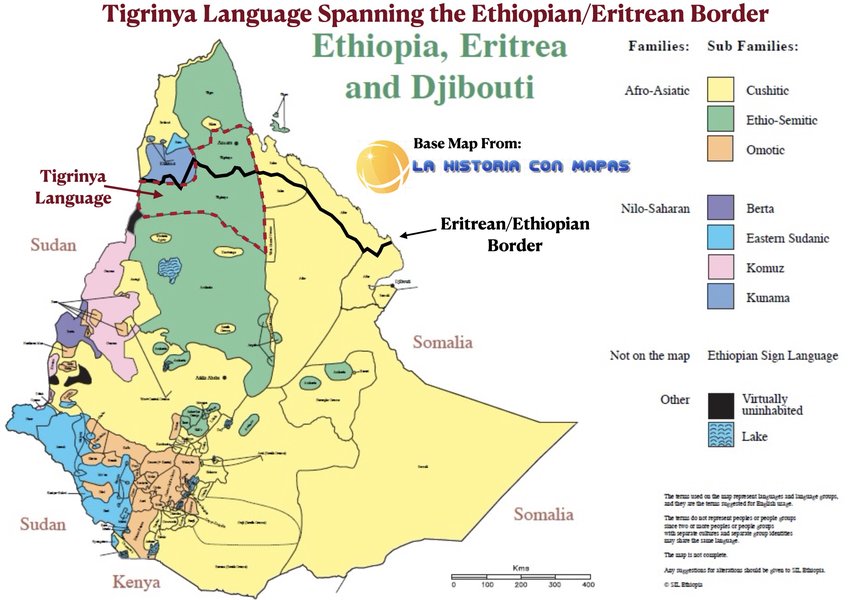
Geographical distribution of the Tigrinya language in Ethiopia and Eritrea. Dialects like Enderta, Shire, and Raya are spoken within the Tigray region of Ethiopia.
Structuring the Dialectal Landscape
A mindmap can help illustrate the relationships and key features of these Tigrinya dialects within the broader language family. The map below highlights some of the distinguishing characteristics discussed.
e.g., Clear articulation of 'χ', 'ħ'
ħəzzi (now)"]
id1.1.2["Morphology:e.g., 1st p. sg. suffix
-χuj (jəsəmaʕχuj)jədəllɨjɨj (I don't want)"]
id1.1.3["Lexicon:e.g.,
ħɨdəgənni (leave me)nəgirəkka ʔɨnniʔeχu (I have told you)"]
id1.1.4["Context: Often considered a central/southern Tigrayan dialect, some Amharic influence noted."]
id1.2["Shire Dialect (Tigray Region)"]
id1.2.1["Phonology:e.g., Affricates like
ħɨdʒdʒi (now)Softer consonants in some contexts"] id1.2.2["Morphology:
e.g., 1st p. sg. suffix
-kun (ʔajsəmaʕkun)ʔajdəllɨjɨn (I don't want)ʔajkonən? (is it not?)"]
id1.2.3["Lexicon:e.g.,
gɨdəfənni (leave me)kɨdɨkʼkʼɨs (to sleep)kəm zəllo (as it is/what is being said)"]
id1.2.4["Context: Aligns with northern Tigrinya influences, closer to Eritrean variants than Enderta/Raya."]
id1.3["Raya Dialect (Tigray Region)"]
id1.3.1["Phonology:e.g., Vowel shifts:
tɨmələs (go back), ʔɨdoʔ (interjection)dɨbbəhalɨllo"]
id1.3.2["Morphology:e.g., 1st p. sg. suffix
-χuj (ʔajsəmaʕχuj)jɨʔu (is)ʔaykonəj? (is it not?)"]
id1.3.3["Lexicon:e.g.,
sʼəwɨjəkka ʔɨnnɨhəχu (I have told you)da’dɨməsʼaʔχallu (where you came from)"]
id1.3.4["Context: Southern Tigrayan dialect, often considered transitional, with distinct phonetic and lexical traits."]
id2["General Tigrinya Characteristics"]
id2.1["Ethio-Semitic Branch"]
id2.2["Primary language in Eritrea & Tigray (Ethiopia)"]
id2.3["Common SOV (Subject-Object-Verb) Sentence Structure"]
id2.4["Mutual Intelligibility among dialects varies but generally high for core communication."]
This mindmap categorizes some of the key phonological, morphological, and lexical markers for each dialect based on the provided examples, placing them within the context of Ethiopian Tigrinya.
Comparative Summary Table
The following table provides a side-by-side comparison of selected linguistic features from the provided sentences, illustrating the formal differences between the Enderta, Shire, and Raya dialects of Tigrinya.
| Feature | Example Phrase | Enderta Dialect | Shire Dialect | Raya Dialect |
|---|---|---|---|---|
| Phonology: "Now" | "Now" | ħəzzi |
ħɨdʒdʒi |
ħəzzi |
| Phonology: "Go back" (Vowel) | "Go back" | təmələs |
təmələs |
tɨmələs |
| Morphology: 1st p. sg. "I haven't heard" | Suffix for "I" | jəsəmaʕχuj |
ʔajsəmaʕkun |
ʔajsəmaʕχuj |
| Morphology: "Is it not?" | Verb "to be" (neg. interrog.) | jəχonəj? (is it?) |
ʔajkonən? |
ʔaykonəj? |
| Morphology: "It is" | Copula in "It's your own matter" | ʔijju |
ʔɨjju |
jɨʔu |
| Lexicon: "What is being said" | Phrase | taj həm lɨbbəhalɨllo |
ʔɨntaj jɨbbəhal kəm zəllo |
ta ham dɨbbəhalɨllo |
| Lexicon: "Leave me" | Verb | ħɨdəgənni |
gɨdəfənni |
ħɨdəgənni |
| Lexicon: "To sleep" | Verb | kɨhɨrrɨs |
kɨdɨkʼkʼɨs |
kɨhɨrrɨs |
| Lexicon: "I have told you" (verb complex) | Main verb/auxiliary | nəgirəkka ʔɨnniʔeχu |
nəgirəkka ʔalloχu |
sʼəwɨjəkka ʔɨnnɨhəχu |
This table underscores that while the dialects share a common Tigrinya foundation, leading to a degree of mutual intelligibility, the specific realizations at phonetic, morphological, and lexical levels create distinct dialectal identities.
Tigrinya in Voice: A Glimpse into the Language
Listening to a language provides an invaluable dimension to understanding its nuances. While this video doesn't specifically differentiate the Enderta, Shire, or Raya dialects, it features a Tigrinya speaker, offering a general sense of the language's prosody and sounds. This can help contextualize the written variations discussed.
This video from Wikitongues features Meninet speaking Tigrinya, providing an auditory example of the language.
The variations observed in the Enderta, Shire, and Raya dialects are part of the natural linguistic diversity within Tigrinya. While there isn't a single universally standardized spoken form, the Asmara dialect (from Eritrea) is often prominent in media and literature. Ethiopian Tigrinya dialects, like those examined, contribute significantly to the language's overall richness.
Frequently Asked Questions (FAQ)
Are the Enderta, Shire, and Raya Tigrinya dialects mutually intelligible?
Yes, generally, speakers of Enderta, Shire, and Raya Tigrinya can understand each other, as they are all dialects of the same language. However, mutual intelligibility can vary. The phonetic, lexical, and morphological differences highlighted can sometimes lead to misunderstandings or require clarification, especially with less common vocabulary or complex grammatical constructions. Asymmetries can also exist, where speakers of one dialect might understand another more easily than vice-versa, often influenced by exposure and the degree of divergence.
What are the main geographical areas where these dialects are spoken?
These dialects are primarily spoken in the Tigray Region of northern Ethiopia:
- Enderta dialect is associated with the historical Enderta province, including areas around Mekelle. It's often considered a central or southern Tigrayan dialect.
- Shire dialect is spoken in and around the Shire area in northwestern Tigray. It tends to align more with northern Tigrinya characteristics.
- Raya dialect is spoken in the Raya area of southern Tigray (e.g., Raya Azebo, Raya Alamata). It is classified as a southern Tigrinya variant and can exhibit features influenced by neighboring languages or its geographical position.
Is there a "standard" Tigrinya dialect?
There isn't one single, formally standardized spoken Tigrinya dialect that all speakers universally adopt. However, the Asmara dialect, spoken in Eritrea, is widely used in Eritrean media, education, and literature, giving it a de facto status as a prominent standard form, particularly for Eritrean Tigrinya. In Ethiopia, while various dialects exist, the Tigrinya spoken in urban centers like Mekelle (which would include Enderta influences) also has significant presence in regional media and official contexts. The written form of Tigrinya is more standardized across regions compared to spoken variations.
How significant are Amharic influences on these Tigrinya dialects?
Amharic, another major Semitic language in Ethiopia, has had some influence on Tigrinya dialects spoken in Ethiopia, particularly those in closer geographical or historical contact. Southern Tigrayan dialects, such as Enderta and Raya, are often noted to have more discernible Amharic influence in their lexicon (borrowed words) and sometimes subtle grammatical features compared to northern Tigrayan dialects or Eritrean Tigrinya. This is a common linguistic phenomenon due to language contact and historical interactions between speaking communities.
Recommended Further Exploration
- What are the historical factors influencing Tigrinya dialect diversification in Ethiopia?
- Compare the Tigrinya dialects of Ethiopia with those spoken in Eritrea.
- Explore the sociolinguistic status of different Tigrinya dialects in media and education.
- Investigate the phonetics of ejective and pharyngeal consonants across Semitic languages, including Tigrinya.
References
Last updated May 19, 2025