
Unlocking BIM Excellence: What Are the Most Influential Reads on Information Management?
Explore the core topics, standards, and roles shaping effective digital data handling in construction and design.
Building Information Modeling (BIM) has fundamentally transformed the architecture, engineering, and construction (AEC) industries. More than just 3D modeling, BIM is a sophisticated process for creating and managing digital representations of physical and functional characteristics of places. Central to this process is BIM Information Management – the systematic approach to organizing, controlling, and sharing project data throughout its lifecycle. Effective information management is crucial for enhancing collaboration, reducing errors, minimizing risks, and ultimately delivering better project outcomes.
While identifying the absolute "top 20 most-read posts" based on precise readership metrics is challenging due to the lack of publicly available, consolidated data across all platforms, we can identify the themes, concepts, and types of articles that consistently generate high interest and discussion within the BIM community. This response synthesizes insights from industry publications, expert blogs, and academic research frequently cited as popular or essential reading.
Highlights: Key Insights into BIM Information Management
- Information is Paramount: Effective BIM hinges less on the model itself and more on the quality, structure, and accessibility of the information it contains and facilitates. Digital information management is increasingly seen as the core value proposition.
- Standards Drive Success: International standards, particularly ISO 19650, provide a critical framework for managing information throughout the project lifecycle, ensuring consistency and collaboration across diverse teams and stakeholders.
- Dedicated Roles are Essential: Specialized roles like the Information Manager are emerging as vital for overseeing data workflows, ensuring compliance, and maximizing the benefits of BIM implementation, distinct from traditional BIM modeling or coordination roles.
The Evolving Landscape of BIM Information Management
The discourse around BIM has matured significantly. Initially focused on the novelty of 3D visualization and clash detection, the emphasis has shifted towards the strategic management of the vast amounts of data generated during a project's lifecycle. This shift recognizes that the true power of BIM lies in its ability to serve as a reliable, shared source of information for decision-making, from initial design through construction and into facility operations and maintenance.
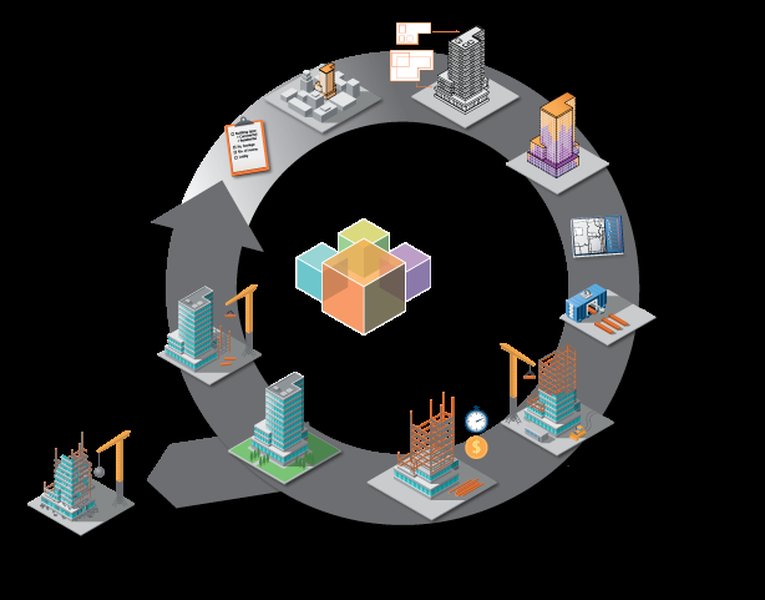
BIM serves as a central hub for project information across its lifecycle.
Why Information Management is the "New BIM"
Some industry thought leaders describe digital information management as the "new BIM." This perspective underscores that the technologies and processes are fundamentally about structuring, exchanging, and utilizing information more effectively. It moves beyond software specifics to focus on the principles of data governance, interoperability, and lifecycle thinking. This approach involves a systematic way of handling project data, ensuring everyone has access to the right information at the right time, thereby streamlining project management and reducing communication barriers.
Most Discussed Themes in BIM Information Management
Based on analyses of popular industry publications, blogs, and conference topics, the following themes consistently emerge as highly read and discussed areas within BIM information management. These represent the core knowledge areas professionals are actively seeking information on:
Foundational Concepts & Explainers
Articles and posts clarifying the basics remain popular, especially as new professionals enter the field or organizations begin their BIM journey.
Defining BIM Beyond 3D
Content exploring the definition of BIM as a process focused on information creation and management, rather than just software or 3D geometry, resonates strongly. This includes understanding concepts like Levels of Development/Detail (LOD).
Core Benefits & ROI Analysis
Posts detailing the tangible benefits – cost savings, risk reduction, improved collaboration, enhanced decision-making – and providing frameworks or case studies for understanding the Return on Investment (ROI) of BIM implementation are frequently sought after.
Understanding Digital Information Management Principles
Explainers focusing on the core tenets of managing digital information in a structured way, often drawing parallels with data management practices from other industries, are gaining traction.
Implementation Strategies & Adoption Insights
Practical advice on implementing BIM and navigating the associated changes is a perennial topic of interest.
Overcoming Adoption Barriers
Articles discussing common challenges like resistance to change, the need for training, initial costs, technical jargon, and achieving genuine interoperability between different software platforms are widely read. Solutions and strategies for overcoming these hurdles are particularly popular.
BIM Implementation Frameworks
Content outlining structured approaches to BIM adoption, including setting clear goals, developing BIM Execution Plans (BEPs), and choosing appropriate technologies, attracts significant attention.
Integrating BIM with Existing Workflows
Practical guides on how to integrate BIM processes smoothly into established project management and design workflows are essential reads for practitioners.
Standards and Governance
As BIM matures, standardization becomes crucial for consistency and collaboration.
The Central Role of ISO 19650
Posts explaining the ISO 19650 series of standards for information management using BIM are consistently among the most important and frequently accessed resources. This includes understanding concepts like the Common Data Environment (CDE), information requirements, and delivery processes.
Data Security and Information Protocols
With the increasing reliance on digital data, discussions around securing BIM information, establishing clear information exchange protocols, and managing data ownership are critical and widely discussed.
Advanced Applications & Integrations
Exploring the expanding capabilities and integrations of BIM captures significant interest.
Leveraging 4D/5D BIM for Project Controls
Articles detailing the use of BIM for schedule simulation (4D) and cost estimation/management (5D) are popular, often highlighting case studies demonstrating improved project predictability and control.
Asset Information Management (AIM) & Facility Management (FM)
Content focusing on the use of BIM data beyond the construction phase for ongoing operations, maintenance, and asset management (often linked to the concept of Digital Twins) is a growing area of interest.
BIM and GIS Integration
Discussions on combining BIM's detailed building information with the broader spatial context provided by Geographic Information Systems (GIS) for infrastructure projects and urban planning are increasingly relevant.
Sustainability and Lifecycle Assessment
Posts exploring how BIM facilitates sustainable design, energy analysis, and lifecycle assessments are important reads as environmental considerations become more prominent.
Key Roles & Responsibilities
Defining roles and required skills is essential for successful BIM information management.
The Information Manager Role Explained
Articles specifically defining the Information Manager role, as outlined in ISO 19650, detailing their responsibilities for overseeing the information management process, are crucial and highly sought after.
BIM Manager vs. Information Manager
Content clarifying the distinctions and overlaps between the traditional BIM Manager role (often focused on technology and model production) and the Information Manager role (focused on process and data flow according to standards) helps organizations structure their teams effectively.
Career Pathways and Skills
Discussions on career opportunities in BIM, required skills (technical and soft skills), training resources, and real-world experiences shared on platforms like LinkedIn and Reddit are popular among professionals looking to advance in the field.
Visualizing Key Facets of BIM Information Management
To understand the relative importance and focus within BIM information management discussions, the following chart visualizes the perceived emphasis on various critical facets. This is based on an analysis of recurring themes in industry publications and discussions, not on quantitative readership data. It highlights areas like Standards Compliance and Collaboration as highly central, with growing importance for areas like Data Security and Asset Management.
Mapping the BIM Information Management Ecosystem
BIM Information Management is a multifaceted domain involving various interconnected concepts, processes, roles, and technologies. The mindmap below provides a visual overview of this ecosystem, branching out from the central theme to show key components and relationships discussed in popular BIM literature.
Building information exchange)"] id5["Key Roles"] id5a["Information Manager"] id5b["BIM Manager"] id5c["BIM Coordinator"] id5d["BIM Modeler/Technician"] id5e["Project Manager"] id6["Enabling Technologies"] id6a["BIM Authoring Software
(e.g., Revit, ArchiCAD)"] id6b["Model Checking Software
(e.g., Solibri)"] id6c["Collaboration Platforms (CDEs)"] id6d["4D/5D Simulation Tools"] id6e["GIS Software"] id6f["Laser Scanning & Reality Capture"]
Spotlight on the Information Manager Role
A recurring theme in discussions about effective BIM information management is the necessity and function of dedicated roles. The Information Manager, often defined in the context of ISO 19650, plays a pivotal part in ensuring the smooth flow and quality control of project data. The following video explores the importance of this role within a BIM environment.
Exploring the necessity of the Information Manager role in BIM projects.
Common BIM Information Management Roles & Tasks
Different roles within a BIM project team contribute to information management in various ways. Understanding these roles and their typical responsibilities regarding data is crucial for structuring effective project teams. The table below outlines some common roles and their associated information management tasks, although specifics can vary by project and organization.
| Role | Typical Information Management Responsibilities |
|---|---|
| BIM Modeler / Technician | Creating accurate model geometry and embedding specified data; Adhering to modeling standards and data input requirements; Generating documentation from the model. |
| BIM Coordinator | Federating models from different disciplines; Performing clash detection and reporting; Ensuring interdisciplinary model consistency; Managing model exchange protocols within the design team. |
| BIM Manager | Developing and maintaining BIM standards and protocols for the organization or project; Managing BIM software licenses and technology infrastructure; Providing training and support to project teams; Overseeing overall model quality and BIM process implementation. |
| Information Manager (per ISO 19650) | Managing the Common Data Environment (CDE) process; Ensuring information exchange occurs according to agreed protocols and schedules; Verifying information deliverables against requirements; Facilitating collaborative use of information; Not necessarily focused on geometric modeling but on the information flow. |
| Project Manager | Ensuring BIM aligns with overall project goals and objectives; Leveraging BIM outputs for project controls (schedule, cost); Facilitating communication between BIM team and other stakeholders; Approving BIM deliverables as part of project milestones. |
| Asset / Facility Manager | Defining information requirements for handover (e.g., COBie); Utilizing BIM data for operations, maintenance, and space management post-construction; Managing the Asset Information Model (AIM). |
Frequently Asked Questions (FAQ)
What is the difference between BIM and BIM Information Management?
Why is ISO 19650 so important for BIM Information Management?
Is an Information Manager the same as a BIM Manager?
What is a Common Data Environment (CDE)?
Recommended Further Exploration
- Explore the practical challenges and solutions for implementing the ISO 19650 standard in real-world projects.
- Investigate the features and differences between various Common Data Environment (CDE) software platforms available for BIM.
- Learn more about how BIM data transitions from construction handover to support long-term facility and asset management, including the concept of Digital Twins.
- Discover the specific skills, qualifications, and certifications sought after for professionals pursuing careers as BIM Information Managers.
References
Last updated May 5, 2025