
Understanding Dark Matter: The Invisible Backbone of the Universe
Unveiling the mysteries of the cosmos through dark matter's elusive presence
Key Takeaways
- Dark matter constitutes approximately 27% of the universe’s mass-energy content, playing a crucial role in the formation and structure of galaxies.
- Its existence is primarily inferred through gravitational effects, such as galaxy rotation curves and gravitational lensing, since it does not interact with electromagnetic radiation.
- The leading candidates for dark matter particles include WIMPs, axions, and sterile neutrinos, though their exact nature remains one of the most significant open questions in modern physics.
Introduction to Dark Matter
Dark matter is a profound and enigmatic component of the universe, making up roughly 27% of its total mass-energy content. Unlike ordinary matter, which we can see and interact with through electromagnetic forces, dark matter does not emit, absorb, or reflect light or any other form of electromagnetic radiation. This invisibility renders dark matter detectable only through its gravitational interactions, making it one of the most intriguing subjects in contemporary astrophysics and cosmology.
Evidence for Dark Matter
Galactic Rotation Curves
One of the earliest and most compelling pieces of evidence for dark matter comes from the observation of galaxy rotation curves. When astronomers measured the rotational speeds of stars in galaxies, they found that stars far from the galactic center were moving much faster than could be explained by the visible mass alone. According to Newtonian mechanics, the rotation speed should decrease with distance from the center, but instead, the speeds remained constant or even increased, suggesting the presence of an unseen mass enveloping the galaxy.
Gravitational Lensing
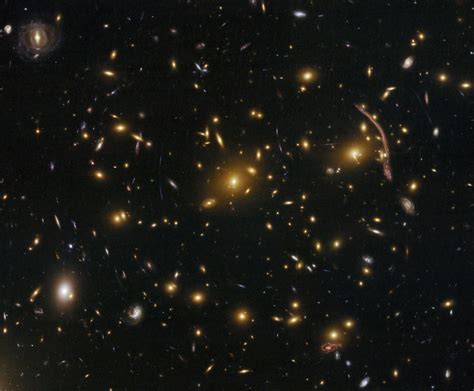
Gravitational lensing occurs when the gravitational field of a massive object bends the path of light coming from a more distant object. Observations of gravitational lensing, especially around galaxy clusters, reveal that the amount of visible matter cannot account for the degree of lensing observed. This discrepancy indicates the presence of substantial amounts of dark matter within and around these clusters.
Cosmic Microwave Background (CMB)
The Cosmic Microwave Background radiation provides a snapshot of the early universe. The fluctuations in the CMB's temperature and polarization patterns are best explained by the existence of dark matter, which influenced the formation of large-scale structures in the universe. These patterns align closely with predictions from models that include dark matter, reinforcing its pivotal role in cosmic evolution.
Large-Scale Structure Formation
The formation and distribution of galaxies and galaxy clusters across the universe align with theoretical models that incorporate dark matter. Dark matter acts as a scaffold, facilitating the coalescence of ordinary matter into the complex structures observed today. Without dark matter, the timeline and process of structure formation would not match observational data.
Composition and Candidates of Dark Matter
Despite extensive research, the exact composition of dark matter remains unknown. However, several leading hypotheses propose different types of particles that could constitute dark matter:
Weakly Interacting Massive Particles (WIMPs)
WIMPs are among the most studied dark matter candidates. These hypothetical particles interact primarily through the weak nuclear force and gravity, making them difficult to detect. They are predicted to have masses roughly comparable to that of protons or heavier, which would account for the gravitational effects attributed to dark matter.
Axions
Axions are extremely light, nearly massless particles proposed to resolve the strong CP problem in quantum chromodynamics. They are also considered viable dark matter candidates due to their weak interactions and ability to form a cold dark matter halo around galaxies.
Sterile Neutrinos
Sterile neutrinos are a type of neutrino that do not interact via any of the fundamental forces except gravity. Unlike regular neutrinos, which interact through the weak nuclear force, sterile neutrinos would be even more elusive, making them a compelling dark matter candidate.
Properties of Dark Matter
Gravitational Interaction
Dark matter interacts with ordinary matter predominantly through gravity. This gravitational pull is sufficient to influence the motion of stars within galaxies and the bending of light around massive objects, as observed in gravitational lensing.
Non-Baryonic Nature
Dark matter is believed to be non-baryonic, meaning it does not consist of protons, neutrons, and electrons, the building blocks of ordinary matter. This distinguishes it from the matter that makes up stars, planets, and living organisms.
Cold Dark Matter
Dark matter is classified as "cold," indicating that its constituent particles move slowly compared to the speed of light. This property is crucial for the formation of structures in the universe, as it allows dark matter to clump together under gravity, providing the necessary scaffolding for galaxy formation.
Role of Dark Matter in the Universe
Dark matter plays an indispensable role in the cosmos, influencing both the large-scale structure and the dynamics of galaxies:
Structure Formation
In the early universe, dark matter provided the gravitational wells necessary for ordinary matter to accumulate and form stars and galaxies. Without dark matter, the timeline for structure formation would be inconsistent with observations, and the universe would lack the complex web of galaxies and clusters we observe today.
Galactic Stability
Dark matter halos envelop galaxies, contributing to their overall mass and ensuring their rotational stability. These halos prevent galaxies from flying apart due to the rapid rotation speeds of their constituent stars, thereby maintaining the integrity of galactic structures over billions of years.
Cosmic Web
The universe's large-scale structure resembles a vast cosmic web, with galaxies and galaxy clusters interconnected by filaments of dark matter. This web-like structure is a direct consequence of dark matter's gravitational influence, shaping the distribution of visible matter across the cosmos.
Detection and Research Efforts
Detecting dark matter directly has proven to be extraordinarily challenging due to its non-interactive nature with electromagnetic forces. However, multiple experimental approaches are underway to uncover its secrets:
Particle Accelerators
Facilities like the Large Hadron Collider (LHC) attempt to produce dark matter particles through high-energy collisions. By analyzing the results of these collisions, scientists hope to identify signatures consistent with dark matter particles.
Direct Detection Experiments
Experiments such as the Cryogenic Dark Matter Search (CDMS) and Xenon1T seek to detect dark matter particles interacting with ordinary matter in highly sensitive detectors. These experiments aim to observe the rare and subtle interactions that dark matter particles might have with atomic nuclei.
Indirect Detection
Indirect detection methods involve searching for the byproducts of dark matter annihilations or decays, such as high-energy photons or neutrinos. Telescopes and space-based observatories monitor regions with high dark matter concentrations to identify these potential signals.
Astrophysical Observations
Precise measurements of galaxy rotation curves, gravitational lensing, and the cosmic microwave background provide indirect evidence for dark matter. Advances in telescope technology and observational techniques continue to refine our understanding of dark matter's distribution and properties.
Theoretical Models and Alternatives
While the dark matter hypothesis remains the leading explanation for various cosmic phenomena, alternative theories have been proposed:
Modified Newtonian Dynamics (MOND)
MOND suggests that the laws of gravity are different at galactic scales, eliminating the need for dark matter to explain the observed rotational speeds of galaxies. However, MOND struggles to account for all observations, such as the gravitational lensing data and the cosmic microwave background fluctuations.
Emerging Theories
New theories continue to emerge, aiming to reconcile discrepancies in our understanding of gravity and matter. These include modifications to general relativity and proposals for new fundamental forces, but none have yet achieved the comprehensive explanatory power of the dark matter framework.
Current Challenges and Future Directions
Despite significant progress, several challenges remain in the quest to understand dark matter:
Lack of Direct Detection
The absence of direct detection of dark matter particles remains a critical obstacle. While indirect evidence strongly supports its existence, confirming the nature of dark matter requires unambiguous detection, which has yet to be achieved.
Diverse Theoretical Models
The multitude of dark matter candidates complicates the search for definitive evidence. Each theoretical model predicts different properties and interactions, necessitating a broad range of experimental approaches to cover all possibilities.
Technological Limitations
Current detection technologies may not be sufficiently sensitive to capture the rare interactions expected from dark matter particles. Advancements in detector sensitivity and data analysis techniques are essential to overcome these limitations.
Interdisciplinary Collaboration
Understanding dark matter requires collaboration across various scientific disciplines, including particle physics, astrophysics, and cosmology. Enhanced interdisciplinary efforts are crucial to integrate theoretical models with observational data effectively.
Conclusion
Dark matter remains one of the most profound mysteries in modern science. Its pervasive presence influences the structure and evolution of the universe, yet its elusive nature continues to challenge our understanding. Ongoing research and technological advancements hold the promise of unraveling the secrets of dark matter, potentially revolutionizing our knowledge of the cosmos and the fundamental laws that govern it.
References
Last updated January 16, 2025