
Defending the Word: U.S. Libraries Amidst the Cold War Chill and McCarthy's Shadow
An exploration of how American libraries navigated censorship, fear, and the fight for intellectual freedom during a tumultuous era.
The mid-20th century plunged the United States into the ideological battleground of the Cold War, a period characterized by intense suspicion and the fervent anti-communist campaign known as McCarthyism. U.S. libraries, traditionally bastions of knowledge and free inquiry, found themselves at the epicenter of this storm, grappling with unprecedented pressures to censor materials, scrutinize staff, and align with nationalistic fervor. This response delves into the challenging history of American libraries during these years, highlighting their struggles, acts of resistance, and the enduring legacy of their commitment to intellectual freedom.
Key Insights: Libraries on the Front Lines
- Censorship Pressures: Libraries faced immense pressure from government bodies and citizen groups to remove books and materials deemed "subversive," pro-communist, or critical of American values.
- The ALA's Stand: The American Library Association (ALA) emerged as a crucial defender of intellectual freedom, notably co-authoring the "Freedom to Read Statement" in 1953 as a direct response to these challenges.
- A Dual Role: While some libraries succumbed to pressure or engaged in self-censorship, many librarians courageously resisted, striving to uphold the principles of free access to information for all.
The Political Cauldron: Cold War and McCarthyism
The Red Scare's Long Shadow
The period following World War II, from roughly 1947 to 1991, was dominated by the Cold War, a global struggle for supremacy between the United States and the Soviet Union. This ideological conflict fostered an atmosphere of fear and suspicion within American society. The "Red Scare" intensified in the late 1940s and early 1950s, largely fueled by Senator Joseph McCarthy of Wisconsin. McCarthyism, characterized by aggressive investigations and accusations of communist infiltration, targeted various American institutions, including libraries, which were viewed as potential conduits for disseminating communist propaganda.
Libraries, both domestic and the U.S. Information Agency (USIA) overseas libraries, were thrust into the role of supporting national foreign policy. Overseas libraries, in particular, were expected to project a "full and fair" image of America, leading to scrutiny and removal of any materials that could be perceived as critical of the U.S. or fuel Soviet propaganda efforts.
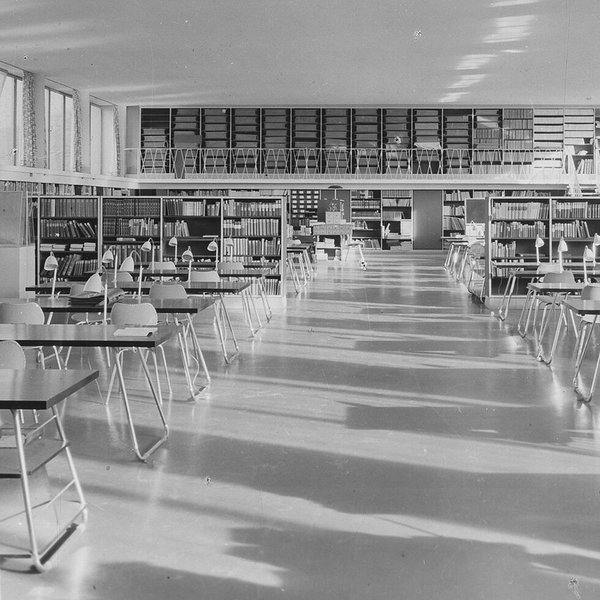
A library reading room in 1954, a period when access to information was under intense scrutiny.
Libraries Under Fire: Censorship and Scrutiny
The Battle for the Bookshelves
During the peak of McCarthyism (roughly 1950-1954), libraries became significant targets. Anti-communist groups, including patriotic organizations like the American Legion and moral crusaders such as the National Organization for Decent Literature (NODL), exerted considerable pressure on libraries to purge their collections.
Demands for Removal
Lists of "subversive" authors and titles circulated, and libraries were urged to remove books perceived as promoting communism, socialism, anarchism, or anything deemed un-American or profane. Children's literature and materials accessible to young readers were particularly targeted. There were even instances of book burnings, notably involving materials in U.S. overseas libraries that McCarthy's investigators deemed inappropriate.
Scrutiny of Librarians
Librarians themselves were not immune to suspicion. They were investigated for potential ties to radical political groups, and their personal beliefs and past associations came under review. This created a chilling effect, leading to self-censorship as librarians and library boards sought to avoid controversy. Access to controversial books was often restricted, with items placed "by request only" rather than on open shelves.
Overseas Libraries Controversy
The State Department's overseas libraries faced intense scrutiny from Senator McCarthy and his aides. Lists of holdings were demanded, and books by authors deemed sympathetic to communism or critical of American society were removed. This "indiscriminate weeding" was feared to compromise the libraries' utility as instruments of anti-communist propaganda itself, as it could undermine their credibility.
Standing Firm: Resistance and the Defense of Intellectual Freedom
The "Freedom to Read Statement"
Despite the oppressive atmosphere, the library community mounted significant resistance. The American Library Association (ALA) played a pivotal role in defending intellectual freedom. Building upon its longstanding Library Bill of Rights, the ALA, in collaboration with the American Book Publishers Council, convened a meeting in May 1953 with librarians, publishers, and cultural leaders. This landmark meeting led to the drafting of the Freedom to Read Statement.
This powerful declaration affirmed the importance of providing a wide range of viewpoints, opposing censorship, and defending democracy. It asserted that it is in the public interest for publishers and librarians to make available the widest diversity of views and expressions, including those that are unorthodox or unpopular. Many individual librarians also courageously resisted censorship attempts, upholding their professional ethics even when facing personal and professional risks.
This video, "Libraries in the Crosshairs | McCarthy | American Experience," discusses how books and authors came under fire during McCarthy's anti-communist campaign, providing context to the pressures libraries faced.
The video above offers a glimpse into the intense pressures faced by libraries and the literary world during the McCarthy era. It underscores how the anti-communist fervor extended to the very contents of library shelves, targeting authors and ideas deemed threatening to the prevailing ideology. This context is crucial for understanding the courage and conviction required by librarians and organizations like the ALA to stand against such widespread censorship efforts.
Navigating the Ideological Minefield: A Comparative Look
The intensity of pressures on libraries and the corresponding efforts to defend intellectual freedom fluctuated throughout the Cold War and McCarthy era. The following radar chart offers a conceptual representation of these dynamics across different phases, comparing factors such as Censorship Pressure, Librarian Resistance, ALA Activism, Government Scrutiny, Public Fear, and the overall Defense of Intellectual Freedom. The values are illustrative, reflecting general trends rather than precise quantitative data.
This chart illustrates how the peak of McCarthyism saw the highest levels of censorship pressure, government scrutiny, and public fear. Concurrently, librarian resistance, ALA activism, and the broader defense of intellectual freedom also intensified in response to these challenges. As McCarthy's influence waned, these pressures generally decreased, but the commitment to intellectual freedom within the library profession remained strong.
Mapping the Era: Interconnected Forces
The challenges faced by U.S. libraries during the Cold War and McCarthy era were a complex interplay of geopolitical tensions, domestic political crusades, institutional responses, and individual actions. The mindmap below visualizes these interconnected elements, providing a clearer understanding of the landscape in which libraries operated.
Cold War & McCarthy Era"] id1["Geopolitical Context"] id1a["Cold War (1947-1991)"] id1b["Soviet-US Ideological Conflict"] id1c["Global Propaganda Battles"] id2["McCarthyism (Red Scare)"] id2a["Senator Joseph McCarthy"] id2b["Anti-Communist Hysteria"] id2c["House Un-American
Activities Committee (HUAC)"] id2d["Investigations & Accusations"] id3["Impact on Libraries"] id3a["Targets of Scrutiny"] id3b["Censorship Demands"] id3b1["Removal of 'Subversive' Books"] id3b2["Book Burnings (Overseas)"] id3b3["Targeting Specific Genres
(Comics, Paperbacks)"] id3c["Scrutiny & Intimidation
of Librarians"] id3d["Overseas Libraries (USIA) Politicized"] id3e["Self-Censorship by Institutions"] id3f["Restricted Access to Materials"] id4["Resistance & Defense"] id4a["American Library Association (ALA)"] id4a1["Library Bill of Rights"] id4a2["Freedom to Read Statement (1953)"] id4a3["Office for Intellectual Freedom (later, 1967)"] id4b["Individual Librarians' Courage"] id4c["Publishers' Alliances"] id4d["Public Opposition to Censorship"] id5["Broader Societal Impact"] id5a["Chilling Effect on Free Speech"] id5b["Civil Defense Role (Fallout Shelters)"] id6["Legacy & Aftermath"] id6a["McCarthy's Censure (1954)"] id6b["Strengthened Commitment to
Intellectual Freedom"] id6c["Shaped Modern Library Policies & Ethics"] id6d["Enduring Vigilance Against Censorship"]
This mindmap illustrates how the overarching Cold War created the conditions for McCarthyism, which directly impacted libraries through censorship and scrutiny. In response, organizations like the ALA and individual librarians spearheaded efforts to defend intellectual freedom, leaving a lasting legacy on the profession and its values.
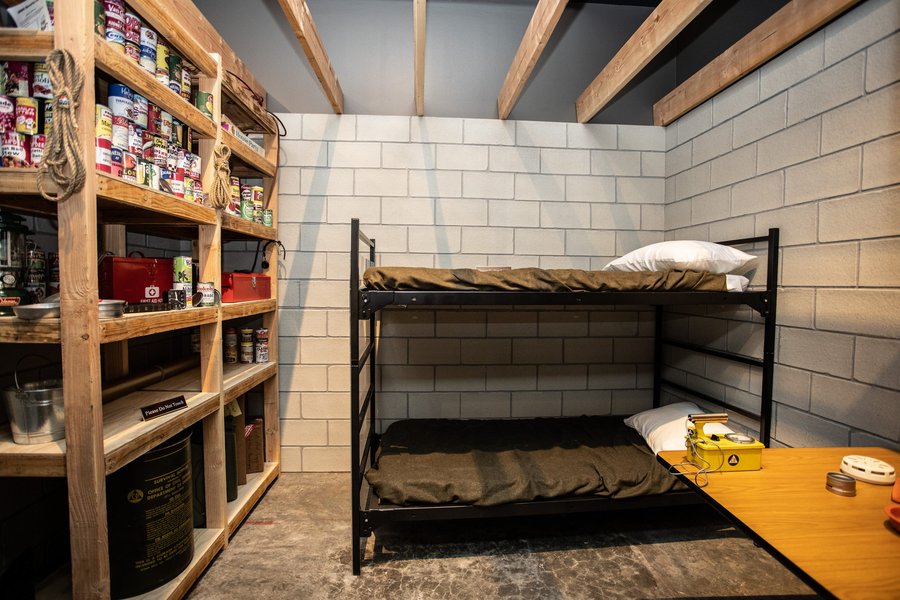
A representation of a Cold War fallout shelter. Some libraries adapted their buildings to include such facilities and disseminated survival information, reflecting broader societal concerns.
Key Actors and Their Influence
The drama unfolding in and around U.S. libraries during the Cold War and McCarthy era involved various individuals, groups, and institutions. The following table summarizes some of the key actors, their roles, and their impact on libraries:
| Actor/Entity | Role/Actions During McCarthy Era | Impact on Libraries |
|---|---|---|
| Senator Joseph McCarthy | Led aggressive anti-communist investigations, accused institutions (including libraries) of harboring subversive elements and materials. | Fueled climate of fear, directly instigated scrutiny of overseas library collections, leading to book removals and even burnings. Increased pressure for censorship in domestic libraries. |
| Pressure Groups (e.g., American Legion, National Organization for Decent Literature) | Campaigned for the removal of materials they deemed "un-American," "indecent," or pro-communist from public and school libraries. | Led to widespread challenges to books, particularly those accessible to children and young adults (e.g., comics, paperbacks), and influenced library acquisition and shelving policies. |
| American Library Association (ALA) | Actively resisted censorship, defended intellectual freedom, and co-drafted the "Freedom to Read Statement" (1953) with publishers. | Provided a crucial institutional voice against censorship, offered guidance and support to librarians, and established foundational principles for intellectual freedom that continue to guide the profession. |
| Individual Librarians | Many librarians resisted censorship demands, sought to maintain diverse collections, and upheld professional ethics, sometimes at personal risk or facing professional scrutiny. | Preserved access to a broader range of information, acted as frontline defenders of intellectual freedom, and demonstrated courage in upholding democratic principles. |
| U.S. Government (e.g., State Department, USIA) | Monitored and controlled collections in U.S. overseas libraries to ensure they presented a favorable image of the United States and supported anti-communist foreign policy. | Led to the purging of books by certain authors or on certain topics critical of U.S. policy, effectively using these libraries as instruments of propaganda, which sometimes conflicted with principles of free access. |
| Publishers and Book Sellers | Collaborated with the ALA on the "Freedom to Read Statement"; some faced pressure to stop distributing materials targeted by censors. | Strengthened the coalition defending free expression; some faced economic repercussions or legal challenges due to the content they published or sold. |
The Waning of Hysteria and Enduring Legacy
From Fear to Fortitude
The tide of anticommunist hysteria began to recede somewhat after Senator Joseph McCarthy was formally censured by the U.S. Senate in December 1954. His credibility suffered, and the most intense period of McCarthyism drew to a close. However, the Cold War continued for decades, and concerns about censorship and intellectual freedom persisted, albeit often in different forms.
The experiences of the McCarthy era profoundly shaped the American library profession. Librarians and library associations emerged with a strengthened commitment to defending free speech and ensuring open access to information. The principles articulated in the Library Bill of Rights and the Freedom to Read Statement became foundational to modern librarianship in the United States. This period underscored the vital role of libraries as democratic institutions and guardians against the suppression of ideas, a role that continues to be challenged and defended to this day.
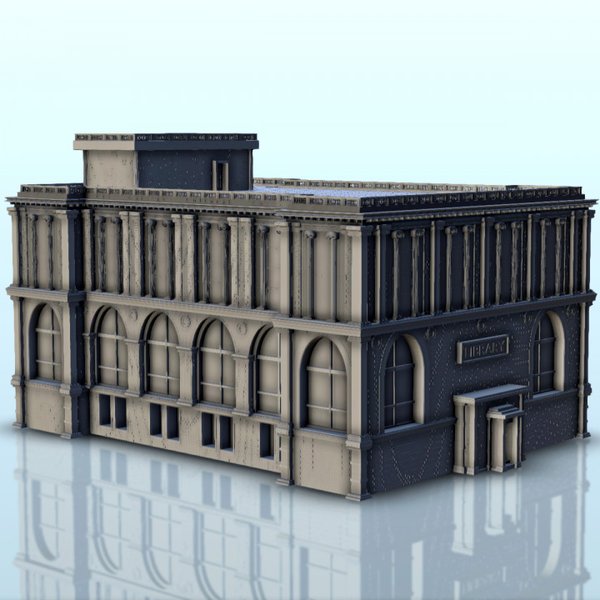
An architectural model of the historic Chicago Public Library, a type of institution central to the debates on information access during the Cold War.
Frequently Asked Questions (FAQ)
What was McCarthyism and how did it affect U.S. libraries?
What was the "Freedom to Read Statement"?
How did librarians respond to the pressures of the McCarthy era?
Were U.S. overseas libraries also affected?
What is the lasting legacy of this period on U.S. libraries?
Conclusion
The Cold War and McCarthy era represent a critical chapter in the history of U.S. libraries. It was a period of profound challenge, where the fundamental principles of intellectual freedom were tested by widespread fear and political pressure. Libraries and librarians found themselves on the front lines of an ideological battle, navigating demands for censorship while striving to uphold their commitment to providing open access to information. The resistance mounted by the American Library Association and countless individuals in the face of such adversity not only helped preserve access to diverse collections but also forged a stronger, more resilient professional ethic centered on the defense of free inquiry. The legacy of this era serves as an enduring reminder of the vital role libraries play in a democratic society and the constant vigilance required to protect the freedom to read.
Recommended Further Exploration
- What specific books were targeted for removal from U.S. libraries during the McCarthy era?
- Explore personal accounts of librarians who resisted censorship during the 1950s.
- How did the U.S. government use overseas libraries as tools of cultural diplomacy during the Cold War?
- Compare the censorship challenges faced by libraries during McCarthyism to contemporary book banning efforts.