
Mastering Venture Capital Analysis: Your Path to Evaluating Autonomous Marine Vehicle Startups
A comprehensive guide to leveraging your VC coursework for a compelling autonomous surface vehicle startup analysis.
Key Insights for Your Analysis
- Focus on both financial and qualitative factors: Venture Capital analysis for startups, especially in emerging fields like autonomous maritime vehicles, goes beyond traditional financial modeling. Highlight your ability to assess the team, market potential, technology, and execution risk alongside financial projections.
- Demonstrate understanding of the VC valuation methods: Since autonomous vehicle startups are often pre-revenue or early-stage, traditional valuation methods are less applicable. Showcase your knowledge of VC-specific valuation techniques like the Venture Capital Method or Risk Factor Summation Method.
- Tailor your analysis to the unique aspects of the autonomous maritime vehicle market: Emphasize your research into the specific challenges, opportunities, regulations, and competitive landscape within this niche sector.
Embarking on a career as a Venture Capital (VC) Analyst requires a unique blend of financial acumen, market understanding, and the ability to assess the potential of early-stage companies. Your plan to combine theoretical learning from VC courses with a practical analysis of a startup in the autonomous unmanned surface maritime vehicle (USV) space is an excellent approach to demonstrate your capabilities to potential employers.
Drawing from the suggested coursework, which likely covers areas such as venture fund fundamentals, startup analysis, financial modeling, deal sourcing, due diligence, and valuation, your analysis of an autonomous USV startup should be a comprehensive document that touches upon these key areas. It needs to be more than just a theoretical exercise; it should feel like a genuine assessment for a potential investment.
Understanding the Venture Capital Analyst Role
A Venture Capital Analyst plays a critical role within a VC firm. Their primary responsibilities include identifying potential investment opportunities (deal sourcing), conducting in-depth research and evaluation of startups (due diligence), building financial models to project future performance, assisting in deal negotiation, and monitoring portfolio companies. The courses you plan to take will equip you with the foundational knowledge in these areas.
Entry-level courses often focus on the fundamentals of venture capital, including how funds are structured, the different stages of funding, and the roles within a VC firm. More advanced courses might delve into sophisticated valuation techniques, term sheet negotiation, and portfolio management. By undertaking these courses, you gain exposure to the theoretical frameworks and practical skills necessary for the role.
Deconstructing Your VC Coursework
Based on typical VC course content, here's a breakdown of the key areas you would likely cover and how they translate to your autonomous USV startup analysis:
Venture Fund Fundamentals and Deal Flow
This section of your coursework would introduce you to the structure of venture capital funds, how they raise capital, and their investment strategies. Understanding deal flow involves learning how VCs identify and attract potential investment opportunities. In your analysis, you should briefly touch upon how a startup like the one you are analyzing would fit within a typical VC fund's investment thesis. For instance, would it be a seed-stage, early-stage, or growth-stage investment? What kind of returns would a VC fund typically expect from such an investment?
Startup Fundamentals and Business Model Analysis
VC courses emphasize understanding the core elements of a successful startup. This includes analyzing the problem the startup is solving, its target market, its product or service, its business model, and its go-to-market strategy. For your autonomous USV startup analysis, you need to:
- Clearly articulate the specific problem the startup's autonomous surface vehicles address in the maritime industry (e.g., data collection, surveillance, logistics, defense).
- Define the target market for these vehicles (e.g., commercial shipping, scientific research, military, environmental monitoring).
- Explain the technology behind their autonomous vehicles and its competitive advantages.
- Detail their business model – how do they plan to generate revenue? (e.g., vehicle sales, service contracts, data subscriptions).
- Outline their strategy for reaching and acquiring customers.
Market Analysis and Trends
A crucial part of VC analysis is understanding the market size, growth potential, and key trends within the industry the startup operates in. Your coursework would cover market research techniques. In your analysis of the autonomous USV startup, you should:
- Provide an estimate of the total addressable market (TAM), serviceable available market (SAM), and serviceable obtainable market (SOM) for autonomous maritime vehicles.
- Discuss the key trends driving the growth of this market, such as increasing demand for maritime data, the need for cost reduction in maritime operations, and advancements in AI and robotics.
- Identify the competitive landscape, including other startups and established companies in the autonomous maritime vehicle sector. Companies like Saronic, OceanAlpha, and Sea Machines Robotics are examples of players in this space.
Here is a table summarizing some companies in the Unmanned Surface Vehicle (USV) and Autonomous Surface Vehicle (ASV) market:
| Company | Focus/Products | Potential Applications |
|---|---|---|
| Saronic Technologies | Intelligent Autonomous Surface Vessels | Naval and maritime forces, defense |
| OceanAlpha | Unmanned Surface Vehicles / Autonomous Surface Vehicles | Data acquisition, various maritime tasks |
| Sea Machines Robotics | Autonomous control and navigation systems for commercial boats and ships | Commercial shipping, marine sector |
| HydroSurv | Uncrewed Surface Vessels for hydrographic, geophysical, and environmental data acquisition | Hydrographic survey, environmental monitoring, nearshore/offshore operations |
| Vessel X, LTD. | Autonomous Water Surface Vessels for coastal and marine pollution management | Water surface cleaning, environmental monitoring |
| Saildrone | Energy-harvesting unmanned autonomous boats with sensors | Ocean data collection, environmental assessment, maritime domain awareness |
Due Diligence
VC due diligence is a thorough investigation of a startup before investment. Your coursework would cover the various aspects of due diligence, including commercial, financial, legal, and technical due diligence. In your analysis, you should demonstrate your understanding by outlining the key areas you would investigate for the autonomous USV startup:
- Team Evaluation: Assess the experience, expertise, and track record of the founding team and key personnel. Their background in robotics, maritime technology, and business is crucial.
- Technology Assessment: Evaluate the maturity, scalability, and defensibility of their autonomous technology. Is it proprietary? Are there patents? How easily can competitors replicate it?
- Market Validation: Have they conducted pilot programs or secured initial customers? What is the feedback?
- Financial Health (if applicable): Analyze any existing financial statements, funding history, and burn rate.
- Legal and Regulatory: Research any relevant maritime regulations or certifications required for autonomous vessels.
Examining the Investor's Perspective on Startup Evaluation
This video provides insights into how investors evaluate startups, covering key criteria and due diligence processes. It can help inform your analysis by offering a framework for assessing the autonomous USV startup from a VC's point of view, ensuring you cover the essential elements that matter to potential investors.
Financial Modeling and Valuation
VC courses often dedicate significant time to financial modeling and startup valuation, which differ significantly from valuing established companies. You would learn about projecting revenue, expenses, and cash flows for early-stage companies with limited historical data. Key valuation methods for startups include the Venture Capital Method, Berkus Method, and Risk Factor Summation Method. In your analysis, you must:
- Create a simplified financial model projecting the startup's revenue and expenses over a reasonable timeframe (e.g., 5-7 years), justifying your assumptions based on market research and the startup's business model.
- Apply at least one VC-specific valuation method to arrive at a pre-money and post-money valuation for a potential investment round. Explain why this method is appropriate for an early-stage company in this sector.
- Discuss key financial metrics relevant to the startup's stage, such as customer acquisition cost (CAC), lifetime value (LTV), and burn rate.
Risk Assessment and Mitigation
Investing in startups is inherently risky. VC courses teach you to identify and assess various risks and evaluate the startup's strategies to mitigate them. For the autonomous USV startup, you should identify and analyze risks such as:
- Technology Risk: Can they successfully develop and scale their autonomous technology?
- Market Adoption Risk: Will the target market adopt autonomous USVs? Are there barriers to adoption?
- Regulatory Risk: Are there evolving regulations for autonomous maritime vehicles?
- Competition Risk: How will they fare against existing and new competitors?
- Execution Risk: Can the team effectively execute their business plan?
For each identified risk, discuss the startup's proposed mitigation strategies and offer your assessment of their effectiveness.
Structuring Your Analysis Document
To create a compelling analysis product, structure it as an investment memo or a due diligence report that a VC analyst would prepare for their partners. A potential structure could include:
- Executive Summary: A concise overview of the opportunity, the startup, the proposed investment, and your recommendation.
- The Opportunity: Describe the market need and the problem the startup is solving.
- The Company: Detail the startup's product/service, technology, and business model.
- Market Analysis: Present your findings on market size, trends, and competition.
- Team: Evaluate the strength and experience of the founding team.
- Technology Deep Dive: Explain the technology and its competitive advantages.
- Go-to-Market Strategy: Analyze their plan for acquiring customers.
- Financial Analysis and Valuation: Present your financial projections and valuation analysis.
- Risks and Mitigation: Detail the key risks and how the startup addresses them.
- Deal Terms (Hypothetical): Propose hypothetical investment terms (e.g., investment amount, equity stake).
- Recommendation: Provide a clear recommendation on whether to invest and why.
- Appendices: Include your financial model, market research data, and sources.
Remember to use clear, concise language and support your analysis with data and logical reasoning. Visual elements like charts and graphs (e.g., market growth projections, financial forecasts) can enhance your presentation.
Demonstrating Your Skills Through the Analysis
Your analysis should explicitly showcase the skills learned in your VC coursework. As you write each section, think about which course module it relates to. For example, when discussing valuation, mention the specific methods you applied and why. When analyzing the market, refer to the market research techniques you learned. This demonstrates that you can translate theoretical knowledge into practical application.
Furthermore, highlight your critical thinking abilities. Don't just present information; analyze it. Offer your informed opinion on the startup's potential, the risks involved, and the attractiveness of the investment opportunity. This shows employers that you can form independent judgments and contribute valuable insights.
Integrating Visual Elements and Data
To make your analysis more impactful, incorporate visual elements and data effectively. This could include charts illustrating market growth, graphs showing financial projections, and images of the autonomous USV technology.
Below is a radar chart illustrating a hypothetical assessment of the autonomous USV startup based on various VC evaluation criteria. This type of visual can quickly convey your perceived strengths and weaknesses of the startup.
Hypothetical Assessment of an Autonomous USV Startup
This radar chart visually represents a hypothetical evaluation of an autonomous USV startup across several key dimensions that venture capitalists consider. A score closer to the outer edge indicates a stronger perceived attribute. For instance, a high score in 'Market Potential' suggests a large and growing market for the startup's technology, while a lower score in 'Financial Projections' might indicate uncertainty in revenue forecasting at this early stage. The shape of the radar chart provides a quick visual summary of the startup's overall profile from an investment perspective.
Including images of autonomous surface vehicles can also make your analysis more engaging and help readers visualize the technology. Ensure that any images you use are relevant to the type of vehicles the startup is developing.
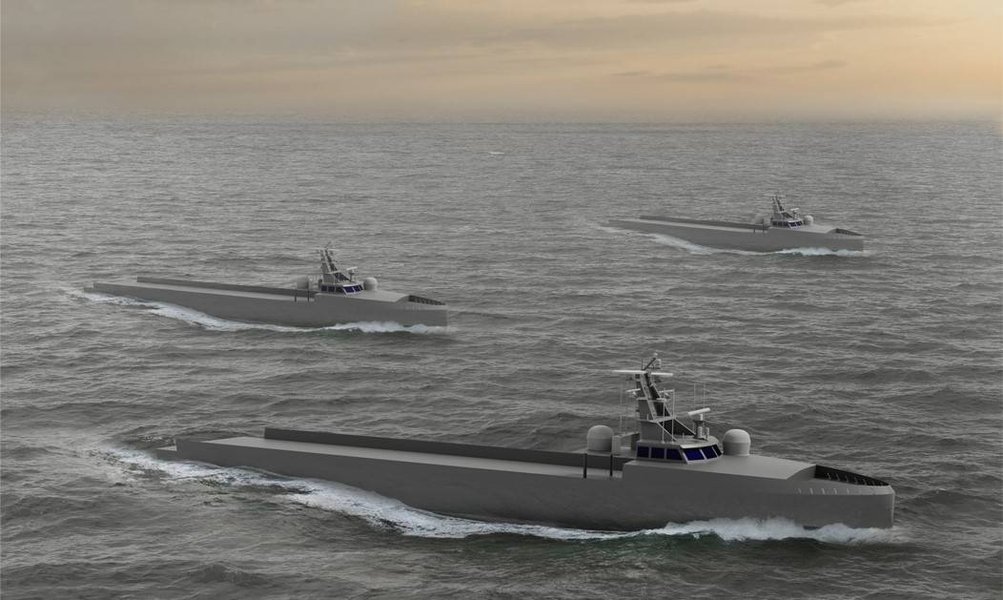
US Navy Medium USV Program Prototype
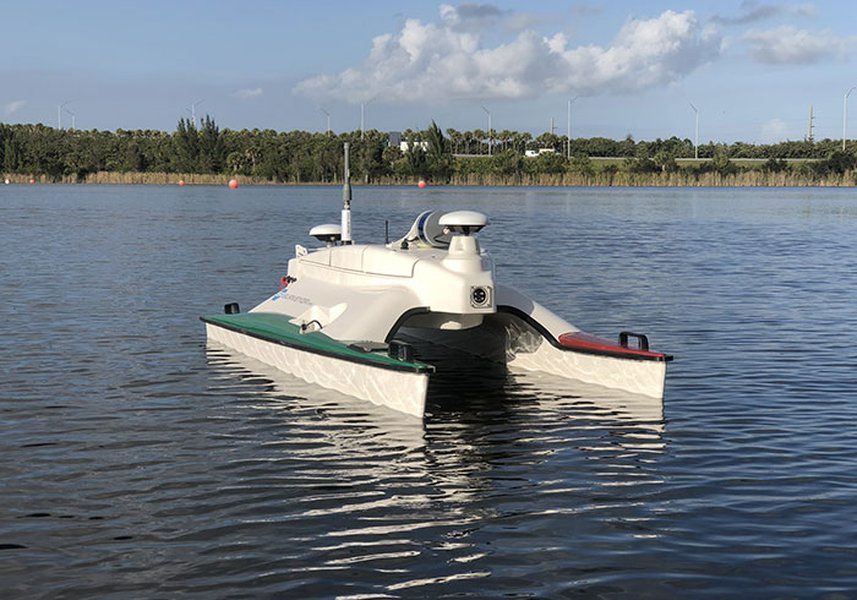
SeaRobotics Surveyor Class Autonomous Surface Vehicle
Tailoring to the Autonomous USV Niche
While the fundamental principles of VC analysis apply to any startup, it's crucial to tailor your analysis to the specific nuances of the autonomous unmanned surface maritime vehicle industry. This includes understanding the unique technical challenges (e.g., navigation in dynamic marine environments, power management, sensor technology), the regulatory landscape for autonomous vessels, the potential use cases across different maritime sectors, and the specific competitive dynamics within this niche.
Demonstrating a deep understanding of the autonomous USV market will significantly strengthen your analysis and show employers that you can quickly grasp complex industries and apply your VC knowledge effectively.
Cultivating Essential VC Analyst Skills
Beyond the theoretical knowledge gained from courses, your analysis should also subtly highlight key skills essential for a VC Analyst. These include:
- Research Skills: Demonstrated through your market analysis, competitive research, and due diligence efforts.
- Analytical Skills: Evident in your financial modeling, valuation, and risk assessment.
- Communication Skills: Reflected in the clarity, structure, and persuasiveness of your written analysis.
- Critical Thinking: Shown in your ability to evaluate the startup's potential and identify key risks and opportunities.
- Industry Knowledge: Displayed by your understanding of the autonomous USV market.
Expanding Your Knowledge Beyond Coursework
While your planned coursework provides a strong foundation, supplement your learning with additional research on the autonomous maritime vehicle industry. Read industry reports, follow news and developments in the sector, and perhaps even try to connect with professionals in the field for informational interviews. This extra effort will deepen your understanding and make your analysis more insightful.
FAQ Section
Recommended Further Exploration
- What are effective strategies for sourcing venture capital deals?
- How do you build accurate financial models for early-stage startups with limited data?
- What are the specific risks associated with investing in autonomous vehicle startups?
- What are the key terms negotiated in a venture capital term sheet?
References
Last updated May 20, 2025