
Unlocking Investment Potential: A Venture Capitalist's Blueprint for Analyzing an Autonomous USV Startup
A comprehensive framework for evaluating a high-tech venture in the maritime defense and offshore energy sectors.
Embarking on a career as a venture capital (VC) analyst requires a robust understanding of finance, strategy, and market dynamics. This summary outlines an exemplary analytical approach for a hypothetical startup, "AquaNav Autonomous Systems," which specializes in developing and manufacturing cutting-edge autonomous unmanned surface vehicles (USVs). These USVs are designed for a dual-use market: bolstering the operational capabilities of the US Navy and enhancing efficiency and safety within the offshore oil and gas industry. This detailed evaluation will demonstrate how knowledge gleaned from specialized courses can be integrated to perform a comprehensive due diligence process, crucial for making informed investment decisions.
Key Highlights of the Analytical Approach
- Integrated Skill Application: Demonstrating the synthesis of core finance, accounting, advanced financial modeling, and sophisticated valuation techniques to build a holistic investment thesis.
- Sector-Specific Valuation Nuances: Applying a blend of startup valuation methodologies, meticulously tailored to the unique characteristics and risk profiles of a pre-revenue, hardware-intensive USV company operating in specialized defense and energy markets.
- Strategic Foresight and Risk Assessment: Conducting a thorough analysis of market opportunities, competitive landscapes, technological hurdles, regulatory environments, and formulating potential exit strategies critical for venture capital success.
Introducing AquaNav Autonomous Systems & the USV Market Landscape
The Dawn of Maritime Autonomy
AquaNav Autonomous Systems is an early-stage technology venture focused on designing, developing, and deploying next-generation USVs. These sophisticated marine drones operate without an onboard human crew, offering capabilities ranging from remote control to fully autonomous operations. The target markets are:
- US Navy: For applications such as intelligence, surveillance, and reconnaissance (ISR), mine countermeasures, anti-submarine warfare, and maritime security, acting as force multipliers and reducing risk to personnel.
- Offshore Oil & Gas Industry: For tasks including pipeline inspection, platform security, environmental monitoring, hydrographic surveying, and logistical support, aiming to reduce operational costs and enhance safety in hazardous environments.
The global market for USVs is experiencing significant growth, with projections indicating an expansion from approximately $700 million in 2021 to an estimated $1.2 billion by 2027. This growth is fueled by increasing demand for maritime automation, advancements in AI and sensor technology, and the strategic importance of unmanned systems in both defense and commercial sectors.
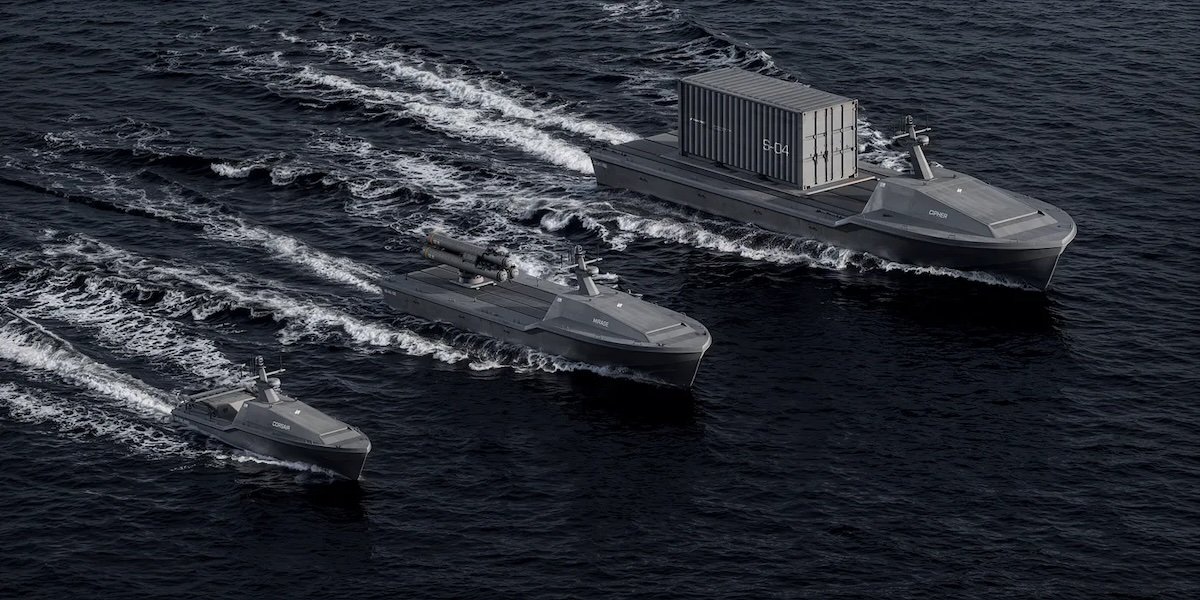
Saronic's 'Mirage' and 'Cipher' Autonomous Surface Vessels, examples of advanced USVs for defense applications.
Phase 1: Foundational Financial Acumen and Data Organization
The initial phase of the analysis involves establishing a strong financial groundwork, leveraging fundamental accounting principles and robust data management skills.
Excel Skills for Business (Macquarie University)
Structuring the Data Backbone
Proficiency in Excel is paramount for a VC analyst. For AquaNav, this involves creating dynamic and auditable financial spreadsheets. Key applications include:
- Organizing historical and projected financial data, including R&D expenditures, material costs for USV components (sensors, hulls, propulsion, autonomy software), and operational expenses.
- Developing detailed capitalization tables (cap tables) to track equity ownership, investor stakes, and potential dilution scenarios across various funding rounds.
- Building flexible models for scenario analysis and sensitivity testing, allowing for quick assessment of how variables like contract wins, component cost fluctuations, or development delays impact financial forecasts.
- Utilizing advanced Excel functions for data manipulation, creating pivot tables for cost analysis, and generating charts for visual representation of financial trends.
Intro to Financial Accounting (Wharton)
Deciphering Financial Health and Integrity
A thorough understanding of financial accounting is crucial for interpreting AquaNav's financial position and performance. This involves:
- Preparing and analyzing pro-forma financial statements: the Balance Sheet, Income Statement, and Cash Flow Statement. Given AquaNav is an early-stage startup, these will be largely projection-based, informed by market research and operational plans.
- Accurate asset valuation, particularly for intangible assets such as proprietary autonomy software, patents related to USV design or control systems, and intellectual property rights. Physical assets like prototype vessels and testing equipment also require careful accounting.
- Implementing correct revenue recognition policies, especially considering potential long-term defense contracts with milestone payments or service agreements in the offshore sector.
- Ensuring compliance with accounting standards for tracking grants, government funding inflows, and private investments. This scrutiny helps verify the financial integrity of the startup, a cornerstone of VC due diligence.
Phase 2: Sophisticated Financial Modeling and In-Depth Analysis
Building upon the foundational skills, the next phase focuses on developing comprehensive financial models to project AquaNav's future performance and assess its economic viability.
Business & Financial Modeling (Wharton, UPenn) & Financial Analysis for Success (UIUC)
Forecasting Future Performance and Viability
This stage involves constructing robust financial models that forecast AquaNav's trajectory over a multi-year horizon (typically 5-10 years for VC purposes). Key elements include:
- Revenue Projections: Based on detailed market sizing for US Navy and offshore oil applications, anticipated contract win rates, USV unit pricing, and potential recurring revenue from maintenance or data services. Assumptions will be clearly documented and stress-tested.
- Cost Structure Modeling: Detailed breakdown of Cost of Goods Sold (COGS) per USV unit (materials, labor, manufacturing overhead), Research & Development (R&D) expenses for ongoing technology enhancements, Sales, General & Administrative (SG&A) costs.
- Cash Flow Forecasting: Developing a Discounted Cash Flow (DCF) model, if applicable, or focusing on cash burn rate and runway calculations, critical for an early-stage, capital-intensive startup like AquaNav.
- Scenario and Sensitivity Analysis: Modeling various scenarios (e.g., baseline, optimistic, pessimistic) based on different assumptions about market adoption, contract success, technological development timelines, and competitive pressures. Sensitivity analysis will identify key value drivers and risk factors (e.g., impact of a 10% change in sensor costs or a 6-month delay in a key Navy contract).
- Key Performance Indicators (KPIs): Identifying and tracking relevant KPIs such as customer acquisition cost (CAC), lifetime value (LTV) if applicable, R&D productivity, sales cycle length, and manufacturing efficiency.
- Break-Even Analysis: Determining the point at which AquaNav could achieve profitability under various scenarios.
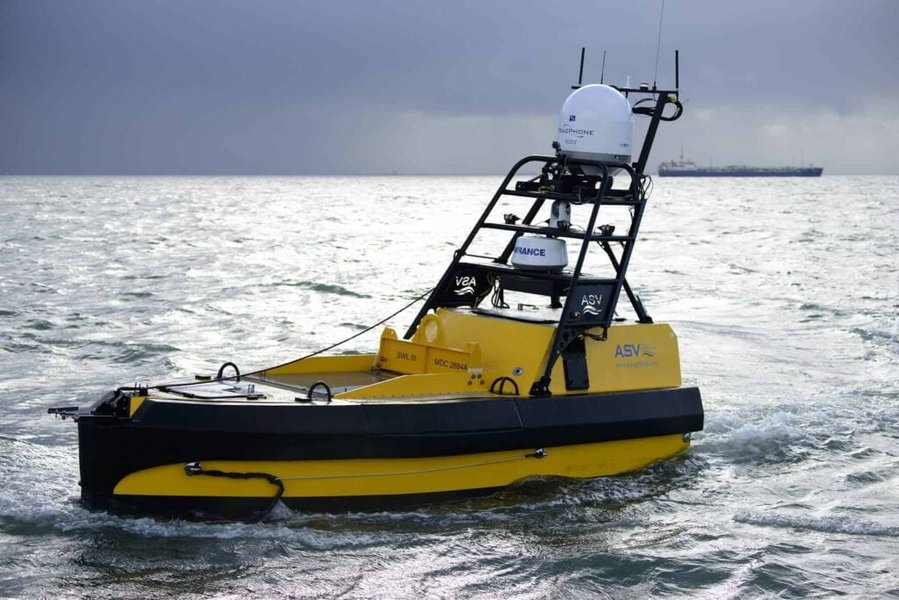
The C-Worker Unmanned Surface Vehicle, designed for offshore oil field services and data collection.
Phase 3: Strategic Valuation in the Venture Capital Ecosystem
Valuation is a critical component of any VC investment decision. For an early-stage, high-tech startup like AquaNav, a nuanced approach combining several methodologies is necessary.
Startup Valuation Methods (Duke University)
Determining a Defensible Pre-Money Valuation
Traditional valuation methods often fall short for pre-revenue or early-revenue startups. This part of the analysis will employ a blend of techniques suited for such ventures:
- Berkus Method: Assigning monetary values to key qualitative success factors: soundness of the idea/technology, quality of the prototype, strength of the management team, strategic relationships (e.g., inroads with Navy or oil majors), and market rollout potential.
- Risk Factor Summation Method: Starting with an average pre-money valuation for similar stage companies in the region/sector and adjusting it based on an assessment of 12 standard risk factors (e.g., management risk, technology risk, market risk, competition risk, manufacturing risk).
- Scorecard Valuation Method (Comparable Method): Comparing AquaNav to other funded startups in the autonomous systems, maritime technology, or defense tech spaces, adjusting a median valuation based on factors like team, technology, market size, and competitive environment.
- Cost-to-Duplicate Approach: Estimating the cost required to replicate AquaNav's current assets, including R&D investment, technology development, intellectual property, and physical prototypes. This often serves as a floor valuation.
- Comparable Transactions (Precedent Analysis): Analyzing valuation multiples (e.g., price/revenue if available, or deal size for similar stage companies) from recent acquisitions or funding rounds of comparable USV or autonomous vehicle startups.
The goal is to arrive at a defensible pre-money valuation range, acknowledging the inherent uncertainties but grounding the estimate in systematic analysis and market comparables.
Advanced Valuation & Strategy (VC/PE/M&A) (Erasmus University) & Private Equity & Venture Capital (Bocconi University)
Crafting Investment Strategy and Exit Pathways
This advanced stage integrates valuation with broader strategic considerations crucial for a VC investment:
- Venture Capital Method: Estimating a potential exit valuation for AquaNav (e.g., acquisition by a major defense contractor or energy services company in 5-7 years) and then discounting that back to a present value based on the target rate of return (IRR) typically sought by VCs (e.g., 30-50%+).
- Term Sheet Considerations: Analyzing key terms for a potential investment round, including valuation, investment amount, type of security (e.g., convertible note, SAFE, preferred equity), liquidation preferences, anti-dilution provisions, and board seats.
- Competitive Landscape Analysis: A deep dive into existing USV manufacturers, other startups, and potential disruptive technologies. Identifying AquaNav's competitive advantages (e.g., superior autonomy algorithms, novel sensor integration, dual-use market strategy).
- Risk Mitigation Strategies: Proposing strategies to mitigate identified risks, such as diversifying customer base beyond a single Navy contract, securing key supplier relationships, or protecting intellectual property.
- Exit Strategy Formulation: Evaluating potential exit opportunities (M&A, IPO – though less common for such hardware-specific startups initially) and aligning the startup's development milestones with attractive exit conditions. This includes identifying potential acquirers in the defense, aerospace, and offshore energy sectors.
- Value Creation Levers: Identifying how a VC investment can strategically help AquaNav scale, beyond just capital infusion (e.g., access to networks, recruitment of key talent, strategic partnerships).
Visualizing Key Assessment Factors for AquaNav
To provide a clear, comparative overview of AquaNav's strengths and areas for development, a radar chart can be highly effective. This chart visually represents an assessment of the startup against key criteria crucial for venture capital investment, compared to a hypothetical industry benchmark for a successful USV startup at a similar stage.
This radar chart highlights areas such as AquaNav's strong team expertise and technology innovation, while also pointing to the need for further development in market traction, particularly in the offshore sector, and refining financial projections. Such visualization aids in quickly grasping the overall investment profile.
Mapping the Venture Capital Analysis Process
A mindmap can effectively illustrate the interconnected components of a comprehensive venture capital analysis for AquaNav Autonomous Systems. It visually outlines how different analytical streams, from market research to strategic recommendations, integrate to form a complete investment evaluation, drawing upon the skills from the various courses.
(AquaNav Innovations)"] id1["Market & Industry Analysis"] id1a["US Navy Applications
(ISR, MCM, ASW)"] id1b["Offshore Oil & Gas Use Cases
(Inspection, Monitoring, Security)"] id1c["Market Size & Growth Trends"] id1d["Competitive Landscape
(Incumbents & Startups)"] id1e["Regulatory Environment
(Maritime & Defense)"] id2["Financial Diligence & Modeling"] id2a["Financial Statement Review
(Intro to Financial Accounting)"] id2b["Pro-forma Financial Projections
(Excel Skills for Business)"] id2c["Revenue, Cost, & CapEx Modeling
(Business & Financial Modeling)"] id2d["Cash Flow Forecasting & Burn Rate"] id2e["Scenario & Sensitivity Analysis
(Financial Analysis for Success)"] id3["Valuation Methodologies"] id3a["Berkus Method"] id3b["Risk Factor Summation"] id3c["Comparable Company/Transaction Analysis"] id3d["Discounted Cash Flow (DCF)"] id3e["Venture Capital Method (Exit-driven)
(Startup Valuation Methods)"] id4["Strategic Assessment & Investment Thesis"] id4a["Overall Investment Recommendation"] id4b["Risk Identification & Mitigation Plan"] id4c["Funding Requirements & Use of Proceeds"] id4d["Term Sheet Structuring Considerations
(Advanced Valuation & Strategy)"] id4e["Exit Strategy Formulation (M&A, IPO)
(Private Equity & Venture Capital)"] id4f["Value Creation & Post-Investment Support"] id5["Integration of Course Knowledge"] id5a["Core Finance & Excel Foundations"] id5b["Financial Accounting Principles"] id5c["Advanced Financial Modeling Techniques"] id5d["Startup-Specific Valuation Approaches"] id5e["VC/PE Strategic Frameworks"]
This mindmap provides a holistic view of the analytical journey, demonstrating how each piece of information and skill contributes to the final investment decision-making process for a complex, technology-driven startup like AquaNav.
Key Financial Metrics & Valuation Approaches for USV Startups
The table below summarizes various startup valuation methods, their applicability to an early-stage USV company like AquaNav Innovations, and their respective pros and cons. Understanding these methods is crucial for any aspiring VC analyst.
| Valuation Method | Description | Application to AquaNav Innovations (USV Startup) | Pros for Early-Stage | Cons for Early-Stage |
|---|---|---|---|---|
| Berkus Method | Assigns value to qualitative factors: sound idea, quality prototype, capable management team, strategic relationships, product rollout/sales. | Assesses strength of USV technology, team's naval/engineering expertise, potential Navy/offshore contracts, and market entry strategy. | Simple, useful for pre-revenue or minimal revenue companies where financial data is scarce. Focuses on key non-financial drivers. | Highly subjective, relies on investor judgment, lacks rigorous financial backing. Dollar amounts are somewhat arbitrary. |
| Risk Factor Summation | Starts with an average valuation for similar pre-revenue startups in the region and adjusts it based on 12 specific risk factors (e.g., management, technology, competition). | Evaluates risks such as USV technology obsolescence, dependence on defense budgets, oil price volatility impacting offshore demand, manufacturing scale-up challenges, and intense competition. | Provides a more structured way to incorporate qualitative risks than Berkus. Forces consideration of a broad range of potential pitfalls. | The initial average valuation can be arbitrary. Weighting and scoring of risk factors remain subjective. |
| Comparable Company Analysis (Comps) | Values a company based on the trading multiples (e.g., EV/Revenue, EV/EBITDA) of similar publicly traded companies. | Difficult to apply directly due to lack of publicly traded, pure-play early-stage USV companies. May look at broader defense tech or marine robotics. | Market-based, reflecting current investor sentiment for similar sectors. | Few, if any, truly comparable public companies for an early-stage, niche USV startup. Public companies are typically much larger and more mature. |
| Precedent Transactions | Values a company based on the multiples paid in recent M&A deals involving similar companies. | Analyzes acquisition multiples from deals involving autonomous vehicle startups, maritime technology firms, or small defense contractors. | Reflects actual acquisition values and what strategic buyers might pay. | Data can be scarce, private, or not directly comparable. Deal specifics often not fully disclosed. Each deal has unique circumstances. |
| Discounted Cash Flow (DCF) | Projects a company's future cash flows and discounts them back to their present value using a discount rate. | Forecasts revenue from potential Navy and offshore oil contracts, R&D and manufacturing costs. A high discount rate is used due to high risk and uncertainty. | Theoretically sound, provides an intrinsic value based on future potential. Forces detailed thought about financial drivers. | Highly sensitive to assumptions (growth rates, discount rates, terminal value) which are very difficult to predict accurately for early-stage startups. "Garbage in, garbage out." |
| Venture Capital Method | Estimates a company's terminal (exit) value at a future date (e.g., 5-7 years) and then discounts this back to the present based on a target IRR for the VC. | Projects potential acquisition value by a larger defense contractor or energy services firm. Calculates the pre-money valuation needed to achieve a typical VC ROI (e.g., 10x). | Directly aligns with how VCs think about returns and exits. Simple to calculate once exit assumptions are made. | Relies heavily on assumptions about exit timing, exit multiples, and the required rate of return, all of which are speculative. |
| Cost-to-Duplicate | Estimates the cost to build a similar company and its assets (technology, IP, team) from scratch. | Calculates total investment in R&D for autonomy software, USV hardware prototyping, patent filings, and assembling the engineering team. | Provides a tangible, asset-based floor for valuation. Easy to understand. | Ignores future potential, market demand, brand value, or any competitive advantages beyond reproducible assets. Does not reflect market value. |
Insights into the USV Industry and Naval Applications
The development of Unmanned Surface Vehicles is rapidly advancing, particularly for naval applications. Understanding the technological capabilities and strategic importance of these platforms is crucial for assessing startups in this domain. The following video provides insights into how the US Navy is leveraging advanced unmanned vessels, such as the USV Defiant, highlighting the real-world context for AquaNav's target market.
US Navy's Game-Changing Unmanned Vessel: USV Defiant's capabilities, showcasing advancements in autonomous naval warfare.
This context is vital for evaluating AquaNav's technological roadmap, competitive positioning, and the potential for securing defense contracts. The dual-use strategy, targeting both defense and the offshore oil industry, allows for diversified revenue streams and leveraging technological advancements across both sectors. The offshore industry, while having different specific requirements, also benefits from increased automation for safety, cost reduction, and efficiency in tasks like infrastructure inspection and environmental monitoring.
Frequently Asked Questions (FAQ)
Recommended Further Exploration
- What are the latest technological advancements in autonomous maritime systems and their impact on USV capabilities?
- How do venture capital firms conduct due diligence for deep tech hardware startups in the defense sector?
- Explore detailed case studies of successful exits for startups in the unmanned vehicle industry.
- What are the key differences in procurement processes and market entry strategies for USVs in the US Navy versus the commercial offshore oil and gas industry?
References

Last updated May 20, 2025