
Navigating the Future: A Venture Capitalist's Blueprint for Evaluating Autonomous Maritime Startups
A comprehensive framework for assessing investment potential in Unmanned Maritime Vehicle (UMV) ventures targeting naval and energy sectors.
The burgeoning field of autonomous unmanned maritime vehicles (AUMVs) presents compelling investment opportunities, particularly for startups catering to the U.S. Navy and the offshore energy sector. Evaluating such early-stage, technology-intensive companies requires a rigorous, multi-faceted approach. This framework outlines a structured process for venture capital (VC) analysts, integrating key competencies from renowned finance and business courses to deliver a comprehensive assessment.
Key Highlights of the Evaluation Framework
- Integrated Financial Scrutiny: Emphasis on robust financial modeling, from foundational accounting principles to sophisticated projection and sensitivity analysis, crucial for early-stage tech ventures.
- Market & Competitive Deep Dive: Thorough market sizing (TAM, SAM, SOM) for both defense and energy sectors, coupled with a critical analysis of the competitive landscape and the startup's unique value proposition.
- Holistic Valuation and Risk Assessment: Application of multiple valuation methodologies suited for startups, alongside a comprehensive risk assessment matrix covering technological, market, regulatory, and execution risks, culminating in a well-reasoned investment thesis.
This framework is designed to guide a VC analyst through a systematic evaluation, ensuring all critical aspects of the AUMV startup are meticulously examined.
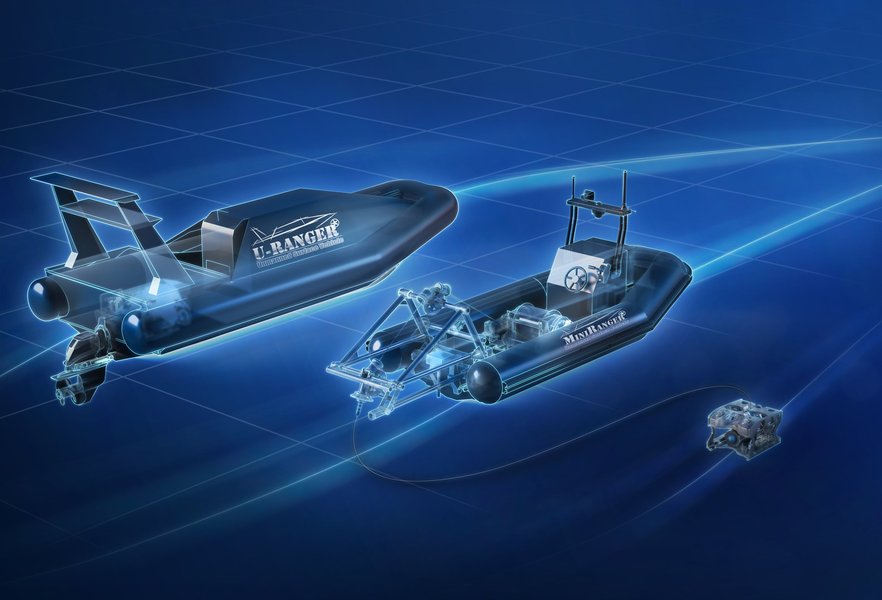
An example of an Uncrewed Surface Vehicle (USV), central to the AUMV industry.
Phase 1: Core Financial Groundwork & Excel Organization
Laying the Foundation with Financial Acumen
This initial phase focuses on establishing a solid financial understanding of the startup and organizing data efficiently. It leverages foundational concepts in accounting and advanced Excel techniques.
1.1 Data Collection, Organization, and Initial Financial Review
Practical Application of Excel Skills – Macquarie:
- Develop a structured Excel workbook to house all startup data, including financials, market research, and competitive analysis.
- Utilize advanced Excel functions (e.g., INDEX-MATCH, SUMIFS, pivot tables) for efficient data manipulation, organization, and preliminary analysis of any available historical data or founder projections.
- Create templates for financial statements and a preliminary capitalization table to track ownership and potential dilution from funding rounds.
Practical Application of Financial Accounting – Wharton:
- If available, meticulously analyze the startup's historical financial statements (Balance Sheet, Income Statement, Cash Flow Statement). For pre-revenue startups, focus on understanding initial investments, grants, and expenditures.
- Identify and understand key accounting policies, especially concerning revenue recognition for complex, long-term contracts typical in defense (e.g., U.S. Navy) and large-scale energy projects. This includes milestone-based recognition.
- Assess the treatment of significant costs like Research & Development (R&D), distinguishing between expensing and capitalization, which can impact valuation and perceived profitability.
- Calculate foundational metrics if data permits, such as initial burn rate and cash runway, providing an early glimpse into financial viability.
Phase 2: Advanced Modeling, Market Analysis, and Performance Projection
Building Predictive Insights and Assessing Market Viability
This phase transitions to constructing detailed financial models and conducting a thorough analysis of the market landscape and the startup's potential within it.
2.1 Comprehensive Market Sizing and Opportunity Assessment
Practical Application of Financial Analysis – UIUC:
- Market Sizing (TAM, SAM, SOM):
- For the U.S. Navy market: Research Department of Defense (DoD) budgets, specific naval programs for unmanned systems, and procurement initiatives. Estimate the portion of these budgets accessible to AUMV startups.
- For the Offshore Energy market: Analyze the size and growth of offshore oil & gas exploration/production and renewable energy (e.g., wind farms). Assess the adoption rate of AUMVs for inspection, maintenance, repair (IMR), security, and survey tasks.
- Utilize both top-down (overall market reports) and bottom-up (specific contract values, number of potential clients) approaches to validate market size estimates.
- Competitive Landscape Analysis: Identify existing players, from large defense contractors and established maritime tech companies to other AUMV startups. Analyze their strengths, weaknesses, market share, and technological differentiation. The startup's competitive advantages (e.g., proprietary AI, superior sensor integration, unique hull design) must be clearly defined.
- Market Trends & Drivers: Evaluate technological advancements (e.g., AI in navigation, enhanced battery life, secure communication systems), regulatory developments (e.g., IMO guidelines for MASS), and geopolitical factors influencing AUMV adoption.

The Manta Ray, an example of advanced UUV development for naval applications, highlights the technological frontier.
2.2 Robust Financial Modeling and Projection
Practical Application of Financial Modeling – Wharton:
- Develop a detailed, integrated 3-statement financial model (Income Statement, Balance Sheet, Cash Flow Statement) projecting performance for at least 5-7 years.
- Revenue Projections: Model revenue streams based on anticipated contract wins with the U.S. Navy and offshore energy clients. Consider sales cycles, pricing strategies (e.g., per-vehicle, service contracts, data-as-a-service), and market penetration rates. \[ \text{Revenue} = (\text{Number of Units Sold} \times \text{Price per Unit}) + \text{Service Revenue} \]
- Cost Structure: Project Cost of Goods Sold (COGS) related to AUMV manufacturing, and Operating Expenses including R&D, Sales & Marketing (S&M), and General & Administrative (G&A).
- Capital Expenditures (CapEx): Forecast investments in manufacturing equipment, testing facilities, and significant technology upgrades.
- Working Capital Management: Model assumptions for accounts receivable, inventory, and accounts payable.
- Scenario & Sensitivity Analysis: Build multiple scenarios (e.g., base case, optimistic case, pessimistic case) by varying key assumptions like contract win rates, development timelines, and cost overruns. Analyze sensitivity to changes in key drivers.
- Free Cash Flow (FCF) Calculation: Project Unlevered Free Cash Flow (UFCF) as a basis for DCF valuation.
2.3 Financial Performance Analysis and KPI Evaluation
Practical Application of Financial Analysis – UIUC:
- Analyze projected financial statements to assess profitability (gross margin, EBITDA margin, net margin), operational efficiency, and cash generation potential.
- Key Performance Indicators (KPIs): Identify and track relevant KPIs for an AUMV startup, such as customer acquisition cost (CAC), lifetime value (LTV) of a contract/vehicle, R&D productivity, prototype development milestones, and pilot program success rates.
- Evaluate funding requirements and cash runway based on the financial model’s burn rate.
- Conduct ratio analysis (liquidity, solvency, profitability ratios) and compare projected performance against available industry benchmarks (if any for this niche sector).
- Perform a break-even analysis to determine the sales volume or contract value needed to cover all fixed and variable costs.
AUMV Startup Evaluation Mindmap
This mindmap provides a visual overview of the key components involved in the comprehensive evaluation of an Autonomous Unmanned Maritime Vehicle (AUMV) startup. It highlights the interconnectedness of market analysis, financial scrutiny, technological assessment, team capabilities, risk evaluation, and the ultimate investment decision process.
Phase 3: Advanced Valuation, Risk Mitigation, and Investment Thesis
Determining Worth and Crafting the Investment Decision
The final phase integrates all previous analyses to arrive at a valuation for the startup, assess multifaceted risks, and develop a cogent investment thesis and potential deal structure.
3.1 Comprehensive Risk Assessment
Practical Application of PE & VC – Bocconi and Advanced Valuation – Erasmus:
- Technological Risk: Reliability and performance of autonomous systems in harsh maritime environments, cybersecurity vulnerabilities, scalability of the technology, dependence on key R&D personnel.
- Market Risk: Pace of adoption by conservative sectors like defense and energy, competition from incumbents and new entrants, accuracy of market size forecasts, length of sales cycles.
- Regulatory Risk: Evolving regulations for autonomous vessels (e.g., SOLAS, COLREGs implications), export controls for defense technology, environmental compliance for offshore operations.
- Execution Risk: Management team's experience and ability to scale, operational challenges in manufacturing and deployment, ability to secure strategic partnerships.
- Funding Risk: Capital intensity of R&D and manufacturing, ability to secure future funding rounds at favorable terms.
- Qualitative risk assessment using methods like the Risk Factor Summation method to adjust valuation.
3.2 Startup Valuation Methodologies
Practical Application of Startup Valuation – Duke and Advanced Valuation – Erasmus:
Given the early stage and high uncertainty, a combination of methods is crucial:
- Venture Capital Method:
- Estimate a potential exit valuation (e.g., 5-7 years out) based on projected revenues/EBITDA and comparable public company or M&A multiples. \[ \text{Post-Money Valuation} = \frac{\text{Terminal Value}}{(1 + \text{Target IRR})^{\text{Years to Exit}}} \]
- Determine the required Return on Investment (ROI) or Internal Rate of Return (IRR) for the VC fund (typically 30-50%+ for early stage).
- Calculate the pre-money and post-money valuations for the current funding round.
- Discounted Cash Flow (DCF) Analysis: Use the projected UFCFs from the financial model. The discount rate (WACC) should reflect the high-risk nature of the startup. Terminal value can be calculated using a perpetuity growth method or an exit multiple. While challenging for early-stage, it provides an intrinsic value perspective.
- Comparable Company Analysis (CCA): Identify publicly traded companies or private companies with recent funding rounds in related sectors (AUMVs, maritime tech, defense tech, robotics). Analyze valuation multiples (e.g., EV/Revenue, EV/EBITDA), adjusting for differences in size, growth, risk, and technology.
- Precedent Transaction Analysis: Analyze M&A transactions involving similar companies to derive valuation multiples paid.
- Qualitative Valuation Methods (for very early stage):
- Berkus Method: Assigns value to key risk factors: sound idea, prototype, quality management team, strategic relationships, and product rollout/sales.
- Scorecard Valuation Method: Compares the startup to other funded startups in the region/sector across various factors, adjusting a median valuation.
- Apply valuation adjustments based on the specific risks identified and the strength of intellectual property (IP).
Comparative Startup Valuation Factors
This radar chart illustrates a hypothetical comparison of key investment attractiveness factors for our target AUMV startup against an "Ideal Benchmark" and an "Average Early-Stage Tech Startup." The factors include Market Growth Potential, Technological Innovation & IP, Management Team Strength, Competitive Advantage, Scalability & Unit Economics, and Regulatory & Execution Risk (where lower is better, so inverse scoring might be implied or it's a "Risk Mitigation Score"). This visualization helps to quickly identify areas of strength and potential concern for the AUMV startup.
3.3 Investment Thesis Development and Deal Structuring
Practical Application of PE & VC – Bocconi:
- Formulate Investment Thesis: Synthesize all findings into a clear, concise investment thesis. This should articulate:
- The specific problem the startup solves for the U.S. Navy and/or offshore energy sector.
- The startup's unique value proposition and sustainable competitive advantages.
- Why this is a compelling investment opportunity (market size, growth potential, team, technology).
- Key risks and potential mitigation strategies.
- Alignment with the VC fund's investment strategy and expertise.
- Define Exit Strategy: Identify potential exit pathways (e.g., acquisition by a major defense contractor like Northrop Grumman or BAE Systems, a large energy service company, or a technology giant entering the maritime space; Initial Public Offering (IPO) in the long term, though less common for early-stage hardware).
- Deal Structuring Considerations: Outline potential investment terms for a term sheet, including:
- Pre-money valuation and investment amount.
- Type of security (e.g., convertible note, SAFE for seed stage; preferred stock for Series A).
- Key terms: liquidation preferences, anti-dilution provisions, board seats, protective provisions.
- Milestones for future tranches of investment, if applicable.
- Due Diligence Plan: Outline key areas for further due diligence if the initial assessment is positive (legal, technical, financial, customer references).
Practical Application of Coursera Concepts
The following table details how concepts from each specified Coursera course are practically applied in the evaluation of an AUMV startup targeting the U.S. Navy and offshore energy sectors:
| Course | Key Concepts Applied | Practical Application in AUMV Startup Evaluation |
|---|---|---|
| Excel Skills – Macquarie | Advanced functions, data organization, spreadsheet modeling, charting. | Building dynamic financial models for projections, scenario analysis, cap table management, and visualizing market data for the AUMV sector. |
| Financial Accounting – Wharton | Revenue recognition, expense classification, financial statement analysis (IS, BS, CFS). | Structuring and interpreting the AUMV startup’s financials, particularly revenue from long-term defense/energy contracts and R&D cost treatment. Assessing historical performance if available. |
| Financial Modeling – Wharton | Forecasting, integrated financial statements, valuation inputs. | Creating multi-year financial projections (revenue, costs, CapEx, FCF) for the AUMV startup, incorporating sensitivities to contract wins and development delays. |
| Financial Analysis – UIUC | Ratio analysis, market sizing, trend analysis, competitive assessment. | Analyzing the AUMV startup's financial health (burn rate, runway), operational efficiency, and market potential within naval and energy segments. Benchmarking against competitors. |
| Startup Valuation – Duke | VC method, Berkus method, Scorecard, market sizing for valuation. | Deriving pre-money and post-money valuations for the AUMV startup using methods appropriate for early-stage, high-growth tech ventures, considering potential exit values. |
| Advanced Valuation – Erasmus | DCF models for startups, risk factor adjustments, comparable analysis nuances. | Refining valuation through DCF (despite early-stage challenges), adjusting for specific AUMV sector risks, and applying nuanced comparable company/transaction analysis. |
| PE & VC – Bocconi | Investment thesis formation, deal structuring, term sheet negotiation, risk assessment frameworks, exit strategies. | Formulating a comprehensive investment recommendation, outlining potential deal terms, understanding investor protections, and identifying likely exit pathways for an AUMV investment. |
This video discusses a startup, Blue Water Autonomy, aiming to build autonomous vessels, providing context on the innovation and ambition within the AUMV sector.
Frequently Asked Questions (FAQ)
What are the primary challenges in valuing an early-stage AUMV startup?
Valuing early-stage AUMV startups is challenging due to limited historical financial data, high technological uncertainty, long development cycles, and dependency on a few large potential customers (like the Navy). Future cash flows are highly speculative, making traditional DCF less reliable on its own. Therefore, a blend of methods like the VC method, comparables (if available for niche tech), and qualitative assessments (team, tech, IP) is often necessary. Market adoption rates for novel maritime technology also add to the uncertainty.
How critical is the management team's experience in a defense-tech AUMV startup?
Extremely critical. For startups targeting the defense sector, a management team with prior experience in defense contracting, understanding of military procurement processes, and established relationships within the DoD or Navy is invaluable. Similarly, experience in maritime engineering, robotics, and scaling complex hardware businesses is crucial. The team's ability to navigate regulatory hurdles, manage long sales cycles, and attract specialized talent significantly impacts success probability.
What are typical exit strategies for AUMV companies?
Typical exit strategies include:
- Acquisition by large defense contractors: Companies like Lockheed Martin, Northrop Grumman, BAE Systems, or L3Harris often acquire innovative tech startups to integrate new capabilities.
- Acquisition by major offshore energy service providers: Companies in the oil & gas or renewable energy support services sector may acquire AUMV tech to enhance their offerings.
- Acquisition by technology companies: Large tech firms looking to enter or expand in autonomous systems or specialized industrial markets.
- Initial Public Offering (IPO): Less common for early-stage hardware or defense-focused startups, but a possibility for highly successful companies with significant scale and market traction in broader commercial applications.
How do regulatory factors specifically impact AUMV startups targeting the U.S. Navy versus the offshore energy sector?
For the U.S. Navy, startups face stringent military specifications (MIL-SPECs), cybersecurity requirements (e.g., CMMC), ITAR (International Traffic in Arms Regulations) for export controls, and potentially lengthy testing and certification processes. Security clearances for personnel may also be required. For the offshore energy sector, regulations focus more on safety (SOLAS, flag state requirements), environmental protection (EPA, MARPOL), operational standards set by bodies like the International Maritime Organization (IMO) for Maritime Autonomous Surface Ships (MASS), and classification society approvals (e.g., DNV, ABS). While distinct, both require significant attention to compliance, impacting development timelines and costs.
Recommended Further Exploration
- What does the competitive landscape for autonomous maritime vehicle manufacturers currently look like?
- What are the primary regulatory hurdles for deploying AUMVs in U.S. naval operations?
- What are the recent M&A trends in the defense technology and offshore energy sectors relevant to AUMV applications?
- What technological milestones are critical for an AUMV startup aiming for Series A funding with a focus on naval contracts?
References
Last updated May 20, 2025