
Comprehensive Waste Flow Table for Construction & Demolition Materials
A detailed analysis on tracking and managing C&D waste streams
Key Takeaways
- Integrated Classification: Categorizing waste streams, such as concrete, steel, wood, and others, enables effective tracking.
- Management Pathways: Understanding and documenting the recycling, reuse, and disposal pathways is essential for sustainable waste management.
- Data-Driven Decision Making: Utilizing quantitative data to support the setting of waste reduction goals and improve material recovery.
Introduction
Effective waste management is paramount in the construction and demolition (C&D) industry. As urbanization and new projects increase, the proper classification and tracking of C&D waste not only help reduce environmental impacts but also contribute to regulatory compliance and the pursuit of circular economy objectives.
This detailed analysis presents a comprehensive waste flow table designed for C&D materials. The table is constructed to track several types of materials from the point of generation to their final management pathways. Materials such as concrete, steel, wood products, drywall, and others are monitored across different stages – quantity generated, recycling, reuse, and disposal. The methodology behind the table ensures that each stream is evaluated within a systematic framework ideal for project reporting and waste reduction strategies.
Understanding the Waste Flow Table Structure
Construction and demolition projects produce a variety of waste streams. Therefore, a structured method that categorizes materials according to their properties and management routes is essential. The waste flow table serves multiple purposes:
- Visualization: It provides a clear diagrammatic representation of how waste flows from the construction or demolition site to various handling and processing centers.
- Data Collection and Analysis: The table captures quantitative data on waste volumes at different stages. This data is critical for assessing current waste management practices and identifying areas for improvement.
- Regulatory Compliance: It aids companies in meeting local and national guidelines on waste management and reporting, ensuring that recycled and reused proportions are properly documented.
- Resource Recovery Opportunities: Detailed tracking facilitates spotting potential opportunities for increased material recovery, thus supporting sustainability initiatives and reducing landfill usage.
Steps to Develop an Effective Waste Flow Table
Developing a comprehensive waste flow table involves a systematic approach comprised of several key steps:
1. Identification of Material Types
The first step is to identify the major material categories that constitute C&D waste. Common categories include, but are not limited to:
- Concrete & Masonry: This includes concrete, bricks, mortar, and stone aggregates.
- Steel and Metals: Structural steel, rebar, and metallic components.
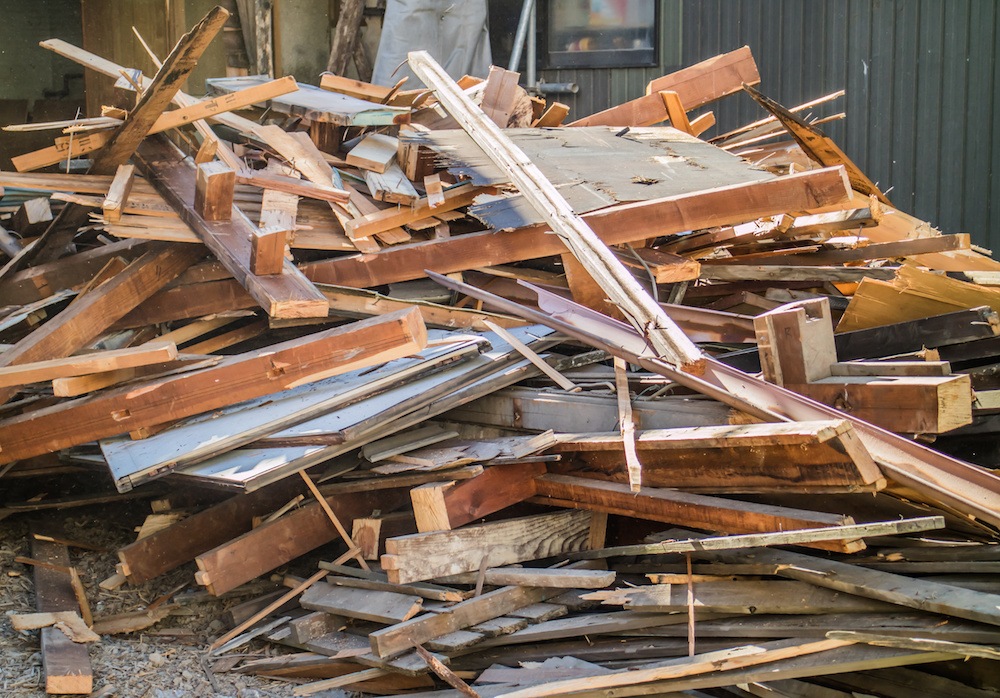
- Wood Products: Includes lumber, plywood, formwork, and other timber wastes.
- Drywall & Gypsum Board: Waste from interior finishes and partitions.
- Brick & Clay Products: Brick, clay tiles, and other ceramics resulting from demolition.
- Asphalt and Asphalt Shingles: Residuals from roofing and pavement works.
- Plastics and Cardboard: Packaging materials and construction-related plastics.
- Other Materials: This may encompass hazardous coatings, paints, or miscellaneous waste streams not classified above.
2. Quantification of Waste
The quantitative data includes the total amount of each material type generated during construction or demolition efforts. This data could be captured in terms of tons, cubic meters, or any standardized measurement unit preferred by the project or facility.
For example, a project could generate 100 tons of concrete waste, with subsequent processing dividing the material among recycling, reuse, or disposal. This quantification is vital for setting benchmarks and gauging material recovery efficiencies.
3. Tracking Material Management Pathways
Each category of waste typically follows a flow through one or more of these management methods:
- Recycling: Processes that facilitate converting waste into reusable materials, such as crushing concrete for road base or re-melting steel for new structural components.
- Reuse: Direct application of waste material for other building purposes. For instance, reclaimed wood might be repurposed for interior finishes or landscaping.
- Disposal: The final stage where materials are sent to landfills or processed in waste-to-energy facilities if recycling or reuse isn’t feasible.
4. Establishing Reporting Protocols
The table should be designed in a manner that it can provide clear and concise data for project managers, environmental auditors, and regulatory bodies. Including annotations or notes in the table columns assists in explaining any particular deviation or special handling of waste materials under specific circumstances.
Moreover, periodically reviewing and validating the data ensures consistency with on-site practices and improves the overall reliability of the waste management program.
The Waste Flow Table
Below is an example of a detailed waste flow table constructed according to the structured approach highlighted above. This table tracks several categories of C&D waste and provides a framework for documenting the component volumes along the pathways of recycling, reuse, and disposal.
Waste Flow Table for C&D Materials
| Material Type | Quantity Generated | Recycling | Reuse | Disposal |
|---|---|---|---|---|
| Concrete & Masonry | 100 tons | 80 tons | 10 tons | 10 tons |
| Steel & Metals | 50 tons | 45 tons | 3 tons | 2 tons |
| Wood Products | 30 tons | 20 tons | 5 tons | 5 tons |
| Drywall & Gypsum Board | 20 tons | 12 tons | 3 tons | 5 tons |
| Brick & Clay Tile | 25 tons | 15 tons | 5 tons | 5 tons |
| Asphalt Shingles | 10 tons | 6 tons | 1 ton | 3 tons |
| Plastics & Cardboard | 15 tons | 10 tons | 2 tons | 3 tons |
| Other/Hazardous Materials | 5 tons | 2 tons | 0 tons | 3 tons |
The above table represents a generalized record that encompasses typical C&D waste streams. Each row is dedicated to a specific material category, with columns indicating the overall amount generated alongside the portions that follow recycling, reuse, or disposal pathways. While numerical values provided here are exemplary, they can be tailored based on accurate measurements and project-specific data.
Analysis of the Waste Flow Data
Material Efficiency and Recovery
One of the foundational goals of establishing a waste flow table is to maximize resource efficiency. By analyzing the percentage of materials that are recycled or reused versus those destined for disposal, project managers and sustainability coordinators can identify areas that offer the greatest opportunity for improvement.
For example, the concrete category in the table shows that 80% of generated concrete waste is recycled into new aggregate materials. This high figure reflects both the recyclability of concrete and the robust infrastructure currently supporting its recycling in many regions. Maintaining or even improving upon this performance indicator can significantly lower the environmental burden associated with processing raw materials.
Identifying Deviation and Adjustment Opportunities
Waste flow tables also serve as diagnostic tools. For instance, if steel recycling levels are observed to be lower than industry standards, it can prompt a detailed review of the sorting and processing techniques being deployed onsite. Moreover, the table may be further enhanced by additional entries that capture quality control measures or reflect adjustments based on regulatory changes.
Such continuous monitoring enables facilities to adjust material handling procedures, improve segregation practices, and thus enhance the overall recovery rate. Additionally, by mapping out the processing pipelines, one can optimize the logistical aspects which foster better material value recovery.
Tracking Quantities and Trends Over Time
Recording data over multiple projects or time periods also allows for trend analysis. Over time, facilities can track improvements in waste diversion from landfills to recycling streams. For example, if the percentage of disposed drywall decreases consistently across projects, it may indicate successful operational changes and better adherence to recycling protocols.
These insights are critical in forming strategy documents, guiding investment in recycling facilities, and influencing policy decisions at both the local and national levels.
Detailed Breakdown of Each Waste Stream
Concrete & Masonry
Concrete and masonry represent one of the highest volume waste streams in any demolition project. Given its high compressive strength and durability, recycled concrete is widely used to produce reclaimed aggregate for new construction applications such as road base layers or for backfill operations. Effective crushing and grading techniques ensure that the recycled product meets rigorous quality standards.
Steel & Metals
Steel, along with other metallic materials, generally exhibits a high recovery rate. Using methods such as magnetic and electrostatic separation, metals are systematically sorted and re-melted, allowing for new construction materials to be produced with minimal waste. The efficient recovery of metals not only conserves natural resources but also saves significant energy in production processes.
Wood Products
Wood waste has diverse recycling and reuse potentials. Untreated wood waste often finds a second life as mulch or biofuel, while processed lumber may be reclaimed for direct reapplication in construction projects. Detailed segregation is essential, as treated or chemically contaminated wood requires different disposal pathways in compliance with environmental regulations.
Drywall & Gypsum Board
Waste from drywall and gypsum board can be challenging due to dust and material inconsistency. However, advancements in recycling technologies have allowed for the recovery of gypsum for use in new board production or even in cement manufacturing. The simultaneous reuse of certain materials can sometimes be implemented onsite, further reducing waste.
Brick & Clay Products
Brick and clay waste, while robust, has the potential for reuse primarily through crushing. This process yields recycled products that can be incorporated into road construction or serve as a natural aggregate in new structures. Consistent quality control, however, is required to ensure that the recycled products maintain structural integrity.
Asphalt Materials
Asphalt, including shingles, is commonly recycled into new asphalt or used as aggregate. Given its composition, recycling asphalt conserves both the raw materials and energy otherwise necessary for producing new asphalt. On the other hand, certain conditions such as contamination or wear may necessitate disposal.
Plastics, Cardboard, and Miscellaneous Waste
Packaging materials such as plastics and cardboard, along with other miscellaneous wastes, may also be tracked. Although they generally have lower volumes compared to structural materials, effective management can contribute to higher overall recycling rates. These materials are often processed separately to meet industry-specific recycling requirements and enhance operational efficiency.
Benefits of an Integrated Waste Flow Table
The adoption of a waste flow table represents a strategic advantage for construction and demolition managers. Among its key benefits:
- Enhanced Sustainability: It supports an environmentally sustainable approach by reducing landfill accumulation and promoting circularity.
- Operational Efficiency: Accurate tracking improves decision-making regarding resource allocation during the construction and demolition phases.
- Regulatory Alignment: It simplifies documentation and reporting required by local and national regulatory bodies.
- Economic Benefits: Material recovery and recycling can result in significant savings and revenue generation through the sale of reclaimed materials.
Challenges and Considerations
Data Collection and Accuracy
One of the primary challenges in preparing an effective waste flow table is ensuring the accuracy of collected data. C&D projects are often complex, multiply-sourced, and subject to variable site conditions. Accurate measurement and categorization are essential to avoid discrepancies that can lead to under- or overestimations in waste flows.
Data collection practices should be standardized across sites, and regular audits are recommended to maintain data integrity. Furthermore, investment in digital tools or resource management software can significantly streamline the process.
Regulatory and Logistical Challenges
Management practices for C&D waste are heavily influenced by local regulations which may vary by jurisdiction. Adhering to these regulations can sometimes require tailored approaches to waste sorting, transportation, and recycling. Logistical challenges may arise when handling hazardous materials or materials that contain contaminants.
Thus, it is crucial to maintain an updated repository of local guidelines and best practices that inform the recording and management processes in the waste flow table.
Adaptive Management Practices
The waste flow table is not a static document; rather, it should be viewed as a dynamic tool that evolves alongside changing construction practices, technological advancements, and environmental policies. Continuous improvement processes, informed by the data captured, allow for adaptations that can lead to greater recycling rates and overall waste reduction.
In this respect, the table serves as both an operational benchmark and a strategic resource in the ongoing effort to enhance sustainability and resource efficiency across C&D projects.
Conclusion
The comprehensive waste flow table detailed above provides a robust framework for tracking, analyzing, and managing the diverse waste streams generated in construction and demolition activities. By categorizing materials, quantifying waste, and following established management pathways (recycling, reuse, and disposal), industry professionals can enhance sustainability, meet regulatory requirements, and improve overall operational efficiency.
As environmental concerns continue to drive the need for resource recovery and waste reduction, such systematic approaches become indispensable in guiding both project-level decisions and broader industry initiatives. Maintaining high standards of data accuracy and adaptability in the waste flow table ensures that each project contributes to a more sustainable and resource-efficient future.
References
- Construction and Demolition Waste Stream Composition Calculator - CalRecycle
- Construction, Renovation, and Demolition Waste Management Guidebook - City of Guelph
- Construction and Demolition Debris Management in the United States - EPA
- Construction and Demolition Debris Generation in the United States 2015 - EPA
More
Last updated February 19, 2025