
Innovative Design for a Modern Drinking Water Treatment Plant
A comprehensive approach to serving 100,000 people with advanced treatment processes
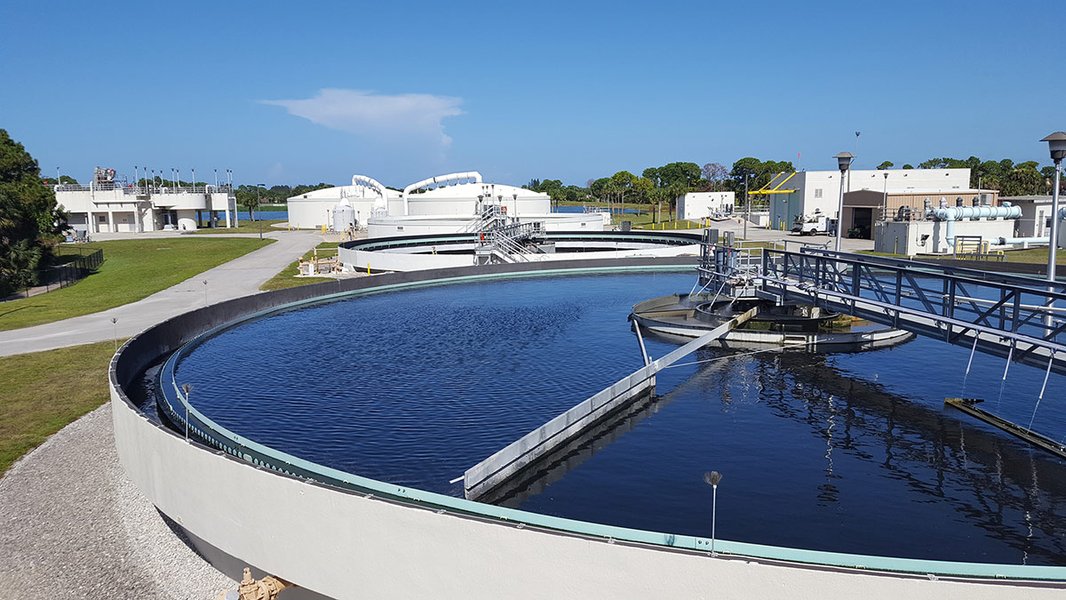
Key Highlights
- Comprehensive Treatment Process: Integration of coagulation, flocculation, sedimentation, filtration, and disinfection tailored to water characteristics.
- Advanced Design Considerations: Detailed calculations for daily water demand and design parameters for radial impeller-based mixing in treatment units.
- Systematic and Modular Approach: Modular design enabling future scalability, efficient sludge management, and compliance with regulatory standards.
Designing the Drinking Water Treatment Plant
In designing a drinking water treatment plant that is capable of supplying 100,000 people with an average daily consumption of 200 litres per person, multiple integrated treatment stages must be implemented to ensure water quality meets or exceeds established safety standards. The combined capacity required is 20,000,000 litres per day (20,000 m³/day). The given water characteristics in Table 1 – particularly the elevated turbidity, iron concentration, and high E-Coli levels – necessitate a multi-stage treatment process.
Water Demand and Unit Process Calculations
Water Demand Calculation
The first step is calculating the overall water demand. Given a population of 100,000 people each consuming 200 litres per day, the calculation is as follows:
\( \text{\textbf{Total Daily Demand}} = 100,000 \times 200 \text{ litres} = 20,000,000 \text{ litres/day} \)
This total corresponds to 20,000 cubic meters per day, serving as a basis for sizing each treatment unit.
Water Quality Assessment
Table 1 presents the key water quality parameters:
| Parameter | Value | Unit |
|---|---|---|
| Ca2+ | 55 | mg/l |
| Mg2+ | 20 | mg/l |
| Turbidity | 25 | NTU |
| Iron | 500 | μg/l |
| E-Coli | 104 per 100 ml |
These values underscore the need for robust treatment – especially for the removal of turbidity, iron, and pathogenic microorganisms.
Process Design and Treatment Units
The treatment process comprises several key stages, each of which must be carefully designed based on both the water’s raw characteristics and the specified design restrictions (including those for a radial impeller in the coagulation and flocculation tanks). The following sections outline each treatment unit:
Coagulation and Flocculation
Design Considerations
In the coagulation step, chemical coagulants such as Alum or Ferric Chloride are added to destabilize suspended particles. The use of a radial impeller provides uniform mixing and ensures that particles, whose diameters predominantly range between 0.0001 and 0.7 mm, encounter the coagulant effectively. Key design restrictions include:
- Tank dimensions adequate to achieve proper detention times (typically a few minutes for coagulation and 15-30 minutes for flocculation).
- Radial impeller specifications including optimal water depth (around 2 m), depth below the impeller, and impeller tip speed (notably around 2.5 m/s for flocculation).
- Ensuring smooth transition of water through the units to form robust flocs.
The enhanced mixing supports floc formation which is critical for efficient removal in the following sedimentation stage.
Sedimentation
Gravity Separation
After flocculation, the water flows into sedimentation basins where formed flocs settle out by gravity. The design of these basins must account for:
- Surface Overflow Rate (SOR): Setting an optimum SOR (generally between 30 to 50 m³/m²/day) to promote effective settling without causing re-suspension of particles.
- Proper basin dimensions and retention time to ensure maximum sedimentation efficiency.
Filtration
Physical Removal of Residual Particles
In the filtration stage, remaining suspended solids are removed using rapid sand filters. Key aspects include:
- Establishing the proper contact time and flow rate – typically a filtration rate of around 5 m/h.
- Ensuring filter media are capable of trapping fine particles disrupted during coagulation and flocculation.
- Screening for any residual turbidity and iron precipitates that could impair water quality.
Disinfection
Final Pathogen Control
Given the significant presence of E-Coli, the disinfection stage is paramount. Several effective disinfection methodologies include:
- Chlorination: Widely adopted to achieve a disinfectant residual with adequate contact time (typically 30 minutes) and appropriate dosage (usually in the range of 0.2 - 2 mg/l).
- Ultraviolet (UV) Disinfection: An excellent alternative that inactivates microorganisms without chemical additives.
- Ozonation: Provides advanced oxidation processes, although may require additional safety and handling measures.
The selection of a disinfection methodology will depend on economic evaluations, local regulations, and desired water quality outcomes.
Additional Treatment Considerations
Iron Removal and Softening
While calcium and magnesium are beneficial minerals, the high concentration of iron (500 µg/l) necessitates its removal from the water. Implementation of dedicated Iron Removal Units (IRUs) via oxidation and subsequent filtration can be used:
- Using oxidizing agents to convert soluble iron to insoluble ferric hydroxide.
- Establishing post-oxidation filtration to remove the precipitated iron particles.
Additionally, if water hardness becomes an operational concern, ion exchange systems could be incorporated, although typically they are not necessary for drinking water unless very high concentrations lead to scaling issues.
Visualizing Process Performance
To provide further insight into the design and performance of the various treatment stages, the radar chart below represents opinionated performance datasets across key water treatment parameters. The datasets incorporate aspects such as coagulation efficiency, sedimentation performance, filtration capacity, disinfection efficacy, and overall process synergy.
Integrated Implementation and Site Considerations
In addition to the process design considerations detailed above, several practical and operational factors must be addressed to ensure a successful water treatment plant:
Plant Layout and Equipment Selection
Strategic Layout Planning
The physical layout of the plant should optimize space usage while facilitating smooth water flow between treatment units. Considerations include:
- Positioning the raw water intake at a location that minimizes contamination risks and optimizes water quality.
- Ensuring that coagulation, flocculation, and sedimentation tanks are positioned to maximize gravity separation during settling.
- Designing filtration units with modular components that can be easily maintained or expanded in the future.
- Incorporating a centralized control system for monitoring and automation to maintain consistent water quality and operational efficiency.
Site and Environmental Compliance
Regulatory and Safety Considerations
The plant design must comply with local, national, and international water quality regulations (such as the Safe Drinking Water Act in the United States). Factors include:
- Meeting stringent criteria for bacterial count and pathogen removal, particularly with the high E-Coli levels present.
- Ensuring that the facility is designed with safety features for handling chemical additives and operating high-speed mixing equipment.
- Implementing energy-efficient systems to minimize operational costs and reduce the environmental footprint.
- Planning for the management and disposal of any generated sludge, ensuring that it is treated to environmentally acceptable standards before disposal or reuse.
Digital Design and Collaborative Engineering
Leveraging Modern Simulation Tools
Modern digital design platforms allow engineers to simulate thousands of configurations and select the optimal design based on performance metrics such as lifecycle cost, system reliability, and energy consumption. Collaborative design platforms also facilitate real-time adjustments and integration of data, offering significant benefits over traditional manual design methods.
Supplementary Learning and Visual Resources
To enhance understanding of the treatment plant design principles and processes, the following video provides further insights into the process flow diagram, design considerations, and practical operation of a drinking water treatment plant:
This comprehensive video animation details key stages from raw water treatment to final disinfection, reinforcing the theoretical principles covered in this design.
FAQ Section
What are the critical factors in sizing a water treatment plant for 100,000 people?
How does a radial impeller contribute to effective coagulation and flocculation?
What are the advantages of integrating digital design tools in water treatment plant design?
References
- How to design a Surface Water Treatment Plant - Structures Insider
- Step-by-step design and calculations for water treatment plant units - ResearchGate
- Water Treatment Plant Design, 5th Edition - Access Engineering Library
- Drinking Water Treatment Plant (Process Animation) - YouTube
- Design of Drinking Water Treatment Plant Example - Chegg
Recommended Further Exploration
 aaucivil.files.wordpress.com
Last updated April 2, 2025