
The Future of Intelligence: Will AI Surpass Human Capabilities?
Examining the Distinct Strengths and Potential Convergence of Artificial and Human Intelligence
The question of whether Artificial Intelligence (AI) will eventually surpass human intelligence is a topic of significant debate and speculation. As AI capabilities continue to advance at an accelerated pace, understanding the fundamental differences between AI and human intelligence, their respective strengths and limitations, and the potential future trajectories of their development is crucial. While AI currently excels in specific, narrow tasks, the prospect of Artificial General Intelligence (AGI) reaching or exceeding human cognitive abilities raises profound questions about the future of work, society, and even the definition of intelligence itself.
Key Insights into the AI vs. Human Intelligence Debate
- Distinctive Strengths: AI excels in speed, precision, and data analysis, while human intelligence is characterized by creativity, intuition, emotional depth, and ethical judgment.
- Current Limitations of AI: Despite advancements, current AI systems lack true empathy, adaptability to entirely novel situations, and the ability to understand complex social dynamics and the "why" behind phenomena.
- Potential for Collaboration: The future likely involves a collaborative relationship where AI augments human capabilities, and humans guide AI with their unique cognitive and emotional attributes.
Defining Artificial and Human Intelligence
To understand the potential for AI to surpass human intelligence, it is essential to define both concepts:
What is Artificial Intelligence?
Artificial intelligence is broadly defined as the simulation of human intelligence processes by machines, particularly computer systems. This includes capabilities such as learning, problem-solving, decision-making, perception, and language comprehension. AI systems achieve these abilities through algorithms and the processing of vast amounts of data.
Key characteristics of current AI:
- Data-Dependent: AI relies heavily on the data it is trained on. Its performance is directly tied to the quality and quantity of this data.
- Task-Specific (Narrow AI): Most AI today is considered "narrow AI," designed to perform specific tasks exceptionally well, such as image recognition, natural language processing, or playing chess.
- Speed and Efficiency: AI can process information and perform calculations at speeds far beyond human capacity.
What is Human Intelligence?
Human intelligence is a complex and multifaceted concept encompassing a wide range of cognitive abilities. It involves not only logical reasoning and problem-solving but also creativity, emotional intelligence, intuition, consciousness, and the ability to adapt to new and unforeseen circumstances based on a broad understanding of the world.
Key characteristics of human intelligence:
- Adaptability and Flexibility: Humans can learn and apply knowledge across diverse domains and adapt to novel situations without explicit programming.
- Creativity and Innovation: Human intelligence is the source of original ideas, artistic expression, and the ability to think outside of established patterns.
- Emotional and Social Intelligence: Humans possess the capacity for empathy, understanding social cues, building relationships, and navigating complex interpersonal dynamics.
- Contextual Understanding: Humans understand information within a broader context, drawing on life experiences, cultural knowledge, and abstract reasoning.
Comparing the Strengths and Weaknesses
While AI has made remarkable progress and can outperform humans in certain areas, there remain significant differences in their capabilities:
Where AI Excels
AI demonstrates superiority in tasks that require:
Processing Large Datasets:
AI algorithms can analyze massive volumes of data rapidly to identify patterns, make predictions, and extract insights. This is evident in fields like healthcare (medical image analysis), finance (fraud detection), and market trend prediction.
\[ \text{AI Speed} \gg \text{Human Speed for Data Processing} \]
Repetitive and High-Precision Tasks:
AI can perform repetitive tasks with consistent accuracy and endurance, without fatigue or loss of focus. This is crucial in manufacturing and data entry.
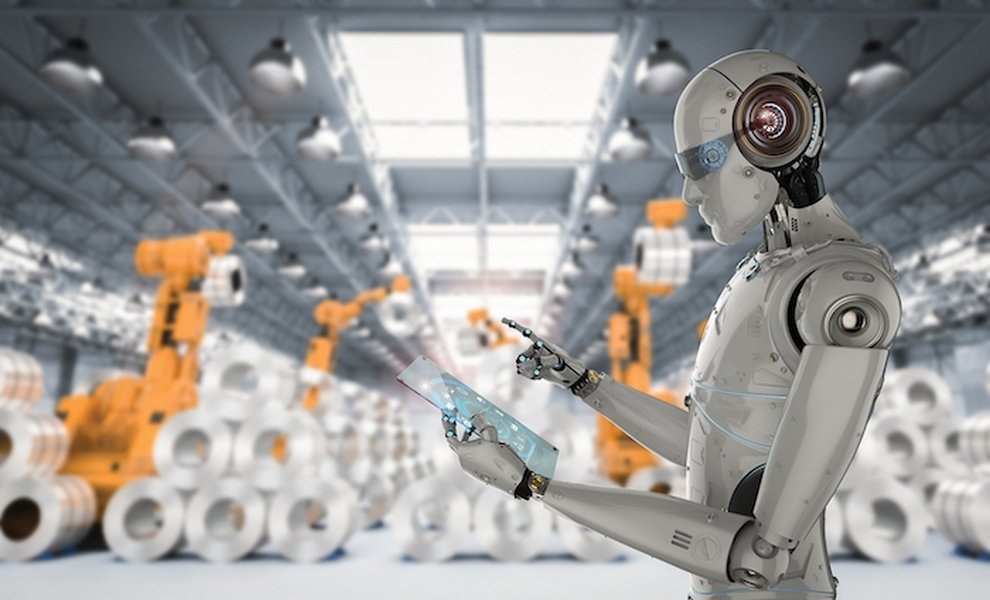
AI systems excelling in manufacturing tasks.
Specific Problem Solving:
In well-defined domains with clear rules, AI can achieve superhuman performance, as demonstrated by AI in chess or Go.
Where Human Intelligence Remains Superior
Human intelligence holds an advantage in areas requiring:
Creativity and Originality:
While generative AI can produce novel content based on existing data, true creativity, which involves combining unrelated ideas and applying emotional depth, remains a human strength. Curiosity, the drive to ask "why," is a uniquely human trait that fuels innovation.
Emotional Intelligence and Empathy:
Understanding and responding to human emotions, navigating complex social interactions, and demonstrating empathy are capabilities deeply rooted in the human experience and are challenging for AI to replicate authentically.
Human interaction in daily life, involving emotional understanding.
Adaptability to Novel Situations:
Humans can apply reasoning and common sense to navigate entirely new and unforeseen circumstances, a skill that current AI, trained on specific datasets, often struggles with.
Ethical Judgment and Values:
Ethical decision-making and the application of human values are complex processes that require a deep understanding of societal norms, consequences, and moral principles, which are beyond the current capabilities of AI.
The Concept of Artificial General Intelligence (AGI) and the Singularity
The discussion about AI surpassing human intelligence often revolves around the concept of Artificial General Intelligence (AGI) and the hypothetical event known as the technological singularity.
Artificial General Intelligence (AGI)
AGI refers to a type of AI that possesses the ability to understand, learn, and apply knowledge across a wide range of tasks at a level equivalent to or surpassing human intelligence. Unlike narrow AI, AGI would have the flexibility and adaptability to perform any intellectual task that a human can.
The Technological Singularity
The technological singularity is a hypothetical point in time when technological growth becomes uncontrollable and irreversible, resulting in unforeseeable changes to human civilization. A key aspect of the singularity is the potential for superintelligent AI to rapidly improve itself, potentially leading to an intelligence explosion that leaves human intelligence far behind.
Current Status and Predictions
Currently, AGI remains theoretical. Experts have varying predictions on when, or if, AGI will be achieved and when the singularity might occur. Some predict significant advancements in the coming decades, while others believe achieving human-level general intelligence is still a distant prospect due to the fundamental differences in how human and artificial intelligence function.
The Future: Collaboration or Replacement?
The potential impact of increasingly capable AI on human society is a major point of discussion. Will AI replace humans in the workforce, or will it augment human capabilities?
AI as an Augmentative Tool
Many foresee a future where AI serves as a powerful tool to augment human intelligence and capabilities. In this scenario, AI handles data-intensive tasks and provides insights, allowing humans to focus on creative problem-solving, strategic thinking, and tasks requiring emotional intelligence and interpersonal skills. This collaborative model, often referred to as "augmented intelligence," leverages the strengths of both AI and humans.
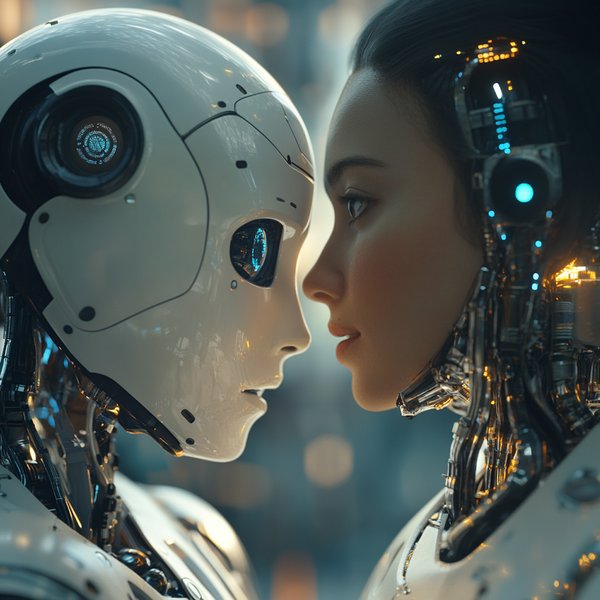
Humans and AI collaborating in the workplace.
Examples of Augmented Intelligence:
-
Healthcare: AI assisting doctors in diagnosing diseases by analyzing medical images.
-
Education: AI tutors providing personalized learning experiences for students.
-
Business: AI analyzing market trends to help executives make informed decisions.
Potential for Job Displacement
While augmentation is a likely path, the increasing automation powered by AI could lead to job displacement in certain sectors, particularly those involving repetitive or data-processing tasks. The transition will require adaptation and the development of new skills for the human workforce.
Ethical and Societal Considerations
As AI becomes more advanced, crucial ethical and societal questions arise, including data privacy, algorithmic bias, accountability for AI actions, and the potential impact on human creativity and autonomy. Protecting human creativity and ensuring that AI development aligns with human values are critical challenges for the future.
Key Differences Between Human and Artificial Intelligence
The following table summarizes some of the key distinctions between human and artificial intelligence:
| Feature | Human Intelligence | Artificial Intelligence |
|---|---|---|
| Learning | Learns from experience, observation, and interaction; adaptable and context-aware. | Learns from data through algorithms; performance is limited by the training data. |
| Creativity | High capacity for original thought, innovation, and artistic expression. | Generates content based on patterns in data; lacks true originality and subjective experience. |
| Emotional Intelligence | Possesses empathy, self-awareness, and the ability to understand and navigate complex social emotions. | Lacks genuine emotions and a deep understanding of human emotional states. |
| Adaptability | Highly adaptable to novel and unforeseen situations; can apply knowledge across diverse domains. | Generally limited to specific tasks and domains; struggles with situations outside of training data. |
| Energy Consumption | Relatively high energy consumption for complex cognitive tasks. | Can process vast amounts of data with lower energy consumption than the human brain for specific tasks. |
| Reasoning | Involves complex abstract reasoning, intuition, and common sense. | Relies on logical rules and pattern recognition within data; can struggle with abstract or intuitive reasoning. |
Expert Perspectives on the Future of AI
Predicting when AI might surpass human intelligence is challenging, and experts hold diverse opinions. Some, like Elon Musk and Ray Kurzweil, have made bold predictions about the timeline for AI reaching or exceeding human capabilities. Others are more cautious, emphasizing the current limitations of AI and the unique aspects of human cognition that are difficult to replicate.
Below is a relevant video discussing predictions about AI surpassing human intelligence:
Ray Kurzweil discusses his predictions on when AI will surpass human intelligence.
This video provides a perspective from a notable futurist on the potential timeline for AI to become smarter than humans. Understanding these different viewpoints highlights the uncertainty and complexity surrounding the future trajectory of AI development.
Challenges in Reaching Human-Level Intelligence
Achieving AGI and potentially surpassing human intelligence faces significant technical and conceptual hurdles:
Understanding Consciousness and Subjectivity:
The subjective experience of consciousness and the qualitative aspects of human thought are not well understood and are currently beyond the scope of AI.
Common Sense and World Knowledge:
Humans possess a vast amount of common sense knowledge about the world acquired through experience, which is difficult to encode and replicate in AI systems.
Developing True Creativity and Intuition:
The spontaneous and often unpredictable nature of human creativity and intuition remains a significant challenge for AI development.
The "Hard Problem" of AI:
Some researchers refer to the challenge of replicating human-level understanding, consciousness, and general intelligence as the "hard problem" of AI.
Frequently Asked Questions
Will AI take over all human jobs?
While AI is likely to automate many tasks currently performed by humans, it is also expected to create new jobs and industries. The future workplace is more likely to involve collaboration between humans and AI, with humans focusing on tasks requiring creativity, critical thinking, and emotional intelligence.
Is AI already smarter than humans in some areas?
Yes, AI has already surpassed human capabilities in specific, narrow domains such as complex calculations, data analysis, and certain games like chess and Go. However, this does not mean AI is generally smarter than humans across all cognitive abilities.
What are the potential risks of AI surpassing human intelligence?
Potential risks include job displacement, the development of autonomous weapons, privacy concerns, algorithmic bias, and the challenge of ensuring that superintelligent AI aligns with human values and goals. These risks are subjects of ongoing research and debate.
How can humans prepare for a future with more advanced AI?
Preparing for a future with advanced AI involves focusing on developing skills that complement AI, such as creativity, critical thinking, emotional intelligence, and adaptability. Continuous learning and reskilling will be crucial.
References
Last updated May 5, 2025