
Unveiling Key Concepts of World War I: A Comprehensive Glossary
Exploring the Language That Defined the Great War and Its Lasting Impact
World War I, often referred to as the Great War, was a global conflict that fundamentally reshaped the 20th century. Lasting from 1914 to 1918, it involved major world powers divided into two opposing alliances: the Allied Powers and the Central Powers. This war introduced new technologies, tactics, and political ideologies, leaving an indelible mark on society, economics, and geopolitics. To truly grasp the complexities of this pivotal period, it is essential to understand the unique vocabulary that emerged from or gained prominence during this era. These terms illuminate the military, political, social, and economic realities faced by millions.
Key Insights into WWI Terminology
- Transformative Conflict: World War I was not just a military engagement but a catalyst for profound societal and political shifts, introducing concepts like total war and mass media's influence.
- Evolving Warfare: The conflict saw the evolution of military tactics, with trench warfare and advanced artillery leading to unprecedented stalemates and the psychological impact of shell shock.
- Post-War Restructuring: The war's end led to significant diplomatic efforts, including the establishment of new international systems like the League of Nations and the concept of self-determination, alongside punitive reparations.
The Core Lexicon of the Great War
Understanding the vocabulary of World War I is crucial for comprehending the events, causes, and consequences of this monumental conflict. Each term encapsulates a specific aspect of the war's military, political, social, or economic dimensions.
Political and Imperial Dynamics
Annexed
To be "annexed" means to add an area or region to a country, state, or city, often without the consent of the population, thereby incorporating it into the larger entity's territory. This concept was central to the imperialist ambitions of European powers leading up to World War I, as nations sought to expand their influence and control over new lands and resources. For example, Austria-Hungary's annexation of Bosnia-Herzegovina in 1908 exacerbated tensions in the Balkans, contributing to the volatile geopolitical climate that eventually triggered the war.
Self-Determination
"Self-determination" refers to the principle that people of a particular national group have the right to choose their own government and form their own independent state. This concept gained significant prominence after World War I, largely championed by U.S. President Woodrow Wilson in his Fourteen Points. It sought to address the grievances of ethnic minorities within collapsing empires and to prevent future conflicts by promoting national sovereignty, though its application was often complex and controversial.
Authoritarianism
"Authoritarianism" describes a political system characterized by strict obedience to authority, especially that of the government, at the expense of personal freedom. In the context of World War I, many of the belligerent nations, particularly the Central Powers, operated under authoritarian or autocratic regimes, where power was concentrated in the hands of a single ruler or a small elite. This contrasted sharply with the more democratic ideals espoused by some Allied nations and contributed to the ideological struggle of the war.
Mandate System
The "Mandate System" was a compromise between the Allied powers, replacing the old colonial system with a new mechanism for administering former German colonies and Ottoman territories after World War I. Administered under the League of Nations, these territories were entrusted to victorious Allied powers, with the stated goal of guiding them towards eventual independence. However, in practice, it often resembled traditional colonialism, leading to continued imperial control.
Zionists
"Zionists" are adherents of Zionism, a political movement advocating for the establishment and development of a Jewish state in the historical Land of Israel. The movement gained momentum in the late 19th and early 20th centuries, and World War I, particularly the British involvement in the Middle East, would have significant implications for the Zionist cause, leading to the Balfour Declaration.
Balfour Declaration
The "Balfour Declaration" was a public statement issued by the British government in 1917 during World War I, announcing its support for the establishment of a "national home for the Jewish people" in Palestine. This declaration had profound and long-lasting consequences for the Middle East, laying the groundwork for future conflicts and the establishment of the State of Israel, while also promising not to prejudice the civil and religious rights of existing non-Jewish communities in Palestine.
Nationalized
To be "nationalized" means to transfer a private industry or private property to public ownership or control by the national government. During World War I, many governments nationalized industries vital to the war effort, such as railways, factories, and resource production, to ensure efficient allocation of resources and maximize output for military purposes. This demonstrated an expansion of state control over the economy, a trend that continued in various forms after the war.
Military Strategies and Warfare
Mobilize
"Mobilize" refers to the act of a country preparing its military forces for war, including calling up reserves, organizing troops, and readying equipment. The rapid mobilization of armies by European powers in 1914, particularly Russia's full mobilization, was a critical factor in escalating regional tensions into a full-scale global conflict due to the intricate system of alliances.
Artillery
"Artillery" encompasses large-caliber guns used in warfare, designed to shoot shells over long distances. World War I became synonymous with heavy artillery bombardments, which played a devastating role in trench warfare, softening enemy defenses and inflicting mass casualties. The development of more powerful and accurate artillery pieces significantly changed the nature of combat.
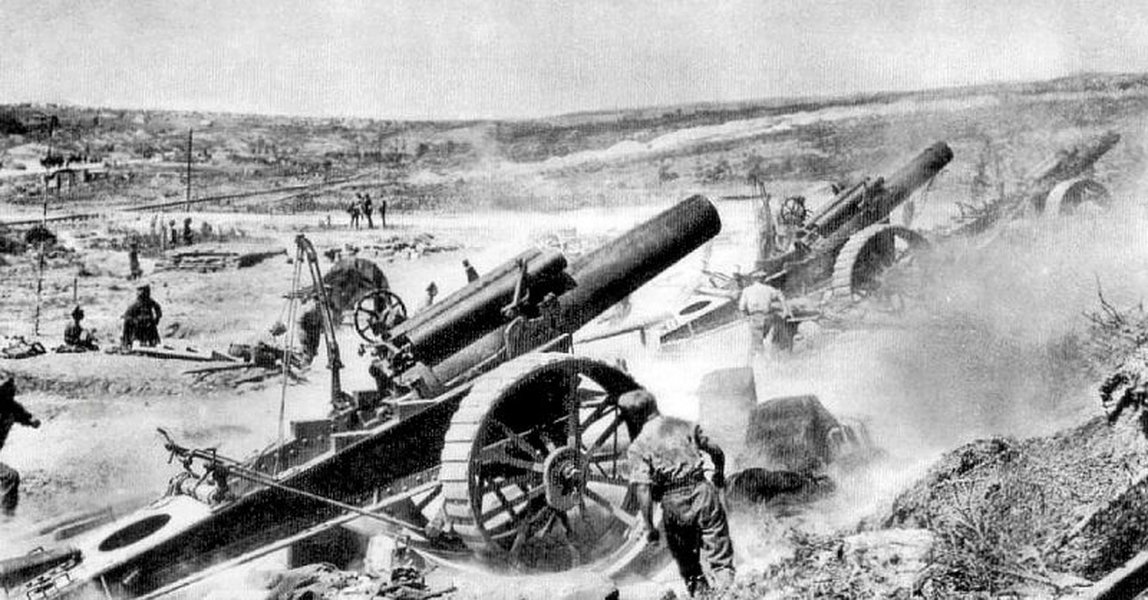
Heavy artillery in action during World War I, highlighting its central role in the conflict.
Cavalry Units
"Cavalry Units" refer to military formations consisting of soldiers who fought on horseback. While cavalry had historically been a crucial component of armies for centuries, their effectiveness diminished significantly in World War I due to the advent of machine guns, barbed wire, and trench warfare. The static nature of the Western Front rendered large-scale cavalry charges impractical and highly vulnerable, leading to a shift towards infantry and mechanized warfare.
Stalemate
A "stalemate" describes a situation in a conflict where neither side can make significant progress or achieve a decisive victory. This term is strongly associated with the Western Front of World War I, where trench warfare led to years of deadlock. Despite massive casualties, battle lines remained largely static, as neither side could break through the formidable defensive networks of trenches, machine guns, and artillery.
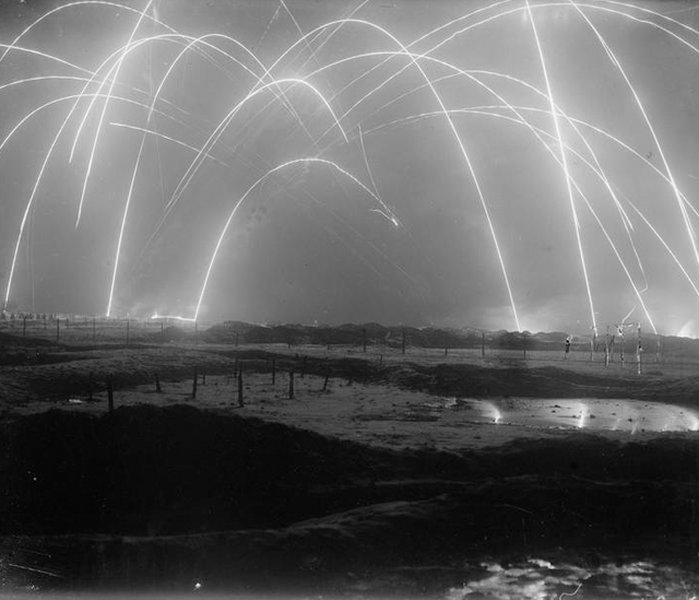
Soldiers enduring the muddy conditions of a WWI trench, a common sight during the prolonged stalemate.
Armistice
An "armistice" is a temporary suspension of hostilities in a war, often agreed upon while a peace treaty is being negotiated. The most famous armistice of World War I was signed on November 11, 1918, effectively ending the fighting on the Western Front at 11:00 AM. This agreement paved the way for the Paris Peace Conference and the subsequent Treaty of Versailles.
Societal Impact and Communication
Propaganda
"Propaganda" refers to information, especially of a biased or misleading nature, used to promote or publicize a particular political cause or point of view. During World War I, governments heavily employed propaganda to mobilize public support, demonize the enemy, encourage enlistment, and promote war bonds. Posters, newspapers, and films were all used to shape public opinion and maintain morale on the home front.
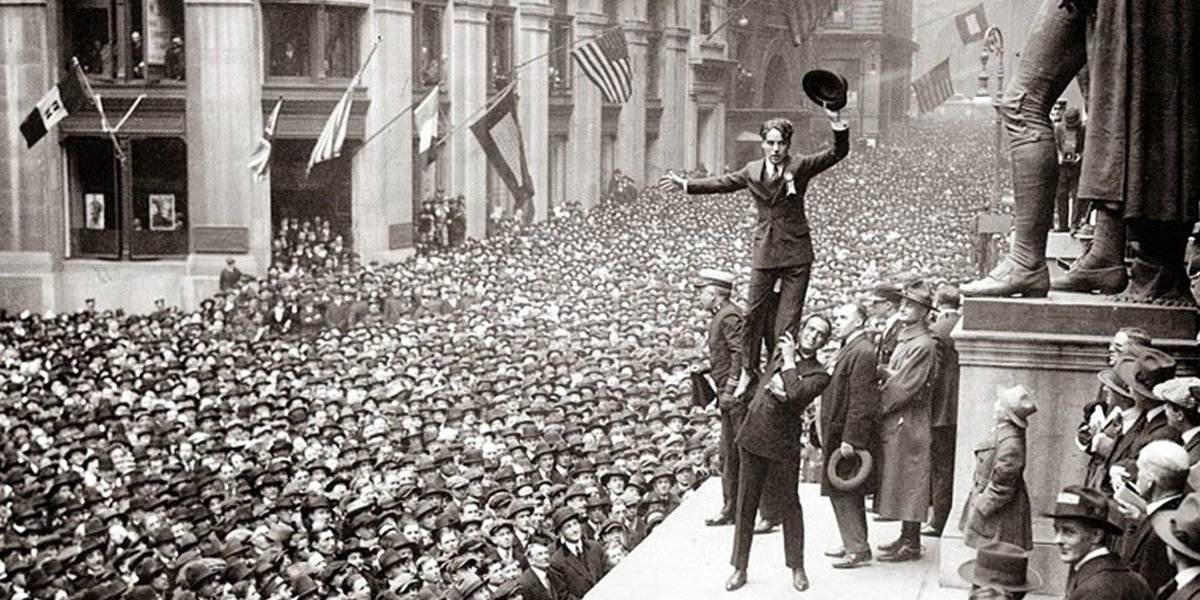
A WWI propaganda poster encouraging citizens to buy war bonds to support the war effort.
Home Front
The "Home Front" refers to the civilian population and activities of a nation engaged in war, especially in terms of their contribution to the war effort. During World War I, the distinction between military and civilian life blurred, as entire societies were mobilized. This included women entering the workforce, rationing, war bond drives, and facing the emotional and economic hardships of the conflict. The home front was crucial for sustaining the fighting on the battlefield.
Conscription
"Conscription," also known as the draft, is the compulsory enlistment of people in a national service, most often military service. Many European nations had conscription systems in place before World War I, which allowed them to quickly mobilize large armies. The scale of the war eventually led almost all belligerent nations to implement or expand conscription to replenish their forces, highlighting the unprecedented demand for manpower.
Mass Media
"Mass media" refers to various means of communication, such as newspapers, radio, and film, that reach a large number of people. While nascent compared to today, World War I saw an increased use of mass media for news dissemination, government communication, and especially propaganda. This marked a significant step in how information, and misinformation, could be rapidly spread to shape public opinion and mobilize support for the war.
Ideological and Social Concepts
Ideology
"Ideology" refers to a system of ideas and ideals, especially one that forms the basis of economic or political theory and policy. World War I was fought not just over territorial disputes but also over competing ideologies, such as imperialism, militarism, nationalism, and, increasingly towards its end, calls for democracy and self-determination. These underlying beliefs profoundly influenced the motivations and actions of nations and their leaders.
Proletariat
The "Proletariat" is a term used in Marxist theory to refer to the working class, especially those who do not own the means of production and whose labor is exploited by the capitalist class. The immense social dislocations and economic inequalities exacerbated by World War I, coupled with the revolutionary ideas of Marxism, led to significant unrest, particularly in Russia, culminating in the Bolshevik Revolution which sought to establish a state ruled by the proletariat.
Consequences and Aftermath
Pandemic
A "pandemic" is an epidemic of disease that has spread across a large region, for instance multiple continents or worldwide. The most devastating pandemic associated with World War I was the Spanish Flu of 1918. This highly lethal influenza strain spread rapidly among soldiers and civilians alike, further devastating populations already weakened by war, leading to millions of deaths worldwide, far exceeding the war's military casualties.
Shell Shock
"Shell Shock" was a term coined during World War I to describe the psychological trauma experienced by soldiers due to the intense combat and horrific conditions of trench warfare. Symptoms included fatigue, tremors, confusion, nightmares, and impaired sight or hearing. Initially misunderstood as a physical injury, it was later recognized as a severe form of post-traumatic stress, highlighting the profound mental toll of modern warfare.
Reparations
"Reparations" are payments made by the vanquished party to the victor to cover the costs or damages inflicted during a war. Following World War I, the Treaty of Versailles imposed heavy reparations on Germany, holding it largely responsible for the war's outbreak through the "War Guilt Clause." These immense financial demands contributed to economic instability in Germany and fueled resentment, which some historians argue played a role in the rise of Nazism.
Deportations
"Deportations" refer to the expulsion of a person or group of people from a country or region. During World War I, forced deportations occurred in various contexts, often targeting ethnic minorities or populations deemed undesirable or disloyal by occupying forces. A notable example is the Ottoman Empire's deportation of Armenians, which constituted a genocide. These acts underscore the human rights abuses and ethnic cleansing that accompanied the conflict.
Measuring the Impact: A Conceptual Radar Chart
To better visualize the relative significance and impact of these terms within the broader narrative of World War I, let's consider a conceptual radar chart. This chart will illustrate how different concepts resonate across various dimensions of the conflict—from its origins to its aftermath, and across military, social, and political spheres. It's important to note that these are subjective assessments to highlight their prominence and influence during the era.
This radar chart provides a visual representation of how different thematic elements, represented by key terms or concepts, influenced various aspects of World War I. For instance, "Trench Warfare & Artillery" has a high score in 'Military Conduct' and 'Societal Impact' due to their direct role in the fighting and the human cost. In contrast, "Treaty of Versailles & Reparations" scores high in 'Political Repercussions' and 'Post-War Legacy', reflecting their crucial role in shaping the interwar period. The chart underscores the interconnectedness of these concepts in defining the war's multifaceted nature.
A Deeper Dive: The Causes and Consequences
The assassination of Archduke Franz Ferdinand in June 1914 is often cited as the immediate spark, but the underlying causes of World War I were deeply rooted in a complex web of factors including:
- Militarism: An arms race and the belief that a nation needed a large military force contributed significantly to the readiness for conflict.
- Alliances: Formal agreements between nations to defend each other created a domino effect, turning a localized conflict into a global war. The Triple Alliance (Germany, Austria-Hungary, Italy) and the Triple Entente (Russia, France, Britain) were central.
- Imperialism: Powerful nations sought to conquer and rule smaller regions, exploiting their resources, leading to fierce competition for colonies and spheres of influence.
- Nationalism: Intense loyalty to one's country or ethnic group, often coupled with a desire for independence or dominance, fueled rivalries and ethnic tensions, particularly in the Balkans.
The conflict escalated rapidly after Russia mobilized its forces in response to Austria-Hungary's declaration of war on Serbia. Germany's subsequent declaration of war on Russia and France, followed by its invasion of Belgium, brought Britain into the conflict, thus engulfing Europe in total war.
The Devastation of Modern Warfare
World War I witnessed the introduction and widespread use of devastating new weapons and tactics. Trench warfare, characterized by elaborate networks of dug-in positions, became the dominant form of combat on the Western Front. This led to a static war of attrition, where massive bombardments by artillery and the introduction of chemical weapons like chlorine and mustard gas inflicted unprecedented casualties. The psychological impact of such prolonged exposure to horror led to cases of "shell shock," a recognition of the severe mental health consequences of modern warfare.
Societal Transformation and the Civilian Experience
The concept of the "Home Front" became paramount, as civilian populations were deeply involved in supporting the war effort. Women took on roles traditionally held by men in factories and agriculture, contributing significantly to war production. Governments implemented "conscription" to ensure a steady supply of soldiers and employed "propaganda" and burgeoning "mass media" to maintain morale and galvanize public opinion against the enemy. Rationing became common, and societies grappled with the economic and social strains of a prolonged global conflict.
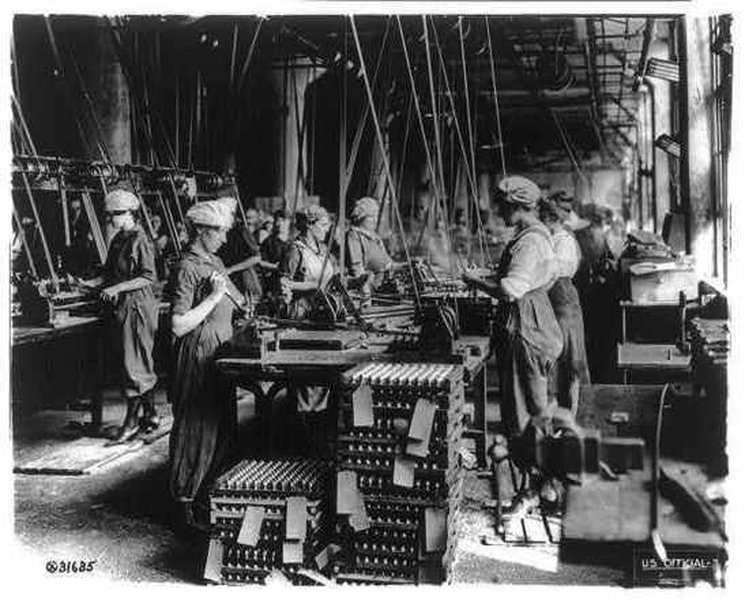
Women working in a factory during World War I, illustrating the mobilization of the home front.
The Aftermath: Redrawing the Map and New Ideologies
The signing of the "Armistice" on November 11, 1918, brought an end to the fighting, but the process of establishing a lasting peace was fraught with challenges. The Treaty of Versailles, signed in 1919, imposed harsh "reparations" on Germany and included the "War Guilt Clause," which many historians argue contributed to future instability. The war also spurred revolutionary movements, notably the rise of "Bolsheviks" and the concept of the "proletariat" gaining political power in Russia, fundamentally challenging the existing world order.
New political frameworks emerged, including the concept of "self-determination" for national groups and the establishment of the "League of Nations" to promote international cooperation and prevent future wars. The "Mandate System" was created to administer former territories of the defeated empires, often leading to continued imperial influence. The war also had a profound impact on regions outside Europe, such as the Middle East, with the "Balfour Declaration" influencing the future of Zionism and the Arab-Israeli conflict.
Understanding World War I: Key Terms and Their Significance
This table provides a concise overview of the key terms discussed, highlighting their definitions and historical relevance during World War I.
| Term | Definition | Relevance to World War I |
|---|---|---|
| Annexed | To add an area or region to a country, often without consent. | Imperialist expansion and a cause of pre-war tensions (e.g., Austria-Hungary's annexation of Bosnia-Herzegovina). |
| Mobilize | To prepare military forces for war. | Rapid escalation of the conflict in 1914 due to alliance system and rapid military preparations. |
| Propaganda | Information, often biased, used to promote a political cause. | Used by governments to shape public opinion, encourage enlistment, and maintain morale on the home front. |
| Ideology | A system of ideas forming economic or political theory. | Underlying beliefs (e.g., nationalism, imperialism, militarism) that drove the conflict and shaped post-war movements. |
| Stalemate | A situation where neither side can make significant progress. | Characteristic of trench warfare on the Western Front, leading to prolonged deadlock and attrition. |
| Artillery | Large-caliber guns used to shoot shells over long distances. | Devastating weapon in trench warfare, responsible for mass casualties and shaping battlefield tactics. |
| Cavalry Units | Military formations consisting of soldiers on horseback. | Rendered largely obsolete by new technologies (machine guns, barbed wire) in static trench warfare. |
| Home Front | The civilian population and activities supporting the war effort. | Crucial for industrial production, morale, rationing, and civilian involvement in total war. |
| Conscription | Compulsory enlistment for military service. | Implemented by most belligerent nations to meet the unprecedented demand for manpower. |
| Armistice | A temporary suspension of hostilities in war. | Signed on November 11, 1918, officially ending the fighting in WWI. |
| Pandemic | A disease epidemic spread globally. | The Spanish Flu of 1918, which killed millions globally, exacerbated the war's human cost. |
| Self-Determination | The right of a people to choose their own government. | A key principle championed by Woodrow Wilson, influencing the redrawing of national borders after the war. |
| Reparations | Payments made by the defeated to the victors for war damages. | Heavy financial burden imposed on Germany by the Treaty of Versailles, leading to economic hardship and resentment. |
| Authoritarianism | A political system with strict obedience to authority. | Prevalent in many pre-war empires (e.g., Germany, Austria-Hungary) and a contrast to Allied democratic ideals. |
| Deportations | Forced expulsion of people from a country or region. | Occurred during the war, notably the Armenian Genocide by the Ottoman Empire. |
| Mandate System | A system for administering former colonies of defeated powers. | Established by the League of Nations to manage former German and Ottoman territories, often resembling colonialism. |
| Zionists | Adherents of Zionism, advocating for a Jewish state in Palestine. | Their cause was significantly impacted by British wartime policies in the Middle East. |
| Balfour Declaration | British statement supporting a Jewish national home in Palestine (1917). | Crucial document influencing the future of the Israeli-Palestinian conflict. |
| Shell Shock | Psychological trauma experienced by soldiers in combat. | Recognized as a severe mental toll of modern warfare, highlighting the human cost beyond physical injury. |
| Proletariat | The working class, especially in Marxist theory. | Its grievances and revolutionary potential were highlighted by wartime conditions and the Russian Revolution. |
| Nationalized | Transferring private industry to government ownership. | Governments took control of vital industries to support the war effort, expanding state economic control. |
| Mass Media | Communication reaching a large audience (e.g., newspapers, film). | Used for news, propaganda, and shaping public opinion on an unprecedented scale during the war. |
Visualizing the Impact of World War I
World War I had profound and multifaceted impacts, not only on the battlefield but also on societies and politics worldwide. The video below offers a concise yet comprehensive overview of the war, its causes, and its major outcomes, serving as an excellent visual summary to complement the detailed vocabulary discussed. It helps to contextualize how these terms played out in the broader historical narrative, from the complex web of alliances that led to conflict to the revolutionary changes it ushered in.
A comprehensive overview of World War I, detailing key events, battles, and figures that defined the conflict.
This video effectively condenses the vast history of World War I, illustrating how concepts like 'mobilization' rapidly escalated tensions, how 'trench warfare' became the defining characteristic of combat, and how the war ultimately led to a redrawing of the global political map with concepts like 'self-determination' and 'reparations' shaping the post-war world.
Frequently Asked Questions (FAQ)
What were the primary causes of World War I?
How did new technologies impact warfare in WWI?
What was the significance of the Treaty of Versailles?
How did World War I affect civilian populations?
Conclusion: The Enduring Legacy of WWI Terminology
The terms associated with World War I are more than just historical definitions; they are windows into the defining characteristics of a conflict that irrevocably altered the global landscape. From the ideological underpinnings of pre-war tensions like "imperialism" and "militarism" to the brutal realities of "trench warfare" and "shell shock," and finally to the post-war attempts at restructuring the world through "self-determination" and the "Mandate System," each word carries a significant weight of historical context. Understanding this specialized vocabulary is essential for anyone seeking to comprehend the profound impact of the Great War on military strategy, international relations, societal structures, and human psychology, setting the stage for much of the 20th century's subsequent history.
Recommended Further Exploration
- How did the alliance system lead to World War I?
- What was the impact of new technologies on World War I combat?
- Explore the social and economic changes on the home front during WWI.
- Analyze the long-term consequences of the Treaty of Versailles.