
Research Proposal: Advancing the State-of-the-Art in 3D Printing of Human Heart Models for Enhanced Drug Screening
Exploring innovative 3D bioprinting technologies for next-generation cardiac drug screening models
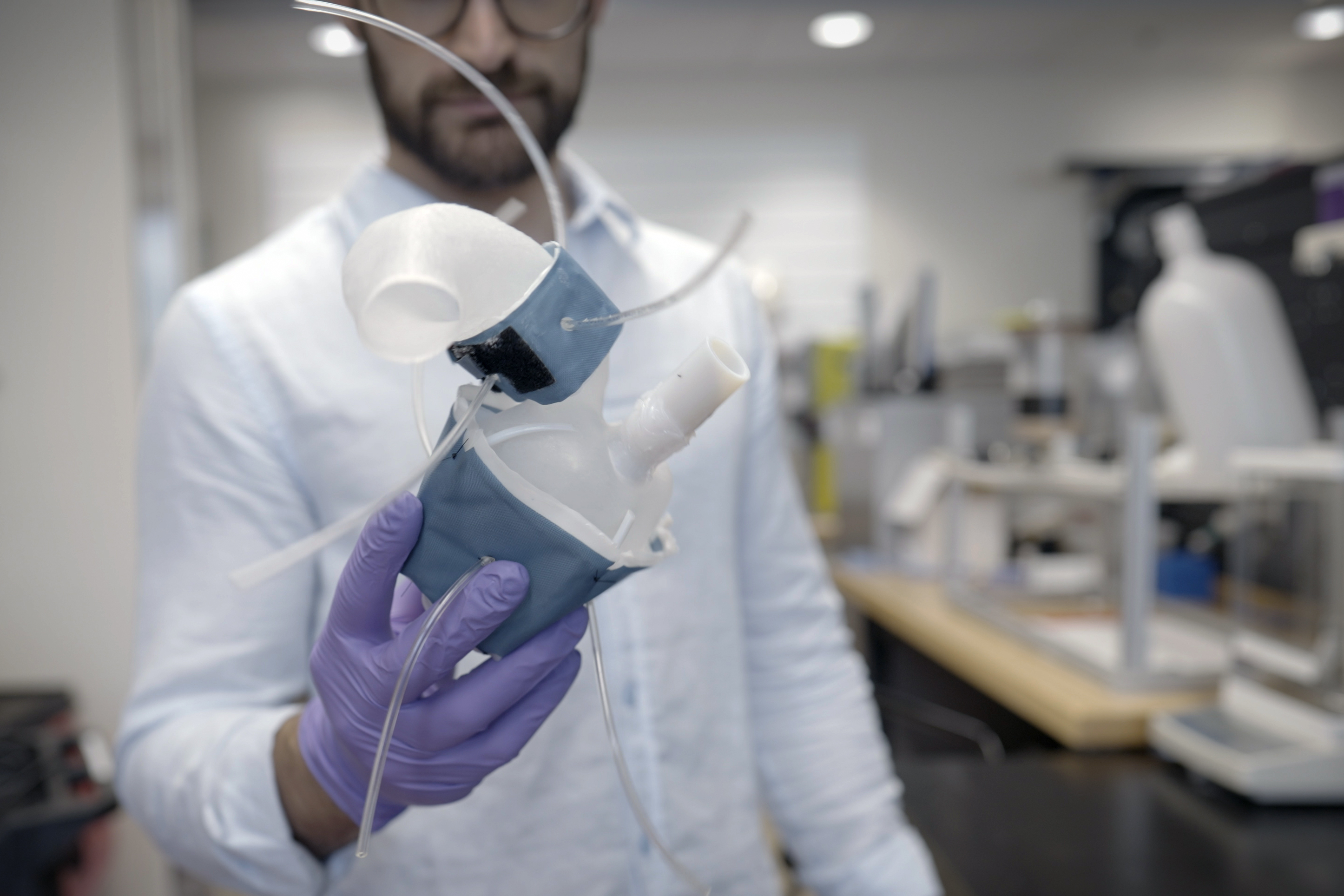
Highlights
- Advanced 3D Bioprinting Techniques: Leveraging cutting-edge printing methods such as SLA, FDM, and digital light processing to replicate the complex anatomical structure of the human heart.
- Novel Bioinks and Biomaterials: Development and optimization of bioinks, including decellularized ECM and peptide-based hydrogels, to support cell viability, differentiation, and maturation.
- Enhanced Drug Screening Applications: Establishing physiologically accurate heart models that provide improved predictive validity for cardiotoxicity, efficacy studies, and personalized medicine.
Introduction
The development of new drugs for cardiovascular diseases is a challenging and resource-intensive process, often hindered by the limitations of traditional preclinical testing methods. Conventional 2D cell cultures and animal models frequently fall short in accurately predicting human cardiac responses due to physiological and anatomical differences. Recognizing these challenges, the proposed research centers on using 3D printing technologies to fabricate anatomically precise human heart models. By integrating advanced bioprinting techniques with novel biomaterials, we aim to significantly enhance the accuracy of drug screening processes and reduce the dependency on animal testing. This proposal outlines the strategy for developing these next-generation heart models, focusing on aspects such as design, bioink formulation, and functional maturation.
Background
Current Challenges and Technological Advances
Traditional drug screening approaches rely heavily on models that do not fully emulate human cardiac physiology. Animal models, while widely used, often suffer from anatomical disparities and poor translational outcomes, whereas 2D cell cultures cannot replicate the three-dimensional complexity of the heart. Recent progress in 3D bioprinting technology presents an opportunity to overcome these challenges by fabricating human heart models that closely mimic in vivo conditions.
Key Technological Innovations
The advent of 3D bioprinting allows for the construction of detailed, volumetric tissue structures with programmable architecture. Techniques such as stereolithography (SLA), fused deposition modeling (FDM), and digital light processing enable the creation of anatomically accurate heart models complete with vascular networks and chamber structures. These innovations are promising for replicating cardiac tissues with high fidelity and offer considerable potential for improving drug test outcomes.
Objectives
The primary aim of this research proposal is to advance the state-of-the-art in 3D printing of human heart models specifically geared for enhanced drug screening. The objectives of the proposed research are multi-fold:
- Design and Fabrication of Advanced Heart Models: Utilize state-of-the-art 3D printing techniques to create anatomically precise heart models that integrate functional vascular networks and distinct cardiac chambers.
- Development of Novel Bioinks: Formulate and optimize innovative bioinks based on decellularized extracellular matrix (ECM) and peptide-based hydrogels that promote cell viability, organization, and differentiation in cardiac tissue.
- Functional Vascularization: Incorporate microfluidic systems and endothelial cell seeding to emulate native blood flow and oxygenation present within human cardiac tissues.
- Maturation and Functionalization Protocols: Develop protocols incorporating electrical stimulation and perfusion culture to drive the functional maturation of cardiomyocytes and vascular cells within the printed models.
- Validation in Drug Screening Applications: Assess the effectiveness of these heart models by testing a range of pharmaceutical compounds, comparing their predictive response to established 2D and animal models.
Methodology
Comprehensive Research Strategy
The proposed approach is divided into several interrelated phases, ensuring that each aspect of 3D bioprinting technology is leveraged to create robust human heart models capable of revolutionizing drug screening methodologies.
Phase 1: Literature Review and Preliminary Design
An extensive literature review will be undertaken to survey state-of-the-art techniques in 3D bioprinting and cardiac tissue engineering. This phase will map current challenges, identify material requirements, and establish design parameters using computer-aided design (CAD) software. This foundational work sets the stage for subsequent model development.
Phase 2: Bioink Development and Optimization
Central to creating functional heart models is the development of bioinks capable of supporting cell functions effectively. This phase involves:
- Testing various biomaterials such as decellularized ECM, peptide-based hydrogels, and biodegradable polymers.
- Optimizing the mechanical properties and viscosity of bioinks to suit the bioprinting process.
- Conducting cell viability and differentiation assays to ensure the bioinks support healthy cardiac tissue formation.
Phase 3: Advanced 3D Printing and Model Fabrication
Using advanced 3D bioprinting platforms, models will be fabricated to include detailed anatomical features. Emphasis will be on:
- Utilizing techniques like SLA and FDM to achieve high-resolution printing.
- Integrating multi-material printing to simulate various cardiac components, including chambers and vascular structures.
- Ensuring dimensional accuracy and reproducibility across printed models.
Phase 4: Incorporation of Functional Vascularization
To mimic native cardiac physiology, the heart models will be equipped with functional vascular networks. This step includes:
- Employing microfluidic techniques to embed channels within the tissue constructs.
- Seeding endothelial cells to line these channels for mimicking capillary networks.
- Verifying blood flow dynamics and oxygen exchange through in vitro simulations.
Phase 5: Maturation and Functional Testing
Maturation protocols are essential for driving the development of functional cardiac tissues. This phase will involve:
- Implementing electrical stimulation regimes to enhance cardiomyocyte alignment and contraction.
- Using perfusion culture systems to simulate physiological conditions and promote tissue growth.
- Conducting real-time functional assays to measure contractility, electrophysiological responses, and metabolic activity.
Phase 6: Validation and Drug Screening Applications
Once the heart models are fully matured, they will be used for drug screening applications. This phase focuses on:
- Comparative studies using traditional 2D cultures and animal models.
- Testing pharmaceutical compounds for both efficacy and cardiotoxicity.
- Assessing the predictive accuracy of the 3D printed models in forecasting human cardiac responses.
Project Components and Budget Overview
| Component | Description | Estimated Cost |
|---|---|---|
| Personnel | Principal Investigator, Postdoctoral Researcher, Graduate Research Assistant, Undergraduate Research Assistant | $200,000 |
| 3D Printing Equipment & Materials | SLA and FDM printers, microfluidic systems, advanced bioink materials | $150,000 |
| Operational Costs | Cell culture consumables, reagents, lab supplies | $30,000 |
| Travel & Training | Conferences and skill development workshops | $20,000 |
| Miscellaneous | Contingency and unforeseen expenses | $30,000 |
| Total | Overall project budget required | $400,000 |
Expected Outcomes
The anticipated outcomes from the proposed research are expected to significantly transform preclinical drug screening and cardiac research:
- Revolutionized Drug Screening: The developed 3D heart models will offer a more physiologically relevant platform for drug testing, reducing reliance on animal testing while providing data that more accurately reflects human cardiac responses, particularly in assessing cardiotoxicity and therapeutic efficacy.
- Enhanced Predictive Validity: By closely replicating the architecture and functionality of human cardiac tissue, these models are expected to improve the prediction of drug outcomes, thereby reducing late-stage drug failures and streamlining the drug development process.
- Innovative Bioink Formulations: The research will contribute to the broader scientific community by developing and optimizing novel bioinks that can be applied in other tissue engineering contexts, potentially extending to personalized medicine.
- Reduction of Ethical Concerns: Advanced 3D printed heart models can serve as effective alternatives to animal models, thereby minimizing ethical concerns associated with animal testing in drug development.
- Technological Advancements: The successful integration of vascular networks, stimulation protocols, and microfluidic systems in 3D printed heart models will set new benchmarks in the field of bioprinting and organ modeling.
Validation Strategy
Comparative Testing and Performance Metrics
A rigorous validation phase is planned to compare the performance and predictive power of the 3D printed heart models against conventional screening methods. This phase will involve:
- Comparing drug responses in the 3D models to those observed in 2D cell cultures and animal models.
- Evaluating metrics such as cardiomyocyte contractility, metabolic activity, and electrophysiological properties using sophisticated in vitro imaging and sensing technologies.
- Conducting statistical analyses to ensure reproducibility and reliability of the models’ responses to a broad range of pharmaceutical compounds.
Research Timeline
Phased Approach for Efficient Execution
| Phase | Duration | Main Activities |
|---|---|---|
| Phase 1 | Months 1-6 | Literature review, design of heart models using CAD tools, preliminary material selection. |
| Phase 2 | Months 7-12 | Development and optimization of bioinks, initial cell viability and differentiation assays. |
| Phase 3 | Months 13-18 | Fabrication of 3D printed heart models, integration of multi-material printing techniques, incorporation of vascular channels. |
| Phase 4 | Months 19-24 | Implementation of maturation protocols (electrical stimulation, perfusion culture), validation against traditional models, drug screening assays. |
Personnel and Resources
Team Composition and Equipment Requirements
The project will be led by a Principal Investigator (PI) with extensive experience in cardiac tissue engineering and 3D bioprinting. The core team will include:
- Principal Investigator (PI): Oversees research strategy, data analysis, and publication efforts.
- Postdoctoral Researcher: Manages day-to-day experimental operations, optimization of bioinks, and detailed model fabrication.
- Graduate Research Assistant: Executes experiments, monitors cell culture processes, and assists in validating model performance.
- Undergraduate Research Assistant: Supports laboratory tasks, data entry, and preliminary experimental preparations.
The laboratory will be equipped with a state-of-the-art 3D bioprinting setup, including stereolithography (SLA) and fused deposition modeling (FDM) printers, microfluidic systems for vascular integration, and advanced imaging systems to monitor tissue maturation and functionality.
Impact on Drug Development and Personalized Medicine
Realizing the potential of 3D printed heart models for drug screening and cardiac tissue engineering could revolutionize both pharmaceutical development and personalized medical treatments. These models offer the opportunity to:
- Provide a more accurate reflection of human cardiac tissue responses to drugs, thereby reducing the occurrence of unexpected side effects in clinical trials.
- Facilitate personalized screening where patient-specific cardiac cells are used to create tailor-made heart models, enhancing treatment efficacy and safety.
- Accelerate the development timeline of cardiovascular drugs by offering rapid and reliable screening methods.
- Minimize ethical concerns and regulatory hurdles by reducing the reliance on animal models.
References
- 3D Bioprinting in Cardiac Models - Frontiers in Bioengineering
- 3D Bioprinting Market Trends - PharmiWeb
-
Advanced 3D Printing Techniques - ScienceDirect
-
Cardiac Tissue Engineering Overview - NCBI PMC
- 3D Printing for Enhanced Drug Screening - Frontiers in Medicine
Recommended Further Queries

Last updated March 22, 2025