
Simple Formulas and Code for Acceleration
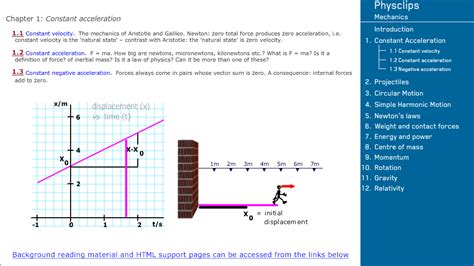
Understanding Acceleration
Acceleration is a fundamental concept in physics that describes the rate at which an object changes its velocity over time. It is a vector quantity, meaning it has both magnitude and direction. Understanding acceleration is essential for analyzing motion in various contexts, from everyday activities to complex engineering applications.
Basic Formulas for Acceleration
1. Average Acceleration
The average acceleration (\(a\)) of an object can be calculated using the following formula: $$ a = \frac{\Delta v}{\Delta t} $$ Where:
- \(a\) = Acceleration
- \(\Delta v\) = Change in velocity (\(v_f - v_i\))
- \(\Delta t\) = Change in time (\(t_f - t_i\))
2. Angular Acceleration
Angular acceleration (\(\alpha\)) pertains to rotational motion and is calculated as: $$ \alpha = \frac{\Delta \omega}{\Delta t} $$ Where:
- \(\alpha\) = Angular Acceleration
- \(\Delta \omega\) = Change in angular velocity (\(\omega_f - \omega_i\))
- \(\Delta t\) = Change in time (\(t_f - t_i\))
3. Centripetal Acceleration
Centripetal acceleration (\(a_c\)) is the acceleration that keeps an object moving in a circular path and is directed towards the center of the circle. It is given by: $$ a_c = \frac{v^2}{r} $$ Where:
-
\(a_c\) = Centripetal Acceleration
-
\(v\) = Velocity of the object
-
\(r\) = Radius of the circular path
Types of Acceleration
Linear Acceleration
Linear acceleration refers to the rate of change of an object's linear velocity. It is directly calculated using the average acceleration formula mentioned above. For example, when a car speeds up from 15 m/s to 35 m/s in 3 seconds, its average linear acceleration is: $$ a = \frac{35\,\text{m/s} - 15\,\text{m/s}}{3\,\text{s}} = \frac{20\,\text{m/s}}{3\,\text{s}} \approx 6.67\,\text{m/s}^2 $$ This calculation demonstrates how an object's velocity changes over a specific time interval.
Angular Acceleration
As previously defined, angular acceleration deals with changes in rotational velocity. For instance, if a wheel's angular velocity increases from 10 rad/s to 20 rad/s over 5 seconds, the angular acceleration is: $$ \alpha = \frac{20\,\text{rad/s} - 10\,\text{rad/s}}{5\,\text{s}} = \frac{10\,\text{rad/s}}{5\,\text{s}} = 2\,\text{rad/s}^2 $$ This indicates the wheel's rotational speed is increasing at a rate of 2 rad/s².
Centripetal Acceleration
Centripetal acceleration is crucial for objects moving in circular paths. For example, if a car is taking a turn with a velocity of 20 m/s and the turn has a radius of 50 meters, the centripetal acceleration is: $$ a_c = \frac{(20\,\text{m/s})^2}{50\,\text{m}} = \frac{400\,\text{m}^2/\text{s}^2}{50\,\text{m}} = 8\,\text{m/s}^2 $$ This means the car experiences an acceleration of 8 m/s² directed towards the center of the turn.
Calculating Acceleration: Step-by-Step Examples
Example 1: Linear Acceleration
Problem: A race car accelerates from 15 m/s to 35 m/s in 3 seconds. Calculate its average acceleration.
Solution:
Using the average acceleration formula:
$$
a = \frac{v_f - v_i}{t_f - t_i} = \frac{35\,\text{m/s} - 15\,\text{m/s}}{3\,\text{s} - 0\,\text{s}} = \frac{20\,\text{m/s}}{3\,\text{s}} \approx 6.67\,\text{m/s}^2
$$
Therefore, the race car's average acceleration is approximately 6.67 m/s².
Example 2: Centripetal Acceleration
Problem: A car is moving at a speed of 30 m/s around a circular track with a radius of 100 meters. Determine the centripetal acceleration.
Solution:
Using the centripetal acceleration formula:
$$
a_c = \frac{v^2}{r} = \frac{(30\,\text{m/s})^2}{100\,\text{m}} = \frac{900\,\text{m}^2/\text{s}^2}{100\,\text{m}} = 9\,\text{m/s}^2
$$
The car experiences a centripetal acceleration of 9 m/s² towards the center of the circular track.
Python Code Examples for Calculating Acceleration
1. Calculating Linear Acceleration
Below is a simple Python function to calculate linear acceleration given the initial velocity, final velocity, and time elapsed.
def calculate_acceleration(initial_velocity, final_velocity, time_elapsed):
    """
    Calculates the acceleration of an object.

    Parameters:
    initial_velocity (float): The initial velocity in m/s.
    final_velocity (float): The final velocity in m/s.
    time_elapsed (float): The time over which the change in velocity occurs in seconds.

    Returns:
    float: The acceleration in m/s².
    """
    if time_elapsed == 0:
        raise ZeroDivisionError("Time elapsed cannot be zero.")
    acceleration = (final_velocity - initial_velocity) / time_elapsed
    return acceleration

# Example usage
initial_velocity = 0    # m/s
final_velocity = 10     # m/s
time_elapsed = 2        # s

acceleration = calculate_acceleration(initial_velocity, final_velocity, time_elapsed)
print(f"The acceleration is: {acceleration} m/s²")
Output: The acceleration is: 5.0 m/s²
2. Calculating Angular Acceleration
The following Python function calculates angular acceleration given the initial angular velocity, final angular velocity, and time elapsed.
def calculate_angular_acceleration(initial_angular_velocity, final_angular_velocity, time_elapsed):
    """
    Calculates the angular acceleration of an object.

    Parameters:
    initial_angular_velocity (float): The initial angular velocity in rad/s.
    final_angular_velocity (float): The final angular velocity in rad/s.
    time_elapsed (float): The time over which the change in angular velocity occurs in seconds.

    Returns:
    float: The angular acceleration in rad/s².
    """
    if time_elapsed == 0:
        raise ZeroDivisionError("Time elapsed cannot be zero.")
    angular_acceleration = (final_angular_velocity - initial_angular_velocity) / time_elapsed
    return angular_acceleration

# Example usage
initial_omega = 10     # rad/s
final_omega = 20       # rad/s
time_elapsed = 5       # s

alpha = calculate_angular_acceleration(initial_omega, final_omega, time_elapsed)
print(f"The angular acceleration is: {alpha} rad/s²")
Output: The angular acceleration is: 2.0 rad/s²
3. Calculating Centripetal Acceleration
Here's a Python function to compute centripetal acceleration based on velocity and radius.
def calculate_centripetal_acceleration(velocity, radius):
    """
    Calculates the centripetal acceleration of an object moving in a circular path.

    Parameters:
    velocity (float): The velocity of the object in m/s.
    radius (float): The radius of the circular path in meters.

    Returns:
    float: The centripetal acceleration in m/s².
    """
    if radius == 0:
        raise ZeroDivisionError("Radius cannot be zero.")
    centripetal_acceleration = (velocity ** 2) / radius
    return centripetal_acceleration

# Example usage
velocity = 20   # m/s
radius = 50     # m

a_c = calculate_centripetal_acceleration(velocity, radius)
print(f"Centripetal Acceleration: {a_c} m/s²")
Output: Centripetal Acceleration: 8.0 m/s²
Advanced Concepts in Acceleration
For scenarios where acceleration is not constant, calculus becomes essential. In such cases, acceleration can be defined as the instantaneous rate of change of velocity with respect to time: $$ a(t) = \frac{dv(t)}{dt} $$ Similarly, velocity can be obtained by integrating the acceleration over time: $$ v(t) = \int a(t) \, dt + v_0 $$ Where \(v_0\) is the initial velocity.
These concepts are pivotal in fields such as motion planning, robotics, and advanced physics, where precise control and analysis of motion are required.
Practical Applications of Acceleration Formulas
Automotive Engineering
In automotive engineering, understanding acceleration is crucial for designing vehicles that can achieve desired performance metrics. Calculations of acceleration help in determining engine power requirements, braking systems, and stability controls.
Aerospace Engineering
Aerospace engineers use acceleration formulas to design aircraft and spacecraft trajectories. Precise calculations ensure that vehicles can achieve the necessary speed and maneuverability while maintaining structural integrity.
Sports Science
Sports scientists analyze acceleration to enhance athletic performance. By measuring an athlete's acceleration, trainers can develop targeted training programs to improve speed and agility.
Robotics
In robotics, acceleration calculations are essential for movement planning and control. Robots must accurately calculate acceleration to navigate environments, manipulate objects, and perform tasks efficiently.
References and Further Reading
For more detailed explanations and examples of acceleration formulas and their applications, consider exploring the following resources:
Last updated January 5, 2025