
Unlocking Tomorrow's Innovators: How STEM Activities Cultivate Essential Skills in Children
Discover the profound developmental benefits of engaging children in hands-on STEM exploration, according to leading education experts.
Science, Technology, Engineering, and Mathematics (STEM) education, particularly through hands-on activities, offers a wealth of developmental benefits for children. Far beyond preparing them for specific careers, these experiences are crucial for nurturing a versatile skill set essential for navigating an increasingly complex world. Leading educators, researchers, and institutions agree that engaging children in STEM activities from an early age fosters critical thinking, problem-solving abilities, creativity, and vital interpersonal skills. This isn't necessarily about formal coding classes or advanced theoretical knowledge in youth; rather, it's about the developmental leaps children make by exploring, experimenting, and creating.
Key Developmental Highlights from STEM Engagement
- Enhanced Cognitive Abilities: STEM activities actively promote critical thinking and problem-solving by encouraging children to analyze, hypothesize, and find innovative solutions to challenges.
- Nurturing Ingenuity: Engagement with STEM tasks ignites creativity and innovation, as children design, build, and experiment, often merging artistic expression with scientific principles.
- Building Essential Life Skills: Collaborative STEM projects foster crucial soft skills such as teamwork, communication, and resilience, preparing children for future academic and professional environments.
The Multifaceted Impact of STEM Activities on Child Development
The consensus among educational experts is clear: STEM activities provide a rich ground for holistic child development. These aren't just fun pastimes; they are foundational experiences that shape how children approach learning and challenges throughout their lives.
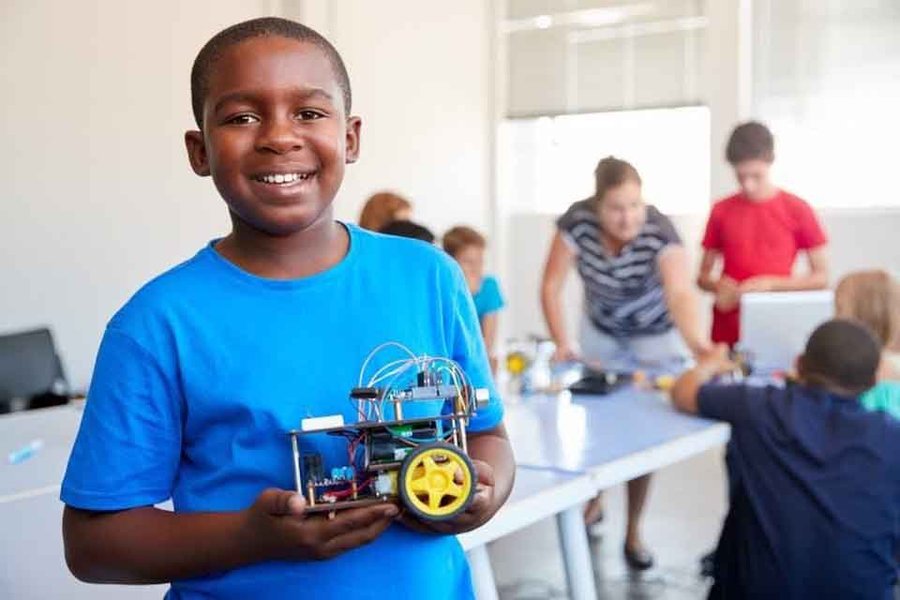
Young learners collaborate on a hands-on STEM project, illustrating the development of teamwork and problem-solving skills.
Sharpening Minds: Critical Thinking and Problem-Solving
One of the most significant benefits of STEM activities is the cultivation of critical thinking and problem-solving skills. Children are encouraged to ask "why" and "how," to make predictions, test their ideas, analyze data, and draw evidence-based conclusions. This inquiry-driven approach helps them think logically and evaluate information effectively.
The Process of Discovery
Institutions like the National Museum of Science and Industry and experts from Harvard University emphasize that STEM fields inherently require curiosity and a drive to solve pressing problems. Activities such as designing a structure to withstand certain forces or figuring out the mechanics of a simple machine directly challenge children to apply knowledge creatively. This process of identifying problems, devising strategies, implementing solutions, and learning from failures is central to developing robust problem-solving capabilities that extend far beyond STEM subjects.
Igniting Imagination: Creativity and Innovation
While often viewed through an analytical lens, STEM is a powerful catalyst for creativity and innovation. Activities like building circuits with playdough, constructing imaginative contraptions, or even integrating art with geometric explorations (STEAM) encourage children to think outside the box and approach challenges with novel perspectives. Invent.org and the National Inventors Hall of Fame highlight how STEM activities spark ingenuity and empower children to become confident innovators. This blend of analytical thought and creative expression is vital for developing well-rounded individuals.
Building Bridges: Collaboration, Communication, and Soft Skills
Many STEM projects are inherently collaborative, requiring children to work in teams. This dynamic fosters essential soft skills:
- Teamwork: Learning to share ideas, distribute tasks, and work towards a common goal.
- Communication: Articulating thoughts clearly, listening to others, and explaining complex concepts in simpler terms.
- Resilience and Adaptability: STEM challenges often involve trial and error. Experiencing setbacks and persevering teaches children to embrace failure as a learning opportunity, fostering resilience and the ability to adapt strategies. SmartLab Learning emphasizes this aspect, noting how students learn to think independently and overcome obstacles.
- Curiosity and Persistence: Hands-on activities tap into children's natural curiosity, encouraging a lifelong love of exploration and discovery. The iterative nature of many STEM tasks builds persistence.

Students working together on a technology-based STEM project, showcasing the development of collaboration and communication skills.
Laying the Groundwork: The Importance of Early STEM Exposure
Experts from organizations like Zero to Three and American University's School of Education strongly advocate for introducing STEM concepts early in a child's life. Even toddlers can engage in age-appropriate STEM exploration, such as playing with water, planting seeds, or building with blocks. These early experiences are crucial for:
-
Developing a positive STEM identity.
-
Building foundational cognitive skills.
-
Enhancing executive functions like attention, memory, and cognitive flexibility.
-
Setting the stage for ongoing academic success and fostering a lifelong passion for learning.
Early, joyful exposure to STEM can significantly impact a child's ability to grasp complex ideas later in life and prepares them for future educational and career pathways.
Visualizing Skill Development Through STEM
The impact of STEM activities on children's skill development is multifaceted. The following chart illustrates how different aspects of STEM engagement contribute to a range of crucial competencies, with varying emphasis depending on the developmental stage.
This chart illustrates an opinionated representation of how engagement in STEM activities typically fosters various skills across different age groups. For example, while curiosity is high across all stages, the complexity of problem-solving and critical thinking challenges often increases with age, leading to more pronounced development in older children.
Connecting the Dots: A Mindmap of STEM Benefits
To further illustrate the interconnected benefits of STEM activities, the following mindmap provides a visual overview of how different skills and developmental advantages are fostered and related.
(Attention, Memory)"] id2["Creative & Innovative Growth"] id2a["Imagination"] id2b["Inventiveness"] id2c["Design Thinking"] id2d["Experimentation"] id3["Social & Emotional Skills (Soft Skills)"] id3a["Collaboration & Teamwork"] id3b["Communication"] id3c["Resilience & Perseverance"] id3d["Adaptability"] id3e["Empathy (in group work)"] id4["Personal Attributes & Mindset"] id4a["Curiosity & Inquiry"] id4b["Confidence"] id4c["Growth Mindset
(Learning from failure)"] id4d["Motivation & Engagement"] id5["Long-Term Impacts"] id5a["Academic Success"] id5b["Career Readiness
(STEM and non-STEM fields)"] id5c["Lifelong Learning Habits"] id5d["Scientific & Technical Literacy"] id6["Real-World Application"] id6a["Practical Understanding of Concepts"] id6b["Relevance to Everyday Life"] id6c["Preparation for Future Challenges"]
This mindmap shows that at the core, STEM activities enhance Cognitive Development, Creative Growth, and Social-Emotional Skills. These, in turn, cultivate valuable Personal Attributes and lead to significant Long-Term Impacts, all while emphasizing Real-World Applications of learning.
STEM Skills in Action: A Summary Table
The diverse skills nurtured by STEM activities are highly transferable and valuable across many aspects of life. The table below summarizes some key skills and their broader implications:
| Skill Developed | Description | Real-World Application & Importance |
|---|---|---|
| Critical Thinking | Analyzing information objectively, identifying biases, and making reasoned judgments. | Making informed decisions in personal and professional life, evaluating sources of information, solving complex societal issues. |
| Problem-Solving | Identifying challenges, brainstorming, evaluating, and implementing effective solutions. | Overcoming obstacles in any career, managing daily life challenges, innovating in various fields. |
| Creativity | Generating new ideas, approaches, or artistic expressions. | Driving innovation in technology and arts, finding unique solutions, adapting to new situations. |
| Collaboration | Working effectively with others towards a shared goal, respecting diverse perspectives. | Essential in most workplaces, community projects, and family dynamics. |
| Communication | Clearly conveying ideas, listening actively, and understanding others. | Building relationships, succeeding in academic and professional settings, effective leadership. |
| Resilience | Bouncing back from setbacks, learning from failure, and maintaining perseverance. | Navigating life's ups and downs, achieving long-term goals, maintaining mental well-being. |
| Digital & Technical Literacy | Understanding and using technology effectively and responsibly. | Essential for modern citizenship, many current and future jobs, and accessing information. |
Exploring STEM: A Visual Introduction
The following video provides a concise and engaging overview of what STEM entails and why it's beneficial for young learners. It helps to visualize how these different disciplines come together to encourage exploration and problem-solving.
This video, "What is STEM? | All About STEM for Kids | Twinkl USA," offers a foundational understanding of STEM, highlighting its core components—Science, Technology, Engineering, and Math—and its focus on exploring, experimenting, and solving real-world problems. Such introductions are valuable for both children and adults to appreciate the breadth and importance of STEM education.
Fostering an Inclusive STEM Future
Educational leaders, including those at Harvard University and the U.S. Department of Education, also emphasize the importance of ensuring equitable access to STEM activities. By designing inclusive programs, educators can reduce opportunity gaps and broaden participation, harnessing diverse talents and perspectives to enrich the STEM fields and society as a whole.
Frequently Asked Questions (FAQ)
What age is best to introduce children to STEM activities?
Are STEM skills only useful for careers in science and technology?
How do STEM activities promote creativity if science and math seem rigid?
My child isn't interested in "sciencey" things. How can I encourage STEM engagement?
Conclusion
The insights from leading educational institutions and experts underscore a powerful consensus: STEM activities are far more than academic exercises. They are vital developmental tools that equip children with the critical thinking, problem-solving, creative, and collaborative skills necessary for success in the 21st century. By fostering curiosity, resilience, and a love for learning through hands-on exploration, STEM education empowers children to become confident, adaptable individuals ready to tackle future challenges and contribute meaningfully to society, irrespective of the career paths they ultimately choose.
Recommended Further Exploration
References
Last updated May 21, 2025