
Ensuring Precision in Cancer Treatment: A Deep Dive into CAR-T Cell Therapy Quality Control
Unpacking the meticulous process that guarantees the safety and effectiveness of personalized cell therapies.
Chimeric Antigen Receptor (CAR) T-cell therapy represents a groundbreaking advancement in personalized medicine, particularly for treating certain types of cancer. This immunotherapy involves engineering a patient's own T cells to recognize and destroy cancer cells. Given that these are living drugs tailored to individual patients, maintaining rigorous quality control (QC) throughout the complex manufacturing process is paramount. This overview details the essential QC workflow steps that ensure the final CAR-T cell product is safe, pure, potent, and effective.
Key Highlights of CAR-T Quality Control
- Comprehensive Testing: QC is integrated into every step of the manufacturing process, from inspecting raw materials to testing the final product before infusion.
- Focus on Critical Attributes: Testing centers on ensuring key characteristics: Safety (sterility, endotoxin levels), Purity (correct cell type, absence of contaminants), Potency (ability to kill target cells), and Identity (correct CAR expression).
- Regulatory Adherence: All QC measures must comply with stringent regulatory guidelines (like FDA requirements and GMP standards) to guarantee patient safety and product consistency.
Understanding CAR-T Cells and Manufacturing
The Basics of CAR-T Cell Engineering
CAR-T cells are T lymphocytes equipped with synthetic receptors (CARs). These receptors allow the T cells to identify and bind to specific proteins (antigens) found on the surface of cancer cells.
Key Components of a Chimeric Antigen Receptor (CAR):
- Extracellular Antigen-Binding Domain: Typically derived from an antibody, this part recognizes the specific target antigen on cancer cells (e.g., CD19 on B-cell leukemia).
- Hinge Region: Provides flexibility, connecting the binding domain to the cell membrane.
- Transmembrane Domain: Anchors the CAR structure within the T cell membrane.
- Intracellular Signaling Domains: These domains (like CD3-zeta and co-stimulatory domains such as CD28 or 4-1BB) activate the T cell upon antigen binding, triggering the cancer-killing function and promoting T cell persistence.
The Manufacturing Journey
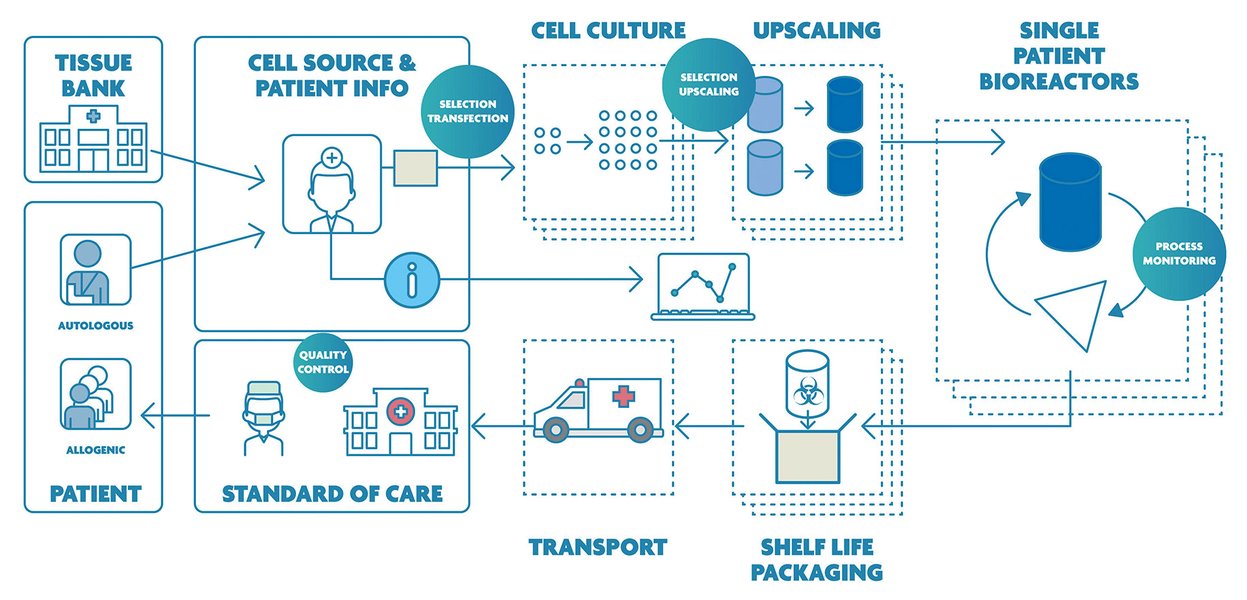
Creating CAR-T cells is a multi-step process, typically involving:
- Leukapheresis: Collection of white blood cells, including T cells, from the patient's blood.
- T-Cell Isolation & Activation: Separation and selection of T cells from the collected sample, followed by activation to prepare them for genetic modification.
- Genetic Modification (Transduction/Transfection): Introduction of the CAR gene into the T cells, usually using a viral vector (like lentivirus or retrovirus) or non-viral methods.
- Ex Vivo Expansion: Culturing the newly engineered CAR-T cells in a bioreactor to multiply them into the millions or billions required for a therapeutic dose.
- Harvest, Formulation & Cryopreservation: Collecting the expanded cells, washing them, formulating them into an infusion medium, and often cryopreserving (freezing) them for storage and transport until patient infusion.

Diagram illustrating the typical steps involved in manufacturing CAR-T cell therapies, from patient cell collection to final product infusion.
The Rigorous Quality Control Workflow
Quality control isn't just a final check; it's a continuous process woven throughout manufacturing to ensure the integrity and safety of the CAR-T cell product. Each step has specific QC measures.
1. Raw Materials and Starting Material Qualification
Ensuring a Solid Foundation
The process begins long before the patient's cells are collected. All materials used must meet strict quality standards.
- Reagent & Media Testing: Culture media, cytokines, antibodies, and other reagents are tested for sterility, purity, identity, and absence of contaminants like endotoxins or mycoplasma.
- Vector Qualification: Viral vectors used for gene transfer undergo rigorous testing for identity, purity, potency (titer), sterility, and safety (e.g., replication-competent virus testing).
- Leukapheresis Product Assessment: The patient's collected cells (apheresis material) are assessed upon arrival for cell count, viability, and microbial contamination. This baseline check ensures the starting material is suitable for manufacturing.
2. In-Process Controls During Manufacturing
Monitoring the Transformation
QC tests are performed at critical junctures during the manufacturing process to monitor progress and detect potential issues early.
- T-Cell Isolation & Activation: Checks confirm the efficiency of T-cell selection and monitor activation markers (e.g., CD69, CD25) to ensure cells are ready for transduction.
- Transduction Efficiency: After introducing the CAR gene, the percentage of T cells successfully expressing the CAR is measured, often using flow cytometry or quantitative PCR (qPCR/ddPCR). This is a key indicator of potential potency.
- Cell Expansion Monitoring: During the culture phase, cell count, viability, growth kinetics, and phenotype (e.g., CD4/CD8 ratio, memory markers) are regularly monitored. Culture conditions (pH, glucose, lactate) are also tracked. Sterility checks are performed periodically.
3. Cryopreservation Quality Control (If Applicable)
Preserving Cell Integrity
Cryopreservation allows for scheduling flexibility and transport, but it's a critical step that can impact cell health.
- Process Validation: The freezing and thawing procedures must be validated to ensure minimal cell loss and impact on function.
- Post-Thaw Assessment: A sample is often thawed and tested for viability and recovery to confirm the cryopreservation process was successful before the main batch is released or shipped.
4. Final Product Testing and Release
The Gatekeeper Checks
Before the CAR-T cell product can be released for patient infusion, it undergoes a comprehensive battery of tests based on pre-defined specifications outlined in a Certificate of Analysis (CoA).
- Identity: Confirms the product contains the correct CAR construct and targets the intended antigen (e.g., anti-CD19 CAR expression for B-cell malignancies). Flow cytometry is key here.
- Purity: Assesses the percentage of CAR-T cells versus non-transduced T cells, residual non-T cells (like B cells or monocytes), and process-related impurities (e.g., residual beads from selection, vector components).
- Viability: Measures the percentage of living cells in the final product, crucial for therapeutic effect. Typically requires >70% or >80% viability.
- Cell Count/Dose: Verifies the total number of viable CAR-T cells to ensure the correct dose is administered.
- Potency: Functional assays measure the biological activity of the CAR-T cells, confirming their ability to recognize and kill target cancer cells (cytotoxicity assays) and/or produce cytokines (like Interferon-gamma) upon stimulation.
- Safety: Rigorous testing for sterility (absence of bacteria and fungi), mycoplasma, and endotoxins is mandatory to prevent infection and severe inflammatory reactions in the patient. Tests for replication-competent viruses (if applicable) are also performed.
Only if the final product meets all pre-defined specifications across these critical quality attributes (CQAs) is it released for administration to the patient.

Overview of typical release tests performed on cell therapy products, including CAR-T cells, before patient administration.
Focus on Critical Quality Attributes (CQAs)
CQAs are the physical, chemical, biological, or microbiological attributes of the CAR-T product that must be controlled to ensure the desired product quality. The QC workflow is designed to monitor and control these attributes.
This chart illustrates the perceived relative importance and complexity of controlling various Critical Quality Attributes (CQAs) during CAR-T cell manufacturing QC. Attributes like Safety, Purity, Viability, and Dose are typically subject to very high scrutiny and complex testing regimes due to their direct impact on patient outcomes. Potency and Identity are also critical, requiring sophisticated functional and molecular assays. Phenotype and Vector Copy Number, while important, might involve slightly less complex or frequent testing compared to the primary release criteria but are still crucial for understanding product characteristics and consistency.
Tools and Technologies in CAR-T QC
Advanced analytical techniques are essential for the comprehensive characterization and quality control of CAR-T cell products.
- Flow Cytometry: A cornerstone technique used extensively for assessing cell identity (surface markers like CD3, CD4, CD8), purity (percentage of CAR-expressing cells), viability, and phenotype. Multi-parameter flow cytometry provides detailed insights into the cell populations.
- Quantitative PCR (qPCR) and Droplet Digital PCR (ddPCR): Used to quantify vector copy number (VCN) per cell, measure transduction efficiency, and detect residual DNA or potential contaminants. ddPCR offers high precision, crucial for CQA assessment.
- Cell-Based Potency Assays: In vitro assays, such as cytotoxicity assays (measuring target cell killing) and cytokine release assays (e.g., ELISA, ELISpot, Luminex for IFN-γ, TNF-α), are used to evaluate the functional activity of the CAR-T cells.
- Microbial Detection Systems: Automated culture systems (e.g., BACT/ALERT) and rapid microbiological methods (e.g., Gram stain, PCR-based tests) are used for sterility testing. Specific assays are used for mycoplasma detection (PCR or culture-based).
- Endotoxin Testing: Limulus Amebocyte Lysate (LAL) assays (chromogenic, turbidimetric, or gel-clot methods) are standard for detecting bacterial endotoxins.
- Automated Cell Counters & Analyzers: Provide accurate cell counts and viability measurements (e.g., using trypan blue exclusion).
Advanced microfluidic and chip-based technologies are being developed to improve the speed and precision of cell analysis and quality control in cell therapy manufacturing.
Visualizing the QC Workflow
This mindmap provides a simplified overview of the key stages and considerations within the CAR-T cell therapy quality control workflow.
The mindmap outlines the workflow, starting from vetting the initial materials (patient cells, vectors, reagents), moving through in-process checks during cell modification and expansion, culminating in comprehensive final product testing before release. Key considerations like CQAs, GMP, and regulatory standards underpin the entire process.
Video Overview: CAR-T Manufacturing Workflow
This video provides a visual walkthrough of the typical CAR-T cell manufacturing process, highlighting the steps where quality control measures are integrated to ensure a safe and effective final product. It helps contextualize the journey of the T cells from patient collection to therapeutic infusion.
Understanding the manufacturing flow provides context for why specific QC tests are performed at different stages. The video illustrates the complexity and precision required, emphasizing the role of technology and automation in modern cell therapy production.
QC Testing Summary Table
This table summarizes some of the essential quality control tests performed at different stages of CAR-T cell manufacturing and the critical quality attributes they assess.
| Manufacturing Stage | Key QC Test | Critical Quality Attribute (CQA) Assessed |
|---|---|---|
| Starting Material (Apheresis) | Viability, Cell Count, Microbial Screen | Starting Material Suitability |
| Starting Material (Vector) | Titer, Purity, Sterility, Safety | Vector Quality & Safety |
| In-Process (Post-Transduction) | Transduction Efficiency (% CAR+) | Identity, Potential Potency |
| In-Process (Expansion) | Viability, Cell Count, Phenotype | Product Growth, Consistency |
| Final Product | Sterility Test | Safety |
| Final Product | Mycoplasma Test | Safety |
| Final Product | Endotoxin Test | Safety |
| Final Product | Flow Cytometry (% CAR+, Purity Markers) | Identity, Purity |
| Final Product | Viability Assay | Viability |
| Final Product | Cell Count | Cell Dose |
| Final Product | Potency Assay (e.g., Cytotoxicity) | Potency |
| Final Product | Vector Copy Number (VCN) | Safety, Consistency |
Challenges and Future Directions in CAR-T QC
Current Hurdles
- Complexity and Lengthy Turnaround Time: The multi-step manufacturing process is complex and can take several weeks, delaying treatment. QC testing itself adds significant time.
- Variability: Patient-to-patient variability in starting T cells can impact manufacturing success and final product characteristics. Standardizing processes to account for this is challenging.
- Cost: The bespoke nature of autologous CAR-T therapy, combined with extensive QC requirements, contributes to its high cost.
- Potency Assay Standardization: Defining and reliably measuring potency, which reflects clinical efficacy, remains an area of active development and standardization.
Innovations on the Horizon
- Automation and Closed Systems: Increased automation reduces manual handling, minimizing contamination risks and improving consistency. Closed manufacturing systems further enhance sterility assurance.
- Real-Time Monitoring and Process Analytical Technology (PAT): Implementing sensors and non-invasive monitoring within bioreactors allows for real-time tracking of CQAs, potentially enabling faster decision-making and process adjustments.
- Rapid Testing Methods: Development of faster methods for sterility, mycoplasma, and potency testing aims to shorten the overall manufacturing and release timeline.
- Improved Analytics: More sophisticated analytical tools (e.g., advanced flow cytometry, 'omics' analyses) provide deeper characterization of the product, potentially identifying attributes predictive of clinical success.
- Allogeneic ('Off-the-Shelf') CAR-T: While presenting different QC challenges (e.g., related to gene editing and host rejection), allogeneic therapies aim to overcome the personalized manufacturing bottleneck.
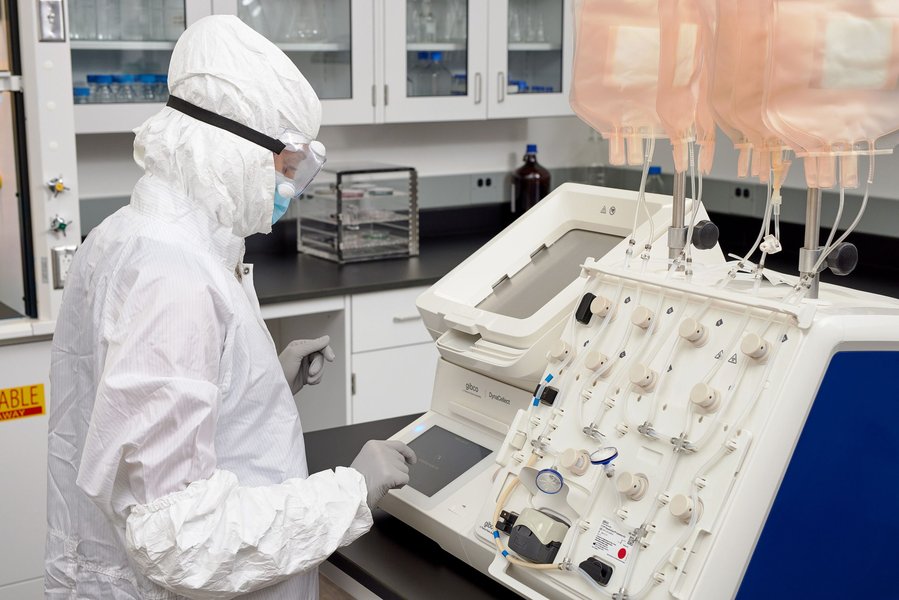
Automation and advanced bioreactor technologies are key to overcoming manufacturing bottlenecks and standardizing CAR-T cell production and quality control.
Frequently Asked Questions (FAQ)
Why is quality control so critical for CAR-T therapy?
Because CAR-T cells are living drugs derived from a patient's own cells (autologous) or a donor (allogeneic), there's inherent biological variability. QC ensures that despite this variability, the final product administered is consistently safe (free from harmful contaminants), pure (contains the right cells), potent (capable of fighting cancer), and correctly dosed. Failures in QC could lead to ineffective treatment, dangerous side effects (like severe infections or cytokine release syndrome), or manufacturing failures.
What are the main safety tests performed?
The primary safety tests include:
- Sterility Testing: Checks for bacterial and fungal contamination. Usually requires a 14-day incubation period.
- Mycoplasma Testing: Detects mycoplasma, a type of bacteria that can evade standard sterility tests.
- Endotoxin Testing: Measures levels of endotoxins, which are components of bacterial cell walls that can cause fever and shock.
- Replication-Competent Virus Testing: If viral vectors are used, tests are done to ensure no replication-competent viruses (which could cause infection) were generated during vector production.
How is the 'potency' of CAR-T cells measured?
Potency refers to the specific ability of the CAR-T cells to perform their intended biological function. It's typically measured using cell-based assays that mimic the cells' action in the body. Common methods include:
- Cytotoxicity Assays: Co-culturing CAR-T cells with target cancer cells (expressing the specific antigen) and measuring the percentage of cancer cells killed.
- Cytokine Release Assays: Measuring the production of key signaling molecules (like Interferon-gamma, TNF-alpha) by CAR-T cells when they encounter target cells, indicating activation.
- Proliferation Assays: Assessing the ability of CAR-T cells to multiply upon stimulation.
How long does the QC process take?
The total time for CAR-T manufacturing and release, including all QC steps, typically takes several weeks (e.g., 2-4 weeks or more). Some QC tests, particularly sterility testing (which often requires 14 days), are major contributors to this timeline. Significant effort is underway to develop rapid testing methods to shorten this "vein-to-vein" time.
References
- Quality Control in CAR-T Cells Manufacturing - WeAreCellix
-
Quality Control and Nonclinical Research on CAR-T Cell Products: General Principles and Key Issues - ScienceDirect
-
Improving CAR T Cell Therapy by Optimizing Critical Quality Attributes and CAR T Cell Product Manufacturing - PMC NCBI
- Addressing biological and manufacturing hurdles for CAR T cell therapies - Nature Communications
- CAR-T Characterization and Quality Control/Assurance Testing - Sartorius
- Ensuring CAR T Cell Quality: Validating a Potency Assay - Accellix
- Improving Quality Control in CAR T Cell Manufacturing with Droplet Digital PCR (ddPCR) - Bio-Rad
Recommended Reading
Last updated April 12, 2025