
Unlocking Safety and Power: Inside the Rigorous Quality Control of CAR-T Cell Therapy
A step-by-step look at the critical checks ensuring CAR-T therapies are effective and safe for cancer patients.
Highlights of CAR-T Quality Control
- Multi-Stage Scrutiny: Quality control isn't a single step but a continuous process integrated throughout CAR-T manufacturing, from starting materials to the final therapeutic product.
- Assay Arsenal: A diverse range of sophisticated assays, including flow cytometry, cell-based potency tests, ELISA, and molecular methods, are employed to assess identity, purity, potency, and safety.
- Patient Safety First: Rigorous testing for sterility, endotoxins, mycoplasma, and residual process components minimizes risks, ensuring the final CAR-T cell product is safe for infusion.
The Crucial Role of Quality Control in CAR-T Therapy
Chimeric Antigen Receptor (CAR) T-cell therapy represents a groundbreaking advance in cancer treatment. This personalized immunotherapy involves genetically engineering a patient's own T cells to recognize and destroy cancer cells. However, manufacturing these living drugs is complex and requires meticulous quality control (QC) to guarantee their safety, consistency, and therapeutic effectiveness. The QC workflow encompasses multiple stages, employing a battery of tests to verify that the final cell product meets stringent specifications before it can be administered to a patient.
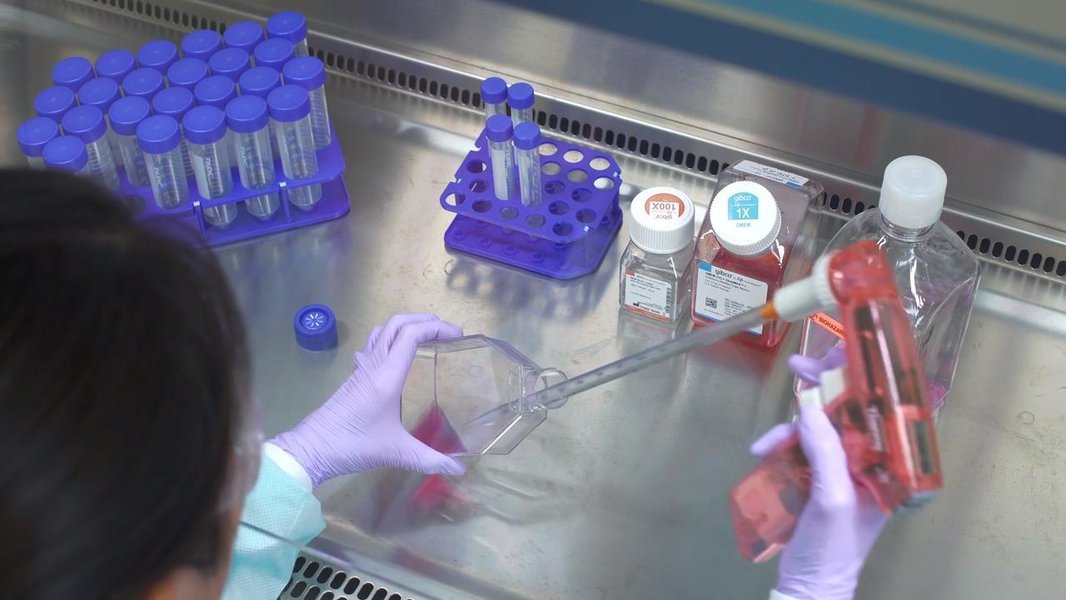
Maintaining aseptic conditions during cell culture is fundamental to preventing contamination throughout the CAR-T manufacturing process.
This process ensures that the modified T cells correctly identify and target cancer cells (identity and potency), are present in sufficient numbers free from harmful contaminants (purity and safety), and retain their desired characteristics throughout manufacturing and expansion.
Navigating the CAR-T QC Workflow: A Step-by-Step Journey
The QC workflow for CAR-T cell therapy is typically divided into three main phases: assessment of starting materials, in-process controls during manufacturing, and final release testing of the finished product. Each phase involves specific tests tailored to the critical quality attributes (CQAs) being assessed.
Phase 1: Starting Material Qualification
The quality journey begins even before manufacturing commences, with the assessment of the initial patient material obtained via leukapheresis.
Key QC Checks:
- Cell Count and Viability: Determining the total number of viable T cells available using automated cell counters for accuracy and efficiency.
- Cell Subset Analysis: Using flow cytometry to quantify essential T cell populations, such as CD4+ (helper) and CD8+ (cytotoxic) T cells. The initial ratio is a baseline characteristic.
- Purity Assessment: Ensuring the T cell population is sufficiently pure and free from significant contamination by other cell types (e.g., B cells, monocytes) using flow cytometry.
- Reagent QC: Verifying the quality, sterility, and identity of critical reagents like viral vectors, antibodies, and cell culture media.
Phase 2: In-Process Control (IPC) During Manufacturing
As the T cells undergo activation, genetic modification (transduction), and expansion, continuous monitoring is crucial to ensure the process remains on track.

Cell culture systems are central to expanding CAR-T cells to therapeutic doses, requiring constant monitoring.
Key QC Checks:
- CAR Transduction Efficiency: Measuring the percentage of T cells successfully expressing the CAR construct, typically using flow cytometry to detect the CAR protein on the cell surface or qPCR/ddPCR to quantify CAR gene copies. Regulatory guidelines often suggest limits on vector copy number (VCN) per cell (e.g., FDA recommendation often cited as <4 copies/cell) to mitigate integration risks.
- Cell Expansion Monitoring: Tracking cell growth, viability, and population doubling times throughout the culture period using cell counting methods and viability dyes.
- Phenotype Analysis: Assessing the characteristics of the expanding CAR-T cells using flow cytometry. This includes monitoring T cell differentiation states (e.g., naïve, memory subsets like CD62L+ cells) and activation markers, which can correlate with persistence and efficacy.
- Sterility Testing: Performing regular checks during culture to detect any microbial (bacterial or fungal) contamination early.
Phase 3: Final Product QC and Release Testing
Before the CAR-T cell product can be released for patient infusion, it undergoes a comprehensive battery of tests to confirm it meets all predefined specifications for safety, purity, identity, and potency.
Key QC Checks:
- Identity Confirmation: Verifying the presence of the CAR construct (gene and protein) using methods like flow cytometry and/or PCR, confirming the product is indeed the intended CAR-T therapy.
- Purity Assessment (Final): Re-confirming high purity of the CAR-T cell population and absence of contaminating cells using flow cytometry.
- Potency Assay: This critical assay measures the biological activity of the CAR-T cells – specifically, their ability to recognize and kill target cancer cells expressing the relevant antigen. This is often done using cell-based cytotoxicity assays (co-culture assays). Developing robust and standardized potency assays is a key challenge.
- Viability and Cell Count (Dose): Precisely quantifying the number of viable CAR-T cells to ensure the correct dose is administered.
- Cytokine Release Assay: Measuring the profile and quantity of cytokines (e.g., IFN-γ, TNF-α, IL-2) released by CAR-T cells upon encountering target cells, often using ELISA or multiplex bead assays. This indicates functional activation but also informs potential risks like Cytokine Release Syndrome (CRS).
- Residual Vector/Reagent Testing: Quantifying any remaining viral vector particles or process reagents (e.g., beads used for activation) using methods like qPCR or ELISA to ensure they are below safe limits.
- Sterility Testing (Final): Comprehensive testing according to pharmacopeial standards to confirm the absence of bacteria, fungi, and yeast.
- Mycoplasma Testing: Specific testing to ensure the product is free from mycoplasma contamination, which can affect cell function and pose safety risks. PCR-based methods are often used for faster results.
- Endotoxin Testing: Measuring levels of bacterial endotoxins (lipopolysaccharides) using methods like the Limulus Amebocyte Lysate (LAL) test to prevent pyrogenic reactions upon infusion.
Only batches that pass all release specifications are approved, documented with a Certificate of Analysis (CoA), cryopreserved (if applicable), and released for clinical use.
Visualizing the CAR-T QC Workflow
The intricate process of CAR-T quality control involves multiple interconnected steps and assays. This mindmap provides a simplified overview of the key stages and associated testing categories.
This map highlights how different assays are deployed at various points to build a comprehensive quality profile of the CAR-T cell product.
Key Assays in the CAR-T QC Toolkit
Several analytical techniques are cornerstones of the CAR-T QC process, each providing unique insights into the product's characteristics.
Flow Cytometry: The Workhorse of Cell Analysis

Flow cytometry analyzes individual cells based on light scattering and fluorescence, enabling detailed characterization.
Flow cytometry is indispensable in CAR-T QC. It uses lasers and detectors to analyze individual cells based on their physical properties (size, granularity) and the presence of specific proteins (antigens) tagged with fluorescent antibodies. Its applications include:
- Phenotyping: Identifying and quantifying cell populations (T cells, CD4/CD8 subsets, other immune cells).
- CAR Expression: Measuring the percentage of cells expressing the CAR and the intensity of expression.
- Purity: Detecting contaminating cells.
- Viability: Assessing cell health using specific dyes.
- Activation/Differentiation Markers: Monitoring the functional state of T cells.
Advanced multi-parameter flow cytometry (e.g., 13+ colors) provides highly detailed cell characterization.
Cell-Based Potency Assays: Measuring Functional Power
Potency assays are critical for confirming that the CAR-T cells can perform their intended therapeutic function – killing cancer cells. Common approaches involve:
- Cytotoxicity Assays: Co-culturing CAR-T cells with target cancer cells (expressing the specific antigen) and measuring the extent of cancer cell death over time. This can be done using various readouts like dye release (LDH assay), caspase activation, or real-time imaging/impedance systems (like xCELLigence).
- Cytokine Release Assays: Measuring key cytokines (e.g., IFN-γ) released by CAR-T cells upon specific activation by target cells, often using ELISA or multiplex platforms. This reflects T cell activation and effector function.
Establishing standardized, validated potency assays that accurately reflect in vivo efficacy remains an area of active development.
ELISA: Quantifying Soluble Signals
Enzyme-Linked Immunosorbent Assay (ELISA) is a plate-based technique used to detect and quantify specific proteins, such as cytokines or residual process reagents.
- Cytokine Profiling: Measuring levels of IFN-γ, TNF-α, IL-2, etc., released during potency assays or as a standalone measure of activation potential.
- Residual Protein Detection: Quantifying trace amounts of proteins used during manufacturing (e.g., specific antibodies, growth factors).
Molecular Assays (PCR/qPCR/ddPCR): Probing the Genes
Polymerase Chain Reaction (PCR) based methods are vital for genetic analysis:
- Vector Copy Number (VCN): Quantitative PCR (qPCR) or Droplet Digital PCR (ddPCR) accurately measures the average number of CAR gene copies integrated into the genome of each cell, crucial for safety assessment.
- Residual Vector Detection: Detecting any remaining viral vector particles in the final product.
- Mycoplasma Detection: Rapid PCR-based tests for specific detection of mycoplasma DNA.
Cell Culture & Sterility Testing: Ensuring Purity and Growth

Proper cell culture techniques, including medium changes and waste removal, are essential during CAR-T expansion and testing.
Cell culture is the foundation of CAR-T manufacturing (expansion phase) and also a tool for QC:
- Expansion Monitoring: Assessing cell proliferation and health during the growth phase.
- Sterility Testing: Culturing samples in specific broths (e.g., thioglycolate, tryptic soy broth) for extended periods (typically 14 days) to detect bacterial or fungal growth according to pharmacopeial methods.
- Mycoplasma Culture: Specialized culture methods to detect mycoplasma, though often supplemented or replaced by faster PCR methods.
Relative Importance of Assays Across the Workflow
Different assays play more prominent roles at specific stages of the QC process. This radar chart illustrates the perceived relative importance or frequency of use for key assay types during starting material checks, in-process control, and final product release testing. Note that this is a qualitative representation based on typical workflows.
As shown, flow cytometry is crucial across all stages. Cell-based potency assays and ELISA are primarily concentrated in final product testing, while molecular assays gain importance during IPC (for transduction) and final release (for VCN and safety). Cell culture and viability/sterility checks are consistently important throughout.
Summary of Key CAR-T QC Parameters and Assays
This table provides a consolidated overview of the essential quality attributes tested during CAR-T cell manufacturing, the typical assays employed, and the relevant workflow stage.
| QC Parameter | Assay(s) Used | Workflow Stage | Purpose |
|---|---|---|---|
| Identity | Flow Cytometry (CAR protein), PCR (CAR gene) | IPC, Final Product | Confirm presence of CAR construct |
| Purity | Flow Cytometry | Starting Material, IPC, Final Product | Assess percentage of CAR-T cells vs contaminants |
| Potency | Cell-Based Cytotoxicity Assay, Cytokine Release Assay (ELISA/Multiplex) | Final Product | Measure biological activity (killing ability, activation) |
| Viability | Dye Exclusion (e.g., Trypan Blue), Flow Cytometry (Viability Dyes) | Starting Material, IPC, Final Product | Determine percentage of live cells |
| Cell Count / Dose | Automated Cell Counter, Manual Counting (Hemocytometer) | Starting Material, IPC, Final Product | Quantify total viable cells for dosing |
| Transduction Efficiency / VCN | Flow Cytometry, qPCR/ddPCR | IPC, Final Product | Measure CAR gene integration frequency |
| Phenotype | Flow Cytometry (Surface Markers) | Starting Material, IPC, Final Product | Characterize T cell subsets and differentiation state |
| Sterility | Culture-based methods (Pharmacopeial), Rapid Microbial Methods | IPC, Final Product | Ensure absence of bacteria and fungi |
| Mycoplasma | Culture, PCR-based assays | IPC, Final Product | Ensure absence of mycoplasma contamination |
| Endotoxin | LAL Assay | Final Product | Ensure endotoxin levels are below acceptable limits |
| Residuals | ELISA, qPCR, Flow Cytometry (Beads) | Final Product | Quantify remaining process components (vectors, reagents) |
Insights into CAR-T QC Methods
Understanding the practical application of quality control methods is crucial. The following video from Miltenyi Biotec discusses techniques used to detect and characterize CAR-T cells during the manufacturing process, offering valuable insights into the QC steps involved.
This video highlights methods for detecting and isolating CAR-expressing cells, a key aspect of identity and purity testing within the QC workflow. It underscores the importance of specific tools and reagents tailored for CAR-T cell analysis, contributing to the overall quality assurance process.
Automation and Future Directions in CAR-T QC
The complexity and personalized nature of CAR-T therapy drive the need for automation and advanced analytical technologies. Integrating QC steps directly into automated, closed manufacturing platforms can reduce manual errors, shorten turnaround times, and improve consistency. Novel technologies under investigation include:
- Microfluidic Devices (Lab-on-a-Chip): Miniaturized systems for performing assays like flow cytometry or qPCR with smaller sample volumes and faster processing.
- Real-time Monitoring: Sensors integrated into bioreactors for continuous monitoring of cell health, metabolites, or even CAR expression.
- Label-Free Analysis: Techniques like real-time cell deformability cytometry that assess cell state without requiring fluorescent labels.
- Advanced Imaging and AI: Using high-content imaging and artificial intelligence to analyze cell morphology and behavior for quality assessment.
These advancements aim to make CAR-T QC faster, more efficient, and potentially more predictive of clinical outcomes.
Regulatory Landscape and Validation
CAR-T cell therapies are subject to stringent regulatory oversight by agencies like the U.S. Food and Drug Administration (FDA) and the European Medicines Agency (EMA). Manufacturers must demonstrate that their QC processes are robust and that all assays used for product release are properly validated. Validation ensures that an assay is accurate, precise, specific, sensitive, and reliable for its intended purpose. Adherence to Good Manufacturing Practice (GMP) guidelines is mandatory throughout the production and QC process.
Frequently Asked Questions (FAQ)
What is the main goal of CAR-T QC? +
The primary goal is to ensure the safety, identity, purity, potency, and consistency of the final CAR-T cell product before it is administered to a patient. It verifies that the therapy is correctly manufactured, functional, free from harmful contaminants, and contains the right dose of viable cells.
Why is flow cytometry so important in CAR-T QC? +
Flow cytometry is a versatile tool used at multiple stages. It allows for the analysis of individual cells to confirm CAR expression (identity), determine the percentage of CAR-T cells versus other cells (purity), assess T cell subsets (phenotype), and measure cell viability. Its ability to provide multi-parameter data on large cell populations makes it essential.
What is a potency assay in CAR-T therapy? +
A potency assay measures the biological activity or functional strength of the CAR-T cells. For CAR-T therapy, this usually involves demonstrating the cells' ability to recognize and kill target cancer cells (cytotoxicity) or to become activated and release specific cytokines (like IFN-γ) upon encountering the target antigen. It's a critical measure of therapeutic potential.
How is sterility ensured? +
Sterility is ensured through multiple layers: using sterile starting materials and reagents, performing manufacturing in a controlled GMP environment with strict aseptic techniques, and conducting rigorous sterility testing on the final product according to established pharmacopeial methods (typically involving culturing samples in specific media for 14 days to detect any microbial growth). Testing for mycoplasma and endotoxins also contributes to overall safety.
What happens if a CAR-T batch fails QC? +
If a batch of CAR-T cells fails any critical quality control test and does not meet the pre-defined release specifications, it cannot be released for patient infusion. The batch is typically rejected and discarded. Thorough investigation occurs to determine the cause of the failure to prevent recurrence in future manufacturing runs.
References
- Quality Control in CAR-T Cells Manufacturing - Cellix Ltd.
- Autologous CAR T cell Therapy Workflow - Danaher Life Sciences
- Potential solutions for manufacture of CAR T cells in cancer immunotherapy - Nature Communications
-
Quality Control and Nonclinical Research on CAR-T Cell Products - ScienceDirect
- Advanced Flow Cytometry Assays for Immune Monitoring of CAR-T Cell Therapy - Frontiers in Immunology
- Quality Control in CAR T-Cell Manufacturing Using ddPCR - Technology Networks
- Ensuring CAR-T cell quality through validated potency assays - Accellix
Recommended
 assets.thermofisher.com
Last updated April 14, 2025