
Unveiling the Hidden Dangers: Are These Common Electrical Mistakes Lurking in Your Walls?
Mastering Electrical Safety: Identifying Common Installation Flaws and Understanding Core Principles.
Electrical systems are the lifelines of modern buildings, but errors in their design and installation can lead to significant hazards, including fires, electric shocks, equipment damage, and system failures. Understanding the most frequent mistakes and the fundamental principles of safe electrical work is crucial for homeowners, DIY enthusiasts, and even professionals seeking to ensure safety and compliance.
Essential Insights: Key Takeaways
- Incorrect wire sizing and circuit overloading are among the most frequent and dangerous electrical errors, often leading to overheating and potential fires.
- Proper grounding and secure, enclosed connections are absolutely critical safety measures that prevent shocks and protect appliances.
- A solid grasp of fundamental electrical principles and strict adherence to electrical codes (like the National Electrical Code or NEC and local regulations) is essential for identifying and preventing installation mistakes.
Most Frequent Electrical Design & Installation Mistakes
Numerous errors can occur during electrical work, often stemming from a lack of knowledge, inadequate planning, or cutting corners. Here are some of the most commonly cited mistakes:
Wiring and Connection Errors
Incorrect Wire Size (Gauge)
Using a wire that is too small (higher gauge number) for the electrical load it carries is a critical fire hazard. The wire can overheat due to excessive current flow. For standard 120V circuits in North America, 14-gauge copper wire is typically used for 15-amp circuits, and 12-gauge copper wire for 20-amp circuits. Using undersized wire violates code and compromises safety.
Poor or Loose Connections
Connections that are not mechanically and electrically sound (e.g., loose wire nuts, improperly tightened screw terminals) create high resistance points. This resistance generates heat, which can melt insulation and potentially start a fire. Using "backstab" push-in connectors on outlets and switches is also often discouraged as they can loosen over time compared to screw terminals.
Connections Outside Electrical Boxes
All wire splices and connections must be contained within approved electrical boxes (junction boxes, outlet boxes, etc.). Making connections outside of a box ("flying splices") leaves them exposed to physical damage, moisture, and increases the risk of arcing or short circuits spreading.
Wires Cut Too Short
Wires inside an electrical box should extend at least 3 inches beyond the face of the box, and ideally 6 inches total from where they enter. Wires cut too short make it difficult to create secure connections to devices or other wires, leading to strain and potential loosening.
Damaged Wire Insulation or Jackets
The outer jacket and inner insulation protect the conductors. Nicking, cutting, or abrading the insulation during stripping, pulling wire through structure, or improper stapling can expose the conductor, leading to short circuits or shock hazards. Over-tightening cable staples is a common cause of such damage.
Reversed Polarity
Connecting the hot (live) and neutral wires incorrectly on receptacles or fixtures creates a serious safety hazard. While the device might still function, parts of it could remain energized even when switched off, increasing the risk of electric shock during simple tasks like changing a lightbulb.
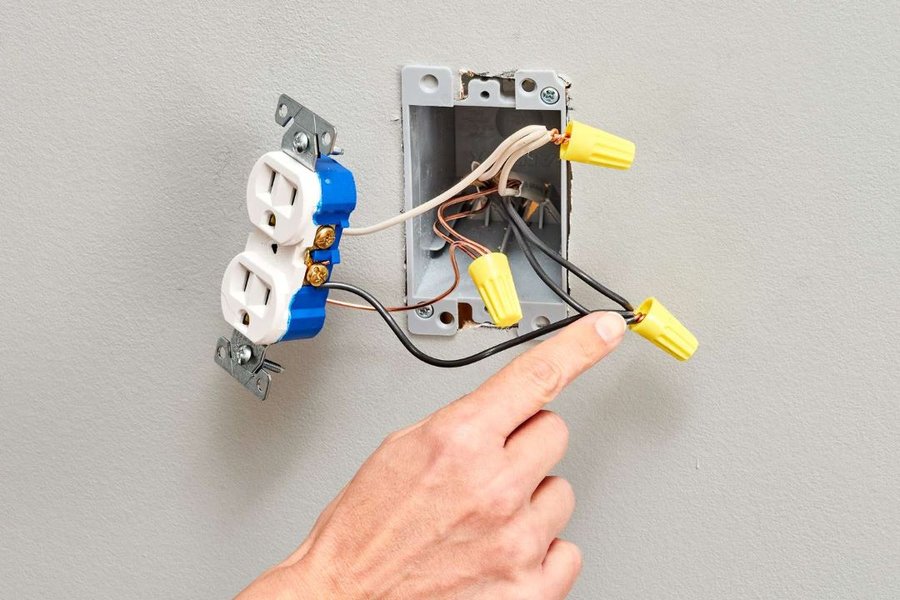
Careless or improper wiring connections significantly increase electrical risks.
Circuit and Load Management Errors
Overloading Circuits
Each circuit is designed to handle a maximum electrical load, protected by a specific circuit breaker or fuse. Connecting too many appliances or devices, especially high-wattage ones, to a single circuit can exceed its capacity. This leads to tripped breakers, blown fuses, or dangerous overheating of the wiring if the protection fails or is incorrectly sized.
Inadequate Planning and Design
Failing to create a detailed electrical plan before starting work is a common precursor to mistakes. This includes calculating loads for each circuit, determining the optimal number and placement of outlets and fixtures for each room, and considering future electrical needs. Poor planning can lead to overloaded circuits, insufficient outlets, and costly rework.
Missing Spare Circuits
Not including spare circuits or spaces in the electrical panel limits future flexibility. Adding new appliances or circuits later becomes more complex and expensive if the panel is already full.
Grounding and Safety System Errors
Improper or Missing Grounding
Grounding provides a safe path for electricity to flow to the earth in the event of a fault, preventing shocks and protecting equipment. Common mistakes include forgetting to connect the ground wire, making poor ground connections, or failing to ground metal boxes and devices properly. Ungrounded systems pose a significant shock hazard.
Mixing Line-Voltage and Low-Voltage Wiring
Running high-voltage power cables (e.g., 120V/240V) in the same conduit, raceway, or electrical box as low-voltage wiring (e.g., telephone, network cable, thermostat wire) without proper barriers or using cables/boxes specifically rated for this purpose is typically a code violation. It can cause interference in the low-voltage systems and create safety hazards.
Enclosure and Physical Installation Errors
Overcrowding Electrical Boxes
Electrical codes limit the number of wires, devices, and connectors that can be placed in a box of a specific size (box fill calculation). Stuffing too many elements into a box makes proper connections difficult, increases the risk of damaging wires, generates excess heat, and can make it harder to contain sparks or arcs.

Overcrowded electrical boxes are a common code violation and safety hazard.
Loose Outlets and Switches
Devices that are not securely fastened to the electrical box can move around, potentially straining the wire connections and causing them to loosen over time. This is both an aesthetic issue and a safety hazard.
Improper Wire Routing and Protection
Wires should be routed to avoid physical damage. This means keeping them away from sharp edges (like metal studs without protective bushings), hot surfaces (like flues or chimneys), and areas prone to moisture unless specifically rated for such conditions. Using conduit or armored cable where necessary provides essential protection.
Code and Compliance Errors
Ignoring Electrical Codes
Many common mistakes are direct violations of the National Electrical Code (NEC) in the US, the Canadian Electrical Code (CEC) in Canada, or other local regulations. These codes represent the minimum standards for safe installation. Ignoring them can lead to unsafe conditions, failed inspections, and legal liability.
Visualizing Risk Factors in Electrical Installations
The following chart provides a relative perspective on the perceived frequency and potential impact of various categories of electrical installation mistakes. Factors like incorrect wiring and grounding faults often carry high risks, while inadequate planning can underpin multiple downstream errors. This is an illustrative analysis, not based on precise statistical data.
Fundamental Principles for Spotting Electrical Mistakes
Understanding the "why" behind electrical rules is key to identifying unsafe practices. Grasping these core principles empowers you to recognize potential hazards:
Understanding Electrical Loads and Wire Capacity (Ampacity)
Principle: Wires have limits. Every electrical wire has a maximum amount of current (measured in amperes or amps) it can safely carry without overheating. This capacity (ampacity) depends on the wire's material (copper or aluminum) and its gauge (thickness). How it Helps Spot Mistakes: Knowing that thicker wires (lower gauge numbers) carry more current helps you identify if a wire seems too thin for the circuit breaker protecting it (e.g., a 14-gauge wire on a 20-amp breaker is a red flag). It also helps question if too many high-power devices are planned for a standard circuit.
The Critical Role of Grounding
Principle: Grounding is a safety path. The grounding system provides a dedicated path for fault current (electricity going where it shouldn't) to travel safely to the earth, tripping the circuit breaker and de-energizing the circuit. How it Helps Spot Mistakes: Recognizing the green or bare copper ground wire and understanding its purpose allows you to look for its presence and proper connection at outlets, switches, fixtures, and metal boxes. Missing or improperly connected ground wires are a major safety violation.
Circuit Overcurrent Protection
Principle: Breakers protect wires. Circuit breakers and fuses are safety devices designed to interrupt the flow of electricity when the current exceeds the safe level for the circuit wiring, preventing overheating and fires caused by overloads or short circuits. How it Helps Spot Mistakes: If breakers trip frequently, it's a strong indicator of a problem – likely an overloaded circuit or faulty wiring/appliance. Understanding this prevents simply resetting the breaker repeatedly or, worse, replacing it with a larger one, which defeats the protection and creates a severe fire hazard.
The Necessity of Secure and Enclosed Connections
Principle: Connections must be tight and contained. Electrical connections are potential points of failure. They must be mechanically secure to ensure good electrical conductivity and prevent heat buildup from resistance. They must also be enclosed in approved boxes to contain sparks/arcs and protect against physical damage. How it Helps Spot Mistakes: This principle helps you identify exposed splices, loose wire nuts, or connections made outside of boxes as immediate hazards. You can also check if outlets and switches feel loose in their boxes.
Understanding Polarity (Hot, Neutral, Ground)
Principle: Wires have distinct jobs. In AC circuits, the hot wire carries the current to the load, the neutral wire completes the circuit back to the source, and the ground wire is for safety. Correctly identifying and connecting these wires (typically black/red for hot, white for neutral, green/bare for ground) is crucial. How it Helps Spot Mistakes: Knowing polarity helps you recognize reversed connections (e.g., hot and neutral swapped on an outlet, identifiable by testing or observing connection points – hot usually connects to brass/dark screws, neutral to silver/light screws). Reversed polarity is a hidden danger.
Box Fill Limitations
Principle: Boxes have capacity limits. Electrical boxes are sized based on the number and size of wires, devices (switches/outlets), and internal clamps they contain. Overfilling a box violates code and can lead to damaged wires, overheating, and difficulty making safe connections. How it Helps Spot Mistakes: Visually inspecting a box that looks crammed full of wires should raise concerns. While precise calculation requires knowing wire gauges and box volume, excessive crowding is often apparent and suggests a potential violation.
Physical Protection of Wiring
Principle: Wires need protection from damage. Electrical cables must be routed and secured in ways that protect them from physical abuse, sharp edges, excessive heat, or moisture. How it Helps Spot Mistakes: You can look for wires run across sharp metal edges without protection, cables stretched too tightly, improper stapling that might have damaged the insulation, or non-water-resistant cables used in damp/wet locations.
Adherence to Electrical Codes
Principle: Codes establish minimum safety standards. The National Electrical Code (NEC) and local amendments provide detailed requirements for safe electrical installations. These cover everything from wire sizing and grounding to outlet spacing and box types. How it Helps Spot Mistakes: While detailed code knowledge requires study, understanding that codes exist and cover specific requirements encourages questioning installations that look unprofessional or deviate significantly from standard practices seen in properly wired homes.
Mapping Electrical Mistakes and Prevention
This mindmap illustrates the connections between common electrical mistake categories, their potential consequences, and the fundamental principles that help prevent or identify them. Understanding these relationships reinforces the importance of careful planning and execution in electrical work.
Common Mistakes by Category: Summary Table
This table summarizes key categories of electrical mistakes, providing examples, potential outcomes, and the core principle that helps in their prevention or identification.
| Mistake Category | Common Examples | Potential Consequences | Key Prevention Principle |
|---|---|---|---|
| Wire Sizing | Using 14-gauge wire on a 20A circuit; undersized feeders. | Overheating, fire hazard, voltage drop. | Understanding Wire Ampacity & Load Calculation. |
| Connections | Loose wire nuts; backstabbed outlets; splices outside boxes. | Overheating, arcing, fire hazard, intermittent power. | Ensuring Secure, Enclosed Connections. |
| Grounding | Missing ground wires; unconnected ground terminals; improper bonding. | Electric shock hazard, equipment damage from surges. | Understanding Grounding Fundamentals. |
| Circuit Loading | Too many devices on one circuit; inadequate circuits planned. | Tripped breakers, overheating wires, fire hazard. | Proper Load Calculation & Circuit Design. |
| Enclosures | Overcrowded junction boxes; devices not secured in boxes. | Wire damage, overheating, loose connections, code violation. | Adhering to Box Fill Limits & Proper Installation. |
| Physical Protection | Wires run over sharp edges; improper stapling; wrong cable type for location. | Insulation damage, short circuits, shock hazard. | Ensuring Physical Protection of Wiring. |
| Code Compliance | Violating outlet spacing rules; mixing voltages improperly; ignoring NEC/local rules. | Safety hazards, failed inspections, liability. | Adherence to Electrical Codes. |
Insights from the Field: Common DIY Wiring Errors
Many electrical mistakes occur during DIY projects where homeowners may lack the necessary experience or knowledge. This video discusses several common and potentially dangerous wiring errors that DIYers often make, reinforcing the importance of understanding fundamental principles before undertaking electrical work. Watching experienced electricians explain these pitfalls can provide valuable context.
Frequently Asked Questions (FAQ)
What is the single most dangerous common electrical mistake?
While many mistakes are dangerous, improper grounding is often cited as one of the most critical safety failures. A missing or faulty ground connection removes a primary safety mechanism designed to prevent electric shock in the event of a wiring fault, potentially making appliance casings live or preventing breakers from tripping correctly during a fault.
Can I fix minor electrical issues myself?
Simple tasks like replacing a switch or outlet might be feasible for a knowledgeable DIYer who understands the safety precautions (like turning off the power correctly) and basic principles (like polarity and grounding). However, due to the inherent risks, any task involving new circuits, panel work, or anything you are unsure about should be left to a qualified electrician. Many seemingly "minor" issues can signal larger underlying problems.
What are some warning signs of bad or faulty wiring?
Common warning signs include: frequent tripping of circuit breakers or blowing fuses; flickering or dimming lights, especially when appliances turn on; buzzing or cracking sounds from outlets or switches; outlets or switch plates that are warm to the touch; a persistent burning smell; mild shocks or tingling sensations when touching appliances. If you notice any of these signs, it's crucial to have your electrical system inspected by a professional.
How important is following the electrical code?
Following the National Electrical Code (NEC) and any local amendments is extremely important. These codes are not arbitrary rules; they are minimum standards developed over decades based on experience and safety testing to prevent fires and electrical shocks. Installations that don't meet code requirements are inherently less safe, may not pass inspections (which can affect insurance or selling a property), and can lead to serious accidents.
Recommended
- How can I accurately calculate the electrical load needed for a specific room?
- What are the essential safety steps to follow when replacing an electrical outlet?
- What are the key differences between 15-amp and 20-amp circuits and their wiring requirements?
- When is it absolutely necessary to hire a licensed electrician instead of attempting a DIY electrical project?
References
Last updated April 30, 2025