
In-Depth Discussion on E-R Modeling
A Comprehensive Analysis of the Entity-Relationship Modeling Technique
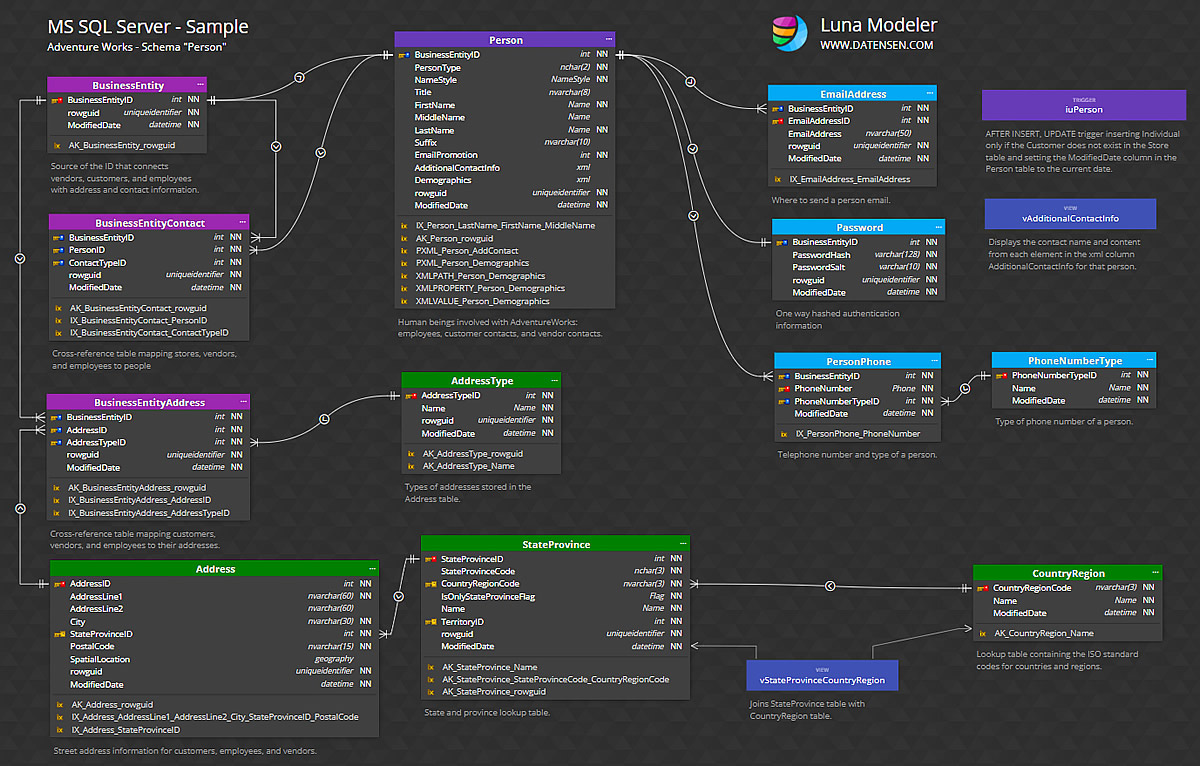
Key Takeaways
- Conceptual Framework: E-R modeling establishes a clear visual representation of entities, their attributes, and inter-entity relationships.
- Database Blueprint: It serves as a foundational blueprint that guides the translation of data structures into relational database tables, ensuring data integrity.
- Communication Tool: This technique simplifies communication between technical and non-technical stakeholders by standardizing the way database structures are depicted.
Introduction
Entity-Relationship (E-R) modeling is a vital technique in database design that involves creating a conceptual schema to visually represent the structure of data. The E-R model provides a means to document and communicate the essential components of a database, including data entities, their various attributes, and the relationships existing between these entities. Initially proposed in the 1970s, this methodology has evolved into an essential tool that lays the groundwork for building robust, efficient, and error-resistant databases.
This discussion aims to delve into the specifics of E-R modeling, exploring its definition, components, advantages, and practical applications. An analytical perspective will be provided to ensure readers comprehend not only how E-R modeling is implemented but also why it remains a cornerstone technique in the field of data management and database architecture.
Core Components of E-R Modeling
At its heart, E-R modeling constructs a blueprint that represents three central components: entities, attributes, and relationships. These components work together to provide a clear picture of how data is structured and interrelated in a database.
Entities
Definition and Importance
Entities are defined as objects or concepts about which data is stored. In an E-R diagram, each entity is typically represented by a rectangle. Entities can be tangible items such as “Customers,” “Products,” or “Orders,” or they can be conceptual elements such as “Employee” or “Course.” They reflect the real-world objects that need to be tracked within the system.
A properly defined entity plays a crucial role in ensuring that the database aligns with real-world requirements. By identifying clear entities, designers can separate concerns, manage data more effectively, and avoid redundancies.
Attributes
Nature of Attributes
Attributes represent the descriptive properties or characteristics of an entity. Illustrated as ellipses in E-R diagrams, these features provide the specific details needed to fully describe an entity. For instance, a “Student” entity might include attributes such as “Student ID,” “Name,” “Date of Birth,” and “Email Address.” It is through these attributes that the qualities of an entity are captured and stored.
Primary and Foreign Attributes
Attributes sometimes bear special importance in database design. A primary attribute, or primary key, is a unique identifier for each instance of an entity. Conversely, foreign keys establish a connection between entities and are used to realize relationships. In a well-designed database, the appropriate use of primary and foreign keys is instrumental in maintaining data integrity and ensuring that relationships are properly enforced.
Relationships
Types and Representation
Relationships in E-R modeling define how entities interact with each other. Graphically, these associations are represented by lines or diamonds linking the corresponding entities. There are several types of relationships:
- One-to-One (1-1): Each entity in one set is associated with a maximum of one entity in another. For example, each person may have one unique passport.
- One-to-Many (1-M): One entity can be linked to multiple entities in another set. A common example is a single customer placing many orders.
- Many-to-Many (M-N): Multiple entities in one set may be associated with multiple entities in another. For instance, students enrolling in multiple courses and courses having several students.
To depict these relationships accurately, cardinality and participation constraints are utilized to denote the minimum and maximum number of occurrences of one entity in relation to another.
Benefits and Advantages of E-R Modeling
E-R modeling presents numerous advantages that have cemented its status as an indispensable tool in database design:
Visual Clarity and Simplicity
One of the principal benefits of E-R models is the clear and concise visual depiction of complex data systems. By representing entities, attributes, and relationships in a diagrammatic format, E-R modeling facilitates a better understanding of the overall database structure. This clarity is particularly valuable when explaining intricate data systems to stakeholders with varying levels of technical expertise.
Error Prevention and Early Issue Identification
The process of E-R modeling inherently forces designers to think critically about the entire database structure. By mapping out entities and their interconnections early in the design process, potential errors or issues can be identified and resolved before the database is implemented. This proactive approach reduces future complications, such as data redundancy, inconsistencies, or violations of business rules.
Facilitation of Communication
E-R diagrams serve as an excellent communication tool between technical developers and non-technical business users. Its standardized visual language bridges the communication gap, ensuring that all stakeholders have a consistent understanding of the database’s structure. This consensus is invaluable during both the planning phase and throughout subsequent development stages.
Foundation for Relational Database Implementation
An E-R model is not merely a diagram; it is a blueprint that guides the creation of relational databases. Each entity is translated into a table, and attributes become the columns of these tables. Relationships are enforced via primary and foreign keys. This well-defined process not only streamlines the implementation phase but also ensures that the final database structure is both logical and effective.
The E-R Modeling Process
The creation of an effective E-R model is a systematic process that involves several critical steps to ensure that all necessary data elements and their relationships are accurately captured.
Step 1: Identify Entities
Detailing the Real-World Objects
Initially, the data modeling process begins with identifying the fundamental entities. This step involves understanding the real-world problem and determining the objects or concepts that play a significant role. For instance, in a university database, common entities might include “Students,” “Courses,” “Professors,” and “Departments.” The accurate identification of these entities is essential to ensure that all necessary components are captured.
Step 2: Define Attributes
Specifying Descriptive Features
After identifying entities, the next step is to define their attributes. This phase involves specifying the details or properties that describe each entity. In our university example, the “Students” entity might have attributes such as “Student ID,” “Name,” “Enrollment Date,” and “Major.” Clarity in attribute definition eliminates ambiguity and provides a structured way to record relevant information.
Step 3: Establish Relationships
Mapping Data Interactions
Establishing relationships is arguably one of the most crucial steps in E-R modeling. Relationship mapping involves determining how entities interact with one another. For example, one student may enroll in multiple courses, or one professor may teach several courses. These interactions are visually represented by linking the corresponding entities with relationship symbols, facilitating the understanding of data dependencies.
Step 4: Determine Cardinality and Participation
Defining Interaction Constraints
Cardinality specifies the number of instances of one entity that can be related to instances of another entity, such as one-to-one, one-to-many, or many-to-many relationships. Participation constraints further detail whether the relationship is mandatory or optional. These parameters are critical as they help in applying integrity constraints during database implementation, ensuring that the data adheres to the intended structure and business rules.
Step 5: Translate to Relational Schema
From Conceptual to Logical
Once the conceptual model is complete and thoroughly vetted, the next natural step is translating the E-R diagram into a relational schema. Each entity is converted into a table, while attributes determine the columns within these tables. Relationships are implemented using primary and foreign keys, which facilitate referential integrity. This conversion forms the basis of the actual database and is critical for its subsequent management and operation.
Advantages and Best Practices in E-R Modeling
Employing E-R modeling correctly brings forth numerous benefits and follows certain best practices that underpin its success in database design.
Advantages of E-R Modeling
E-R modeling aids in designing databases that are robust and error-resistant. Its graphical nature simplifies the visualization of complex systems, making it easier for teams to identify redundancies and potential pitfalls. The iterative nature of E-R modeling supports continual refinement, ensuring that the eventual relational schema is both efficient and comprehensive.
Additionally, this technique serves as a central communication tool, equipping both technical and non-technical stakeholders with a mutual understanding of the data architecture. In many cases, the early identification of commonalities or overlaps through E-R diagrams prevents significant issues during system implementation.
Best Practices
To achieve the best outcomes in E-R modeling, several best practices should be observed:
- Simplicity: Keep the model as straightforward as possible. Avoid excessive complexity that can cloud the understanding of data relationships.
- Accuracy: Ensure that all entities, attributes, and relationships are identified and defined correctly. Accuracy in the early stages prevents complications later.
- Validation: Regularly validate the model with all stakeholders to confirm that it meets business requirements and expectations.
- Documentation: Document decisions and changes as they occur. This practice assists in maintaining clarity over project evolution.
- Iterative Improvement: Use feedback loops to continuously refine the model, especially as new requirements or constraints are uncovered.
Practical Applications of E-R Modeling
Beyond theoretical discussions, E-R modeling has practical applications across diverse sectors and system types. Its ability to outline and regulate data structures makes it indispensable in projects ranging from small-scale applications to large enterprise systems.
Database Design and Management
In traditional database design, E-R modeling is foundational. It plays a central role in ensuring that a relational database is optimally structured. From academic institutions designing student information systems to large corporations managing customer data, the principles of E-R modeling ensure that databases perform efficiently and are easily maintainable.
Data Warehouse and Data Lakehouse Architectures
Even with the evolution of data storage solutions, such as data warehouses and data lakehouses, the principles of E-R modeling continue to be relevant. In these complex systems, E-R diagrams help in organizing and cataloging vast datasets, ensuring that the interrelationship between different data entities is understood. This clarity facilitates data integration and analytics, which are essential for decision-making in contemporary data-driven organizations.
Facilitating System Upgrades and Maintenance
As organizations evolve, so do their data requirements. The well-documented nature of an E-R model ensures that subsequent system upgrades or modifications are executed with minimal disruption. Developers can refer back to the established model to understand data flows and dependencies, allowing for smoother transitions during system extension or migration.
Analysis of E-R Modeling with Respect to Modern Database Systems
Although originally designed for traditional relational databases, the core principles of E-R modeling find relevance in modern data systems and evolving technological landscapes. As the scope of database technologies expands to include non-relational databases and hybrid data storage, the need for a clear conceptual design persists. Modern database systems often borrow the clarity and structured methodology of E-R diagrams while incorporating additional layers to handle varied data formats.
The structured nature of E-R models ensures that even in dynamic environments, the fundamental expectations concerning data integrity and efficient design remain intact. Thus, while adapting to broader, more dynamic systems, teams continue to uphold the discipline of conceptual modeling through E-R diagrams, ensuring that there is a reliable connection between business requirements and technological implementation.
Illustrative Table: Core Elements in E-R Modeling
| Element | Representation | Description |
|---|---|---|
| Entities | Rectangles | Real-world objects or concepts, such as Customers, Products, Orders |
| Attributes | Ellipses | Properties or characteristics of entities, like Name, ID, Date |
| Relationships | Diamonds/Lines | Connections between entities, including one-to-one, one-to-many, and many-to-many associations |
| Cardinality | Annotations | Specifies the number of instances in one entity related to another |
Conclusion
In summary, E-R modeling is a cornerstone of effective database design that provides a clear, concise, and visual schema mapping real-world objects, their attributes, and interrelationships. By methodically identifying entities, defining their attributes, and detailing the relationships with appropriate constraints, this modeling technique establishes the groundwork for efficient relational database implementation. Its widespread adoption across industries underscores its importance as both a communication tool and a blueprint for managing intricate data systems. The practice of E-R modeling mitigates errors early in the design process, enhances collaboration among stakeholders, and adapts fluidly to evolving data requirements in modern database systems.
References
- Introduction to E‐R Modeling - KSU Faculty
- Overview of the Entity-Relationship Data Model - IBM
- Database Design: E-R Models and Normalization Simplified
- E/R Modeling - Database Management Fandom
- Comprehensive Guide to Entity-Relationship (ER) Modeling With Example
- Introduction of ER Model - GeeksforGeeks
- What is an Entity Relationship Diagram (ERD)? - Lucidchart
- ER Model Basic Concepts - TutorialsPoint
- Entity–relationship model - Wikipedia
More
Last updated February 19, 2025