
Poland's Climate Crossroads: Why Konfederacja Resists Net-Zero and the Global Emissions Reality
Unpacking the nationalist opposition to EU climate goals and whether global powers undermine Europe's efforts.
Highlights
- Konfederacja's Opposition: The Polish party Konfederacja resists EU Net-Zero policies primarily due to concerns over economic costs for its coal-reliant economy, perceived threats to national sovereignty, and broader Euroscepticism.
- Global Emissions Dynamics: The argument that emissions reductions by the EU will be futile because countries like China, India, and the USA will simply "replace" them is an oversimplification; global climate action is interdependent, and EU efforts play a crucial role in driving innovation and international cooperation.
- Poland's Energy Challenge: Poland's significant dependence on coal presents unique economic and social hurdles in transitioning to a low-carbon economy, fueling political resistance to ambitious climate targets.
Konfederacja's Stand Against Net-Zero
Economic Sovereignty vs. Climate Ambition
Konfederacja Wolność i Niepodległość (Confederation Liberty and Independence), often known simply as Konfederacja, is a political coalition in Poland characterized by its nationalist, socially conservative, economically liberal (specifically advocating low taxes and deregulation), and Eurosceptic positions. Its stance against the European Union's Net-Zero emissions target by 2050, a core component of the European Green Deal, is rooted in a combination of these ideological pillars.
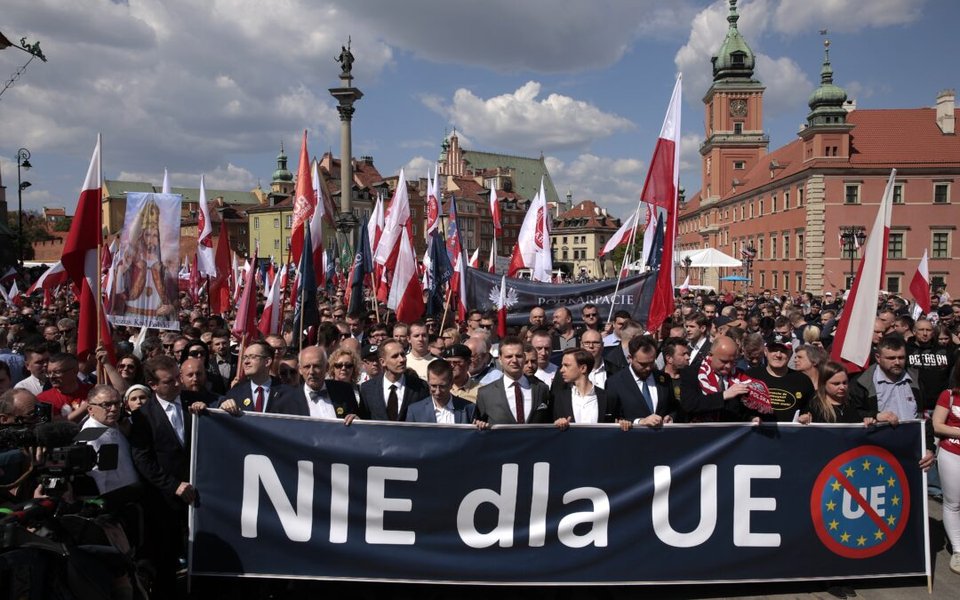
Konfederacja leaders during a political event, reflecting their nationalist platform.
Economic Hardship Concerns
A primary driver of Konfederacja's opposition is the perceived economic burden of decarbonization on Poland. The Polish economy, particularly its energy sector, remains heavily reliant on coal. In recent years, coal has generated roughly 70-80% of the country's electricity. Transitioning away from this dominant source requires massive investment, potentially leading to:
- Job Losses: Significant impacts on employment in coal mining regions and related industries.
- Increased Energy Costs: Concerns that phasing out cheaper fossil fuels will raise energy prices for consumers and businesses, harming competitiveness.
- Threats to Energy Security: Worries that a rapid shift could jeopardize the stability and reliability of Poland's energy supply before alternative sources are fully established.
Konfederacja argues that the EU's climate policies, such as the "Fit for 55" package (which includes reforms to the Emissions Trading System and a planned ban on new combustion engine car sales by 2035), unfairly penalize Poland. They contend that the costs are disproportionately high for Poland compared to wealthier Western European nations with less fossil fuel dependence, and that EU support mechanisms are insufficient.
National Sovereignty and Euroscepticism
Konfederacja views many EU directives, including ambitious climate targets, as an infringement upon Polish national sovereignty. The party champions Polish independence and opposes what it sees as dictates from Brussels. The Net-Zero agenda is framed not just as an environmental policy but as an external imposition that undermines Poland's right to determine its own economic and energy future. This resonates with their broader Eurosceptic base, which is wary of deeper EU integration.
Ideological Resistance
The party's socially conservative and nationalist ideology also contributes to its stance. The Green Deal and Net-Zero are sometimes portrayed by critics on the right as part of a progressive, globalist agenda that clashes with traditional values and national priorities. Opposition becomes a tool to rally voters who are skeptical of rapid societal or economic transformations driven by international bodies.
Poland's Energy Reality: The Coal Context
To understand the depth of the challenge and the basis for economic concerns, it's crucial to see Poland's energy context. The following table illustrates the significant role coal plays compared to the EU average, highlighting the scale of the required transformation.
| Energy Source / Indicator | Poland (approx. recent figures) | EU-27 Average (approx. recent figures) | EU 2030 Target Context |
|---|---|---|---|
| Share of Coal in Electricity Generation | ~70-80% | ~15% | Rapid phase-out aligned with Green Deal |
| Share of Renewables in Gross Final Energy Consumption | ~15-20% | ~22-23% | At least 42.5% (with aim for 45%) |
| Greenhouse Gas Emissions per Capita | Higher than EU average (due to coal) | Variable, generally lower in Western EU | Overall 55% reduction target vs 1990 |
| Commitment to 2050 Net-Zero | Historically hesitant, recent government shifts towards alignment | Legally binding target | Pathway via intermediate targets (e.g., 2030, 2040) |
Note: Figures are approximate and fluctuate yearly. The table serves to illustrate the structural differences influencing policy debates.
This heavy reliance on coal makes the Net-Zero transition economically and socially more challenging for Poland than for many other EU member states, feeding into the arguments made by parties like Konfederacja.
The Global Climate Action Equation: Is Europe Going It Alone?
Debunking the "Useless Effort" Argument
A common argument raised by critics of ambitious climate policies in regions like the EU is that unilateral action is futile. The concern is that if the EU reduces its emissions, other major global emitters – notably China, India, and the USA – will simply increase theirs, effectively cancelling out Europe's efforts and potentially gaining a competitive advantage through lower regulatory costs. Is this perspective accurate?
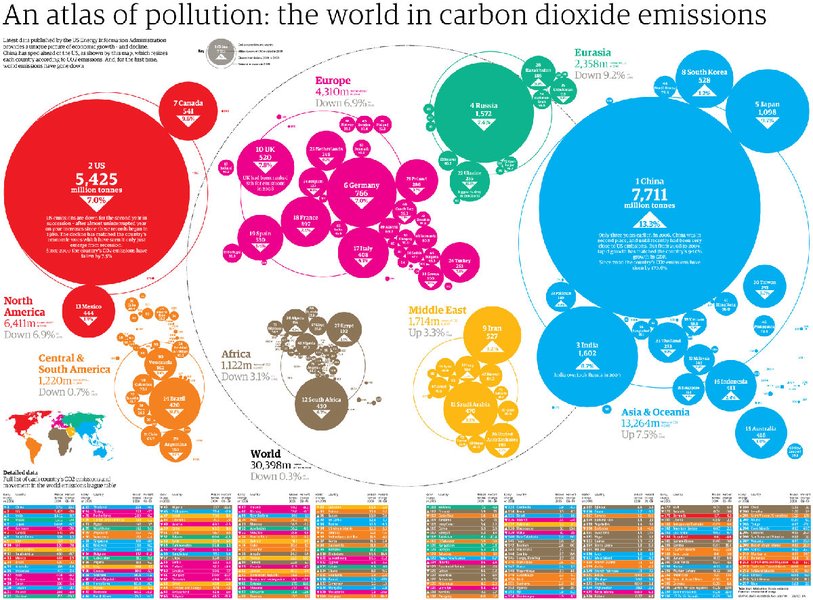
Global carbon dioxide emissions trends highlight the significant contributions of major economies.
An Oversimplification of a Complex Problem
While it's true that climate change is a global problem requiring a global solution, and the actions of major emitters outside the EU are critical, the notion that EU efforts are "useless" if others don't match pace immediately is an oversimplification. Here's why:
- Interdependence, Not Isolation: Climate action isn't a zero-sum game where one country's reduction is automatically "replaced" by another's increase. Global climate stability depends on collective reduction. The EU's actions contribute to the overall goal outlined in the Paris Agreement – limiting global warming well below 2, preferably to 1.5 degrees Celsius, compared to pre-industrial levels. Every tonne of CO2 avoided matters.
- Leadership and Innovation: By setting ambitious targets, the EU aims to lead by example. This drives innovation in green technologies (renewable energy, energy efficiency, sustainable transport). As these technologies become more advanced and cheaper, it makes it easier and more attractive for other countries, including major emitters, to adopt them. The EU's policies create markets for green solutions.
- Diplomatic Leverage: The EU's commitment strengthens its diplomatic position in international climate negotiations, allowing it to push for greater ambition from partners worldwide. Policies like the Carbon Border Adjustment Mechanism (CBAM) also aim to prevent "carbon leakage" (where industries move production to countries with laxer regulations) and incentivize greener practices globally.
- Existing Commitments (Despite Challenges): Major emitters outside the EU are not entirely idle, although the pace and scope of their actions are debated:
- China: Aims for carbon neutrality by 2060 and to peak emissions before 2030. It is the world's largest investor in renewable energy but also continues to rely heavily on coal.
- USA: Rejoined the Paris Agreement and has set targets for significant emissions reductions by 2030, supported by policies like the Inflation Reduction Act, though political shifts can affect long-term consistency.
- India: Aims for net-zero by 2070 and has rapidly expanding renewable energy capacity, but faces the dual challenge of development and decarbonization.
While the commitments and actions of these and other nations are crucial and need acceleration, the EU's transition provides essential momentum and technological pathways for the global shift.
Visualizing Climate Policy Priorities
The differing approaches to climate policy can be visualized by comparing key priorities. The following radar chart presents a conceptual comparison of the emphasis placed on different factors by Konfederacja, the general EU policy framework, and a hypothetical 'Global Ideal' scenario focused purely on achieving climate goals effectively and equitably. The scores are illustrative, reflecting the general tendencies discussed.
This chart illustrates how Konfederacja's perspective prioritizes national economic concerns and sovereignty significantly higher than collaborative or rapid transition goals, contrasting sharply with the EU's policy aims and an idealized global focus on collective action and speed.
Mapping the Interconnected Factors
Understanding the Climate Action Network
Achieving global Net-Zero involves a complex web of interconnected factors, including national policies, international cooperation, economic realities, and technological development. The mindmap below outlines some key elements influencing the effectiveness of climate action, showing how regional efforts like the EU's Net-Zero plan fit into the larger picture.
(e.g., 2030, 2050)"] id1b["Policy Mechanisms
(ETS, CBAM, Green Deal)"] id1c["Technological Innovation
& Investment"] id1d["Potential Impacts
(Economic, Social)"] id2["Actions of Major Emitters
(Non-EU)"] id2a["China
(Net-Zero 2060 goal, Coal reliance)"] id2b["USA
(Policy shifts, IRA investment)"] id2c["India
(Net-Zero 2070 goal, Development needs)"] id2d["Other Nations
(Varying commitments)"] id3["International Cooperation"] id3a["Paris Agreement Framework"] id3b["UN Climate Conferences (COPs)"] id3c["Technology Transfer & Finance"] id3d["Diplomatic Pressure"] id4["National Political Factors"] id4a["Economic Concerns
(e.g., Poland/Konfederacja)"] id4b["National Sovereignty Issues"] id4c["Public Opinion & Social Acceptance"] id4d["Lobbying & Industrial Interests"] id5["Overarching Challenges"] id5a["Carbon Leakage Risk"] id5b["Ensuring Just Transition"] id5c["Global Economic Conditions"] id5d["Monitoring & Verification"]
This mindmap illustrates that the success of the EU's strategy is influenced by, and in turn influences, the actions of other major global players, international agreements, and domestic political considerations like those highlighted by Konfederacja's stance in Poland.
Voices from the Ground: Protests Against EU Climate Policies
Farmers' Concerns Reflect Broader Resistance
Resistance to EU climate policies isn't limited to political parties. Protests, such as those by farmers across Europe, including Poland, highlight grassroots concerns about the economic impacts of the green transition. While distinct from Konfederacja's specific platform, these movements often tap into similar sentiments regarding costs, regulations, and perceived fairness, demonstrating the real-world challenges governments face in implementing climate policies. The following video shows Polish farmers protesting against EU Green Deal policies, illustrating this tension.
These protests often focus on regulations related to land use, pesticides, and emissions from agriculture, which are part of the broader Green Deal framework. They underscore the need for policies that address climate change while also supporting affected communities and industries through a "just transition."
Frequently Asked Questions (FAQ)
What is the EU's "Net-Zero by 2050" goal exactly?
Net-Zero means achieving a balance between the greenhouse gases put into the atmosphere and those taken out. The EU's goal, legally enshrined in the European Climate Law, commits the bloc to reaching climate neutrality by 2050. This involves drastically reducing emissions across all sectors (energy, industry, transport, buildings, agriculture) and offsetting any remaining residual emissions through methods like carbon capture or natural carbon sinks (like forests).
Is Poland the only EU country hesitant about climate goals?
Historically, Poland was the most prominent holdout, initially not endorsing the 2050 net-zero target alongside other member states due to its heavy reliance on coal. While Poland's government position has evolved towards greater alignment, particularly under recent administrations, concerns about the pace and cost of transition persist. Other Central and Eastern European countries with similar economic structures have also expressed concerns, although the EU-wide target is now legally binding for all members. Debates about implementation specifics and burden-sharing continue across the EU.
What is "carbon leakage"?
Carbon leakage refers to the situation where businesses, to avoid stringent climate policies (like carbon pricing) in one jurisdiction, move their production to regions with less strict regulations. This can lead to an increase in total global emissions, as the emissions are simply displaced rather than reduced. Policies like the EU's Carbon Border Adjustment Mechanism (CBAM) are designed to mitigate this risk by placing a carbon price on certain imported goods, ensuring that imports face similar carbon costs to domestic production.
What are China's and India's climate targets?
China has pledged to peak its CO2 emissions before 2030 and achieve carbon neutrality before 2060. India has committed to achieving Net-Zero emissions by 2070. Both countries also have intermediate targets, such as increasing the share of non-fossil fuels in their energy mix and reducing the carbon intensity of their economies. While significant, these timelines are later than the EU's 2050 target, reflecting different national circumstances and developmental stages.
Recommended
- What are the specific policies in the EU's Fit for 55 package that Poland opposes?
- How does Poland plan to transition away from coal energy?
- Compare the climate commitments and progress of the EU, China, USA, and India.
- What is the European Union's Carbon Border Adjustment Mechanism (CBAM)?
References
Last updated April 27, 2025