
Lady Frieda Harris Artwork
Exploring the Life, Techniques, and Legacy of a Pioneering Esoteric Artist
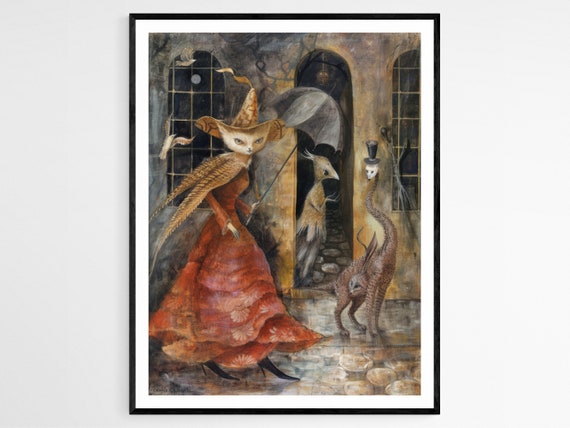
Lady Frieda Harris, born Marguerite Frieda Bloxham in 1877 in London, is remembered today as a pioneering artist whose work transcended the boundaries of conventional art. Her legacy is most prominently tied to her contributions to esoteric and occult art, particularly through her extensive collaboration with the influential occultist Aleister Crowley. Harris’s artistry reflects a profound engagement with symbolism, spirituality, and modernist techniques. This comprehensive reflection explores her artistic journey, key artworks, stylistic influences, and the enduring impact she has had on art and mystical thought.
Key Takeaways
- Innovative Synthesis of Esoteric Symbolism and Modern Art: Harris combined modernist aesthetics with deep esoteric traditions, creating visually intricate and symbolically rich artworks.
- Thoth Tarot Deck as a Magnum Opus: Her collaboration with Aleister Crowley led to the creation of the Thoth Tarot deck, which remains a seminal work in divinatory and occult art.
- Influence Beyond Tarot: In addition to her work on tarot, Harris’s contributions extended to Masonic tracing boards and spiritual iconography, influencing both artistic and esoteric communities.
Biographical Background and Early Influences
Lady Frieda Harris’s introduction to the world of art and symbolism began in the culturally rich milieu of late 19th-century London. Born into a family with a prominent social background, Harris managed to navigate societal expectations by initially presenting her work under pseudonyms. This strategic move allowed her artistic voice to be appreciated for its merit, independent of her social standing. Throughout her lifetime, her work was informed not only by her innate artistic talent but also by the many esoteric and mystical philosophies that were in vogue in early 20th-century Europe.
Harris’s early work was characterized by an exploration of traditional themes that gradually gave way to a more complex engagement with mystical and symbolic content. This evolution in her artistic expression can be seen as a journey toward synthesizing classical art forms with modernist ideas, and eventually, with the occult teachings of figures like Aleister Crowley. Her studies in various esoteric traditions, including ideas drawn from Christian Science, Thelema, and anthroposophy, provided a fertile ground for the development of a unique visual language that emphasized both beauty and mystery.
Major Artworks and Projects
The Thoth Tarot Deck: A Fusion of Art and Esoteric Philosophy
Perhaps the most significant and widely recognized work of Frieda Harris is the Thoth Tarot deck. Initiated in the late 1930s and completed by the early 1940s, the deck is composed of 78 cards that encapsulate a broad spectrum of symbolic content. Each card is meticulously crafted, featuring a palette bursting with vibrant hues and intricate details that reflect the myriad influences on Harris's work.
The creative process behind the Thoth Tarot deck was one of intense collaboration. While Aleister Crowley provided detailed descriptions of the occult principles and metaphysical ideas that were to underpin each card, Harris translated these abstract notions into concrete and visually arresting images. Crowley’s influence is evident in the themes of transformation, the interplay of opposites, and the representation of cosmic forces. However, it is Harris’s unique ability to merge modern art techniques with deep symbolic imagery that gives the deck its timeless appeal.
The cards are not mere divinatory tools but also works of art meant to evoke contemplation and introspection. The deck's design integrates a blend of Egyptian, Hindu, alchemical, and Kabbalistic imagery, all of which contribute layers of meaning. Harris’s use of color, geometric forms, and symbolic figures invites the viewer to explore multiple interpretations, making the Thoth Tarot deck a complex piece of visual literature.
Masonic Tracing Boards and Other Esoteric Works
In addition to her celebrated work on the Thoth Tarot deck, Lady Frieda Harris also made significant contributions to the art of Masonic symbolism. Her designs for Masonic tracing boards are noteworthy examples of how traditional symbols can be reinterpreted through the lens of modern artistic techniques. Typically created for the different degrees of Freemasonry (Entered Apprentice, Fellow Craft, and Master Mason), these tracing boards were designed to serve as visual teaching aids.
One of the fascinating aspects of these boards is the use of projective synthetic geometry—a mathematical approach that helped Harris translate abstract Masonic principles into concrete visual forms. By using geometric patterns and precise constructions, she was able to evoke a sense of order and mystery simultaneously. These tracing boards extended beyond their practical applications; they also serve as a testament to her ability to merge art, mathematics, and spiritual symbolism.
Exhibition History and Public Reception
Over the years, Lady Frieda Harris’s artworks have been exhibited in several prominent venues across Britain. Notable exhibitions included displays in Oxford, Chipping Campden, London, and Berkeley, which highlighted the evolving nature of her artistic expression. These exhibitions not only showcased her work on the Thoth Tarot deck but also featured other symbolic paintings and carefully crafted designs that reflected a deeper, ongoing exploration of mystical themes.
Although some of her works did not enjoy widespread public acclaim during her lifetime, her legacy has grown substantially posthumously. The preservation of the original Thoth Tarot paintings in prestigious archives has allowed later generations to continually re-engage with her work, ensuring that the visual and philosophical intricacies she pioneered remain relevant.
Artistic Style and Influences
Symbolism and Esoteric Imagery
Central to Lady Frieda Harris’s work is her masterful use of symbolism. She often integrated a diverse array of symbolic elements that have roots in multiple esoteric traditions. Her approach was to create layered images where each element could be read on various symbolic levels. This multiplicity allowed her viewers to encounter new insights each time they engaged with her work.
Her artwork does not merely rely on visual impact; instead, it operates as a visual language intended to communicate complex philosophical ideas. The interplay of light, color, and form in her pieces is carefully orchestrated to evoke both emotional and intellectual responses. Whether it is the cosmic themes in the Thoth Tarot or the precise geometrical constructs in the Masonic boards, every detail in her work is deliberate and laden with meaning.
Modernist Techniques and Geometric Precision
Frieda Harris's work represents a significant interaction between traditional artistic practices and modernist experimentation. One of the most compelling aspects of her style is her integration of projective synthetic geometry—a field that embraces geometric precision—to reinterpret classical symbolic forms. This mathematical rigor injected a sense of order and harmony into her complex compositions, providing a visual counterpoint to the sometimes chaotic nature of mystical symbolism.
Her pioneering use of geometry is particularly evident in her reimagining of Masonic symbols. By employing techniques that involve careful measurements, alignments, and spatial relationships, she created works that resonate with both the intellect and the senses. Not only did these methods enhance the aesthetic qualities of her artworks, but they also reinforced the idea that within the perceived randomness of the universe, there exists an underlying order.
Harris’s modernist approach is further encapsulated in her vibrant use of color and dynamic composition. The Thoth Tarot cards, for instance, are celebrated for their rich and often unexpected color palettes. Every brushstroke serves a dual purpose: to create visually compelling images and to evoke subtle nuances of meaning that invite prolonged meditation and reflection.
Integration of Esoteric Traditions
In her pursuit of an artistic synthesis, Harris meticulously wove together threads from various esoteric traditions. Her canvas became a mosaic of influences drawn from ancient Egyptian, Indian, alchemical, and Kabbalistic teachings. Each card in the Thoth Tarot deck is imbued with these multifaceted symbols, inviting viewers to consider interconnections between disparate forms of knowledge.
This inclusive methodology means that Harris’s work serves not simply as a visual archive of esoteric motifs but as an interdisciplinary dialogue. Her art articulates a universal language of symbols that speaks to themes of transformation, unity, and metaphysical exploration. As such, her legacy is not confined to the realm of art alone; it touches upon philosophy, religious studies, and even mathematics.
Legacy and Influence
The enduring influence of Lady Frieda Harris is evident in how her artworks continue to inspire and inform both artistic and esoteric communities. The Thoth Tarot deck, in particular, has achieved iconic status. It has been embraced by those interested in divination, occult studies, and modern spiritual practices. Critics and practitioners alike admire its profound capacity to evoke deep internal reflection and to serve as a catalyst for personal transformation.
Beyond the tarot, her contributions to Masonic art and modern esoteric imagery have paved the way for subsequent generations of artists. Harris demonstrated that art need not be solely visual; it can be an immersive experience that challenges observers to explore hidden layers of meaning beneath the surface. This innovative blending of art and symbolism has been influential in various realms, including contemporary fantasy art, video game design, and modern graphic novels which draw inspiration from mystical iconography.
Her preservation within academic and cultural institutions, such as the renowned archives that house the original Thoth Tarot paintings, ensures that her visionary work continues to be subject to scholarly research and public admiration. As both a technical innovator and a philosophical thinker, Frieda Harris exists as a bridge between the artistic traditions of the past and the avant-garde explorations of the future.
Artistic and Cultural Impact
Lady Frieda Harris’s multifaceted contributions have had a ripple effect across various cultural domains. Art historians cite her work as emblematic of the early 20th century’s synthesis of esoteric thought and modernist aesthetics. Meanwhile, spiritual practitioners see her depictions as visual meditations on universal truths. Her ability to translate complex metaphysical concepts into accessible imagery has encouraged a new wave of artistic experimentation that privileges both form and function.
Additionally, her work has influenced the way we think about the relationship between art and science. The integration of geometric precision in her mystical compositions prefigured an era where artists and scientists increasingly see value in interdisciplinary collaboration. Her legacy suggests that the boundaries between artistic expression, scientific inquiry, and spiritual exploration are, in fact, permeable—a concept that continues to inspire contemporary creative practice.
Comparative Overview Table of Key Works
| Artwork/Project | Description | Key Features |
|---|---|---|
| Thoth Tarot Deck | An intricately designed deck of 78 cards merging divination with esoteric symbolism. | Vibrant colors, multi-layered symbolism, influenced by Egyptian, Hindu, Kabbalistic, and alchemical imagery. |
| Masonic Tracing Boards | Artistic teaching aids used in Freemasonry to represent key degrees. | Uses projective synthetic geometry, precise geometric forms, and modern reinterpretations of traditional Masonic symbols. |
| Other Esoteric Paintings | Works reflecting her ongoing engagement with spiritual and mystical themes beyond tarot. | Combination of modernist techniques with deep symbolism. Focus on transformation, cosmic order, and metaphysical hierarchy. |
Detailed Analysis and Discussion
The Collaborative Process with Aleister Crowley
The collaboration between Lady Frieda Harris and Aleister Crowley stands as one of the defining aspects of her artistic legacy. Their creative partnership exemplified a meeting of minds where high art and occult philosophy intertwined seamlessly. Crowley, a figure known for his deep involvement with Thelema, provided the theoretical backbone of the project. His writings and philosophical insights were meticulously translated by Harris into visual form.
This creative dichotomy—between conceptual ideology and artistic execution—yielded an extraordinary product. Harris worked for several years to ensure that each Tarot card not only met the artistic standards of the time but also embodied the intricate symbolism prescribed by Crowley. It was a laborious process that involved multiple revisions at Crowley’s behest, which ultimately enhanced the depth and clarity of the symbolic representations.
The outcome of this collaboration continues to be celebrated today. The Thoth Tarot deck not only serves as a tool for divination but also inspires modern explorations of art, spirituality, and psychology. For many practitioners, engaging with the cards is akin to embarking on a journey through a rich tapestry of religious, mythological, and philosophical traditions.
Innovative Use of Geometry and Color
A distinctive attribute of Harris’s artwork is her innovative use of geometry, an approach that reflects her penchant for structure and order. Her application of projective synthetic geometry is evident across various works, offering a unique perspective on the esoteric themes she sought to portray. By employing mathematical principles to construct her images, Harris imbued her drawings and paintings with an inherent balance and harmony.
Equally significant is her dynamic use of color. Harris did not merely see hues as decorative elements; she saw them as carriers of emotional and symbolic significance. In the Thoth Tarot deck, for instance, the deliberate combination of stark contrasts and subtle gradations of color heightens the cards’ metaphysical impact. This approach enabled each image to assume a dual role—both as a visual masterpiece and as a tool for introspective meditation.
The union of color theory and geometric design in her art creates photographs of intricate detail where every element, be it a brushstroke or a calculated line, contributes to the overall narrative. Viewers are not just looking at art; they are invited to decipher a coded visual language that speaks to universal truths and mysteries.
Cultural Resonance and Timelessness
The cultural resonance of Frieda Harris’s work is a testament to its timeless appeal. Her ability to encapsulate complex philosophical ideas in a form that is as visually captivating as it is intellectually engaging has ensured that her work remains relevant through successive generations. Modern tarot practitioners, contemporary artists, and scholars of esoteric studies all continue to find inspiration in her legacy.
Harris’s art is a bridge between multiple worlds. It connects the ancient traditions of mystical practices with the innovations of 20th-century modern art. This duality is a primary reason why her artwork continues to spark conversations among academics and enthusiasts alike. Whether seen as rigorous spiritual instruction or as avant-garde artistic expression, her compositions retain the power to stimulate both the intellect and the spirit.
Moreover, her legacy demonstrates how art can serve as a universal language—a medium through which complex ideas are made accessible and emotionally resonant. In this way, Lady Frieda Harris stands as an exemplar of how artistic innovation can influence cultural and spiritual paradigms, fostering a broader understanding of human creativity and the quest for meaning.
Conclusion
In exploring the artwork of Lady Frieda Harris, we uncover an artist who defied traditional boundaries by merging the aesthetics of modern art with the intricate symbolism of esoteric traditions. Her most influential project, the Thoth Tarot deck, remains a cornerstone of occult art, celebrated for its deep philosophical foundations and stunning visual composition. Beyond the tarot, her work on Masonic tracing boards and other symbolic pieces demonstrates a profound commitment to harnessing the power of geometry, color, and symbolism to evoke universal truths.
Today, Lady Frieda Harris’s legacy endures not only because of the beauty of her art but also due to her remarkable ability to communicate complex ideas through a visual medium. Her contributions have left an indelible mark on both the worlds of art and occult philosophy, continuing to influence scholars, artists, and spiritual seekers alike.
References
-
Frieda Harris - Eazel - Eazel
- Tracing Board - Sacred Art - Pinterest
- Frieda Harris Gallery - Astrum Argenteum
- Lady Frieda Harris - Wikipedia
- Lady Frieda Harris - WikiArt
- Magentas Musings - Tabi
More
Last updated February 19, 2025