
Beyond Equilibrium: Unveiling the Dynamic World of Non-Equilibrium Quantum Phases
A deep dive into quantum systems pushed out of balance, revealing novel phenomena and transitions beyond classical understanding.
Non-equilibrium quantum phases represent a vibrant and rapidly evolving frontier in modern physics. Unlike their equilibrium counterparts, which describe the ground state of quantum systems at zero temperature or in thermal balance, non-equilibrium quantum phases emerge when systems are continuously driven by external fields, subjected to rapid changes (quenches), or interact with an environment leading to dissipation. This departure from equilibrium unlocks a rich tapestry of behaviors and transitions that are not constrained by the principles of equilibrium statistical mechanics, offering glimpses into new forms of quantum order and dynamics.
Essential Insights: Key Takeaways
- Beyond Thermal Balance: Non-equilibrium quantum phases occur in systems actively prevented from reaching thermal equilibrium, driven by external forces, dissipation, or sudden parameter shifts.
- Dynamic Transitions: These systems can undergo dynamical quantum phase transitions (DQPTs), where critical changes occur in the system's time evolution, distinct from equilibrium phase transitions driven by thermal fluctuations.
- New Physics & Technologies: The study of non-equilibrium quantum phases reveals novel phenomena like time crystals and unique critical behaviors, paving the way for advancements in quantum computing, materials science, and quantum sensing.
Understanding the Landscape of Non-Equilibrium Quantum Systems
Quantum phase transitions (QPTs) in equilibrium are characterized by abrupt changes in the ground state of a many-body system due to quantum fluctuations at absolute zero temperature, typically tuned by non-thermal parameters like magnetic field or pressure. Non-equilibrium quantum systems extend this paradigm to scenarios where the system is perpetually out of balance. This can lead to non-equilibrium steady states (NESS), where the system settles into a stable state despite continuous energy exchange, or exhibit complex time-dependent behaviors.
Conceptual illustration of an experimental setup observing a quantum phase transition, highlighting the intricate control required.
Core Concepts in Non-Equilibrium Dynamics
Several key concepts underpin the study of non-equilibrium quantum phases:
Dynamical Quantum Phase Transitions (DQPTs)
DQPTs are a central focus, representing non-analytic behaviors in the real-time evolution of a quantum system following a quench or under periodic driving. These are not phase transitions in the thermodynamic sense but rather critical points in time where the system's properties change sharply. They are often identified by non-analyticities in the Loschmidt echo (the overlap between the initial state and the time-evolved state) or through out-of-time-ordered correlators (OTOCs). DQPTs generalize the concept of phase transitions to the time domain, offering insights into how quantum many-body systems evolve far from equilibrium.
Non-Equilibrium Steady States (NESS)
In open quantum systems or driven-dissipative systems, a NESS can emerge. This is a state where macroscopic observables become time-independent despite the continuous flow of energy or particles through the system. Transitions between different NESS, known as NESS-QPTs, can exhibit unique critical phenomena distinct from their equilibrium counterparts. The distinction between classical and quantum characteristics can become blurred in NESS-QPTs.
Synchronization and Entrainment
When quantum systems are subjected to periodic driving, they can synchronize their dynamics with the external drive. This can lead to novel phases, such as in the driven Ising model, where states synchronized with the external modulation exhibit transitions, including anisotropic transitions not found in equilibrium.
Time Crystals
A particularly exotic non-equilibrium phenomenon is the time crystal. Discrete time crystals are phases of matter that spontaneously break discrete time-translation symmetry under periodic driving, leading to persistent oscillations at a subharmonic frequency of the drive. These states represent a fundamentally new type of non-equilibrium order.
Quantum Correlations and Entanglement
Non-equilibrium dynamics can lead to complex patterns of quantum correlations and entanglement. Understanding how entanglement evolves and spreads in non-equilibrium systems is crucial for quantum information processing and for characterizing the nature of these dynamic phases.
Theoretical and Experimental Exploration
The investigation of non-equilibrium quantum phases relies on a combination of advanced theoretical tools and sophisticated experimental platforms.
Theoretical Frameworks and Models
The theoretical description of non-equilibrium quantum systems is challenging due to the absence of concepts like free energy minimization. Key approaches include:
- Lindblad Master Equations: For open quantum systems, these equations describe the time evolution of the density matrix, incorporating both coherent dynamics and dissipative effects from the environment.
- Keldysh Formalism: A powerful quantum field theory technique for handling non-equilibrium Green's functions, allowing for the calculation of time-dependent observables.
- Non-Hermitian Hamiltonians: These arise naturally in driven-dissipative systems or when considering decay. They provide a mathematical framework to describe effective non-unitary evolution and can reveal non-equilibrium phase transitions.
- Geometrical Methods: The Uhlmann geometric phase, a generalization of the Berry phase to mixed states, is used to quantitatively assess the quantum character of critical phenomena in NESS and to identify NESS-QPTs.
- Specific Models:
- Driven-Dissipative Heisenberg Antiferromagnet: Studies show transitions characterized by changes in magnon distribution.
- Driven Ising Model: Exhibits synchronized phases and novel transitions.
- Haldane-Hubbard Model Quenches: Used to probe equilibrium topological and symmetry-breaking order via non-equilibrium dynamics.
- Transverse-Field XY Model: A workhorse model for studying both equilibrium and non-equilibrium transitions, including DQPTs and NESS behavior when coupled to reservoirs.
- Large Deviation Theory: Applied to ensembles of quantum trajectories, this approach helps uncover dynamical phases and transitions in systems with complex relaxation.
Experimental Platforms and Probes
Experimental advances have been crucial in realizing and probing non-equilibrium quantum phases:
- Ultracold Atoms: Highly controllable systems that allow for the simulation of various Hamiltonians and the study of quench dynamics and DQPTs.
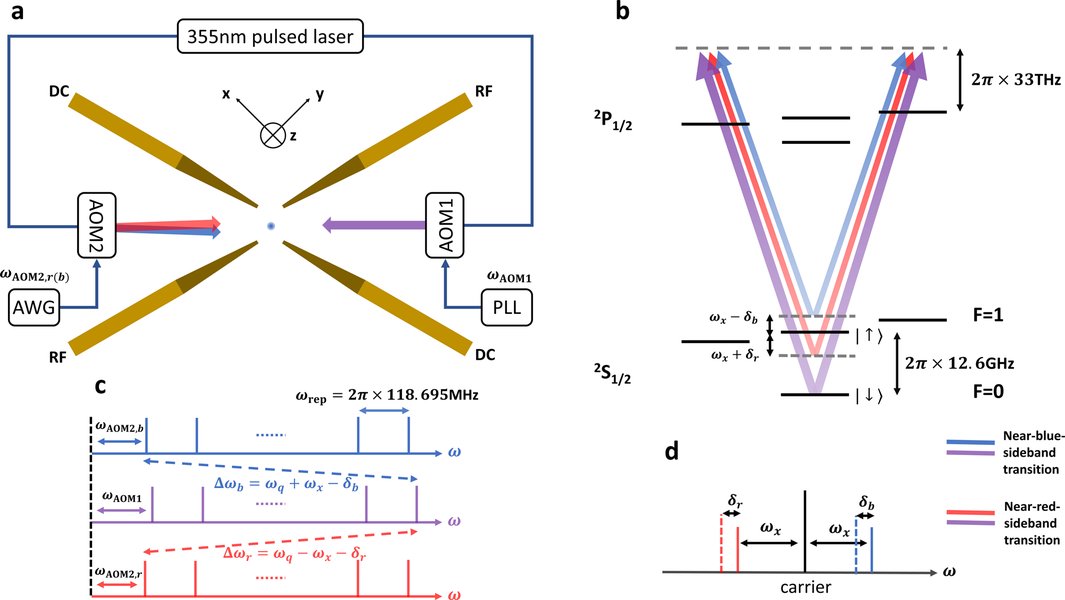
- Trapped Ions: Offer precise control over individual quantum bits and interactions, enabling the simulation of non-equilibrium phase transitions and phenomena like prescrambling.
- Superconducting Qubits: Another versatile platform for quantum simulation, capable of exploring driven-dissipative systems and complex many-body dynamics.
- Polariton Condensates: Systems of light-matter quasiparticles that can exhibit non-equilibrium condensation and phase transitions driven by pumping and decay.
- Quantum Reservoir Probing: Techniques involving local quenches to monitor energy absorption or correlation functions, providing experimental signatures of phase transitions.
- Disorder Studies: Investigating the impact of disorder, for example, through isotopic variations in materials like LiErF4, on quantum phase transitions.
Introduction to dynamical quantum phase transitions by Markus Heyl. This video discusses the fundamental concepts of DQPTs, a key area within non-equilibrium quantum physics.
Comparative Analysis: Non-Equilibrium Quantum Phenomena
Different non-equilibrium quantum phenomena and theoretical approaches possess varying degrees of maturity, experimental accessibility, and potential for uncovering new physics. The radar chart below offers a qualitative comparison across several key aspects for selected areas within the study of non-equilibrium quantum phases. These are subjective assessments based on current research trends.
This chart illustrates that while areas like Driven-Dissipative Systems and DQPTs have relatively high theoretical maturity and experimental realization, phenomena like Time Crystals show immense potential for discovering novel physics, though their computational and experimental tractability can be more challenging. Technological relevance is growing across all these areas as our understanding and control improve.
Mapping the Concepts: A Mindmap of Non-Equilibrium Quantum Phases
To visualize the interconnectedness of concepts within the study of non-equilibrium quantum phases, the following mindmap provides a hierarchical overview. It starts with the central theme and branches out into defining characteristics, theoretical approaches, experimental methods, and key discovered phenomena.
This mindmap highlights how various elements, from fundamental defining features to sophisticated theoretical tools and experimental platforms, contribute to our understanding of non-equilibrium quantum phases and the exciting phenomena they encompass.
Equilibrium vs. Non-Equilibrium Quantum Phases: A Comparison
Understanding the distinctions between equilibrium and non-equilibrium quantum phases is crucial. The following table summarizes their key differences:
| Feature | Equilibrium Quantum Phases | Non-Equilibrium Quantum Phases |
|---|---|---|
| Defining State | Ground state or thermal equilibrium state | Dynamical states, Non-Equilibrium Steady States (NESS), or time-evolving states |
| Driving Force for Transitions | Quantum fluctuations at T=0, tuned by parameters (e.g., magnetic field, pressure) | Quantum fluctuations, external driving, dissipation, quenches, time evolution itself |
| Temperature | Typically considered at T=0 (for QPTs) or finite T (for thermal phases) | System is not in thermal equilibrium; effective "temperatures" can sometimes be defined but are not standard |
| Key Concepts | Ground state energy, order parameters, symmetry breaking, critical exponents, free energy | Dynamical order parameters, Loschmidt echo, OTOCs, NESS, synchronization, time crystals, entanglement dynamics, Liouvillian gap |
| Theoretical Tools | Hamiltonian diagonalization, statistical mechanics, renormalization group, quantum field theory | Lindblad master equations, Keldysh formalism, Floquet theory, non-Hermitian quantum mechanics, dynamical mean-field theory |
| Examples of Transitions | Superconductor-insulator, Mott transition, quantum Hall transitions | Dynamical Quantum Phase Transitions (DQPTs), NESS-QPTs, transitions to time-crystalline order |
| Stability Principle | Minimization of free energy or ground state energy | Stability of dynamical attractors, properties of NESS, robustness to perturbations over time |
This comparison underscores that while both paradigms deal with quantum many-body systems, the conditions, driving mechanisms, and resulting phenomena in non-equilibrium settings are fundamentally different and often richer.
Recent Advances and Persistent Challenges
The field of non-equilibrium quantum phases is characterized by rapid advancements and ongoing challenges. Researchers are increasingly employing interdisciplinary approaches, drawing from condensed matter physics, quantum information science, statistical mechanics, and quantum optics.
Progress and New Directions
Recent studies have focused on:
- Universal Behaviors: Identifying universal scaling laws and critical exponents associated with non-equilibrium transitions, although these can be more diverse than in equilibrium.
- Topological Non-Equilibrium Phases: Exploring how topological properties, robust in equilibrium, manifest or can be induced in driven or quenched systems.
- Connection to Quantum Thermodynamics: Understanding concepts like work, heat, and entropy production in far-from-equilibrium quantum systems.
- Control and Engineering: Developing methods to precisely control and engineer non-equilibrium states for technological applications, such as in robust quantum information processing or creating materials with on-demand properties.
Open Questions and Challenges
Despite significant progress, several challenges remain:
- Classification: Developing a comprehensive classification scheme for non-equilibrium phases and their transitions, analogous to the Landau theory for equilibrium systems, is difficult due to the lack of a universal free energy-like quantity.
- Experimental Probes: Devising new experimental techniques to directly measure the defining characteristics of non-equilibrium phases, such as dynamical order parameters or entanglement in large systems.
- Theoretical Complexity: Many non-equilibrium problems are computationally hard to solve, requiring new analytical and numerical methods, especially for strongly interacting systems in higher dimensions.
- Role of Disorder: Understanding the interplay between interactions, driving, dissipation, and disorder in shaping non-equilibrium phenomena, such as many-body localization and its stability.
The exploration of non-equilibrium quantum phases continues to push the boundaries of our understanding of quantum matter, promising not only fundamental new insights but also pathways towards novel quantum technologies.
Frequently Asked Questions (FAQ)
What is the main difference between equilibrium and non-equilibrium quantum phases?
Equilibrium quantum phases describe the state of a quantum system that is in thermal balance or its lowest energy (ground) state at zero temperature. Transitions between these phases are typically driven by changing a parameter like magnetic field or pressure, and the system always has time to settle. Non-equilibrium quantum phases, on the other hand, occur when a system is actively prevented from reaching equilibrium, for example, by continuous external driving, rapid changes in its parameters (a quench), or interaction with an environment causing dissipation. Their behavior is governed by dynamics and time evolution, not by minimizing a free energy.
What are Dynamical Quantum Phase Transitions (DQPTs)?
DQPTs are critical phenomena that occur in the real-time evolution of a quantum system, typically after a sudden change (quench) in its parameters. They are characterized by non-analytic behavior (singularities) in certain quantities, like the Loschmidt echo, as a function of time. Unlike equilibrium phase transitions, which mark changes in the system's static properties, DQPTs signify critical points in the system's dynamics, reflecting a fundamental change in how the quantum state evolves.
Why are non-equilibrium quantum phases important for quantum technologies?
Understanding and controlling non-equilibrium quantum phases can lead to new quantum technologies. For instance, driven systems might allow for the creation of novel states of matter with tailored properties, like topological phases or time crystals, which could be useful for robust quantum computation or metrology. The dynamics of entanglement in non-equilibrium systems are also crucial for quantum information processing. Furthermore, exploring these phases can help design materials with on-demand functionalities and improve quantum sensing techniques.
What are some examples of non-equilibrium quantum phenomena?
Key examples include:
- Dynamical Quantum Phase Transitions (DQPTs): Singularities in the time evolution after a quench.
- Non-Equilibrium Steady States (NESS): Stable states in open systems with continuous driving and dissipation.
- Time Crystals: Phases that spontaneously break time-translation symmetry under periodic driving.
- Many-Body Localization (MBL): A phenomenon where interacting quantum systems fail to thermalize due to strong disorder.
- Prethermalization: A transient state where a system appears thermalized according to some observables but has not reached true thermal equilibrium.
Recommended Further Exploration
- What are the experimental signatures of dynamical quantum phase transitions?
- How do time crystals relate to non-equilibrium quantum phases?
- Explore the role of non-Hermitian Hamiltonians in describing open quantum systems.
- What are the potential applications of non-equilibrium steady states in quantum technology?
References

Last updated May 18, 2025