
Research Gaps and Opportunities in Poultry Production Under Climate Change
An in-depth exploration of current challenges, gaps, and future directions for sustainable poultry farming
Key Takeaways
- Long-Term and Regional Effects: There is a need for studies that monitor the cumulative, long-term impacts of climate change, with emphasis on regional variability and local adaptation.
- Adaptive Strategies and Genetic Innovations: More research is required on cost-effective adaptation practices, including housing design, nutritional adjustments, and the development of climate-resilient poultry breeds.
- Economic, Disease, and Sustainability Aspects: Comprehensive economic analyses, integrated disease management protocols, and sustainability strategies are essential to mitigate climate change impacts while reducing greenhouse gas emissions.
Introduction
Poultry production plays a central role in global food security, yet it is increasingly vulnerable to the challenges posed by climate change. Rising temperatures, heat stress, altered precipitation patterns, and extreme weather events all directly affect the health, productivity, and welfare of poultry. As the sector continues to evolve, the need to address critical research gaps grows, particularly in deepening our understanding of how climate variables interact with various aspects of poultry production. This article synthesizes existing research to identify core gaps and articulate potential pathways to adapt and enhance sustainability within the industry.
Research Gaps in Climate Change Impact on Poultry Production
1. Long-Term Impact Studies and Regional Variability
Current research predominantly focuses on the immediate and short-term effects of climate change, such as heat stress and sudden weather anomalies. However, long-term investigations are sparse. Understanding the prolonged exposure implications on poultry health, production capacity, reproductive performance, and genetic adaptation is imperative. In addition, climate change does not affect all regions uniformly. Variations in local climate conditions suggest that region-specific studies are needed to gauge the differential impacts on poultry production. This includes localized adaptation measures that consider the unique challenges faced by smallholder operations in developing countries and members of international supply chains.
2. Adaptation Strategies and Management Practices
Adaptation strategies encompass modifications in housing, nutrition, genetics, and farm management practices. Although multiple potential strategies have been suggested, there is a dearth of comprehensive and scalable research that evaluates their long-term efficacy. For instance, improved housing designs that incorporate smart ventilation systems and cooling technologies can mitigate heat stress, yet detailed longitudinal studies are required to assess their performance across diverse climatic zones.
Besides physical adaptations, nutritional interventions involving resilient and region-specific feeds need further attention. Researchers must evaluate how climate variability influences the quality and availability of feed ingredients, and develop strategies that maintain feed efficiency under stress conditions.
3. Genetic Research and Breeding for Climate Resilience
One of the most promising areas for adaptation is genetic enhancement. Despite advancements in selective breeding, there remains a notable gap in the research on genetic markers that promote heat tolerance and overall climate resilience. The limited understanding of genes responsible for thermoregulation slows the development of breeds that can thrive in warmer environments. Integrating genetic and epigenetic research with climate studies could yield poultry lines better suited to the new environmental realities.
4. Economic Analysis and Policy Support
The economic implications of climate change for poultry production extend beyond operational costs and reduced productivity. Comprehensive economic analysis is needed to quantify these impacts, especially given that different production structures (e.g., small-scale versus large-scale operations) face distinct challenges. Such studies should inform policy makers and stakeholders about potential investments in adaptation technologies and infrastructure upgrades.
Beyond pure economic evaluation, there is a critical need for robust policy frameworks to support farmers. These frameworks might include financial incentives, subsidies for sustainable practices, and regulatory guidelines that facilitate the transition to climate-smart production systems.
5. Disease Dynamics and Biosecurity
Climate change can significantly shift the dynamics of disease and pathogen prevalence in poultry. Elevated temperatures and fluctuating weather patterns might favor the spread of certain diseases, altering infection rates and transmission dynamics. However, current research is limited in linking these changes directly to evolving climate conditions. Understanding potential new disease patterns is urgently needed for designing effective vaccination programs and biosecurity measures. Moreover, the integration of predictive models and long-term monitoring will be crucial for anticipating outbreaks and coordinating rapid responses in the field.
6. Sustainability, Emissions, and Environmental Management
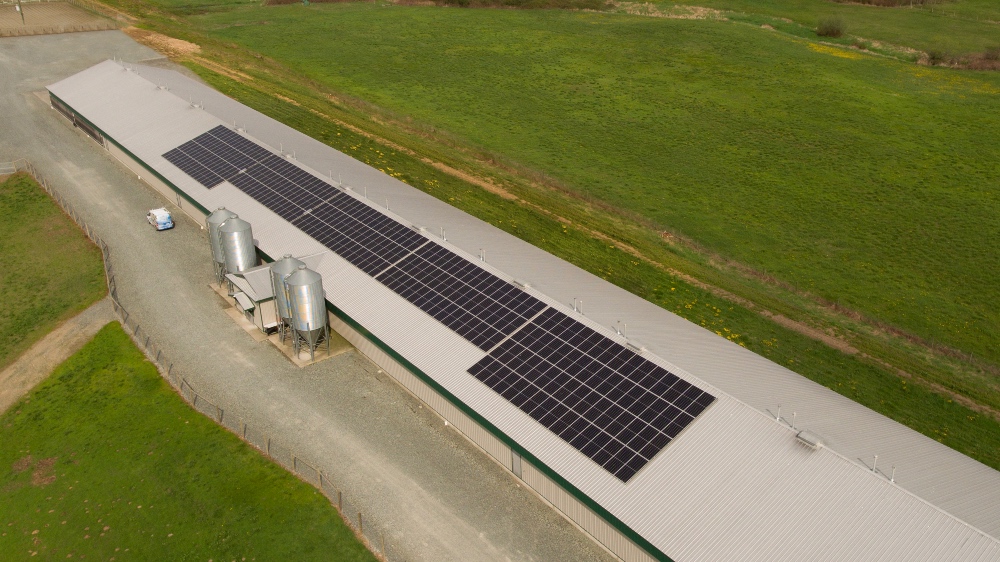
Poultry production contributes to global greenhouse gas (GHG) emissions, albeit to a lesser extent than other livestock sectors. Nevertheless, the sector’s carbon footprint, largely influenced by the use of fossil fuels and manure management practices, is an area ripe for improvement. Strategies aimed at reducing emissions include improving energy efficiency, transitioning to renewable energy sources, and refining manure management practices to minimize methane and nitrous oxide emissions.
In addition to operational improvements, an integrated approach that assesses the entire life cycle of poultry production is necessary. This includes evaluating the environmental effects of feed production, waste management, and processing. By identifying and addressing key emission points, the industry can move toward a more sustainable and eco-friendly model.
7. Technological Innovations and Integrated Farming Systems
Technological innovation stands at the forefront of mitigating the impact of climate change on poultry production. The adoption of precision agriculture—using digital monitoring technologies to track environmental conditions and animal responses—shows promise in optimizing farm operations. However, the deployment of these technologies is still in its early stages within the poultry industry.
Additionally, integrating poultry farming with other livestock systems may provide opportunities for risk diversification, creating more resilient production ecosystems. Studies that explore the viability and benefits of such integrated systems could guide future farming practices, potentially enhancing overall farm sustainability and profitability.
8. Feed Efficiency and Nutritional Adaptations
Climate change affects feed production by altering crop yields and changing the nutritional content of feed ingredients. A related research gap exists in linking these alterations with poultry performance and overall production efficiency. Developing and testing adaptive feeding strategies—such as alternative protein sources or supplement formulations resilient to climate stress—is essential for ensuring that poultry maintains optimal feed conversion rates even under changed environmental conditions.
9. Integration of Multi-Disciplinary Approaches
Addressing the impacts of climate change on poultry production requires an integrated approach that spans multiple disciplines. This means combining insights from climatology, animal physiology, genetics, economics, and technology. Instead of studying each factor in isolation, future research should apply interdisciplinary models that assess the cumulative and interactive effects of various climate variables. Such a holistic perspective will not only yield more robust findings but also support the design of comprehensive adaptation strategies.
Summary Table of Research Gaps and Proposed Directions
| Research Gap | Key Issues | Proposed Research Directions |
|---|---|---|
| Long-term Impact Studies | Lack of longitudinal data on physiological, reproductive, and genetic changes | Conduct multi-generational monitoring and regional studies to assess long-term effects |
| Regional Variability | Uneven impact across different climates and geographies | Develop localized adaptation strategies and region-specific models |
| Housing and Management | Need for effective cooling, ventilation, and adaptive farm design | Implement studies on innovative housing designs and energy-efficient systems |
| Genetic Research | Limited understanding of heat tolerance markers and thermoregulation | Focus on genetic markers, selective breeding, and epigenetic research for resilient traits |
| Nutritional Adaptations | Climate-induced variability in feed quality and availability | Research alternative feed formulations and adaptive nutritional strategies |
| Disease Dynamics | Changing epidemiology of pathogens under climate variability | Develop predictive models and integrated biosecurity measures |
| Sustainability & Emissions | The sector’s carbon footprint from energy use and manure management | Enhance energy efficiency, renewable energy adoption, and sustainable waste management |
| Technological Innovations | Underutilization of precision livestock farming and integrated systems | Implement digital monitoring systems and explore integration with other livestock |
| Economic & Policy Frameworks | Insufficient economic analysis and lack of supportive policies | Develop cost-benefit models and advocate for policy incentives |
Discussion and Future Perspectives
Interdisciplinary Integrations
The complexity of climate change effects in poultry production necessitates a truly interdisciplinary approach aimed at bridging the various research gaps. By integrating animal physiology, genetic research, economic analysis, and climate science, researchers are better positioned to develop holistic solutions. Future studies should incorporate state-of-the-art techniques in data analysis and modeling to predict how multiple climate variables interact simultaneously, thereby offering iterative improvements in mitigation strategies.
Technological and Engineering Solutions
Technological advancements such as precision livestock farming systems, smart sensors, and real-time environmental monitoring can be pivotal in adapting to climate change. Engineering solutions aimed at enhancing house insulation, efficient energy use, and manure processing should be adopted more broadly. Such interventions not only minimize the carbon footprint of the industry but also directly improve poultry comfort, health, and productivity under challenging climate conditions.
Economic Viability and Policy Implementation
Addressing climate change impacts is not solely a technological or scientific challenge—it also carries significant economic and policy dimensions. Detailed economic analysis is needed to evaluate the costs and benefits of various adaptation measures for poultry farmers. Developing policy frameworks that offer subsidies, technical support, and financial incentives can accelerate the adoption of best practices and innovative technologies. An effective economic model must factor in the long-term benefits of sustainability and increased productivity, which can offset initial implementation costs.
Moreover, financial models that incorporate risk management strategies are essential to help farmers cope with the uncertainties brought about by climate variability. Economic models should be robust enough to guide investment decisions and establish cost-sharing mechanisms between private stakeholders and government bodies.
Sustainability and Environmental Stewardship
Sustainability remains a central theme throughout the challenges posed by climate change in poultry production. Emphasis on reducing the environmental footprint through renewable energy practices, improved manure management, and sustainable feed production is critical. Balancing productivity with reduced greenhouse gas emissions will require both incremental improvements in current practices and ground-breaking technological innovations. Researchers and practitioners must work together to create poultry production systems that align with global targets for reducing carbon emissions.
As the industry evolves, it will be imperative to develop consistent monitoring systems that track the efficacy of these interventions. This ongoing feedback loop can drive continuous improvements and foster a culture of innovation within the field.
Conclusion
In conclusion, the multifaceted research gaps in addressing climate change impacts on poultry production demand a comprehensive, integrated, and interdisciplinary approach. Key areas for further exploration include long-term impact assessment, region-specific adaptation strategies, genetic enhancement for climate resilience, and the optimization of housing, nutrition, and management practices. Economic analyses and supportive policy frameworks are equally essential to ensure that farmers can feasibly adapt to these challenges. By embracing technological innovations and integrating insights across various disciplines, the poultry industry can move towards sustainable production practices that bolster food security while reducing environmental impacts.
Ultimately, bridging these research gaps will not only enhance poultry productivity and animal welfare but also contribute significantly to global sustainability efforts—all of which are imperative as climate change reshapes agricultural landscapes.
References
- Climate Change in Poultry Production - The Poultry Site
- Climate Change and its Effects on the Poultry Industry - Springer
-
Climate Change and Heat Stress: Impact on Production and Reproduction - ScienceDirect
- Impact of Climate Change on Broiler Production - IntechOpen
- Global Warming and Its Relevance to Poultry - UGA Extension
More
Last updated February 18, 2025