
Self-Storage Software Showdown: Smart Technology vs. Streamlined Simplicity
Navigate the choice between comprehensive Smart Storage Software and the user-friendly Easy Storage Solutions for your facility.
Key Insights at a Glance
- Target Audience Dictates Choice: Smart Storage Software generally caters to medium-to-large, tech-forward operators desiring advanced automation and multi-facility management, while Easy Storage Solutions is ideal for small-to-medium facilities prioritizing affordability and ease of use.
- Technological Divide: Smart Storage Software often incorporates AI, IoT devices like smart locks, and advanced analytics. Easy Storage Solutions focuses on robust, software-based automation of core operational tasks with a strong online tenant portal.
- Scalability and Complexity: Smart Storage Software is built for scalability and managing multiple locations from a unified dashboard, potentially with a steeper learning curve and higher upfront investment. Easy Storage Solutions excels in simplicity for single or smaller operations but may have limitations for extensive multi-site growth under one account.
Decoding Self-Storage Management: Smart Software vs. Easy Storage Solutions
Choosing the right management software is a pivotal decision for any self-storage facility. It impacts operational efficiency, tenant experience, and ultimately, profitability. Today, we delve into a detailed comparison between the broad category of "Smart Storage Software" and the specific, popular platform "Easy Storage Solutions." Understanding their distinct philosophies and feature sets will empower you to make an informed choice tailored to your business needs as of Thursday, 2025-05-15.
What is "Smart Storage Software"?
Smart Storage Software represents a category of modern, integrated self-storage management platforms that leverage advanced technologies to automate and optimize facility operations. These solutions typically go beyond basic management tasks, incorporating elements like:
- Artificial Intelligence (AI): For dynamic pricing, customer insights, and predictive analytics.
- Internet of Things (IoT): Integration with smart locks, unit sensors for monitoring temperature or occupancy, and smart access control systems (e.g., smartphone-based entry, Bluetooth access, facial recognition).
- Advanced Automation: Automating processes from rental and payment to communication, access control, late-to-auction workflows, and even Google review collection.
- Remote Management: Offering comprehensive tools for managing facilities remotely, often including sophisticated mobile applications for both staff and tenants.
- Enhanced Security: Smart surveillance integration, real-time alerts, and digital access logs.
The core aim of Smart Storage Software is to enhance tenant convenience, significantly improve facility security, drive operational efficiency, and provide data-driven insights for strategic decision-making. These platforms are often designed for scalability, supporting multi-facility operators from a single, unified dashboard.
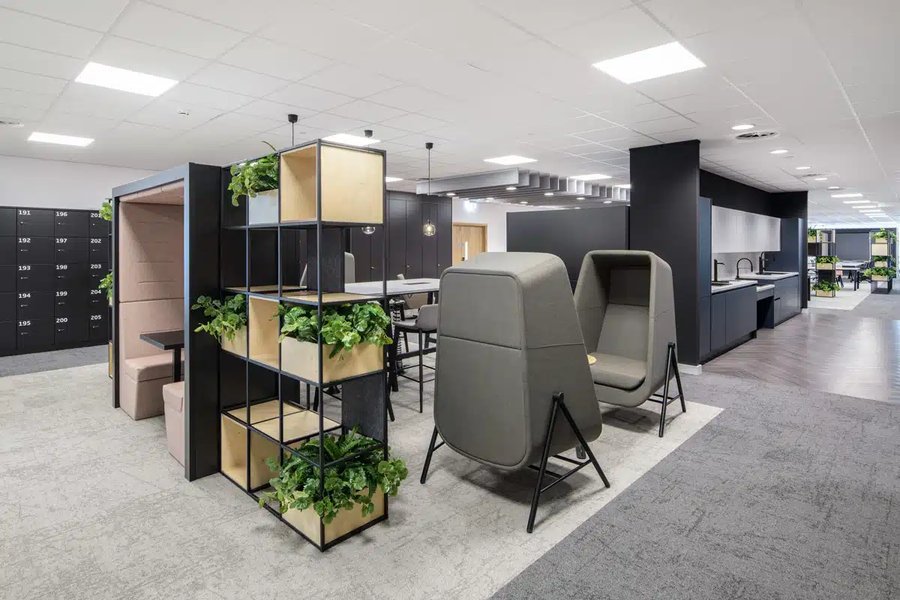
Smart storage solutions transforming modern workspaces, indicative of the tech-forward approach in the self-storage industry.
Understanding Easy Storage Solutions
Easy Storage Solutions (ESS) is a specific, well-established cloud-based self-storage management software. It is particularly recognized for its user-friendliness and affordability, making it a popular choice for small to medium-sized storage facilities. Key characteristics include:
- Core Operational Focus: ESS excels at streamlining fundamental tasks such as online rentals, payment processing, billing and invoicing (with automated reminders via email and text), unit tracking, and customer data management.
- Integrated Website: It typically provides an integrated, mobile-friendly website that allows tenants to rent units, make payments, and manage their accounts online, enhancing accessibility and convenience.
- Ease of Use: True to its name, ESS is lauded for its intuitive interface, making it easy to learn and operate, even for those who are not particularly tech-savvy.
- Web-Based Accessibility: Being 100% web-based, it can be accessed from any device with an internet connection (smartphones, tablets, computers).
- Customer Support: ESS is often praised for its responsive and helpful customer service.
While robust in its core offerings, ESS generally has less emphasis on integrating cutting-edge hardware (like smart locks directly) or advanced AI-driven analytics compared to the broader "Smart Storage Software" category. Its primary goal is to provide a reliable, straightforward, and cost-effective solution for efficient self-storage management.

Effective organization, a key outcome of streamlined management software like Easy Storage Solutions.
Feature-by-Feature Deep Dive: A Comparative Analysis
Let's dissect the capabilities of Smart Storage Software (as a category) and Easy Storage Solutions across several critical dimensions.
Core Functionality and Automation
Smart Storage Software: Offers comprehensive automation across nearly all operational aspects. This includes AI-driven dynamic pricing, automated tenant onboarding, intelligent communication workflows, smart access control management, automated follow-ups, and even automated processes for delinquent accounts moving towards auction. The goal is to minimize manual intervention and maximize efficiency.
Easy Storage Solutions: Focuses on automating routine but essential tasks. This includes automated billing, sending invoice reminders, calculating late fees, processing online payments, and managing collections. While it significantly reduces administrative burden, the scope of automation is generally less extensive than "smart" platforms, particularly in areas requiring AI or complex decision-making logic.
Technology Integration and Innovation
Smart Storage Software: This is a defining characteristic. These platforms actively integrate with smart hardware such as electronic locks, individual unit sensors (for climate control, door status), smart keypads, and advanced surveillance systems. They often feature mobile apps for tenants to access their units via smartphone and for managers to oversee operations remotely. AI and machine learning are increasingly used for analytics and operational optimization.
Easy Storage Solutions: While technologically sound and cloud-based, ESS's primary innovation lies in its user-friendly software interface and seamless online rental/payment system. Direct integration with advanced hardware like smart locks or IoT unit sensors is typically not a core feature, though it integrates effectively with payment gateways and communication tools.
Scalability and Multi-Facility Management
Smart Storage Software: Designed with scalability in mind. These systems often provide a centralized dashboard capable of managing multiple facilities, making them suitable for growing businesses or large enterprises. Features like global reporting, advanced rate management across sites, and consistent deployment of smart technologies are common.
Easy Storage Solutions: Best suited for small to medium-sized single facilities. While it can handle growth up to a certain point (often cited around 200-300 units per instance), managing multiple distinct facilities might require separate logins or accounts, potentially lacking the unified oversight of more advanced multi-site platforms. Some users have noted limitations when trying to scale significantly or manage a large portfolio under a single ESS umbrella without workarounds.
User Experience: Ease of Use and Mobile Access
Smart Storage Software: The user experience can vary. While many strive for intuitive interfaces, the sheer breadth of features and the integration of hardware can mean a steeper learning curve initially. Mobile access is typically robust, with dedicated apps for both managers and tenants offering extensive functionality.
Easy Storage Solutions: Excels in ease of use. Its interface is consistently praised for being straightforward and intuitive, allowing new users to get up and running quickly. Its web-based platform is inherently mobile-friendly, allowing management from any device. The tenant portal is also designed for simplicity in online rentals and payments.
Security and Compliance
Smart Storage Software: Places a strong emphasis on advanced security features. This includes integration with smart locks providing auditable access logs, real-time alerts for unauthorized access attempts, and often integration with sophisticated video surveillance systems. AI can be used for anomaly detection. Compliance features may also be more advanced due to data handling from various smart devices.
Easy Storage Solutions: Provides standard, reliable security features, including secure payment processing and automatic data backups. It ensures compliance with industry norms for data protection. However, it generally relies on traditional physical security measures at the facility (e.g., standard locks, manual gate codes), with the software managing the tenant data and financial transactions securely.
Customization and Integration Capabilities
Smart Storage Software: Often highly customizable, allowing businesses to tailor modules, workflows, and even branding. They tend to offer extensive APIs for integration with a wide array of third-party services, including accounting software, marketing platforms (CRMs), and specialized hardware.
Easy Storage Solutions: Offers a degree of customization in its interface and website design. It integrates well with essential third-party services like payment processors. However, the scope for deep customization or integration with a broad ecosystem of external applications and hardware might be more limited compared to enterprise-level smart solutions.
Reporting, Analytics, and Business Insights
Smart Storage Software: Typically provides powerful reporting and analytics tools. AI-powered insights can help with occupancy forecasting, revenue management, identifying customer trends, and optimizing marketing spend. Real-time dashboards offer a comprehensive view of facility performance.
Easy Storage Solutions: Offers standard reporting tools for operational oversight, covering aspects like occupancy, revenue, payment statuses, and customer data. While effective for day-to-day management and basic business analysis, it generally doesn't offer the deep, AI-driven analytical capabilities of more advanced smart platforms.
Pricing and Value Proposition
Smart Storage Software: Generally comes with a premium price tag, reflecting the advanced technology, hardware integrations (if bundled or required), and comprehensive feature set. The value proposition lies in increased efficiency, enhanced security, improved tenant experience, and potential for higher revenue through optimization.
Easy Storage Solutions: Known for its affordability and excellent value for money, especially for smaller operators. Its pricing is typically straightforward and targets businesses looking for a cost-effective yet robust management solution without the expense of advanced smart features they may not need.
Customer Support and Onboarding
Smart Storage Software: Customer support varies by provider. Given the complexity, comprehensive onboarding and ongoing technical support are crucial. Many offer extensive documentation, training resources, and dedicated support teams.
Easy Storage Solutions: Consistently receives high marks for its responsive, friendly, and helpful customer support. The onboarding process is generally smooth due to the software's inherent simplicity.
Visualizing the Differences: Comparative Overview
To better illustrate the distinctions, let's look at a side-by-side table and a feature strength radar chart.
At-a-Glance Comparison Table
This table summarizes the key differences discussed, providing a quick reference for comparison.
| Feature/Attribute | Smart Storage Software (General Category) | Easy Storage Solutions (Specific Product) |
|---|---|---|
| Primary Focus | Advanced automation, tech integration (AI, IoT), multi-facility optimization, enhanced security & tenant experience. | Core operational efficiency, ease of use, affordability, online rentals & payments for small/medium facilities. |
| Target Market | Medium to large operators, tech-forward businesses, multi-facility enterprises. | Small to medium-sized facilities, budget-conscious operators, those prioritizing simplicity. |
| Technology Integration | High (smart locks, sensors, AI, advanced analytics, mobile apps for access). | Primarily software-based; robust online platform, less direct smart hardware integration. |
| Automation Scope | Extensive, including dynamic pricing, AI insights, smart access control, complex workflows. | Core tasks: billing, payments, reminders, basic reporting. |
| Scalability | High; designed for multi-facility management from a unified dashboard. | Good for single facilities or small portfolios; potential limitations for extensive multi-site operations under one account (e.g., ~200-300 unit capacity often cited per instance). |
| Ease of Use | Can be moderate to complex due to feature breadth and hardware setup. | Very high; known for its intuitive interface and simplicity. |
| Mobile Access | Comprehensive; often dedicated manager and tenant apps with advanced functionality. | Strong; web-based platform is mobile-friendly for managers and tenants. |
| Pricing | Typically premium, variable based on features and hardware. | Affordable, excellent value for money. |
| Customer Support | Varies by provider; often includes detailed onboarding and technical support. | Highly rated for responsiveness and helpfulness. |
| Reporting & Analytics | Advanced, AI-powered insights, extensive real-time reporting. | Standard operational reports, basic analytics. |
Feature Strength Radar Chart
This radar chart offers a visual comparison of perceived strengths based on common industry understanding. Scores are on a scale of 3 (less emphasis) to 10 (strong emphasis/capability). This is an evaluative representation based on the provided information, not empirical data from the software providers themselves.
The chart visualizes how Smart Storage Software typically excels in advanced areas like tech integration and scalability for larger operations, while Easy Storage Solutions stands out for its beginner-friendliness and cost-effectiveness for smaller businesses, along with strong basic operational efficiency and support.
Self-Storage Software Landscape: A Mindmap View
This mindmap provides a conceptual overview of the key characteristics and target users for both Smart Storage Software and Easy Storage Solutions, helping to clarify their positions within the self-storage software market.
Advanced Technology (AI, IoT)
Comprehensive Automation
Multi-site Management Focus
Scalable Architecture
Enhanced Security Features"] id1_2["Pros:
Future-proof Operations
High Degree of Automation
Deep Business Insights
Improved Tenant Experience"] id1_3["Cons:
Potentially Higher Cost
May Require Hardware Investment
Steeper Learning Curve"] id1_4["Ideal For:
Medium to Large Facilities
Tech-Forward Operators
Multi-Location Businesses
Businesses Seeking Optimization"] id2["Easy Storage Solutions (Specific Product)"] id2_1["Key Traits:
User-Friendly Interface
Affordable Pricing
Core Feature Set (Online Rentals, Payments)
Cloud-Based Accessibility"] id2_2["Pros:
Simple and Intuitive
Cost-Effective Solution
Strong Customer Support
Quick Implementation"] id2_3["Cons:
Limited Advanced Automation
Less Emphasis on Smart Hardware
Scalability Constraints for Very Large Ops
Basic Reporting"] id2_4["Ideal For:
Small to Medium Facilities
Budget-Conscious Owners
Single-Site Operations
Users Prioritizing Simplicity"]
Expert Insights: Choosing the Right Software
The decision of which self-storage software to implement is crucial. Factors such as your facility's size, your growth plans, your budget, and the level of technological integration you desire all play significant roles. For a broader perspective on selecting self-storage management software, consider the insights offered in discussions around the industry's best tools.
The following video discusses how to choose the right self-storage software, which can provide valuable context when weighing options like comprehensive smart solutions versus more straightforward platforms like Easy Storage Solutions:
Video discussing considerations for choosing self-storage management software.
This video, titled "The BEST Self Storage Software in 2024! | How to Choose The Right ...", delves into what makes a software solution effective for property management in the self-storage sector. It touches upon aspects like innovative features and what to look for when evaluating different systems. While not a direct comparison of the two specific options discussed here, it offers a framework for thinking about your software needs, which is highly relevant to this decision-making process.
Making the Right Choice for Your Business
Ultimately, the "better" software depends entirely on your specific business context and goals.
When to Opt for Smart Storage Software
Consider a Smart Storage Software solution if:
- You operate or plan to operate multiple facilities and need a centralized management system.
- You aim to be at the forefront of technology, offering tenants features like smart, keyless access and enhanced unit monitoring.
- Advanced automation and AI-driven insights are critical for optimizing your operations and revenue.
- You are looking to significantly reduce manual labor and potentially operate with leaner staffing.
- Your budget allows for a potentially higher initial investment in software and compatible hardware.
- You serve a tech-savvy clientele that values convenience and modern amenities.
When Easy Storage Solutions is the Ideal Fit
Easy Storage Solutions is likely a better choice if:
- You run a small to medium-sized facility, or perhaps a few smaller sites where unified complex oversight isn't paramount.
- Your primary need is a reliable, user-friendly system for core tasks like online rentals, payments, and tenant communication.
- Affordability and value for money are top priorities.
- You prefer a simple, straightforward interface that requires minimal training.
- You don't currently require or plan for extensive integration of smart hardware like electronic unit locks across your facility.
- Responsive customer support for a core software package is highly valued.
Frequently Asked Questions (FAQ)
What is the primary difference between Smart Storage Software and Easy Storage Solutions? +
The primary difference lies in their technological scope and target audience. Smart Storage Software (a category) emphasizes advanced technology like AI and IoT (e.g., smart locks, unit sensors), extensive automation, and multi-facility management, targeting tech-forward, often larger operations. Easy Storage Solutions (a specific product) focuses on providing an affordable, user-friendly platform for core operational tasks (online rentals, payments, billing) for small to medium-sized facilities, prioritizing simplicity and cost-effectiveness over cutting-edge tech integrations.
Which software is better for a small, single-facility storage business? +
For a small, single-facility storage business, Easy Storage Solutions is often a more suitable choice. Its affordability, ease of use, and comprehensive features for core management tasks (like online payments and automated reminders) provide excellent value without the complexity or higher cost associated with many advanced Smart Storage Software platforms.
If I plan to expand to multiple locations, which option is more suitable? +
If you plan to expand to multiple locations, Smart Storage Software (as a category) is generally more suitable. These platforms are often designed with multi-facility management in mind, offering centralized dashboards, global reporting, and tools to manage operations across several sites efficiently. While Easy Storage Solutions can be used for multiple sites, it might require separate accounts or logins, lacking the unified oversight of true multi-site systems.
Does "Smart Storage Software" involve physical hardware? +
Yes, often it does. A key component of many "Smart Storage Software" solutions is their integration with physical hardware like smart locks, electronic gate access systems, individual unit sensors (for climate or door status), and advanced surveillance cameras. This hardware works in conjunction with the software to provide enhanced security, automation, and tenant convenience.
Is Easy Storage Solutions truly "easy" to use for someone not tech-savvy? +
Yes, Easy Storage Solutions is widely reported by users to be very intuitive and easy to use, even for individuals who are not particularly tech-savvy. Its interface is designed for simplicity and straightforward navigation, making the learning curve minimal. This ease of use is one of its primary selling points.
Recommended Further Exploration
- What are the specific AI features offered by leading Smart Storage Software providers?
- How does the cost of Easy Storage Solutions compare to other popular self-storage software for small businesses?
- What are the main security benefits of integrating smart locks with self-storage management software?
- Can Easy Storage Solutions integrate with my existing accounting software?
References
 amazon.com
Last updated May 15, 2025