
Beyond Panels and Motors: Unveiling the Crucial Factors in Solar Car Powertrain Design
Achieving peak performance requires a deep dive into efficiency, weight, aerodynamics, and system integration.
Designing the powertrain for a solar car involves far more than simply connecting solar panels to a motor. It's a complex engineering challenge that demands meticulous attention to numerous interconnected factors to maximize efficiency, ensure reliability, and achieve optimal performance under the constraints of limited solar energy. Success hinges on a holistic approach that balances competing priorities.
Highlights: Key Considerations for Solar Powertrains
- Weight is Paramount: Every gram counts. Minimizing vehicle weight through material selection and component design is crucial for reducing energy consumption and maximizing range.
- Efficiency Beyond the Motor: Optimizing the entire energy pathway, from sunlight capture and battery management to minimizing rolling resistance and drivetrain friction, is essential.
- System Integration is Key: The powertrain doesn't work in isolation. Effective integration with aerodynamics, thermal management, control systems, and safety features dictates overall performance and reliability.
Energy Generation and Management: The Foundation
The journey from sunlight to motion begins long before the wheels turn. Efficiently capturing, converting, storing, and managing the limited solar energy is fundamental to powertrain design.
Maximizing Solar Energy Capture
Solar Panel Efficiency and Integration
While technically separate from the powertrain, the solar array is its energy source. Using high-efficiency photovoltaic (PV) cells is vital, but designers must also consider the panel's surface area, angle relative to the sun (which changes constantly), and integration into the car's body to minimize aerodynamic disruption. The inherent low efficiency of even the best panels (often around 23%) underscores the need for downstream optimization.
Power Conditioning and MPPT
Solar panel output fluctuates significantly with sunlight intensity and temperature. Maximum Power Point Tracking (MPPT) systems are essential electronic controllers that continuously adjust the electrical load to extract the maximum possible power from the array under varying conditions. Efficient power converters are also needed to condition this power for the battery and motor.
Energy Storage and Distribution
Battery Selection and Management
Batteries store energy for acceleration, moments when sunlight is insufficient (clouds, tunnels), or strategic power deployment in races. Key considerations include:
- Energy Density vs. Power Density: Balancing the need for sufficient energy storage (range) with the ability to deliver high power (acceleration).
- Weight: Batteries are often heavy components, impacting overall vehicle mass.
- Lifecycle and Safety: A robust Battery Management System (BMS) is critical for monitoring cell voltage, temperature, and current, ensuring safe operation (preventing overcharging, over-discharging, overheating) and maximizing battery lifespan.
- Placement: Locating batteries strategically, often close to the motor, can reduce electrical resistance losses in wiring and influence vehicle weight distribution and handling.
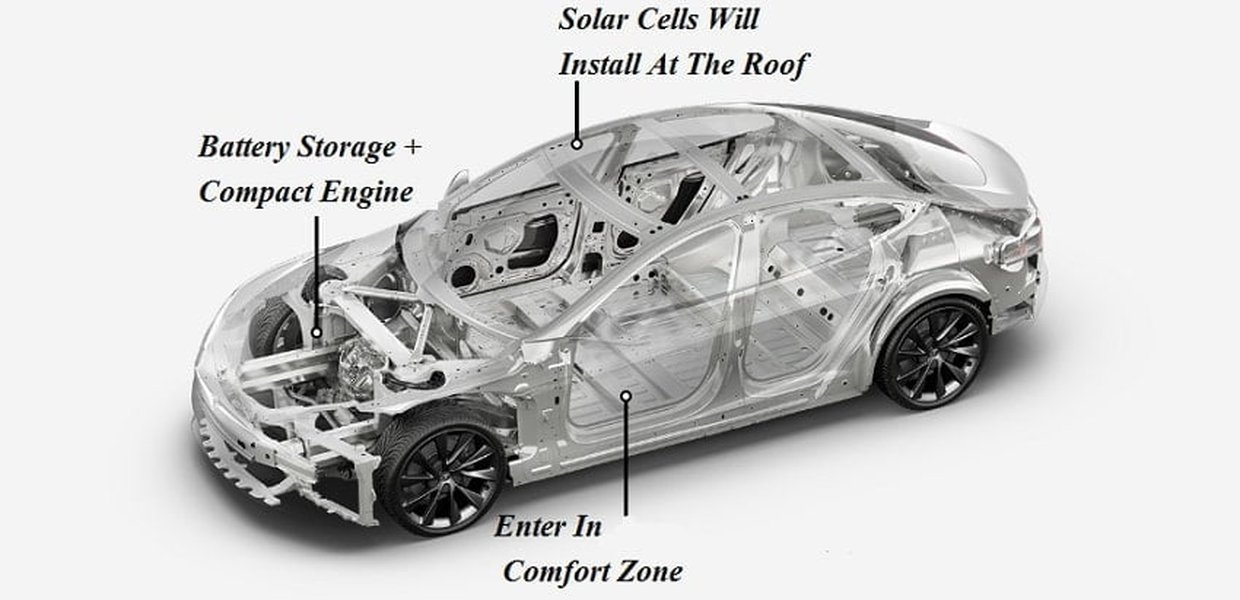
Conceptual design of a solar car highlighting panel placement.
Core Powertrain Components: Motor and Transmission
The heart of the powertrain involves converting stored electrical energy into mechanical motion as efficiently as possible.
Electric Motor Selection
Choosing the right electric motor, typically a high-efficiency Brushless DC (BLDC) motor, is critical. Factors include:
- Efficiency Curve: Motors operate most efficiently within a specific range of speed and torque. The motor must be matched to the vehicle's expected operating conditions.
- Power-to-Weight Ratio: Maximizing power output while minimizing motor weight is crucial.
- Torque vs. RPM: Balancing the need for starting torque (acceleration) with high rotational speed (top speed) is essential. This often involves trade-offs influenced by the chosen gear ratio or direct drive configuration.
- Core Losses: Internal energy losses within the motor (dependent on lamination thickness, magnetic flux, etc.) must be considered, especially if not detailed by the manufacturer.

Example of a highly efficient in-wheel motor, a common choice for solar cars to reduce drivetrain losses.
Transmission and Drive Mechanism
Gear Ratio Optimization
While some solar cars utilize direct drive (motor connected directly to the wheel hub) to save weight and eliminate transmission losses, others use gear reduction. Selecting the optimal gear ratio is crucial for balancing acceleration and top speed. This often requires experimentation and calculation based on motor characteristics, wheel size, and desired performance profile (e.g., racing vs. commuting).
Mechanical Drivetrain Components
If not using direct drive, the system transmitting power from the motor to the wheels (e.g., chain and sprocket, drive shaft, constant velocity axles, custom joints) must be:
- Lightweight: Minimizing rotational inertia and overall vehicle mass.
- Efficient: Reducing frictional losses through proper alignment, lubrication, and component selection (e.g., high-quality bearings).
- Durable: Able to withstand the stresses of operation without failure.
Optimizing for Efficiency: Beyond the Core Components
Achieving maximum range requires minimizing energy losses throughout the vehicle system.
Minimizing Physical Resistance
Aerodynamics
Although external to the powertrain, the vehicle's aerodynamic design significantly impacts the power required to overcome air resistance, especially at higher speeds. A low drag coefficient reduces the load on the motor, directly improving energy efficiency. This often involves trade-offs with solar panel area and internal component packaging.
Rolling Resistance
The energy lost due to tire deformation and friction with the road is significant. Factors include:
- Tire Selection: Specialized, low-rolling-resistance tires (often narrow, high-pressure designs) are commonly used.
- Inflation Pressure: Maintaining optimal tire pressure is critical.
- Wheel Alignment: Precise steering and wheel alignment minimize tire scrub and energy waste.
- Wheel Bearings: High-quality, low-friction bearings reduce rotational resistance.
Thermal Management
Electric motors, batteries, and power electronics (like MPPTs and motor controllers) generate heat during operation. Excessive heat reduces component efficiency and lifespan.
- Component Efficiency Loss: Batteries, in particular, have optimal operating temperature ranges.
- Cooling Strategies: Designing for adequate airflow (passive cooling) or incorporating active cooling systems (fans, liquid cooling) is necessary, though active systems consume some energy themselves.
Visualizing Design Priorities: A Balancing Act
Solar car powertrain design involves balancing multiple, often conflicting, objectives. The radar chart below illustrates how the emphasis on different factors might shift based on the specific goals of the vehicle project. For example, an endurance race car might prioritize efficiency and reliability above all else, while a concept for urban commuting might place a higher value on cost and robustness.
This chart visualizes hypothetical priorities on a scale where higher numbers indicate greater importance. Real-world design involves quantifying these factors and making data-driven trade-offs.
System Integration, Control, and Reliability
An effective powertrain relies on seamless integration with other vehicle systems and robust control strategies.
Control Systems and Strategy
Powertrain Control Unit (PCU)
The "brain" of the powertrain, the PCU (or equivalent control electronics), manages energy flow. It takes inputs from sensors (monitoring battery state, solar input, motor speed, temperature, driver controls) and makes decisions to optimize performance, efficiency, and safety.
Load Management and Driving Strategy
Intelligent control algorithms decide when to draw power primarily from the solar array, supplement with battery power, or rely solely on the battery. This includes strategies for regenerative braking, where the motor acts as a generator during deceleration to recapture kinetic energy and recharge the battery slightly, further enhancing overall efficiency.

Sensors play a critical role in monitoring and controlling modern electric powertrains, including those in solar cars.
Reliability, Durability, and Safety
Solar cars, especially those used in competitions, operate under demanding conditions. The powertrain must be:
- Reliable: Components must function consistently without failure over long durations or distances. This involves careful component selection, rigorous testing, and consideration of vibration and environmental factors.
- Durable: Able to withstand mechanical stresses, vibrations, and potential impacts. Material selection and structural design are key.
- Safe: Incorporating safety features like electrical isolation, fusing, emergency shut-offs, and ensuring compatibility with mandatory braking systems (often dual independent circuits are required).
Interaction with Other Systems
Powertrain design influences and is influenced by other subsystems:
- Chassis and Suspension: The powertrain's weight and placement affect vehicle dynamics (handling, center of gravity). Suspension design must ensure efficient power transfer to the ground and protect components from shock, while also maintaining wheel alignment.
- Braking System: Must work reliably alongside the powertrain, potentially incorporating regenerative braking functions coordinated by the PCU.
Electric Powertrain Design Insights
While focused on Formula SAE electric vehicles, the principles discussed in the following video regarding electric powertrain design, motor selection tradeoffs, and system layout offer valuable insights applicable to solar car powertrain development. Understanding general EV powertrain architecture helps contextualize the specific challenges and solutions employed in solar vehicles.
Key takeaways include the importance of matching motor characteristics (torque/speed curves) to vehicle requirements, considering different drive layouts (though solar cars often use rear-wheel or hub motors), and the intricate process of component selection and integration – all highly relevant considerations when designing a solar car's powertrain.
Mapping the Interconnections: Powertrain Design Factors
The mind map below illustrates the complex web of factors influencing solar car powertrain design. It highlights how decisions in one area, such as material choice for weight reduction, can impact others, like durability or cost. Understanding these relationships is key to a successful design.
(Li-ion, etc.)"] id1_3_2["Capacity (kWh)"] id1_3_3["BMS"] id1_3_4["Weight & Volume"] id1_3_5["Thermal Issues"] id2["Motor & Transmission"] id2_1["Electric Motor"] id2_1_1["Type (BLDC, etc.)"] id2_1_2["Efficiency Curve"] id2_1_3["Power/Torque/RPM"] id2_1_4["Weight"] id2_1_5["Cooling Needs"] id2_2["Transmission"] id2_2_1["Direct Drive"] id2_2_2["Gearbox/Reduction"] id2_2_2_1["Gear Ratio"] id2_2_2_2["Efficiency Losses"] id2_2_3["Drive Mechanism
(Chain, Shaft, Axles)"] id3["Efficiency Optimization"] id3_1["Rolling Resistance"] id3_1_1["Tire Selection"] id3_1_2["Inflation Pressure"] id3_1_3["Wheel Bearings"] id3_1_4["Alignment"] id3_2["Aerodynamics"] id3_2_1["Body Shape (Cd)"] id3_2_2["Integration w/ Panels"] id3_3["Minimizing Losses"] id3_3_1["Electrical (Wiring)"] id3_3_2["Mechanical (Friction)"] id4["Physical Constraints"] id4_1["Weight Reduction"] id4_1_1["Material Selection
(Composites, Al)"] id4_1_2["Component Optimization"] id4_2["Structural Integrity"] id4_2_1["Chassis Design"] id4_2_2["Component Durability"] id4_3["Packaging"] id4_3_1["Component Layout"] id4_3_2["Center of Gravity"] id5["Operational Aspects"] id5_1["Thermal Management"] id5_1_1["Battery Cooling"] id5_1_2["Motor Cooling"] id5_1_3["Electronics Cooling"] id5_2["Reliability"] id5_2_1["Component Lifespan"] id5_2_2["Testing & Validation"] id5_3["Safety"] id5_3_1["Electrical Isolation"] id5_3_2["Fusing & Protection"] id5_3_3["Braking System
Integration"] id6["System Integration & Control"] id6_1["Control Unit (PCU)"] id6_1_1["Sensor Inputs"] id6_1_2["Control Algorithms"] id6_2["Driving Strategy"] id6_2_1["Energy Management"] id6_2_2["Regenerative Braking"] id6_3["Software"] id6_3_1["Parameter Tuning"] id6_3_2["Monitoring"] id7["External Factors"] id7_1["Environment"] id7_1_1["Sunlight Variability"] id7_1_2["Temperature Effects"] id7_2["Cost & Manufacturability"] id7_2_1["Component Costs"] id7_2_2["Assembly Complexity"] id7_3["Regulations"] id7_3_1["Competition Rules"] id7_3_2["Safety Standards"]
Key Powertrain Design Trade-offs
Designing a solar car powertrain inevitably involves making compromises. Optimizing one aspect often negatively affects another. Understanding these trade-offs is crucial for making informed design decisions. The table below summarizes some common dilemmas:
| Factor 1 | Factor 2 | Common Trade-off Consideration |
|---|---|---|
| High Motor Efficiency | Cost | Motors with the highest efficiency ratings, especially custom-designed ones, are often significantly more expensive than standard off-the-shelf options. |
| Lightweight Materials (e.g., Carbon Fiber) | Cost & Manufacturability | Advanced composites drastically reduce weight but increase material costs and require specialized manufacturing processes compared to aluminum or steel. |
| Battery Capacity (Range) | Weight & Cost | Increasing battery capacity directly increases range but also adds considerable weight and cost to the vehicle. |
| Aerodynamic Efficiency (Low Drag) | Solar Panel Area | Highly streamlined shapes may limit the available surface area for mounting solar panels, requiring higher efficiency (and potentially more expensive) cells. |
| Component Durability | Weight | Making components stronger and more durable often requires using more material or denser materials, adding weight which negatively impacts efficiency. |
| Direct Drive Transmission | Motor Requirements & Starting Torque | Eliminates transmission losses and weight but requires a motor capable of providing sufficient torque across a wide speed range, potentially compromising peak efficiency or increasing motor size/cost. |
| Active Thermal Management | Energy Consumption & Complexity | Fans or pumps for cooling improve component performance/lifespan in hot conditions but add weight, complexity, and consume a portion of the generated energy. |
Frequently Asked Questions (FAQ)
Why is weight so critical in solar car design?
Solar cars generate very limited power compared to conventional vehicles. Reducing weight minimizes the energy needed for acceleration and overcoming rolling resistance and gravity (on inclines). Every kilogram saved directly translates to potentially longer range, better acceleration, or the ability to maintain speed with less power draw, making weight reduction a primary design driver.
What is MPPT and why is it needed?
MPPT stands for Maximum Power Point Tracking. It's an electronic system that continuously adjusts the electrical operating point (voltage and current) of the solar panel array to ensure it produces the maximum possible power under varying conditions (sunlight intensity, temperature, shading). Without MPPT, the system wouldn't efficiently harvest the available solar energy, significantly reducing the power available to the powertrain.
Direct drive vs. gearbox: which is better for a solar car?
There's no single "better" answer; it depends on the design goals and component choices. Direct drive (often using in-wheel motors) eliminates gearbox weight and efficiency losses but requires a motor with specific torque characteristics and can increase unsprung mass. A gearbox allows for optimizing the motor's operating point via gear ratios, potentially using a smaller, lighter, or more efficient motor, but adds weight, complexity, and some energy loss in the gears themselves. Many competitive solar cars favor highly efficient direct-drive hub motors.
How important is aerodynamics compared to powertrain efficiency?
Both are critically important and heavily interdependent. At low speeds, rolling resistance dominates energy consumption, making drivetrain efficiency and weight paramount. As speed increases, aerodynamic drag becomes the largest resistive force, often consuming the majority of the powertrain's output. Therefore, a highly efficient powertrain is less effective if pushing an aerodynamically poor shape, and vice-versa. Successful solar cars optimize both aspects synergistically.
Recommended Reading
- Explore techniques for optimizing solar panel energy capture on moving vehicles.
- Investigate the pros and cons of direct drive versus geared motor systems in solar car applications.
- Discover the latest advanced materials being used to reduce weight in solar car chassis and body designs.
- Learn about sophisticated battery management strategies employed in competitive solar racing.
References
Last updated April 27, 2025