
Economic Feasibility and Efficiency Optimization
Exploring the potential and rationality of integrated solar tracking systems in residential energy solutions
Key Highlights
- Enhanced Energy Yield: Solar tracking systems significantly increase energy production by aligning panels with the sun’s movement.
- Economic Viability: Investment in advanced tracking technology can reduce overall long-term costs while maximizing return on investment.
- Sustainable Environmental Impact: Integrated systems contribute to lowering carbon emissions and support a shift toward renewable energy.
Introduction to Solar-Powered Homes with Integrated Tracking Systems
The increasing demand for renewable energy and environmental sustainability has prompted homeowners, developers, and policymakers to explore innovative ways to harness solar energy. One of the most promising advancements in this arena is the integration of solar tracking systems with photovoltaic (PV) panels. Unlike traditional fixed-mount solar systems, solar-powered homes equipped with tracking technology are designed to capture maximum solar irradiance throughout the day by continuously adjusting the position of the solar panels to match the sun’s trajectory. This alignment of technology with natural rhythms not only increases energy generation but also enhances the overall economic feasibility of residential solar installations.
The integration of solar tracking systems within residential setups addresses two crucial facets of modern energy solutions: efficiency optimization and economic feasibility. Optimization in this context refers to the continuous adjustment of the panel orientation, ensuring that the energy absorbed is maximized even as the sun's position changes. When solar panels are mounted on tracking systems, energy yield improvements of 20-40% are commonly observed, depending on the type of tracking mechanism employed—whether single-axis or dual-axis systems. This increased productivity translates into tangible financial savings over the lifetime of the installation.
Rationale Behind the Integration of Solar Tracking Systems
Economic Feasibility Analysis
A key aspect of integrating solar tracking systems into residential applications is evaluating the economic feasibility. While the initial capital expenditure for installing a solar tracking system is notably higher compared to a fixed array, the benefits in energy production often justify this investment. Enhanced energy capture means that households can either reduce their reliance on grid electricity or generate surplus power that can be sold back to the grid, thereby recouping the initial investment.
Homeowners considering such technology typically conduct a detailed techno-economic analysis that factors in:
- Installation and hardware costs
- Long-term savings on utility bills
- Government incentives and tax rebates
- The potential increase in property value
- Maintenance and operational expenses
For instance, a detailed comparative cost analysis between fixed-mount and single-axis tracking systems reveals a noticeable increase in upfront costs. A standard 4-kilowatt fixed PV system might cost significantly less than a comparable system configured with a solar tracker. However, when one considers the increased energy yield—often around 30% more energy for single-axis systems and up to 40% for dual-axis systems—the return on investment becomes markedly attractive. Typically, the cost of energy derived from tracking systems may be dramatically reduced; studies have shown cost-of-energy estimates as favorable as approximately \( \text{\$0.241/kWh} \) for leading designs.
Table: Comparative Overview of Investment and Efficiency
| System Type | Initial Investment Increase | Energy Production Increase | Typical Payback Period |
|---|---|---|---|
| Fixed-Mount | Baseline | 100% (baseline energy) | NA |
| Single-Axis Tracker | ~50-60% higher than fixed | +20-30% | 5–10 years |
| Dual-Axis Tracker | 70-90% higher than fixed | +30-40% | 7–12 years |
This table outlines the relationship between initial investments and energy gains. Although higher capital costs are inherent to tracking systems, the potential for increased efficiency and energy generation can lead to diminished energy costs over time, thus substantiating the economic feasibility of the investment.
Efficiency Optimization Strategies
Optimizing Panel Orientation
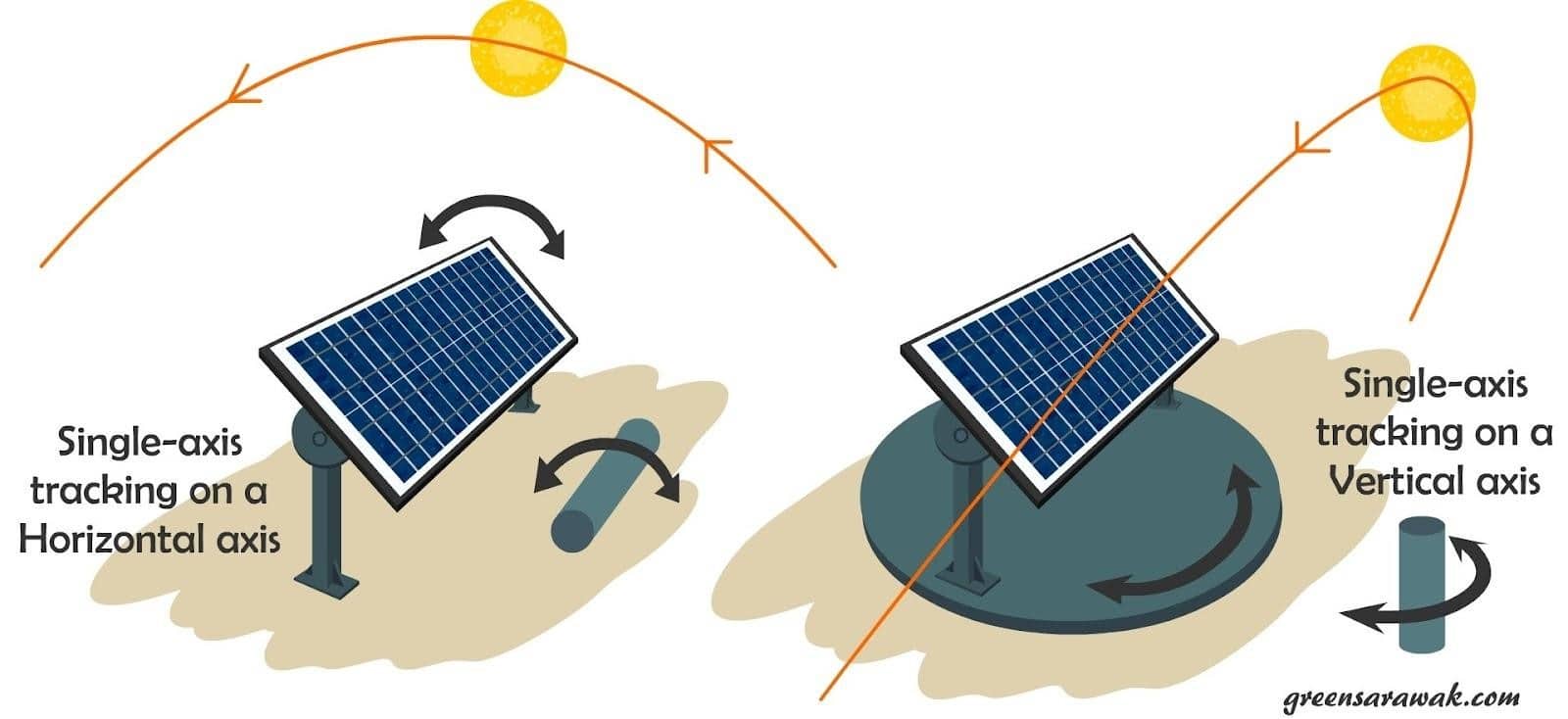
The efficiency optimization of solar-powered homes is largely achieved through the dynamic adjustment of the panels’ orientation. Traditional fixed systems operate on a set tilt, which is inherently limited as the sun’s position shifts throughout the day and across seasons. Solar trackers, on the other hand, come in two primary configurations:
- Single-Axis Tracking: This approach allows the panels to follow the sun across one plane, typically horizontal, improving efficiency by capturing more sunlight during the day.
- Dual-Axis Tracking: Providing degrees of freedom in both horizontal and vertical directions, dual-axis trackers adjust the panel’s angle completely, enabling optimal positioning throughout the year.
The decision between these two systems depends on several factors such as installation costs, available space, and regional solar insolation levels. For regions with high solar variability, dual-axis systems often offer superior performance by capturing the maximum possible energy, though their increased complexity and cost require careful economic justification.
Optimization Parameters
To achieve optimal performance, several parameters must be finely tuned:
- Tilt Angles: The initial tilt of the panels should be optimized according to latitude, ensuring that the panels capture the maximum possible direct sunlight.
- Azimuth Angle: Adjusting the panel's horizontal angle relative to true south (or true north in the southern hemisphere) helps maintain perpendicularity to the sun’s rays.
- Seasonal Adjustments: Because the sun’s path changes with the seasons, automated systems that adjust both tilt and azimuth can yield significant energy gains.
- Maximum Power Point Tracking (MPPT): Integrating smart technology that continually adjusts the load to optimize the power output of the panels further increases overall efficiency.
Advanced control algorithms and sensor-based technologies are at the forefront of these adjustments, ensuring that panels are always operating at their maximum potential. The integration of these smart control systems within residential installations represents a progressive step towards fully optimized renewable energy harvesting.
Environmental and Sustainability Considerations
Impact on Carbon Footprint
One of the driving motivations behind the shift to solar-powered homes is the urgent need to reduce greenhouse gas emissions. Integrated solar tracking systems directly contribute to environmental sustainability by maximizing energy production, which in turn reduces reliance on fossil-fuel-based power sources. When homes generate more of their own energy, the demand for grid electricity diminishes, leading to a reduction in overall carbon emissions.
As urban areas grow and energy consumption increases, the importance of harnessing sustainable technologies becomes paramount. The enhanced efficiency provided by tracking systems means fewer solar panels are needed to achieve the same energy output as larger, traditional fixed arrays. This reduction in physical infrastructure not only minimizes the environmental footprint but also contributes to the sustainable development of urban landscapes.
Long-Term Sustainability and Resource Efficiency
Solar-powered homes with integrated tracking systems represent a confluence of economic and environmental benefits. Over the lifespan of a solar installation—which can extend beyond 25 years—the cumulative energy savings and reduction in carbon dioxide emissions present an impressive case for sustainability. This long-term perspective is valuable not only for individual homeowners but also for policymakers and energy planners seeking to craft resilient and forward-thinking energy policies.
In concert with technological advancements, the integration of renewable energy sources such as solar panels into residential areas is steadily transforming local energy markets. As governments continue to offer tax credits, rebates, and other financial incentives, the overall economic barrier to adopting such technologies is lowered, thereby accelerating the shift toward cleaner and more efficient energy systems.
Techno-Economic and System Integration Analysis
System Design and Component Synergy
A critical factor in the successful deployment of solar-powered homes with tracking systems is the integration and synchronization of various components. The design of these systems involves a cohesive approach that considers solar panels, tracking mechanisms, inverters, storage systems, and smart control units. Each element plays a vital role in ensuring optimal energy conversion and reliability of the system.
For example, an effective pairing of high-efficiency photovoltaic panels with advanced tracking systems and maximum power point tracking (MPPT) technology can generate a system that delivers not only high energy production but also lower operational costs. This integration minimizes energy losses, optimizes energy storage for intermittent supply, and maximizes the overall efficiency of the photovoltaic installation.
Component Interactions Table
| Component | Function | Benefit to System |
|---|---|---|
| Photovoltaic Panels | Convert sunlight into electricity | Primary energy generation unit |
| Solar Tracking Mechanisms | Adjust panel orientation in real-time | Maximizes solar energy absorption |
| Inverters | Convert DC to AC power | Ensures compatibility with home grid |
| MPPT Controllers | Optimize power output | Enhances efficiency under varying conditions |
| Storage Systems | Store surplus energy | Provides backup and load balancing |
The table above outlines the critical components within an integrated solar system and demonstrates how each factor contributes to improved performance and cost efficiency. Such detailed integration is vital to maximizing output and ensuring sustainable long-term operation.
Policy and Incentive Framework
Governmental regulations and incentive programs also play a major role in the economic feasibility of integrating solar tracking systems in residential homes. Many regions have introduced subsidies, government-backed loans, and tax deductions specifically designed to offset initial setup costs of renewable energy systems. The combination of these financial benefits, along with the declining costs of solar technology over recent years, makes it increasingly viable for homeowners to invest in state-of-the-art solar infrastructure.
The role of policies is further accentuated by the global shift towards cleaner energy practices. Innovative financing models and incentive schemes encourage not only individual homeowners but also community-based energy projects and larger-scale distributed generation initiatives. These financial models help overcome initial cost hurdles and foster a broader adoption of renewable technologies, reinforcing the economic case for investment in solar-powered homes with tracking systems.
References
- Solar Tracking Systems: How They Work, Types and Advantages - EnergySage
- Solar Tracking System - Its Efficiency, Purpose and Advantages - Das Energie
- Is A Solar Tracking System Worth It? - SolarReviews
-
Technical and Economic Aspects of Solar Tracking Systems - ScienceDirect
- Performance and Cost Analysis of Solar Panel Tracking Systems - MDPI
Recommended Related Queries
Last updated March 8, 2025