
Unlocking Sunshine: How Solar PV Systems Power Our World
An in-depth look at the science and components that turn sunlight into electricity for your home and beyond.
Key Insights into Solar PV Technology
- Fundamental Principle: Solar PV systems operate on the photovoltaic effect, where sunlight (photons) directly converts into DC electricity within semiconductor materials, primarily silicon.
- Essential Conversion: Inverters are critical for transforming the DC electricity generated by solar panels into AC electricity, making it usable for standard appliances and compatible with the electrical grid.
- Energy Management: Batteries and charge controllers play a vital role in energy storage and system stability, especially for off-grid applications or providing backup power, by storing excess energy and protecting battery health.
The Science Behind Solar: Operating Principles
Solar Photovoltaic (PV) energy systems harness the power of the sun and convert it into usable electricity through a fascinating scientific process. The core principle underpinning this technology is the photovoltaic effect. This effect is a physical and chemical phenomenon where certain materials, known as semiconductors, generate an electric current when exposed to light.
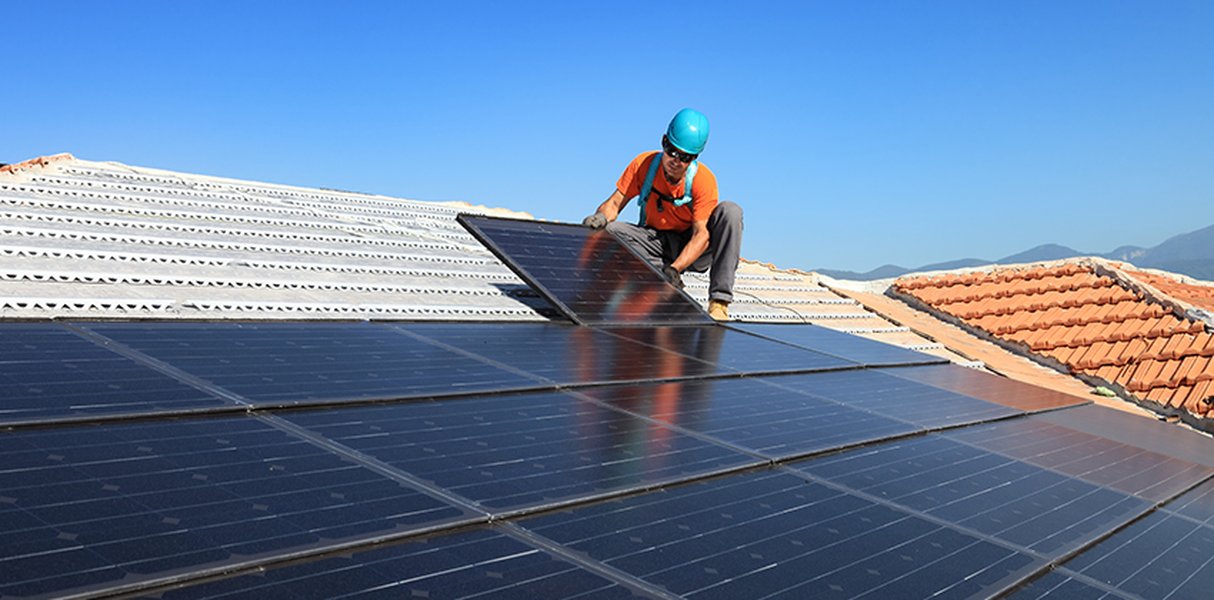
Solar panels, the primary collectors of sunlight, installed on a residential roof.
The Photovoltaic Effect Explained
The photovoltaic effect occurs within solar cells, which are the fundamental building blocks of solar panels. These cells are typically made from semiconductor materials, with silicon being the most common choice.
- Photon Absorption: When sunlight, composed of tiny energy packets called photons, strikes the surface of a solar cell, these photons can be absorbed by the semiconductor material.
- Electron Excitation: If a photon carries sufficient energy, it can transfer this energy to an electron within the semiconductor's atomic structure. This extra energy excites the electron, causing it to break free from its atomic bond and become a mobile charge carrier. This process also creates a "hole" (a positive charge) where the electron used to be.
- Creation of Electric Current: Solar cells are designed with an internal electric field, usually created by joining p-type (positively doped) silicon and n-type (negatively doped) silicon to form a p-n junction. This electric field forces the freed electrons to move towards the n-type side and the holes towards the p-type side. This separation of charges creates a voltage difference across the cell.
- Direct Current (DC) Generation: When an external circuit connects the positive and negative sides of the solar cell, the mobile electrons flow through the circuit, creating a direct current (DC) of electricity. Each individual solar cell produces a small amount of power (typically around 0.5 volts), so multiple cells are connected in series and parallel within a solar panel to achieve a useful voltage and current output.
This process requires no fuel, involves no moving parts, and produces no direct emissions, making solar PV a clean and sustainable way to generate electricity. The efficiency of this conversion depends on several factors, including the type and quality of the semiconductor material, the intensity and angle of sunlight, and the ambient temperature.
Anatomy of a Solar PV System: Major Components
A fully functional solar PV system is more than just solar panels. It comprises several key components working in concert to efficiently capture solar energy, convert it into usable electricity, store it if necessary, and ensure safe operation. These components, apart from the PV modules themselves, are often referred to as the "Balance of System" (BOS).
1. Solar Panels (Photovoltaic Modules)
Description
Solar panels, also known as PV modules, are the most visible part of a solar energy system. They consist of an array of interconnected solar cells, typically made from crystalline silicon (monocrystalline or polycrystalline) or thin-film semiconductor materials. These cells are encapsulated between a protective glass front sheet and a durable backsheet (often a polymer) and housed in a rigid aluminum frame. This construction protects the delicate cells from environmental factors like moisture, hail, and physical impact.
Function
The primary function of solar panels is to capture sunlight and convert it directly into DC electricity via the photovoltaic effect, as described earlier. Panels are typically mounted on rooftops or ground-mounted racks, positioned to maximize exposure to sunlight throughout the day and year. The DC electricity produced is the raw energy that will be processed by other components in the system.
Additional Details
Solar panels can be wired together in series to increase voltage or in parallel to increase current, forming a solar array tailored to the specific energy needs and voltage requirements of the system. The performance of solar panels can be affected by factors like temperature (efficiency generally decreases as panel temperature rises), shading (even partial shading on one part of a panel or array can disproportionately reduce overall output in some systems), and orientation/tilt angle.
2. Inverters
Description
An inverter is a sophisticated electronic device that acts as the brain of the solar PV system. It's a power converter that transforms the variable DC output from the solar panels into AC electricity.
Function
The primary function of an inverter is to convert the DC electricity generated by solar panels into AC electricity. Most household appliances and the utility grid operate on AC power (typically 120V or 240V at 50Hz or 60Hz, depending on the region). Inverters achieve this conversion by rapidly switching the direction of the DC input, effectively creating an alternating current waveform. Beyond this core function, modern inverters often perform several other crucial tasks:
- Maximum Power Point Tracking (MPPT): Inverters continuously adjust the electrical operating point of the solar array to extract the maximum possible power under varying conditions of sunlight and temperature.
- System Monitoring: Many inverters provide data on energy production, system performance, and can detect faults. This information can often be accessed remotely via web or mobile applications.
- Grid Synchronization: For grid-tied systems, the inverter synchronizes the AC output with the grid's voltage and frequency, allowing surplus energy to be fed into the grid or power to be drawn from the grid when solar production is insufficient.
- Safety Protection: Inverters include safety features like anti-islanding protection, which automatically shuts down the inverter if the utility grid experiences an outage. This prevents the solar system from sending power into downed grid lines, protecting utility workers.
Types of Inverters
- String Inverters: These connect to a series of solar panels (a "string") and convert the combined DC power from that string. They are a common and cost-effective solution for many residential and commercial systems.
- Microinverters: These smaller inverters are installed on each individual solar panel. They convert DC to AC at the panel level, which can improve overall system performance, especially if some panels are affected by shading or orientation differences. They also allow for panel-level monitoring.
- Power Optimizers with String Inverters: This hybrid approach involves DC-to-DC converters (optimizers) at each panel that condition the power before sending it to a central string inverter. This offers some benefits of microinverters, like panel-level optimization, while often being more cost-effective for certain installations.
- Hybrid Inverters (Battery-Ready Inverters): These inverters are designed to work with battery storage systems. They can manage the flow of energy between the solar panels, batteries, the home's loads, and the grid.
3. Batteries (Energy Storage Systems)

Battery energy storage systems allow for the use of solar power even when the sun isn't shining.
Description
Solar batteries are energy storage devices that can store the DC electricity generated by solar panels. Common battery chemistries include lead-acid (deep-cycle) and lithium-ion, with lithium-ion becoming increasingly popular due to its higher energy density, longer lifespan, and deeper discharge capabilities.
Function
The primary function of batteries in a solar PV system is to store excess solar energy generated during the day for later use. This stored energy can be utilized:
- During the night when solar panels are not producing power.
- During periods of high energy demand that exceed the panels' instantaneous output.
- During grid outages, providing backup power (if the system is configured for this).
- To increase self-consumption of solar energy, reducing reliance on the grid and potentially lowering electricity bills, especially in areas with time-of-use electricity rates.
Batteries are essential for off-grid solar systems, which are not connected to the utility grid, and are increasingly common in grid-tied systems for backup power and enhanced energy independence.
4. Charge Controllers
Description
A charge controller, also known as a charge regulator, is an electronic device placed between the solar panels and the batteries in systems that include energy storage. It is not typically needed in simple grid-tied systems without batteries.
Function
The main function of a charge controller is to regulate the flow of electricity from the solar panels to the batteries. This ensures that the batteries are charged efficiently and, most importantly, protects them from overcharging and deep discharging.
- Preventing Overcharge: Overcharging can damage batteries, reduce their lifespan, and even pose safety risks. The charge controller monitors the battery's state of charge and reduces or stops the current from the panels once the battery is full.
- Preventing Deep Discharge: Some charge controllers also prevent batteries from being drained too much by disconnecting loads when the battery voltage drops below a safe level.
- Optimizing Charging: Advanced charge controllers use multi-stage charging algorithms to optimize battery health and longevity.
Types of Charge Controllers
- Pulse Width Modulation (PWM): PWM controllers are simpler and less expensive. They work by gradually reducing the amount of power flowing to the battery as it approaches full charge, using a series of pulses.
- Maximum Power Point Tracking (MPPT): MPPT controllers are more advanced and efficient. They actively track the maximum power point of the solar array and adjust the input voltage to match the battery's charging requirements. This allows them to harvest significantly more power from the panels, especially in conditions of varying sunlight or when panel voltage is much higher than battery voltage.
Visualizing Component Roles: A Comparative Overview
The various components of a solar PV system contribute differently to its overall cost, technological sophistication, maintenance needs, and impact on efficiency. The radar chart below offers a comparative visualization of these aspects for the major components. This is an illustrative representation based on typical system configurations and relative values.
Note: The values in this chart are illustrative and can vary based on specific system designs, component quality, and usage patterns. "Batteries" and "Charge Controllers" are considered in scenarios where they are included in the system.
System Synergy: How Components Work Together
The mindmap below illustrates the interconnectedness of the solar PV system's principles and components, showing how they collectively achieve the goal of converting sunlight into usable electricity.
This diagram highlights the journey of energy from sunlight to usable power, mediated by the crucial functions of each component. Whether for a grid-tied system primarily reducing electricity bills, or an off-grid system providing complete energy independence, these components must work seamlessly together.
Component Breakdown: Functions and Characteristics
The following table provides a quick reference summary of the major components, their primary functions, key characteristics, and their necessity in different types of solar PV systems.
| Component | Primary Function | Key Characteristics / Technologies | Essential for Grid-Tied System? | Essential for Off-Grid System? |
|---|---|---|---|---|
| Solar Panels (PV Modules) | Convert sunlight directly into DC electricity. | Made of photovoltaic cells (typically silicon); various sizes, efficiencies, and types (monocrystalline, polycrystalline, thin-film). | Yes | Yes |
| Inverter | Convert DC electricity from panels (or batteries) into AC electricity; manage power flow. | Types: String, microinverters, power optimizers, hybrid. Features: MPPT, anti-islanding, system monitoring. | Yes | Yes |
| Batteries (Energy Storage) | Store excess DC energy generated by solar panels for later use. | Common types: Lithium-ion, lead-acid. Key specs: Capacity (kWh), depth of discharge (DoD), cycle life. | Optional (primarily for backup power or increased self-consumption) | Yes (for continuous power supply) |
| Charge Controller | Regulate the charging of batteries from solar panels to prevent overcharging and deep discharging, optimizing battery life. | Types: PWM (Pulse Width Modulation), MPPT (Maximum Power Point Tracking). Essential for systems with batteries. | No (unless batteries are included) | Yes (if batteries are part of the system) |
Understanding Solar Components Visually
To further clarify how these components fit together in a typical solar power system, the following video provides a straightforward explanation of the fundamental parts and their roles.
This video, "Basic Solar Components & How They Work," offers a visual guide to understanding the interplay between solar panels, inverters, and batteries in a solar energy setup.
Frequently Asked Questions (FAQ)
What is the "photovoltaic effect"?
The photovoltaic effect is the process by which light energy (photons) is converted directly into electrical energy (voltage and current) when absorbed by a semiconductor material, such as silicon. When photons strike the material, they can excite electrons, causing them to become free charge carriers. An internal electric field within the solar cell then separates these charges, creating a voltage that can drive an electric current through an external circuit.
What's the difference between DC and AC electricity in a solar system?
Direct Current (DC) electricity is characterized by a unidirectional flow of electric charge. Solar panels naturally produce DC electricity. Batteries also store and supply DC electricity.
Alternating Current (AC) electricity is characterized by electric charge that periodically reverses direction. The utility grid and most household appliances operate on AC electricity.
In a solar PV system, an inverter is used to convert the DC electricity from the solar panels (or batteries) into AC electricity so it can be used by appliances or fed into the grid.
Are batteries always necessary in a solar PV system?
No, batteries are not always necessary.
In grid-tied systems, solar panels generate electricity that can be used immediately. Any excess power can be sent to the utility grid (often for credit, depending on local policies), and power can be drawn from the grid when solar production is insufficient (e.g., at night). Batteries can be added to grid-tied systems for backup power during outages or to store excess solar energy for later use, increasing self-consumption.
In off-grid systems, which are not connected to the utility grid, batteries are essential to store energy for use when the sun isn't shining, ensuring a continuous power supply.
What is MPPT, and why is it important?
MPPT stands for Maximum Power Point Tracking. It is an electronic system, typically found in modern inverters and advanced charge controllers, that constantly adjusts the electrical operating point (voltage and current) of the solar panels to maximize the power output. Solar panels have an optimal operating point (the "maximum power point") that varies with changing sunlight conditions (irradiance) and temperature. MPPT technology ensures that the panels are always operating at this peak efficiency point, thereby harvesting more energy than systems without MPPT, especially under variable conditions like cloudy days or partial shading. This makes the entire solar PV system more efficient and productive.
Recommended Further Exploration
- How does shading affect solar panel performance and what are the solutions?
- What are the differences between grid-tied, off-grid, and hybrid solar PV systems?
- What factors influence the efficiency of a solar PV system?
- What are the environmental benefits and lifecycle impacts of solar PV technology?
References
Last updated May 14, 2025