
Unlocking Sunshine: How Do Solar PV Systems Actually Power Your World?
Dive into the science behind solar energy and discover the crucial components that transform sunlight into electricity.
Solar photovoltaic (PV) energy systems are at the forefront of renewable energy technology, offering a clean and sustainable way to generate electricity. Understanding their operating principles and the function of their major components is key to appreciating their growing importance in our energy landscape. This exploration will delve into how these systems convert sunlight into usable power and detail the roles of solar panels, inverters, batteries, and charge controllers.
Key Insights into Solar PV Systems
- Photovoltaic Effect: The core principle involves photons from sunlight striking semiconductor materials (typically silicon) in solar cells, dislodging electrons to create a direct current (DC).
- Essential Conversion: Inverters play a non-negotiable role in converting the DC electricity produced by solar panels into alternating current (AC) electricity, which is standard for household appliances and grid integration.
- Energy Independence: Batteries, while optional for grid-tied systems, are crucial for off-grid applications and for providing backup power, storing excess energy for use when the sun isn't shining.
The Fundamental Operating Principle: The Photovoltaic Effect
The magic behind solar photovoltaic (PV) energy systems lies in a phenomenon known as the photovoltaic effect. This process, first observed by French physicist Edmond Becquerel in 1839, describes the direct conversion of light (photons) into electricity. Here's a step-by-step breakdown:
- Sunlight Strikes: Sunlight, composed of tiny energy packets called photons, falls upon the surface of a solar panel.
- Semiconductor Interaction: Solar panels are made up of many photovoltaic cells. Each cell typically consists of two layers of a semiconductor material, most commonly silicon. One layer is treated to be n-type (negative, with an excess of electrons), and the other is p-type (positive, with a deficiency of electrons, or "holes").
- Electron Excitation: When photons with sufficient energy strike the silicon atoms in the PV cell, they transfer their energy to electrons. This energy allows the electrons to break free from their atomic bonds.
- Creation of Electric Current: The freed electrons are then swept by an internal electric field created at the junction between the n-type and p-type layers (the p-n junction). This flow of electrons constitutes a direct current (DC).
- Electricity Collection: Conductive metal contacts on the front and back of the solar cell collect these flowing electrons, making the DC electricity available for use.
The efficiency of this conversion process depends on factors like the intensity of sunlight, the angle of incidence, the temperature of the solar cells, and the intrinsic properties of the semiconductor material. Modern PV systems are designed to maximize this energy capture, often with panels positioned to optimize sun exposure.
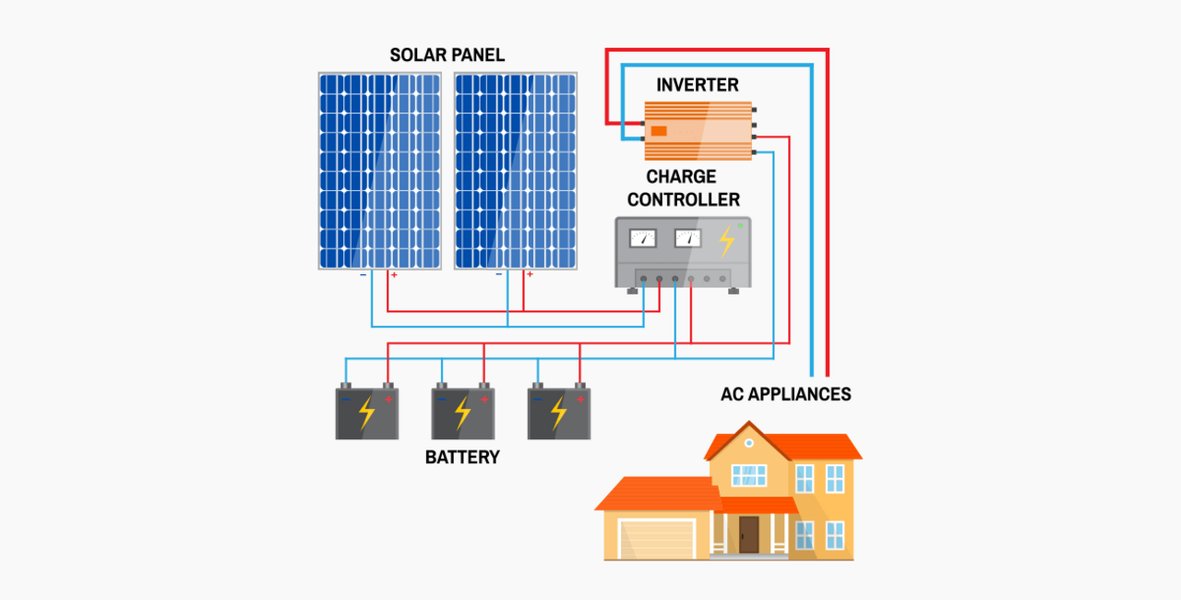
A typical residential solar PV system setup, illustrating how components work together.
Major Components and Their Functions
A functional solar PV system is more than just panels; it's an integrated assembly of several critical components, each playing a distinct role in the generation, conversion, storage, and management of solar energy.
1. Solar Panels (Photovoltaic Modules/Arrays)
Description
Solar panels are the most visible part of a PV system. They are composed of multiple photovoltaic cells connected in series and/or parallel to achieve desired voltage and current outputs. These cells are typically encapsulated between a transparent front glass and a protective back sheet, all held together by a sturdy frame. Common materials for PV cells include monocrystalline silicon, polycrystalline silicon, and thin-film semiconductors. Panels are often grouped together to form larger structures called solar arrays to meet higher power demands.
Function
The primary function of solar panels is to capture sunlight and convert it directly into DC electricity via the photovoltaic effect, as described earlier. They are the "generators" of the solar PV system. The amount of electricity a panel can produce depends on its size, efficiency, the amount of sunlight it receives (insolation), and environmental factors like temperature and shading. Panels are designed for long-term outdoor operation, typically with lifespans of 25 to 30 years or more.
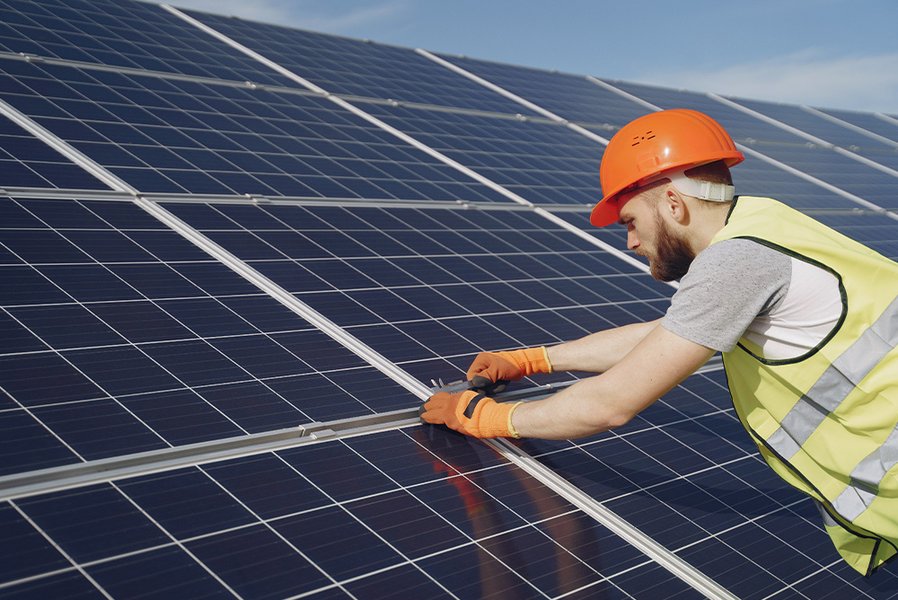
Solar panels, the primary energy collectors, installed on a residential roof.
2. Inverters
Description
Inverters are sophisticated electronic devices that act as the bridge between the solar panels and the electrical loads (appliances, grid). They come in various types, including string inverters (for a series of panels), microinverters (one per panel), and power optimizers (enhancing individual panel output before a central inverter). Modern inverters also often include monitoring capabilities and advanced safety features.
Function
The core function of an inverter is to convert the DC electricity generated by the solar panels into AC (alternating current) electricity. AC power is the standard form of electricity used by most household appliances and is compatible with the utility grid. In grid-tied systems, inverters synchronize the AC output with the grid's frequency and voltage. They also perform critical safety functions, such as "anti-islanding," which de-energizes the solar system during a grid outage to protect utility workers. Some inverters can also optimize power output by performing Maximum Power Point Tracking (MPPT), ensuring the panels operate at their peak efficiency under varying sunlight conditions.
3. Batteries (Energy Storage Systems)
Description
Batteries in a solar PV system are electrochemical storage devices. While not a mandatory component for all systems (especially grid-tied systems that can export excess power), they are essential for off-grid systems and are increasingly popular for grid-tied systems with backup power or self-consumption goals. Common battery chemistries include lead-acid (deep-cycle) and lithium-ion, with lithium-ion becoming more prevalent due to its higher energy density, longer lifespan, and deeper discharge capabilities.
Function
The primary function of batteries is to store surplus solar energy generated during the day for later use. This stored energy can be utilized during the night, on cloudy days when solar production is low, or during power outages (if the system is configured for backup). Batteries enhance energy independence, improve the reliability of the power supply, and can help manage energy costs by allowing users to store cheap solar energy instead of buying expensive grid power during peak hours.
4. Charge Controllers
Description
A charge controller, also known as a charge regulator, is an electronic device used in solar PV systems that include batteries. It sits between the solar panels and the battery bank (and sometimes the load).
Function
The main purpose of a charge controller is to regulate the voltage and current coming from the solar panels to the batteries. This is crucial for:
- Preventing Overcharging: It stops charging the batteries once they are full, which can otherwise damage them and shorten their lifespan.
- Preventing Deep Discharging: Some controllers can disconnect loads if the battery voltage drops too low, protecting the battery from excessive discharge.
- Preventing Reverse Current Flow: At night, or when panel voltage is lower than battery voltage, it prevents current from flowing back from the batteries to the solar panels, which would drain the batteries.
Visualizing Component Importance
To better understand the relative characteristics and importance of each major component within a typical solar PV system, the following radar chart provides a comparative overview. The scores are indicative, reflecting general trends and common perceptions in the industry for a standard residential system aimed at maximizing self-consumption and providing some backup.
This chart evaluates components based on:
- Initial Cost Contribution: The relative share of the component in the total upfront system cost.
- Lifespan Expectancy: How long the component is generally expected to last before needing replacement.
- Maintenance Requirement: The level of ongoing maintenance or checks needed for optimal performance.
- Impact on System Efficiency: How significantly the component influences the overall energy conversion efficiency.
- Necessity for Basic Grid-Tied Operation: How essential the component is for a fundamental grid-connected system (without storage).
Mapping the Solar PV System
This mindmap provides a hierarchical view of a solar photovoltaic system, illustrating the core operating principle and the interconnectedness of its major components. It helps visualize how each part contributes to the overall goal of converting sunlight into usable electricity.
Generate DC Electricity"] B1b["Composition: PV Cells, Glass, Frame"] B2["Inverter"] B2a["Function: Convert DC to AC Electricity"] B2b["Types: String, Micro, Power Optimizers"] B2c["Features: Grid Synchronization,
Safety (Anti-islanding), MPPT"] B3["Batteries (Optional)"] B3a["Function: Store Excess Energy"] B3b["Use Cases: Off-grid, Backup Power,
Self-consumption"] B3c["Types: Lithium-ion, Lead-acid"] B4["Charge Controller (If Batteries Present)"] B4a["Function: Regulate Charging
of Batteries"] B4b["Protects Against: Overcharging,
Deep Discharging, Reverse Current"] B4c["Types: PWM, MPPT"] C["System Output"] C1["AC Electricity for Loads/Grid"] C2["Energy Independence/Backup"]
This visual representation highlights the flow from fundamental physics to practical application, showing how sunlight is harnessed and processed through various stages and components to deliver power.
Component Overview Table
The following table summarizes the key characteristics and functions of the major components in a solar PV system, providing a quick reference guide.
| Component | Primary Function | Key Characteristics / Types | Typical Lifespan |
|---|---|---|---|
| Solar Panels | Convert sunlight into DC electricity. | Made of PV cells (Monocrystalline, Polycrystalline, Thin-film silicon); Form arrays. | 25-30+ years |
| Inverter | Convert DC electricity from panels to AC electricity. | String inverters, Microinverters, Hybrid inverters; Includes MPPT, grid synchronization, safety features. | 10-15 years (string), 20-25 years (micro) |
| Batteries | Store excess solar energy for later use. | Lithium-ion, Lead-acid; Capacity measured in kWh; Essential for off-grid or backup. | 5-15 years (depending on type and usage) |
| Charge Controller | Regulate power flow from panels to batteries, preventing damage. | PWM (Pulse Width Modulation), MPPT (Maximum Power Point Tracking); Essential for battery-based systems. | 10-15 years |
This table offers a snapshot of what each component does and what to expect from it in terms of performance and longevity, further clarifying their roles within the integrated solar energy solution.
Exploring Solar Components Visually
Understanding the components of a solar PV system can be enhanced by seeing them discussed in context. The following video provides a clear explanation of the basic components, including solar panels, inverters, and batteries, and how they work together. It offers a practical overview that complements the technical descriptions provided.
This video, titled "Basic Solar Components & How They Work - Solar Panels, Inverter, Batteries, & More Explained," walks through each key part of a solar power system. It's valuable for visualizing how these elements connect and function in a real-world setup, making the concepts more tangible for those new to solar technology.
Frequently Asked Questions (FAQ)
What is the photovoltaic effect?
The photovoltaic effect is the process by which light energy (photons) is converted directly into electrical energy (voltage and current). This occurs when photons strike a semiconductor material, like silicon in a solar cell, and transfer their energy to electrons, causing them to flow and create an electric current.
Do all solar PV systems need batteries?
No, not all solar PV systems require batteries. Grid-tied systems can operate without batteries by sending excess electricity generated to the utility grid and drawing power from the grid when solar production is insufficient. Batteries are essential for off-grid systems, and for grid-tied systems where backup power during outages or maximizing self-consumption of solar energy is desired.
What's the difference between DC and AC electricity in a solar system?
Solar panels generate Direct Current (DC) electricity, where electrons flow in one direction. Most household appliances and the utility grid use Alternating Current (AC) electricity, where the direction of electron flow reverses periodically. The inverter in a solar PV system is responsible for converting the DC output from the panels into usable AC power.
What is an MPPT charge controller and why is it better?
An MPPT (Maximum Power Point Tracking) charge controller is a more advanced type of charge controller that optimizes the power transfer from solar panels to batteries. It constantly monitors the voltage and current from the panels and adjusts the electrical operating point to extract the maximum possible power. This can result in significantly higher energy harvest (typically 10-30% more) compared to older PWM (Pulse Width Modulation) controllers, especially in variable weather conditions or when the panel voltage is much higher than the battery voltage.
How long do solar PV systems typically last?
Solar panels, the core component, are very durable and typically come with performance warranties of 25 to 30 years, often lasting even longer. Inverters generally have a shorter lifespan, around 10-15 years for string inverters, though microinverters and power optimizers may last longer. Batteries have lifespans varying from 5 to 15 years or more, depending on the technology (e.g., lithium-ion vs. lead-acid) and usage patterns. Overall, a well-maintained solar PV system can provide clean energy for several decades.
Recommended Further Exploration
- What are the differences between monocrystalline and polycrystalline solar panels?
- How do grid-tied, off-grid, and hybrid solar systems compare?
- What maintenance is required for a residential solar PV system?
- How does net metering work with solar panel systems?
References
Last updated May 14, 2025