
Revolutionizing Space Power: Next-Generation Solutions for Solar Panels
Exploring how cutting-edge technologies aim to overcome cost, efficiency, material, and maintenance hurdles for solar energy in orbit.
The final frontier presents unique challenges for harnessing solar energy, a critical component for virtually all space missions. Traditional space solar panels, while functional, grapple with issues like prohibitive launching costs, the need for ever-higher energy efficiency, sustainable material utilization, and the immense difficulty of in-orbit repairs. Fortunately, a wave of innovative technologies is emerging, promising to redefine how we power our endeavors beyond Earth. This overview delves into five such pioneering solutions: Quantum Dot Solar Panels, Self-Assembling Space Origami Satellites, AI Repair Robots, AI Beam Systems, and Plasma Force Fields, examining their potential to transform space solar energy systems as of May 10, 2025.
Key Innovations at a Glance
- Boosted Efficiency & Reduced Weight: Quantum Dot solar cells offer the potential for significantly higher energy conversion and lighter, more flexible panel designs, directly impacting launch costs and power output.
- Smarter Deployment & Material Use: Origami-inspired self-assembling structures allow for compact launch configurations and efficient material usage, unfolding large solar arrays in space.
- Autonomous Upkeep & Extended Lifespans: AI-driven robots and protective fields aim to autonomously repair and shield solar panels from the harsh space environment, minimizing costly and complex human interventions.
Quantum Dot Solar Panels: Harvesting More Light with Less
Quantum Dot Solar Cells (QDSCs) represent a significant leap in photovoltaic technology. These cells utilize semiconductor nanocrystals, or "quantum dots," whose electronic characteristics are determined by their size and composition rather than a fixed material property. This tunability allows QDSCs to be optimized for absorbing a broader range of the solar spectrum.
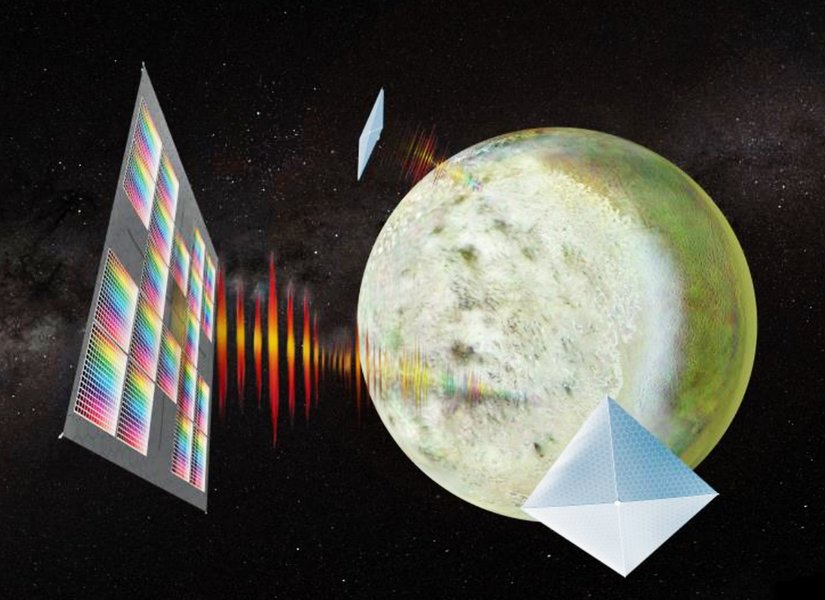
Conceptual illustration of quantum dots, highlighting their potential in advanced sensor and solar cell technologies. (Image: NASA)
Addressing Key Space Solar Panel Challenges
Impact on Launching Costs
Quantum dots can be processed in solution, enabling the fabrication of thin, lightweight, and flexible solar panels. This dramatically reduces the overall mass of solar arrays compared to traditional rigid silicon panels, leading to substantial savings in launch costs, as payload weight is a primary driver of launch expenses.
Enhancing Energy Efficiency
QDSCs have demonstrated efficiencies exceeding 18.1% in laboratory settings, with theoretical thermodynamic conversion efficiencies potentially reaching as high as 66%. This is partly due to phenomena like Multiple Exciton Generation (MEG), where a single high-energy photon can generate multiple electron-hole pairs, boosting current. Their tunable bandgap allows them to capture more of the incident sunlight, converting it into electricity more effectively, which is crucial for power-hungry space missions.
Optimizing Material Use
The ability to create very thin films of quantum dots means less raw material is required per unit of power generated. Their solution-processability also opens doors for potentially more cost-effective manufacturing techniques and integration onto diverse, unconventional surfaces, further optimizing material utility.
Revolutionizing Repairment (Indirectly)
While QDSCs don't directly repair themselves, their enhanced radiation resistance compared to some traditional materials can lead to slower degradation in the harsh space environment. This inherent durability could reduce the frequency of required repairs or replacements, contributing to longer operational lifespans for solar arrays.
Self-Assembling Space Origami Satellites: Unfolding the Future of Deployment
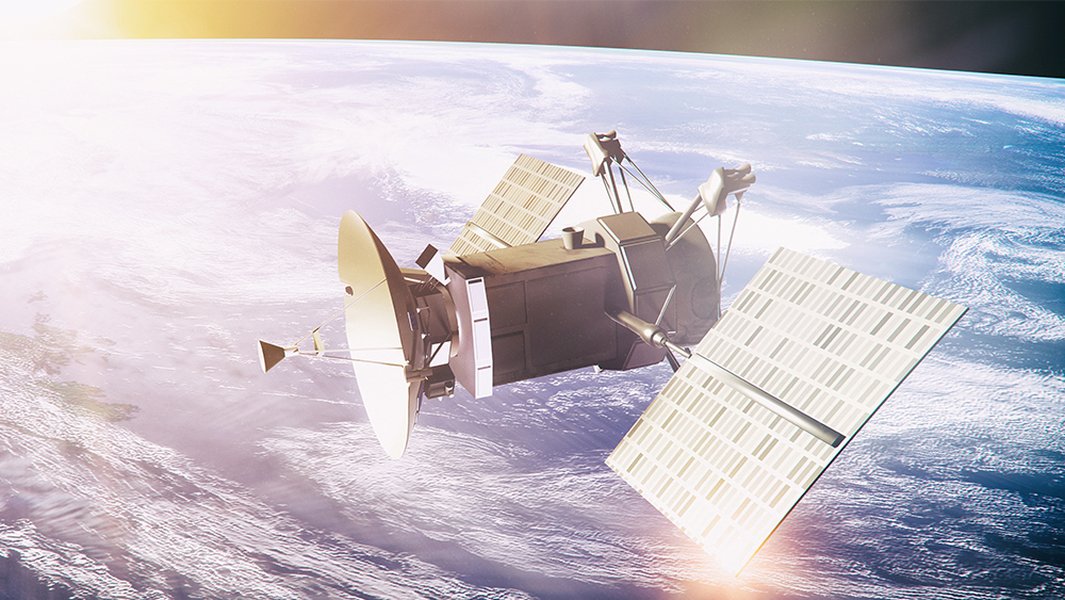
Inspired by the ancient Japanese art of paper folding, origami engineering is being applied to develop satellite components, including large solar arrays and antennas. These structures can be launched in a highly compact, flat-packed state and then autonomously unfold or "self-assemble" into their complex, functional 3D shapes once in orbit.
An origami-inspired parabolic antenna designed to fold flat for launch and deploy in space. (Image: Texas A&M Engineering)
Addressing Key Space Solar Panel Challenges
Impact on Launching Costs
The primary advantage of origami-inspired designs is the dramatic reduction in stowage volume. By folding large structures like solar arrays into small packages, more equipment can fit into a rocket's payload fairing, or smaller, less expensive launch vehicles can be used. This directly translates to lower launch costs.
Enhancing Energy Efficiency
Once deployed, these origami structures can form very large solar arrays, maximizing the surface area available for solar energy collection. This allows for higher power generation capabilities without the launch volume penalty typically associated with large, rigid structures.
Optimizing Material Use
Origami engineering often focuses on clever folding patterns and the use of lightweight, resilient materials (like shape-memory polymers or specialized resins) to achieve deployment. This can lead to structures that are materially efficient, requiring less structural mass compared to traditional deployable booms and trusses, while still providing the necessary support and surface area. The reduction in complex mechanical parts for deployment can also reduce weight and potential failure points.
Revolutionizing Repairment (Indirectly)
While not a direct repair mechanism, the modularity and potentially simpler deployment mechanisms of some origami designs could, in theory, make them easier to manage or replace segments if advanced robotic servicing becomes available. However, the primary benefit remains in deployment and initial material efficiency.
AI Repair Robots: Autonomous Maintenance in the Void
Artificial Intelligence (AI) coupled with advanced robotics offers a pathway to autonomous inspection, diagnosis, and repair of space assets, including solar panels. These AI repair robots could range from small, specialized units to more versatile robotic arms capable of complex tasks.
Addressing Key Space Solar Panel Challenges
Impact on Launching Costs
By extending the operational life of solar panels and satellites through in-orbit repair, AI robots can reduce the need for costly replacement missions. This long-term cost saving can be significant, offsetting the initial investment in developing and launching the robotic systems themselves.
Enhancing Energy Efficiency
Damaged or degraded solar panels operate at reduced efficiency. AI robots can identify and repair issues like micrometeoroid impacts, faulty connections, or delamination, restoring panels to their optimal performance and ensuring consistent energy generation.
Optimizing Material Use
Instead of replacing entire panels or satellites, AI robots could perform targeted repairs, potentially using materials carried on board or even utilizing in-situ resource utilization (ISRU) concepts in the future, such as 3D printing replacement parts. Some concepts explore robots working with self-healing materials embedded in the panels.
Revolutionizing Repairment
This is the primary domain of AI repair robots. They offer the potential to conduct intricate repairs in hazardous environments without risking human astronauts. Companies like GITAI are developing inchworm-style robots and other systems capable of performing tasks typically done by astronauts, crucial for maintaining long-duration missions and infrastructure in space.
AI Beam Systems: Intelligent Energy Distribution
AI Beam Systems, in the context of space solar power, generally refer to intelligent systems for managing and directing energy. This could involve the wireless transmission of power between satellites, from a power-generating satellite to a base, or optimizing the power flow within a satellite's own systems.
Addressing Key Space Solar Panel Challenges
Impact on Launching Costs
Efficient wireless power transmission could reduce the need for extensive, heavy wiring harnesses on large space structures or within satellite constellations, potentially lowering overall mass and thus launch costs.
Enhancing Energy Efficiency
AI algorithms can dynamically optimize power transmission, adjusting beam direction, focus, and frequency to maximize efficiency and minimize losses during wireless transfer. For onboard systems, AI can intelligently route power, ensuring that critical systems receive energy when needed, and reducing waste from over-provisioning or inefficient distribution.
Optimizing Material Use
By enabling more efficient power sharing and reducing reliance on bulky physical connections for power transfer across distances, AI beam systems contribute to a more streamlined and materially lean infrastructure, particularly for concepts like space-based solar power (SBSP) or distributed satellite systems.
Revolutionizing Repairment (Indirectly)
While not a repair system itself, AI-controlled power beaming could potentially reroute power around damaged sections of an array or a system if other parts remain functional, providing a degree of resilience until repairs can be effected.
Plasma Force Fields: Futuristic Shields for Solar Arrays
The concept of a plasma force field involves using electromagnetic fields to contain or manipulate plasma (ionized gas) to create a protective barrier around a spacecraft or its components, like solar panels. While still largely in experimental and theoretical stages for robust, large-scale application, the principle is to deflect harmful elements.
Addressing Key Space Solar Panel Challenges
Impact on Launching Costs
If effective, a lightweight plasma shield could replace or augment heavier physical shielding against debris and radiation, potentially reducing the overall mass of the satellite and its protective systems, thereby lowering launch costs.
Enhancing Energy Efficiency (Indirectly)
By preventing degradation from radiation and physical impacts, plasma shields could help solar panels maintain their initial energy conversion efficiency for longer periods, leading to better long-term energy output over the mission's lifetime.
Optimizing Material Use
The primary material benefit would be the reduction in physical armor or redundant systems needed for protection. The "material" of the shield itself is plasma, generated and controlled, rather than a large mass of conventional shielding material.
Revolutionizing Repairment
The most significant impact of a functional plasma force field would be in damage prevention. By deflecting micrometeoroids, space debris, and harmful charged particles, it would drastically reduce the incidence of damage to solar panels, thereby minimizing the need for repairs and extending their operational lifespan significantly.
Visualizing the Solutions: An Interconnected Approach
The following mindmap illustrates how these innovative technologies connect to address the multifaceted challenges faced by space solar panels. Each solution offers unique benefits that can also complement others, paving the way for more robust and sustainable space power systems.
Space Solar Panels"] id1["Key Challenges"] id1a["Launching Cost"] id1b["Energy Efficiency"] id1c["Material Use"] id1d["Repairment"] id2["Quantum Dot Solar Panels"] id2a["Boosts Efficiency (MEG, Tunable Bandgap)"] id2b["Lightweight & Flexible (Reduces Launch Cost)"] id2c["Less Material, Radiation Resistant"] id3["Self-Assembling Origami Satellites"] id3a["Compact Launch (Reduces Cost)"] id3b["Efficient Material Use (Fewer Parts)"] id3c["Large Deployable Arrays (Boosts Collection)"] id4["AI Repair Robots"] id4a["Autonomous In-Space Repair (Solves Repairment)"] id4b["Extends Mission Lifespan (Reduces Replacement Costs)"] id4c["Maintains Efficiency by Fixing Damage"] id5["AI Beam Systems"] id5a["Wireless Power Transfer (Reduces Wiring Mass)"] id5b["Optimized Energy Distribution (Boosts System Efficiency)"] id6["Plasma Force Fields"] id6a["Protection (Debris, Radiation)"] id6b["Enhanced Durability (Reduces Repair Needs)"] id6c["Maintains Panel Efficiency by Preventing Degradation"]
This visualization underscores the synergistic potential. For example, lightweight Quantum Dot panels deployed via an Origami structure could have their lifespan significantly extended by an AI Repair Robot, all while being protected by a Plasma Force Field and having their energy output managed by an AI Beam System.
Comparative Impact Analysis of Emerging Solutions
To better understand the relative strengths of these technologies in addressing the core challenges, the radar chart below provides a visual comparison. The scores (ranging from 3 to 10, where 10 is highest impact) are qualitative assessments based on the current understanding and potential of each technology. An axis minimum of 2 is used for clarity, meaning scores start effectively from 3.
This chart highlights, for instance, the significant role of Origami Satellites in reducing launch costs and Quantum Dot Panels in boosting energy efficiency, while AI Repair Robots are unparalleled in enhancing repairability.
Quantum Leap in Solar Technology: A Video Insight
The development of Quantum Dot solar cells is one of the most exciting frontiers in solar energy research. The following video explores how these tiny particles could fundamentally change solar panel technology, touching upon their efficiency and potential applications, which are highly relevant for demanding environments like space.
This video, "How Quantum Dots Solar Panels Could Change Everything," provides a deeper dive into the science and transformative potential of QDSCs. It explains the underlying principles that allow quantum dots to achieve higher efficiencies and their manufacturing advantages, which align with the goals of reducing material use and increasing power output for space solar panels.
Solution Impact Summary Table
The table below provides a concise summary of how each discussed technology primarily addresses the key challenges associated with space solar panels.
| Technology | Primary Impact on Launching Cost | Primary Impact on Energy Efficiency | Primary Impact on Material Use | Primary Impact on Repairment |
|---|---|---|---|---|
| Quantum Dot Solar Panels | Reduced mass due to lightweight & flexible nature | Higher conversion rates (tunable bandgap, MEG) | Less material needed (thin-film); radiation resistant | Indirectly via enhanced durability |
| Self-Assembling Origami Satellites | Drastically reduced launch volume (compact stowage) | Enables larger deployed arrays for more power collection | Optimized structural mass; fewer complex mechanisms | Potential for modular designs (indirect benefit) |
| AI Repair Robots | Reduced need for costly replacement missions | Maintains optimal performance by fixing damages | Enables targeted repairs, potential for in-situ material use | Autonomous diagnostics and in-orbit repairs |
| AI Beam Systems | Potential reduction in wiring mass for power distribution | Optimized wireless energy transfer; intelligent power routing | Reduced need for extensive physical power cabling | Resilience through power rerouting (indirect) |
| Plasma Force Fields | Potential reduction in mass of physical shielding | Maintains efficiency by preventing degradation | Reduces need for heavy armor materials | Prevents damage, thus minimizing repair needs |
Frequently Asked Questions
Which technology promises the most significant leap in raw solar energy conversion efficiency?
Quantum Dot Solar Panels show the most promise for a fundamental increase in energy conversion efficiency. Their tunable bandgaps and potential for phenomena like Multiple Exciton Generation (MEG) could allow them to capture and convert a much larger portion of the solar spectrum compared to traditional silicon cells, with theoretical efficiencies reaching up to 66%.
How do Self-Assembling Origami Satellites primarily help in reducing mission costs?
Their primary contribution to cost reduction is by dramatically decreasing the stowage volume of large components like solar arrays or antennas. By folding these structures into very compact forms for launch, they take up less space in a rocket's payload fairing. This allows for either more payloads on a single launch or the use of smaller, less expensive launch vehicles, both of which significantly cut down launching costs.
Are AI Repair Robots and Plasma Force Fields currently operational in space?
As of May 2025, AI Repair Robots are in advanced stages of development and demonstration (e.g., GITAI's robotic systems), with some technologies tested on the ISS, but they are not yet widely operational for routine, autonomous solar panel repair across various missions. Plasma Force Fields are at an earlier, more experimental and theoretical stage of research for large-scale spacecraft protection. While the underlying plasma physics is well-understood, creating stable, efficient, and large-scale protective plasma shields for spacecraft remains a significant engineering challenge.
Can these different technologies be used together?
Yes, absolutely. In fact, their true potential often lies in synergistic combinations. For instance, highly efficient and lightweight Quantum Dot solar panels could be integrated into an Origami-inspired deployable structure. This entire assembly could then be maintained by AI Repair Robots and protected by a Plasma Force Field, with an AI Beam System managing power distribution. Such integrated systems would offer compounded benefits, addressing multiple challenges simultaneously.
Recommended Further Exploration
- What are the latest breakthroughs in quantum dot solar cell efficiency and their durability for space environments?
- What is the current state of development for origami-inspired deployable mechanisms for large space structures beyond antennas?
- Which research projects are leading the way in autonomous robotic servicing and assembly in orbit?
- What are the most recent feasibility studies and experimental progress on using plasma shielding for spacecraft protection against debris and radiation?
References
Last updated May 10, 2025