
Understanding Transformer Operation
Exploring the principles and mechanisms of electromagnetic energy transfer
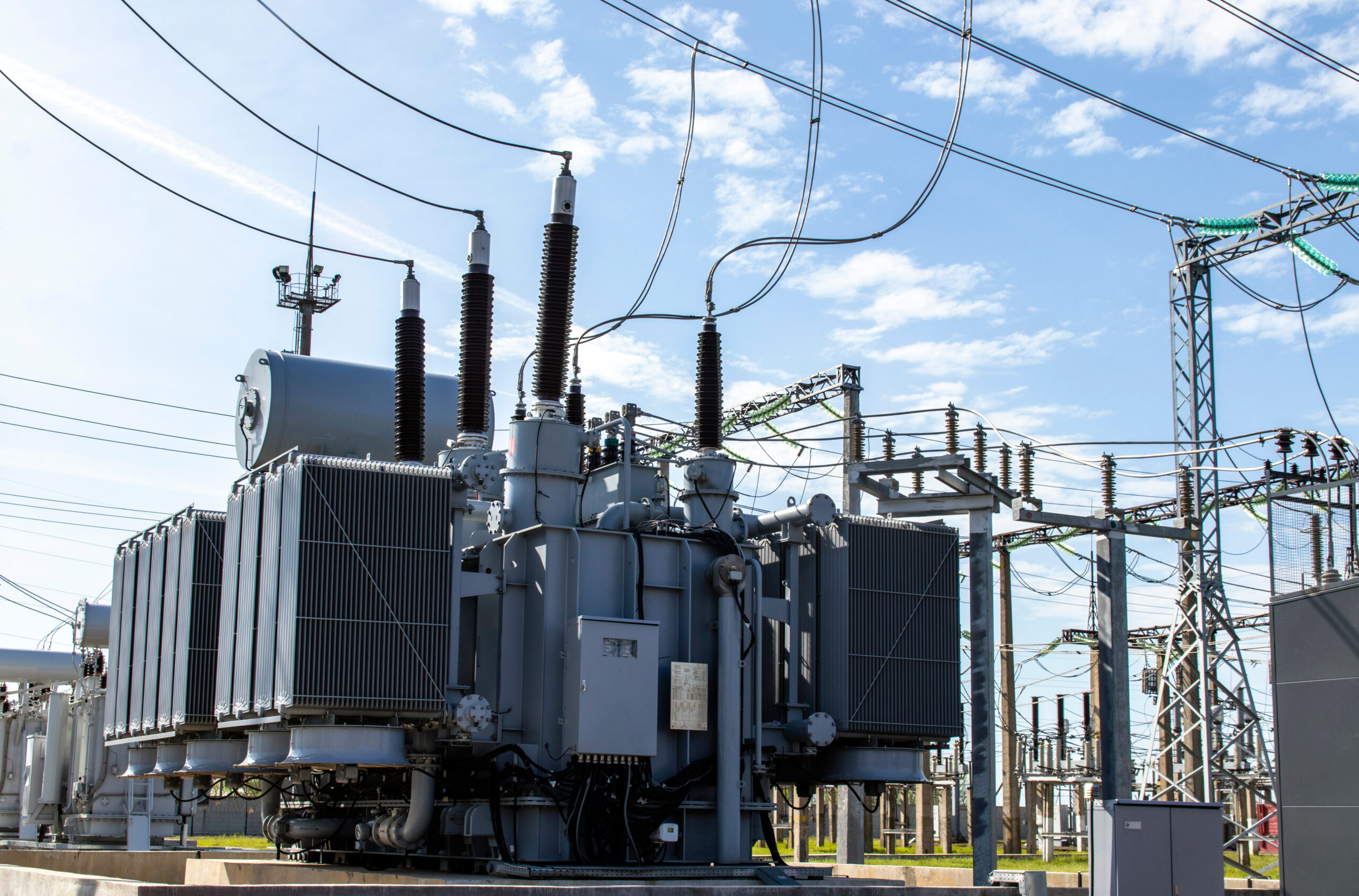
Key Insights
- Electromagnetic Induction: The fundamental process by which a varying magnetic field induces voltage.
- Primary & Secondary Windings: The configuration that determines the voltage transformation ratio.
- Efficient Power Distribution: The role transformers play in stepping up or stepping down voltages to safely and efficiently distribute electricity.
Introduction to Transformers
A transformer is a critical electrical device that transfers energy between two or more circuits using the principle of electromagnetic induction. It finds widespread application in the distribution of electrical energy as it is essential for adjusting voltage levels to meet the specific requirements of various electrical systems and devices. Essentially, a transformer allows for the regulation of voltage by stepping it up or stepping it down, thereby ensuring optimal performance and minimum energy loss during power transmission.
The operation of a transformer is intricately linked to the nature of alternating current (AC). Unlike direct current (DC), AC produces a continuously changing magnetic field that is necessary for inducing voltage in a conductor. This property of AC is foundational to understanding how transformers function.
Fundamental Principles of Transformer Operation
Electromagnetic Induction
The core operating mechanism of a transformer is electromagnetic induction. When an alternating current is applied to the primary winding of a transformer, it creates a time-varying magnetic field. According to Faraday's Law of Electromagnetic Induction, this changing magnetic field induces an electromotive force (EMF) in a nearby conductor – in this case, the secondary winding.
Faraday's Law can be mathematically represented as:
\( \text{\( EMF = -N \frac{d\Phi}{dt} \)} \)
Here, \( \text{\( EMF \)} \) is the induced electromotive force, \( \text{\( N \)} \) represents the number of turns in the coil, and \( \text{\( \frac{d\Phi}{dt} \)} \) denotes the rate of change of magnetic flux. This equation highlights the direct relationship between the change in magnetic flux and the induced voltage.
Primary and Secondary Windings
A transformer consists of two key windings: the primary winding and the secondary winding. These windings are coils of electrically conductive wire that are typically wound around a magnetic core. The primary winding is connected to an AC power source, and it is through this winding that an alternating current produces a pulsating magnetic field. This magnetic field travels through a core made of ferromagnetic materials, such as laminated silicon steel, which is designed to guide and intensify magnetic lines of force.
The secondary winding, which is positioned close to the primary, experiences this changing magnetic field. Consequently, a voltage is induced in the secondary winding. The magnitude of this voltage is contingent upon the ratio of the number of turns in the primary versus the secondary winding.
For example, if the secondary winding has more turns than the primary winding, the transformer operates as a “step-up” transformer, increasing the output voltage relative to the input voltage. Conversely, if the primary winding has more turns than the secondary, the device functions as a “step-down” transformer, reducing the voltage accordingly.
Magnetic Core Importance
The magnetic core of a transformer plays a dual role. First, it acts as a conduit that efficiently guides the magnetic field generated by the primary winding to the secondary winding. Second, the core is engineered to minimize energy loss due to eddy currents and hysteresis. Eddy currents are loops of electrical current induced within the core, which can lead to energy dissipation in the form of heat. Laminated cores with insulation between the layers are used to reduce these losses significantly.
Detailed Operational Mechanisms
Step-Up and Step-Down Transformer Mechanisms
Transformers are designed to modify the incoming voltage level through the ratio of turns in their windings:
Step-Up Transformers
In a step-up transformer, the secondary coil is designed with more windings than the primary coil. This increased number of turns causes the induced voltage in the secondary circuit to be higher than that applied to the primary winding. Step-up transformers are typically used in power transmission over long distances to compensate for losses by elevating the voltage before sending it through high-voltage transmission lines.
Step-Down Transformers
On the other hand, a step-down transformer involves a secondary coil with fewer turns than the primary coil. The consequence is a reduction in voltage, which is particularly important for household and industrial use where high-voltage electricity needs to be reduced to safer, more manageable levels. This conversion makes the electricity suitable for domestic appliances and other low-voltage requirements.
Role of Alternating Current (AC)
The effectiveness of a transformer is inherently tied to the characteristics of alternating current (AC). With AC, the current periodically reverses direction, which creates a continually fluctuating magnetic field. This sustained change in the magnetic field is essential because it stimulates the continuous induction of voltage in the secondary coil through the phenomenon of mutual induction.
Direct current (DC), by contrast, flows in a single direction and does not vary with time. Thus, it fails to produce a dynamic magnetic field necessary for the induction process. This is why transformers only function with alternating current.
Efficiency and Technologies to Minimize Losses
Modern transformers are highly efficient devices, often achieving efficiency rates exceeding 95%. Nevertheless, some losses are inevitable due to non-ideal conditions like magnetic leakage, eddy current phenomenon, and hysteresis losses in the core material. Engineers continuously strive to optimize transformer design by:
- Utilizing laminated core materials to restrict the flow of eddy currents.
- Employing high-grade silicon steel to further reduce hysteresis losses.
- Implementing specialized winding techniques and insulation materials to enhance overall energy transfer.
These measures ensure that the transformer performs at optimal levels with minimal heat generation and energy wastage, thus making the entire electrical grid more efficient.
Applications of Transformers
Power Distribution Networks
One of the primary applications of transformers is in power distribution and grid networks. During long-distance electricity transmission, voltages are stepped up using transformers to minimize energy losses caused by resistance in the transmission lines. High voltages permit lower currents for the same power level, resulting in diminished resistive heating.
Once the high-voltage electricity reaches its destination near residential or commercial areas, step-down transformers reduce it to safe and usable levels, ensuring that homes and businesses receive power at the correct voltage to operate various appliances and machinery with safety and efficiency.
Industrial and Commercial Usage
Beyond the national grid, transformers are widely used in industrial environments where large machines and complex systems require customized voltage levels. For instance, three-phase transformers are integral in heavy industrial applications, converting and regulating voltages to sustain high-power machinery. Similarly, smaller transformers are incorporated into electronic devices, medical equipment, and even battery chargers to ensure that voltage is suitably regulated.
Modern Electronic Devices
In modern consumer electronics, transformers are employed in power supplies to ensure that devices receive the correct voltage and current. These transformers adapt the higher voltage from wall outlets to the lower levels required by delicate components inside gadgets such as laptops, smartphones, and televisions, contributing significantly to the overall safety and efficiency of these devices.
Technical and Design Considerations
Physical Construction
The performance of a transformer is not solely determined by its electrical characteristics but also by its physical design. A typical transformer is built around a robust magnetic core made of layers of ferromagnetic materials. This construction is aimed at:
- Enhancing the magnetic coupling between the primary and secondary windings.
- Reducing energy losses associated with dielectric heating and eddy currents.
- Maintaining structural integrity under varied electrical loads and environmental conditions.
Voltage Transformation Ratio
The voltage transformation in a transformer is governed by the ratio of turns between the primary and secondary coils. This can be expressed through the following relationship:
\( \text{\( \frac{V_s}{V_p} = \frac{N_s}{N_p} \)} \)
Here, \( \text{\( V_s \)} \) and \( \text{\( V_p \)} \) are the secondary and primary voltages, respectively, and \( \text{\( N_s \)} \) and \( \text{\( N_p \)} \) are the number of turns in the secondary and primary windings. This mathematical relationship is critical as it permits precise control over voltage levels based on design requirements.
Efficiency Optimization
Engineers strive to maximize transformer efficiency by addressing various factors such as core material choice, winding arrangements, and insulation technologies. Advanced design strategies include:
| Design Aspect | Objective | Implementation |
|---|---|---|
| Core Material | Minimize hysteresis and eddy current losses | Laminated silicon steel or amorphous metals |
| Winding Configuration | Enhance magnetic coupling | Tightly wound coils with optimized spacing |
| Insulation & Cooling | Reduce thermal losses | Advanced insulation materials and cooling systems |
These factors collectively contribute to achieving high operational efficiency, reducing energy and cost losses during power distribution.
Advanced Concepts in Transformer Operation
Mutual Induction and its Role
Mutual induction is a phenomenon where a change in current in one coil causes an induced voltage in another coil positioned within its magnetic influence. In transformers, this principle facilitates the transfer of electrical energy between the primary and secondary windings. The efficiency of this energy transfer directly depends on the quality of the coupling between these windings, which is primarily improved through the design of the magnetic core.
Material and Thermal Considerations
The longevity and efficiency of a transformer are also influenced by the materials used and the thermal management systems in place. High-quality ferromagnetic materials are chosen for the core to ensure minimal energy loss while supporting sustained magnetic flux cycles. Moreover, specialized cooling mechanisms, such as oil cooling or forced air cooling, are employed in larger transformers to dissipate heat effectively and maintain performance during peak loads.
The implementation of these techniques ensures that transformers continue to deliver high performance over extended periods, even under demanding operational conditions.
Real-World Impact and Continued Applications
Role in Power Grids
Transformers represent the backbone of power distribution networks. Their ability to efficiently manage voltage levels directly correlates with the reliability and efficiency of power delivery from generation stations to end-users. By stepping up voltage for transmission, subsequent energy losses due to the resistance of long transmission lines are minimized. Later, at the consumption site, transformers step down the voltage, making electricity safe for operational use in homes, offices, and industries.
Innovations and Modern Transformer Designs
In recent years, transformer designs have witnessed significant innovations. The advent of smart grid technologies has spurred developments in transformer monitoring and diagnostics. Modern transformers are now often equipped with sensors and digital controls that monitor temperature, vibration, and load imbalances in real time. These smart transformers facilitate predictive maintenance, enhance system reliability, and help detect potential issues before they escalate into serious failures.
Additionally, advancements in materials science continue to refine core and insulation materials, contributing to transformers that are not only more efficient but also environmentally friendly. Enhanced magnetic materials and improved cooling technologies contribute to lower operational losses and better overall performance, ensuring that transformers remain integral elements of tomorrow's power systems.
Summary of Transformer Operation
In summary, transformers are indispensable devices that facilitate the efficient transfer of energy through electromagnetic induction. Their operation is anchored on:
- Generating a changing magnetic field through the use of alternating current in the primary winding.
- Inducing an electromotive force in the secondary winding via this fluctuating magnetic field.
- Modifying voltage levels based on the turns ratio between the primary and secondary windings, enabling step-up or step-down functionalities.
With robust designs that mitigate energy losses and promote efficiency, transformers have a lasting impact on power transmission, electrical safety, and reliable access to energy in our modern society.
References
- How do electricity transformers work? - Explain that Stuff
- How Transformers Work - Circuit Basics
- What Is a Transformer and How Does It Work? - Vanco Electrical
- How Transformers Work - The Engineering Mindset
-
Transformer Basics and Transformer Principles - Electronics Tutorials
Recommended Related Queries
Last updated March 20, 2025