
Peeking Beyond the Veil: What Are Near-Death Experiences Really Like?
An exploration into the profound and often transformative journeys reported by those who have touched the edge of life.
Near-death experiences (NDEs) are profound subjective events reported by individuals who have been on the brink of death or have experienced clinical death and were subsequently revived. These experiences, often described as more real than waking reality, occur under extreme physiological conditions such as cardiac arrest, severe trauma, deep anesthesia, or shock. While each NDE is unique, a remarkable consistency in core elements has been observed across diverse cultures and individuals, prompting ongoing scientific and personal fascination.
Key Highlights of Near-Death Experiences
- Profound Peace and Detachment: Many experiencers report an overwhelming sense of peace, calm, and a feeling of being detached from their physical body, often observing events from an external vantage point.
- Journey Towards Light: A common narrative involves moving through a dark tunnel or void towards a brilliant, often loving light, sometimes accompanied by encounters with spiritual beings or deceased loved ones.
- Life-Altering Impact: NDEs frequently lead to significant and lasting transformations in an individual's beliefs, values, and approach to life, often including a diminished fear of death and a greater appreciation for life.
The Tapestry of an NDE: Common Features
While no two near-death experiences are identical, extensive research and countless anecdotal accounts have identified a constellation of common features that frequently appear. These elements paint a picture of a journey that transcends ordinary consciousness.
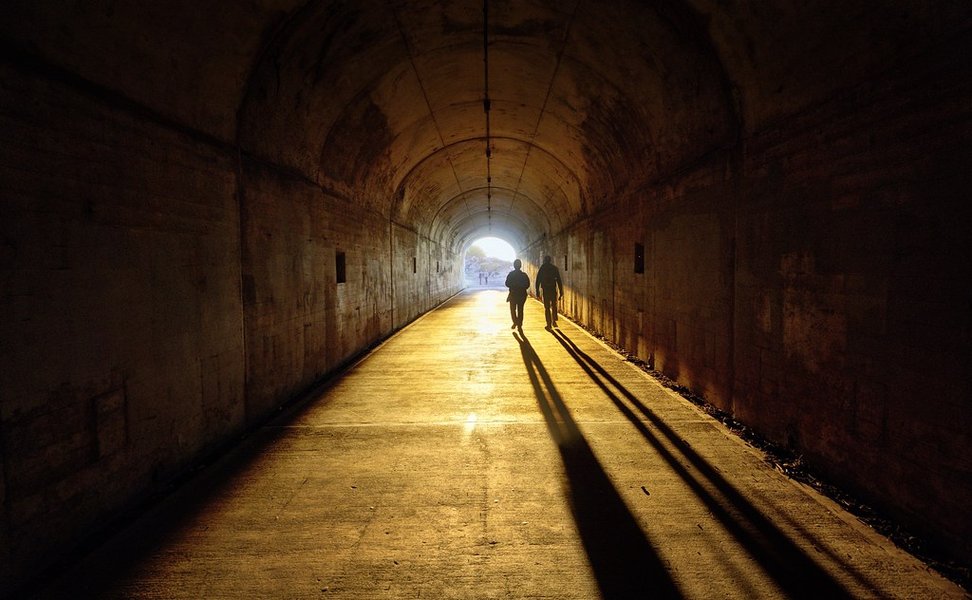
An artistic depiction of the commonly reported "tunnel of light" phenomenon in NDEs.
The Sensation of Detachment: Out-of-Body Experiences (OBEs)
Floating Free
One of the most frequently reported initial stages of an NDE is the out-of-body experience. Individuals often describe a sensation of floating or drifting upwards, finding themselves observing their own physical body and the surrounding environment from an external perspective, typically from above. They might see medical personnel attempting resuscitation, hear conversations, or notice details in the room that they would not have been able to perceive from their body's position. Remarkably, some of these perceptions have later been corroborated as accurate, adding a layer of intrigue to these experiences.
A Passage to Elsewhere: The Tunnel and The Light
Journey Through Darkness to Radiance
Many NDE accounts feature the experience of moving rapidly through a dark space, often described as a tunnel, a void, or a passageway. At the end of this tunnel, or sometimes pervading the entire experience, is an encounter with a brilliant light. This light is almost universally described as being intensely luminous, yet not painful to the eyes. It's often imbued with an overwhelming sense of warmth, goodness, unconditional love, and profound understanding. The interpretation of this light can vary based on cultural or religious background, with some identifying it with a divine presence, while others perceive it as a source of pure consciousness or knowledge.
Encounters and Reunions
Meeting Beings of Light and Loved Ones
Within the NDE, particularly in the presence of the light, individuals often report encountering other beings. These can be perceived as spiritual figures, angels, guides, or, very commonly, deceased relatives and friends who appear healthy and radiant. These encounters are typically characterized by profound emotional connection, telepathic communication, and a sense of being welcomed or guided. The beings often convey messages of love, reassurance, or that it is "not yet time" for the individual to stay.
A Panoramic Look at Life: The Life Review
Reliving Moments with New Perspective
A significant feature for some NDErs is the "life review." This involves a rapid, vivid, and panoramic replay of significant moments from their life. It's often not just a simple recollection but an immersive experience where they re-feel the emotions associated with those events, not only from their own perspective but also from the perspective of those affected by their actions. This review is typically described as non-judgmental, aimed at learning and understanding the impact of one's life choices, particularly in terms of love and kindness.
Emotional Landscape and Cognitive Clarity
Peace, Joy, and Heightened Awareness
Overwhelming positive emotions are a hallmark of many NDEs. Feelings of profound peace, serenity, joy, and unconditional love are frequently reported, often standing in stark contrast to the physical trauma or distress the individual was experiencing. Many also report a heightened sense of mental clarity, with thoughts occurring more rapidly and lucidly than in normal waking consciousness. Time and space may feel distorted or irrelevant.
The Point of No Return and the Return to Life
A Boundary and a Choice
Often, the NDE culminates in reaching a perceived boundary, barrier, or "point of no return." Crossing this boundary is understood to mean permanent death. At this juncture, individuals may feel a strong desire to stay in the peaceful realm they've entered, but are often told they must return, or they make a conscious decision to return, perhaps due to unfinished responsibilities or a feeling that their life's purpose is not yet complete. The return to the physical body can sometimes be abrupt and disorienting.
Variability in Near-Death Experiences
While the aforementioned features are common, it's crucial to recognize that NDEs are highly personal and can vary significantly. Not every individual experiences all these elements, nor in the same sequence.
Pleasant vs. Distressing Experiences
The majority of reported NDEs are described as positive, peaceful, and love-filled. However, a smaller percentage of individuals report distressing NDEs. These can involve feelings of intense fear, terror, isolation, emptiness (a "void" experience), or encounters with unsettling imagery or beings, sometimes described as hellish. These distressing experiences, though less common, can be profoundly challenging for those who undergo them and often require significant emotional processing afterward.
Cultural and Individual Interpretations
The content and interpretation of NDEs can be influenced by an individual's cultural, religious, and personal background. For instance, the spiritual beings encountered might be identified as angels by someone from a Christian background, as messengers of Yama (the god of death) by a Hindu, or simply as beings of light by someone with no specific religious affiliation. Despite these interpretive differences, the core underlying phenomena—such as the sense of peace, the light, and the encounters—show remarkable consistency across cultures.
Research indicates that NDEs occur in approximately 10% to 20% of individuals who survive cardiac arrest. They are not limited to any specific age, gender, or socioeconomic group and have been reported by children as well, whose accounts often lack the cultural conditioning seen in adult narratives.
Visualizing NDE Commonalities
To better understand the prevalence of different features within typical near-death experiences, the following chart provides an illustrative representation. It reflects generalized patterns observed in NDE research, highlighting how frequently certain elements are reported. The scores are on a scale representing prevalence or intensity, not absolute data, as experiences are subjective.
This chart illustrates that while features like overwhelming peace and encountering a brilliant light are highly prevalent in positive NDEs, other elements like a full life review might be less universal. Distressing NDEs show a different pattern, often lacking profound peace and featuring more fear or emptiness.
Unpacking the Elements: A Summary Table
The core components of near-death experiences can be summarized for clarity. The following table outlines common NDE characteristics and their typical descriptions, based on numerous accounts and research findings.
| Feature | Typical Description |
|---|---|
| Feeling of Peace/Well-being | An overwhelming sense of calm, serenity, joy, and absence of pain or fear, despite physical crisis. |
| Out-of-Body Experience (OBE) | Sensation of detaching from the physical body and observing oneself and surroundings from an external perspective. Some report verifiable perceptions during this state. |
| Tunnel Experience | Perception of moving through a dark tunnel, void, or passage, often rapidly. |
| Encounter with Light | Seeing a brilliant, often warm and inviting light, sometimes interpreted as a spiritual presence or gateway. This light is typically associated with feelings of unconditional love. |
| Encounters with Other Beings | Meeting deceased loved ones, spiritual figures (e.g., angels, guides), or unidentified entities radiating warmth and goodness. Communication is often telepathic. |
| Life Review | A panoramic review of significant life events, often experienced with emotional intensity and an understanding of the impact of one's actions on others. |
| Increased Mind Clarity | Thinking rapidly and with exceptional clarity, heightened senses, and a perception that time is altered or non-existent. |
| Boundary or Point of No Return | Reaching a perceived limit or barrier, beyond which return to life is not possible. Often involves a decision or being told to return. |
| Reluctance to Return | A strong desire to remain in the peaceful and loving environment of the NDE, but ultimately returning to the physical body. |
| Distressing Elements (Less Common) | Experiences involving fear, torment, a sense of emptiness or void, or hellish imagery. |
This table provides a structured overview, but it's important to remember the individual and subjective nature of each NDE.
Mindmap of Near-Death Experience Elements
To further illustrate the interconnected aspects of NDEs, the mindmap below provides a visual summary of their primary components, causes, and profound after-effects. It shows how various elements branch out from the central phenomenon of the Near-Death Experience.
This mindmap helps visualize how the different facets of NDEs connect, from the triggers and core experiences to their lasting impact on individuals.
Scientific and Medical Perspectives
The study of NDEs sits at a fascinating intersection of medicine, neuroscience, psychology, and even philosophy. Researchers are actively exploring the physiological and neurological correlates of these experiences.
The Brain Under Duress
NDEs typically occur when the brain is under extreme physiological stress, such as during cardiac arrest when blood flow to the brain ceases, or under deep anesthesia. Some theories propose that NDE phenomena could be related to specific neurochemical releases (e.g., endorphins, DMT) or unusual patterns of brain activity as the brain shuts down or reactivates. For instance, some studies have detected surges in brain electrical activity in the moments surrounding death, which could potentially correlate with the vivid perceptions reported in NDEs, possibly related to dreaming or memory recall mechanisms.
However, several aspects of NDEs challenge purely physiological explanations. The reported clarity of thought and structured recall of events at a time when brain function is severely compromised is one such puzzle. Furthermore, accounts of veridical out-of-body perceptions—where individuals accurately report details they could not have known through ordinary sensory channels—are difficult to explain solely through brain-based models. The fact that NDEs in young children often lack complex cultural or religious symbolism, unlike adult NDEs which can be shaped by learned concepts, also suggests an underlying core experience independent of expectation.
Learnings from Extensive NDE Research
Dr. Bruce Greyson is a prominent researcher who has dedicated decades to studying near-death experiences. His work, along with others in the field, has significantly contributed to our understanding of these phenomena. The following video features Dr. Greyson discussing insights gleaned from over a thousand NDE cases, highlighting common patterns, variations, and the profound after-effects these experiences have on individuals' lives.
In this discussion, Dr. Greyson elaborates on the consistency of NDE reports across different cultures and time periods, the challenges in studying such subjective experiences scientifically, and the transformative impact NDEs often have, leading to reduced fear of death, increased altruism, and a greater sense of interconnectedness. His research underscores that NDEs are not mere hallucinations but complex, structured experiences that warrant serious investigation.
The Enduring Impact: Transformative After-Effects
Perhaps one of the most compelling aspects of NDEs is their profound and often permanent impact on the individual's life. These are not fleeting memories but deeply ingrained experiences that reshape perspectives, values, and life paths.
Changes in Worldview and Values
- Reduced Fear of Death: A very common outcome is a significant decrease, or even elimination, of the fear of death.
- Increased Spirituality: Many report a heightened sense of spirituality or connection to a divine or universal consciousness, often independent of organized religion.
- Shift in Priorities: Material possessions and worldly achievements often become less important, while relationships, love, kindness, and learning become more central.
- Greater Appreciation for Life: There is often an enhanced appreciation for everyday life and nature.
- Increased Empathy and Compassion: Many NDErs feel a stronger sense of connection to others and a greater desire to help.
- Sense of Purpose: The experience can instill a renewed sense of purpose or mission in life.
These transformations can sometimes lead to challenges as individuals reintegrate into their former lives and relationships, as their new perspectives may not be readily understood by others. However, the overall long-term effects are typically reported as overwhelmingly positive and life-enriching.
Frequently Asked Questions about Near-Death Experiences
Are NDEs the same as hallucinations or dreams?
While some physiological theories propose NDEs could be related to brain states similar to dreaming or hallucination (e.g., due to oxygen deprivation or drug effects), NDErs often report their experiences as being hyper-real, more lucid, and more coherently structured than dreams or hallucinations. The profound and consistent after-effects, as well as occasional veridical perceptions during OBEs, also differentiate them from typical hallucinations or dreams for many researchers.
Do all people who nearly die have an NDE?
No, not everyone who has a close brush with death reports an NDE. Studies suggest that NDEs are reported by approximately 10-20% of individuals who survive cardiac arrest. The reasons why some people have NDEs and others do not, even under similar physiological conditions, are not yet fully understood.
Can NDEs be negative or frightening?
Yes, while the majority of reported NDEs are positive and characterized by feelings of peace and love, a minority of individuals report distressing NDEs. These can involve experiences of fear, torment, emptiness, or encounters with menacing figures. These experiences can be deeply disturbing and often require support for the individual to process.
Is belief in an afterlife necessary to have an NDE?
No, NDEs are reported by individuals from all walks of life, including those with strong religious beliefs, agnostics, and atheists. Prior beliefs do not seem to predict whether someone will have an NDE, although they can influence how the experience is interpreted. Interestingly, many people report a shift in their spiritual beliefs *after* having an NDE.
How do scientists study NDEs?
Studying NDEs presents unique challenges due to their subjective and spontaneous nature. Research methods include retrospective collection of accounts from NDErs, prospective studies in hospital settings (e.g., interviewing cardiac arrest survivors), psychological assessments (like the Greyson NDE Scale), and neurophysiological monitoring where possible (e.g., EEG during cardiac arrest). Researchers look for patterns, common elements, physiological correlates, and long-term after-effects. Cross-cultural studies also help to distinguish universal features from culturally influenced interpretations.
Recommended Further Exploration
If you are intrigued by near-death experiences, you might find these related queries useful for delving deeper:
- What are the scientific explanations for out-of-body experiences during NDEs?
- How do near-death experiences in children differ from those in adults?
- What is the long-term psychological impact of distressing near-death experiences?
- Are there cross-cultural similarities in the interpretation of the 'light' seen in NDEs?
References
Last updated May 14, 2025