
Exploring Urban Observation in Poe's "The Man of the Crowd"
A detailed analysis of flâneur, palimpsest, and heterotopia
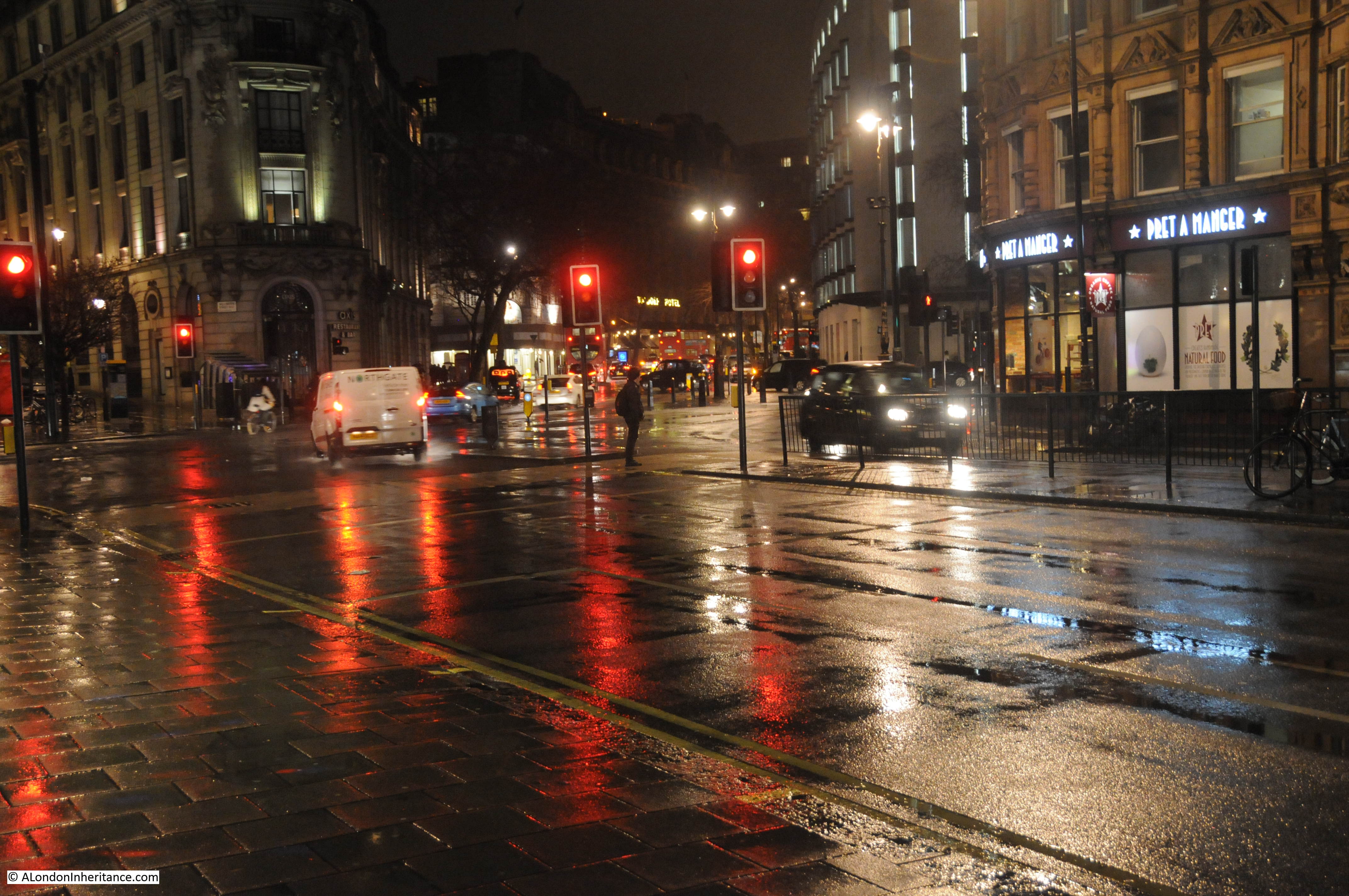
Key Insights
- The flâneur concept inspires a critical examination of the narrator’s role as both detached observer and obsessive participant.
- Palimpsest as a metaphor illustrates how layered histories and personal biases overlay the urban experience in the narrative.
- Heterotopia and urban spaces reveal the alternative social realities of London, where multiple worlds coexist yet remain estranged.
Introduction
Edgar Allan Poe’s “The Man of the Crowd” is a multifaceted narrative that delves into the depths of urban existence, identity, and alienation. Through its narrative structure and thematic undercurrents, the story invites readers to explore the ideas of flâneur, palimpsest, and heterotopia. This analysis unpacks how these concepts interrelate to depict an urban landscape that is simultaneously layered, anonymous, and profoundly complex.
The Flâneur in "The Man of the Crowd"
Understanding the Observer
The term flâneur historically refers to an urban wanderer, a detached observer who ambles through the city streets to absorb its details and textures. Popularized by Charles Baudelaire, the flâneur is an emblem of modern urban life—a figure who finds beauty in everyday anonymity, yet remains aloof from intimate engagement. In “The Man of the Crowd,” the narrator adopts this role, positioning himself within the bustling confines of a London coffee shop. Initially, his observations are clinical and reflective, offering a panoramic view into the multiplicity of urban life.
Transformation from Detached Observer to Obsessive Seeker
What distinguishes Poe’s narrator is his transition from a passive observer to an individual gripped by an obsessive fixation. While the traditional flâneur enjoys the simplicity of urban observation, the narrator’s quest to decipher the identity and essence of a mysterious old man introduces an element of personal involvement and existential pursuit. This fixation disrupts the safe distance typically maintained by a flâneur, as the narrator becomes an active participant in his own narrative of urban exploration. His journey through the city's labyrinth becomes a metaphor for the search for meaning within the faceless crowd.
Palimpsest: Layers of Meaning and History
The Urban Canvas as a Palimpsest
The concept of a palimpsest refers to a manuscript or document that has been subject to multiple layers of writing over time. Historically, this idea encapsulates the notion that surfaces, whether physical or metaphorical, retain traces of previous inscriptions, even as new meanings emerge. In Poe’s narrative, the city itself acts as a palimpsest, where each facet of urban life builds upon the remnants of past experiences, societal shifts, and cultural narratives.
Eyewitness to Historical Layers
The streets of London, as depicted in “The Man of the Crowd,” are imbued with the residue of countless lives, wars, innovations, and transformations. The narrator’s relentless observation is not merely an examination of people passing by; it is an encounter with history. Every face and gesture evokes stories that have been written, erased, and rewritten over time. In this way, the narrative suggests that individuals, much like the city itself, are marked by layers of memory and history. The enigmatic old man, in particular, is portrayed as a living palimpsest—his face and visible demeanor hint at hidden pasts, leaving the narrator, and the reader, to ponder narratives that extend beyond the immediate.
The Interplay of Past and Present
As the story unfolds, it becomes apparent that every observation is influenced by the observer’s preconceived notions and the historical and cultural stratifications of the urban environment. Every detail—from the glint in an eye to the shadows cast by street lights—serves as a palimpsestic artifact. The urban setting thus becomes a canvas upon which layers of history, human emotion, and urban mythologies coalesce, inviting a sustained inquiry into the nature of identity and existence.
Heterotopia: Spaces of Otherness
Exploring Alternative Social Realities
The notion of heterotopia, as developed by philosopher Michel Foucault, describes physical spaces that are simultaneously real and symbolic, acting as "worlds within worlds." In stark contrast to utopias, heterotopias are spaces of difference; they encapsulate norms, contradictions, and the coexistence of divergent social practices. In “The Man of the Crowd,” the urban landscape emerges as a heterotopia—a complex, transverse space where social hierarchies converge and disintegrate.
Urban Landscapes as Sites of Paradox
London, with its crowded streets, dark alleys, and vibrant public spaces, serves as the perfect embodiment of a heterotopic space. Within its confines, disparate elements of society congregate—rich and poor, native and immigrant, order and chaos. The narrator’s journey is not just physical but also symbolic; as he traverses from one urban niche to another, he witnesses a mosaic of social realities that defy conventional order. The bustling public realms provide a stage for overlapping and often contradicting identities, emphasizing the transient nature of social groups.
The Enigma of the Man in the Crowd
Central to this exploration is the figure of the mysterious old man, who defies easy categorization. His very presence underscores the heterotopic characteristic of urban spaces—he exists on the margins, as both a part of and apart from the collective. The narrator’s fixation on this character serves as a meditation on invisibility and anonymity in public spaces. The old man becomes an embodiment of the city’s inherent duality: he is both a product of the historical layering (palimpsest) that defines urban life and a manifestation of its altered, heterotopic state.
A Comprehensive Comparison Table
| Concept | Description | Relevance in the Story |
|---|---|---|
| Flâneur | An urban wanderer whose observational presence reflects the complexities and nuances of city life. | The narrator’s relentless and evolving observations transition him from a detached onlooker to someone consumed by the mystery of the old man, highlighting the intimate dance between subjectivity and urban anonymity. |
| Palimpsest | A layered reworking of texts (or histories) where old traces coexist with new inscriptions. | The urban environment and the characters, particularly the old man, are depicted as vessels containing multi-layered histories, suggesting that each individual carries imprints of past experiences that shape their identity. |
| Heterotopia | Spaces simultaneously existing with alternative or multiple functions that challenge conventional social orders. | London serves as a heterotopic space where conflicting social realities intersect, making the narrative both a literal and figurative exploration of an urban space that defies singular definitions. |
Synthesizing the Themes
Interwoven Narratives of Observation and Identity
In “The Man of the Crowd,” Edgar Allan Poe crafts a narrative that uses the interplay of the flâneur, palimpsest, and heterotopia to probe the inner workings of modern urban life. The flâneur is not merely a figure of detached amusement but also one of melancholy and existential search. The narrator’s transformation from casual observer to intensely engaged seeker mirrors the psychological complexity of urban existence: cities are not just physical spaces but archives of human memory.
The concept of the palimpsest further enriches this narrative, as the city’s surface is seen as having been written over by numerous histories and experiences. Every face in the crowd, every fleeting interaction, and every shadow cast along the streets contributes to a layered narrative that defies simple interpretation. The palimpsestic nature of the narrative invites readers to consider how personal biases and historical legacies inform our perceptions of the world.
Meanwhile, the heterotopic character of the urban landscape underscores the paradoxes inherent in modern life. Rather than a monolithic or uniform environment, the city is portrayed as a matrix of conflicting spaces—places of public intimacy that also breed isolation. By following the elusive old man through the labyrinthine streets, the narrator is led deeper into a world where the boundaries of the self and society blur, emphasizing the ephemeral and transient nature of social identity.
The Narrative as a Microcosm of Urban Life
The convergence of these ideas produces a narrative that serves as a microcosm of urban existence. The character of the flâneur encapsulates the shifting roles an individual can adopt within the dense matrix of city life—oscillating between the observer, the participant, and the lost soul. At the same time, the layers embedded in every element of the story prompt a reevaluation of how history, memory, and perception continuously shape our understanding of identity. The resulting tension is one of both allure and dread, as the urban scene reveals its beauty while also concealing the darker, more inscrutable aspects of human existence.
References
- Flâneur - Wikipedia
- Flâneur - Three Flâneurs
- The Man of the Crowd - Summary & Analysis
- The Flâneur in Psychogeography
- Flâneur - The Art Story
Recommended Related Queries
 threeflaneurs.wordpress.com
 sbeldenblog.wordpress.com
 infinitelyfullofhope.wordpress.com
Last updated March 18, 2025