
Unlocking the Future of Construction: How Advanced Engineering and New Materials Are Redefining Structures
Explore the cutting-edge research shaping resilient, sustainable, and high-performance buildings and infrastructure.
The fields of advanced structural engineering and innovative materials are deeply intertwined, driving significant progress in how we design, build, and maintain our built environment. Research in this domain pushes the boundaries of conventional construction, seeking solutions that are not only stronger and more durable but also more sustainable and resilient to environmental challenges and extreme events. This exploration delves into the key research areas, groundbreaking materials, and advanced techniques highlighted in recent studies and academic publications.
Essential Insights
- Sustainability is Paramount: Research increasingly prioritizes eco-friendly materials (recycled content, bio-composites, low-carbon concrete) and life-cycle analysis to reduce the environmental footprint of construction.
- Material Innovation Drives Performance: Novel materials like fiber-reinforced polymers (FRPs), self-healing concrete, and advanced composites offer superior strength-to-weight ratios, enhanced durability, and unique functionalities.
- Technology Integration is Key: Advanced computational modeling, Artificial Intelligence (AI) for structural health monitoring (SHM), and additive manufacturing (3D printing) are transforming structural design, analysis, and construction processes.
Defining the Frontiers: Advanced Structural Engineering
Beyond Traditional Design
Advanced structural engineering transcends conventional methods by focusing on optimizing the performance, safety, and longevity of structures under complex conditions. It encompasses a wide range of activities, including:
- Performance-Based Engineering: Designing structures to meet specific performance objectives under various load scenarios, including extreme events like earthquakes, high winds, fires, and blasts.
- Life-Cycle Engineering: Considering the entire lifespan of a structure, from design and construction to maintenance, retrofitting, and eventual decommissioning, aiming for long-term sustainability and cost-effectiveness.
- Advanced Analytical & Computational Methods: Utilizing sophisticated tools like the Finite Element Method (FEM) and Boundary Element Method (BEM) for detailed structural analysis and simulation, enabling more accurate predictions of behavior.
- Structural Health Monitoring (SHM): Implementing sensor networks and data analysis techniques (including AI) to continuously monitor the condition of structures, detect damage early, and inform maintenance decisions.
- Resilience and Sustainability: Developing strategies to enhance structural resilience against natural and man-made hazards while minimizing environmental impact through material choice and design efficiency.

Advanced structural design focuses on resilience and incorporates innovative technologies.
The Material Revolution: Innovative Construction Materials
Building Blocks of the Future
Innovative materials are at the heart of advancements in structural engineering. These materials offer enhanced properties compared to traditional options like steel and concrete, opening up new possibilities for design and construction. Research papers extensively cover the development, characterization, and application of materials such as:
Fiber-Reinforced Polymers (FRPs) and Composites
FRPs (using carbon, glass, or aramid fibers in a polymer matrix) and other advanced composites provide high strength, low weight, corrosion resistance, and design flexibility. They are widely researched for reinforcing existing concrete or steel structures (retrofitting) and for constructing new lightweight, durable components like bridge decks and facade elements.
Self-Healing Materials
Self-healing concrete incorporates microcapsules containing healing agents (like bacteria or chemical compounds) or specific mineral admixtures. When cracks form, these capsules rupture or react, autonomously repairing the damage. This significantly enhances durability, reduces maintenance needs, and extends the service life of concrete structures.

Self-healing concrete is one example of materials revolutionizing construction durability.
Sustainable and Bio-Based Materials
Driven by environmental concerns, research focuses on materials with lower embodied energy and carbon footprints. This includes:
- Recycled Materials: Utilizing construction and demolition waste, recycled plastics, or industrial byproducts (like fly ash in geopolymer concrete) as aggregates or binders.
- Bio-Composites: Developing materials from natural resources like bamboo, hemp (hempcrete), mycelium (fungus-based materials), or engineered timber (cross-laminated timber - CLT). These offer carbon sequestration potential and reduced reliance on finite resources.
- Low-Carbon Concrete: Exploring alternative cementitious binders (e.g., geopolymers, calcium sulfoaluminate cements) to reduce the significant CO2 emissions associated with Portland cement production.

Bamboo represents a fast-growing, sustainable alternative for structural applications.
Nanotechnology-Enhanced Materials
Incorporating nanomaterials like carbon nanotubes or graphene into traditional materials (e.g., concrete, steel) can significantly improve their mechanical properties, durability, and even imbue them with sensing capabilities for SHM.
Other Noteworthy Innovations
Materials like transparent wood (offering structural capacity with light transmission), aerogels (extremely lightweight insulators), and advanced alloys continue to be subjects of research for specialized applications.
Synergy: Integrating Materials and Engineering
Driving Infrastructure Improvement
The true potential lies in the integration of these innovative materials within advanced structural engineering frameworks. Research papers often explore this synergy, focusing on how new materials enable:
- Enhanced structural performance under extreme loads (e.g., using FRPs for seismic retrofitting).
- Improved durability and reduced maintenance costs (e.g., through self-healing concrete).
- More sustainable and energy-efficient buildings (e.g., using bio-based insulation or phase-change materials).
- Novel construction techniques like 3D printing complex geometries with specialized materials.
- Development of smart structures with embedded sensors for real-time monitoring.
Addressing challenges like high carbon emissions and low energy efficiency in the construction sector is a major driver, with research examining material composition, production technologies, and end-of-life options to optimize the entire life cycle of infrastructure.
Comparative Analysis of Innovative Materials
A Radar Chart Perspective
Choosing the right material involves balancing various factors. This radar chart provides a comparative visualization (based on general research trends, not precise data) of key attributes for selected innovative material categories relevant to structural engineering. Attributes considered are Strength-to-Weight Ratio, Durability, Sustainability (lower environmental impact), Initial Cost, and Ease of Integration into existing practices. Values are scaled conceptually from 1 (lower performance/higher cost) to 10 (higher performance/lower cost), with the axis minimum set slightly below the lowest data point for clarity.
Mapping the Domain: Research Interconnections
A Mindmap of Key Concepts
The field of advanced structural engineering and innovative materials is complex, with numerous interconnected concepts. This mindmap visualizes the primary research areas and their relationships, showing how materials science, engineering principles, and technological advancements converge.
& Innovative Materials"] id1["Innovative Materials"] id1a["Composites (FRPs)"] id1b["Self-Healing Materials"] id1c["Sustainable Materials"] id1c1["Recycled Content"] id1c2["Bio-Based (Bamboo, Hemp, CLT)"] id1c3["Low-Carbon Concrete"] id1d["Nanomaterials (Graphene)"] id1e["Smart Materials"] id1f["Transparent Wood/Aerogels"] id2["Advanced Structural Engineering"] id2a["Performance-Based Design"] id2b["Life-Cycle Engineering"] id2c["Computational Modeling (FEM/BEM)"] id2d["Structural Health Monitoring (SHM)"] id2d1["Sensors"] id2d2["AI/Machine Learning"] id2e["Resilience (Seismic, Wind, Blast)"] id2f["Retrofitting & Rehabilitation"] id3["Key Focus Areas"] id3a["Sustainability & Environment"] id3b["Durability & Longevity"] id3c["Safety & Resilience"] id3d["Efficiency (Cost & Energy)"] id4["Enabling Technologies"] id4a["3D Printing / Additive Manufacturing"] id4b["Robotics & Automation"] id4c["Drone Technology (Inspection)"] id4d["Advanced Sensor Networks"] id5["Research & Development"] id5a["Material Characterization"] id5b["Experimental Testing"] id5c["Theoretical Modeling"] id5d["Code & Standard Development"]
Spotlight on Materials: Properties and Applications
A Summary Table
The following table summarizes some of the prominent innovative materials discussed in research papers, highlighting their key properties and common structural engineering applications.
| Material Category | Key Properties | Common Structural Applications | Research Focus |
|---|---|---|---|
| Fiber-Reinforced Polymers (FRPs) | High strength-to-weight ratio, corrosion resistance, flexibility in form | Strengthening/retrofitting concrete & steel structures (beams, columns, slabs), bridge decks, pedestrian bridges, seismic upgrades | Long-term durability, fire resistance, connection detailing, hybrid systems |
| Self-Healing Concrete | Autonomous crack repair, enhanced durability, reduced permeability, extended service life | Infrastructure exposed to harsh environments (bridges, tunnels, marine structures), foundations, pavements | Healing efficiency, cost-effectiveness, triggering mechanisms, integration with other admixtures |
| Engineered Wood (e.g., CLT, Glulam) | Sustainable resource, good strength-to-weight, carbon sequestration, aesthetic appeal | Multi-story buildings (walls, floors, roofs), long-span beams, prefabricated modules | Connection design, fire performance, moisture protection, tall timber structures |
| Geopolymer Concrete | Lower carbon footprint (uses industrial byproducts), good mechanical strength, chemical resistance | Precast elements, pavements, structural components (potential replacement for Portland cement concrete) | Mix design optimization, long-term performance, standardization, curing requirements |
| Advanced Composites (e.g., FRCM) | High tensile strength, compatibility with substrates (masonry, concrete), breathability | Strengthening of historical masonry structures, concrete repair and reinforcement | Bond behavior, performance under cyclic loading, application techniques |
| Recycled Aggregate Concrete | Resource conservation, waste reduction | Non-structural applications, pavements, potentially structural elements with careful design | Improving mechanical properties, variability control, long-term durability |
| Phase Change Materials (PCMs) - Integrated | Thermal energy storage, temperature regulation | Building envelopes (walls, roofs) for improved energy efficiency (indirect structural impact) | Integration methods, long-term stability, impact on structural properties |
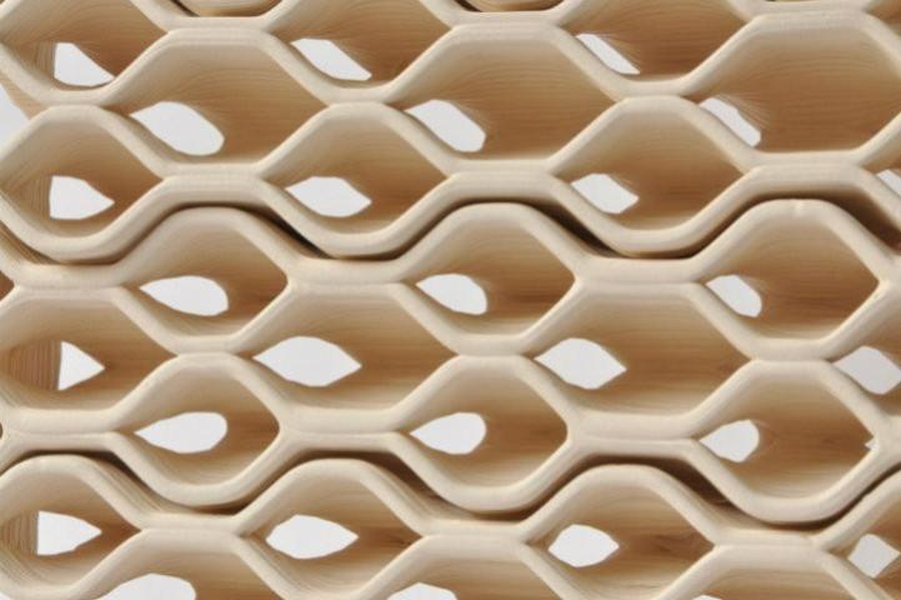
3D printing enables the creation of complex structural components using innovative material formulations.
Visualizing the Research Environment
Touring an Advanced Structural Engineering Lab
Understanding the practical side of this research is crucial. Experimental validation is a cornerstone of developing and verifying new materials and structural concepts. The following video provides a glimpse into a state-of-the-art facility dedicated to this type of work, showcasing the equipment and testing capabilities required to push the boundaries of structural engineering.
Facilities like the one shown enable researchers to conduct large-scale tests on structural components and systems under various loads, simulating real-world conditions. This includes testing beams strengthened with FRPs, evaluating the seismic performance of new structural systems, or assessing the durability of innovative materials under environmental stressors. Such experimental work is essential for validating computational models and building confidence in new technologies before widespread adoption.
Leading Platforms for Research Dissemination
Key Journals and Conferences
Research papers in advanced structural engineering and innovative materials are typically published in specialized peer-reviewed journals and presented at international conferences. Some prominent venues include:
- Journals:
- Construction and Building Materials (Elsevier)
- Advances in Structural Engineering (SAGE Journals)
- Journal of Structural Engineering (ASCE)
- Engineering Structures (Elsevier)
- Materials and Structures (Springer)
- Cement and Concrete Composites (Elsevier)
- International Journal of Advanced Structural Engineering (Springer)
- Structures (Elsevier)
- Conferences: While specific conferences vary yearly, look for events focused on:
- Fiber-Reinforced Polymer (FRP) Composites in Civil Engineering (e.g., CICE)
- Structural Health Monitoring (SHM)
- Sustainable Construction Materials and Technologies
- Earthquake Engineering
- Computational Mechanics and Structural Analysis
- General Civil and Structural Engineering Congresses (e.g., ASCE Structures Congress)
These platforms serve as crucial forums for sharing cutting-edge findings, methodologies, case studies, and state-of-the-art reviews, driving progress within the field.
Frequently Asked Questions (FAQ)
What qualifies as an "innovative material" in construction?
An innovative material in construction typically refers to a material that offers significantly enhanced performance, new functionalities, improved sustainability, or enables novel construction processes compared to traditional materials like conventional concrete, steel, or timber. This can include newly developed materials (e.g., graphene-enhanced composites), materials adapted from other industries (e.g., certain polymers), or traditional materials modified for better properties (e.g., self-healing concrete, engineered timber).
How is Artificial Intelligence (AI) used in advanced structural engineering?
AI, particularly machine learning and deep learning, is increasingly used in structural engineering for various tasks. Key applications include:
- Structural Health Monitoring (SHM): Analyzing sensor data to detect damage patterns, predict remaining service life, and identify anomalies indicative of structural issues.
- Material Design & Discovery: Accelerating the process of discovering new materials with desired properties by predicting material behavior based on composition and structure.
- Structural Optimization: Finding optimal structural designs that meet performance criteria while minimizing weight or cost.
- Predictive Maintenance: Forecasting potential failures and optimizing maintenance schedules based on monitoring data and predictive models.
- Construction Automation: Guiding robotic systems for tasks like automated inspection or component fabrication.
What are the main challenges to adopting innovative materials more widely?
Despite their potential benefits, several challenges hinder the widespread adoption of innovative materials:
- Cost: Many innovative materials have higher initial costs compared to traditional ones, although life-cycle cost analysis might favor them.
- Standardization and Codes: Lack of established design codes, testing standards, and regulatory approval processes can be a barrier.
- Durability and Long-Term Performance Data: For newer materials, there may be limited long-term performance data under real-world conditions.
- Industry Familiarity and Training: Designers, contractors, and laborers may require new skills and training to work effectively with unfamiliar materials and techniques.
- Supply Chain and Scalability: Ensuring a reliable supply chain and scaling up production can be challenging for some novel materials.
- Integration with Existing Systems: Ensuring compatibility and effective connection details when integrating new materials with existing structures or components.
Is sustainability the primary goal of research in this field?
Sustainability is a major and increasingly dominant driver, but it's not the sole goal. Research in advanced structural engineering and innovative materials aims for a balance of objectives, including:
- Enhanced Performance: Achieving higher strength, stiffness, or specific functionalities.
- Improved Durability & Resilience: Creating structures that last longer and better withstand extreme events or harsh environments.
- Increased Safety: Ensuring structural integrity and occupant safety under all conditions.
- Cost-Effectiveness: Considering both initial construction costs and long-term life-cycle costs (maintenance, energy use, replacement).
- Construction Efficiency: Enabling faster, safer, or more automated construction processes (e.g., via 3D printing or prefabrication).
Recommended Further Exploration
- What are the latest advancements in fiber-reinforced polymer applications for bridge retrofitting?
- How does self-healing concrete work and what are its limitations in practice?
- Compare the carbon footprint of geopolymer concrete versus traditional Portland cement concrete.
- Explore case studies of structural health monitoring using AI in large infrastructure projects.
References
Last updated May 2, 2025