
Mastering the Board: Showcasing Your Chess Prowess at School
Strategies for Impressing Peers and Excelling in Scholastic Chess
Chess is more than just a game; it's a display of intellect, strategic thinking, and patience. Whether you're aiming to gain admiration from your peers or dominate the school chess club and tournaments, mastering the game involves a blend of foundational knowledge, tactical sharpness, and a winning mindset. This guide will delve into how you can effectively demonstrate your chess skills in a school environment, from casual games to competitive tournaments, and truly leave an impression.
Key Insights for Chess Excellence at School
- Strategic Foundations: Focus on core principles like controlling the center, developing pieces, and ensuring king safety. These fundamental strategies are the bedrock of impressive play, allowing for tactical opportunities to emerge naturally.
- Tactical Acumen: Hone your tactical skills through regular puzzle practice. The ability to spot forks, pins, skewers, and other tactical motifs is often what distinguishes a good player from a truly impressive one, leading to decisive wins.
- Tournament Readiness: Prepare both mentally and strategically for school tournaments. Understanding tournament rules, managing time, and maintaining composure under pressure are crucial for performing at your peak and achieving success.
Building a Solid Chess Foundation
To truly impress, you need to understand the game beyond just moving pieces. A solid understanding of chess fundamentals is paramount. This includes not only knowing how each piece moves but also grasping their relative values and their potential in different situations. Control of the center of the board, developing your pieces efficiently, and ensuring the safety of your king are the three pillars of strong opening play.
Understanding Piece Values and Movement
Before any complex strategy, a deep familiarity with each piece is necessary. While pawns move simply forward (one or two squares on their first move, one thereafter) and capture diagonally, the more dynamic pieces like knights, bishops, rooks, and queens offer varied movements that open up strategic possibilities. Knowing their relative point values (e.g., pawn=1, knight/bishop=3, rook=5, queen=9) helps in evaluating exchanges and understanding material advantage. However, remember that piece activity and position can often outweigh a slight material disadvantage.
| Piece | Value (Points) | Basic Movement | Key Strategic Role |
|---|---|---|---|
| Pawn | 1 | Forward one square (two on first move); captures diagonally forward one square. | Forms pawn structures, controls central squares, potential for promotion. |
| Knight | 3 | "L" shape (two squares in one direction, then one square perpendicularly); jumps over pieces. | Excellent for forks, controlling central squares, attacking weaknesses. |
| Bishop | 3 | Any number of squares diagonally. | Long-range attacks, strong in open positions, typically paired. |
| Rook | 5 | Any number of squares horizontally or vertically. | Powerful on open files and ranks, ideal for endgames, pairs well. |
| Queen | 9 | Any number of squares horizontally, vertically, or diagonally. | Most powerful piece, versatile in attack and defense. |
| King | N/A (Irreplaceable) | One square in any direction. | Must be protected at all costs; active in endgames. |
Controlling the Center
The center of the board (d4, e4, d5, e5) is strategically vital. Controlling these squares gives your pieces more mobility and limits your opponent's options. Opening moves like 1. e4 or 1. d4 directly aim to stake a claim in the center. By controlling the center, you create a launching pad for your attacks and a defensive stronghold for your king. An impressive player understands that neglecting the center often leads to cramped positions and reactive play.
Developing Your Pieces
Rapid and effective piece development is crucial. This means bringing your knights and bishops out early, ideally to squares where they control central territory and are ready to participate in the game. Avoid moving the same piece multiple times in the opening unless absolutely necessary, as this wastes valuable tempo. Castling is a key developing move that also helps to protect your king and bring a rook into play.
King Safety
Your king's safety is paramount. An exposed king is a constant target for tactical attacks. Castling early is the most common way to get your king to safety, typically on the kingside (short castling) or queenside (long castling). After castling, be mindful of pawn moves around your king, as these can create weaknesses. A player who consistently keeps their king safe while threatening the opponent's king demonstrates a high level of strategic understanding.
Honing Your Tactical and Strategic Prowess
Beyond the basics, true chess mastery and the ability to impress come from a deep understanding of tactics and strategy. While strategy is the long-term plan, tactics are the short-term maneuvers that often decide the game's outcome.
The Art of Tactics
It's often said that "chess is 99% tactics." Tactical blunders are the primary reason for losses at lower levels. Improving your tactical vision involves recognizing common patterns such as forks, pins, skewers, discovered attacks, and back-rank mates. Regularly solving chess puzzles is an excellent way to train your brain to spot these opportunities. The ability to find a winning tactical sequence or a sneaky defensive resource will undoubtedly impress anyone watching.
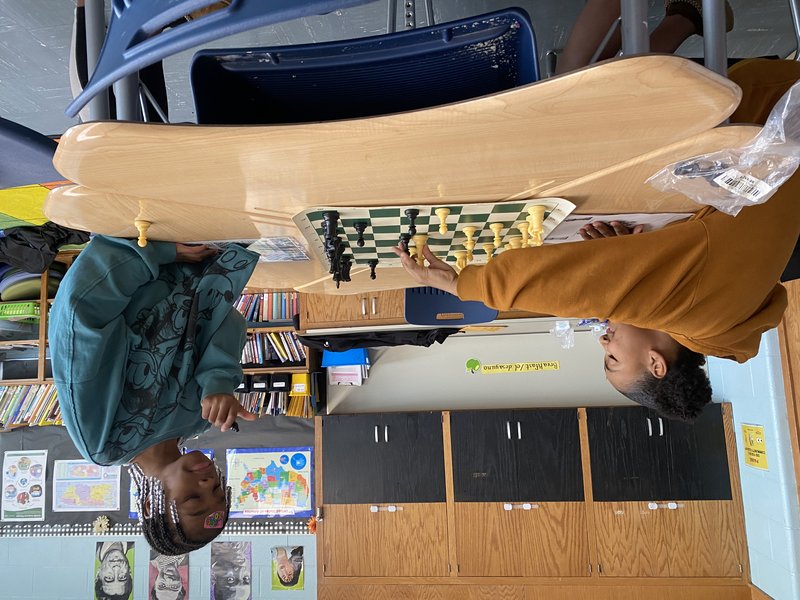
Students engaged in a chess game, showcasing concentration and strategic depth.
Strategic Thinking: Beyond the Immediate Move
While tactics are about immediate threats, strategy is about long-term goals. This includes understanding pawn structures, controlling open files, creating outposts for your pieces, and exploiting your opponent's weaknesses. A strong player can evaluate a position and formulate a plan, even if the tactical opportunities aren't immediately apparent. This involves looking at the whole board and anticipating your opponent's responses several moves ahead.
Evaluating Positions Critically
Before every move, it's essential to evaluate the current position. This includes assessing material balance, king safety for both sides, piece activity, pawn structure, and potential threats or weaknesses. A critical evaluation allows you to make informed decisions and choose moves that align with your strategic goals.
This radar chart illustrates the typical strengths and areas for development across different levels of scholastic chess players. Notice how foundational elements like King Safety and Piece Development are strong across the board, but higher-rated players demonstrate superior Tactical Acumen and Strategic Planning.
Dominating School Chess Tournaments
School chess tournaments are prime opportunities to showcase your skills. Success in these events requires not only strong play but also preparation and an understanding of tournament dynamics.
Preparation is Key
Just like any competition, preparing for a chess tournament is vital. This includes getting adequate rest, having a routine, and maintaining a balanced lifestyle. Mentally, practice playing under time pressure if clocks are used. Reviewing your own games for mistakes and studying famous games can also provide valuable insights and improve your visualization skills.
Understanding Tournament Formats and Rules
Most school tournaments use either a Swiss System (players with similar scores are paired) or a round-robin (everyone plays everyone). Familiarize yourself with specific rules, such as the touch-move rule, draw conditions (like the 50-move rule or three-fold repetition), and any specific dress codes or etiquette. Knowing these rules prevents unnecessary blunders and ensures fair play.
This video provides a comprehensive guide on how to play in chess tournaments, covering everything from finding events to understanding rules and etiquette, which is essential for school tournament success.
Playing Your Best Game
During the tournament, focus on playing solid, sensible moves. For beginners, it's often advised to prioritize not blundering over trying to find brilliant, complex combinations. Maintain composure, especially if you fall behind. Every game offers learning opportunities. Remember the advice: "play patiently, develop naturally in the opening paying attention to king safety, control of center squares, not moving the same piece twice."
Managing Your Time
Time management is a critical skill in tournament chess. Avoid spending too much time on early moves, and learn to budget your time for critical positions. In a 10-minute time control game, for instance, quick, sound decisions are key. If you are playing a much stronger opponent, sometimes a miniature (a very short game) win is your best bet, as longer games increase the chance of blunders.
Learning from Losses and Wins
Whether you win or lose, every game is a chance to learn and grow. Reviewing your games afterwards is crucial for improvement. Analyze where you made mistakes, where you missed opportunities, and what your opponent did well. This reflective practice is what truly builds an impressive chess player over time.
Beyond the Board: Impressing with Your Chess Mindset
Impressing your peers and teachers with chess isn't just about winning games; it's about demonstrating the intellectual qualities that chess fosters.
Demonstrating Sportsmanship and Poise
Good sportsmanship is always impressive. Win gracefully and lose with dignity. This reflects maturity and respect for the game and your opponents. Maintaining composure, even in challenging positions, shows mental fortitude.
The "Blindfold Chess" Wow Factor
If you reach a high level, playing blindfold chess (playing without looking at the board, visualizing it in your mind) is an incredibly impressive feat that truly showcases advanced visualization and memory skills. This isn't for beginners, but it's a testament to the depth of chess understanding that can be achieved.

A student engrossed in a chess game, highlighting the deep concentration fostered by the game.
Balancing Chess with Academics
An impressive chess player also knows how to balance their passion for the game with their academic responsibilities. Creating a structured schedule that allocates time for both activities is essential. This demonstrates discipline and the ability to manage multiple commitments effectively, qualities that are highly valued in any school environment.
Frequently Asked Questions (FAQ)
How can I quickly improve my chess skills for school?
What are the most important things to know before a school chess tournament?
Can chess help me in my academics?
Is it possible to impress someone with chess if I'm new to the game?
Conclusion
Showcasing your chess skills at school is about more than just winning; it's about demonstrating a profound understanding of the game, strategic thinking, and the disciplined mindset that chess cultivates. By focusing on foundational principles, honing your tactical vision, preparing diligently for tournaments, and embodying good sportsmanship, you can not only excel on the chessboard but also earn the admiration of your peers and teachers. Chess, in its essence, is a journey of continuous learning and intellectual growth, making every game an opportunity to impress and inspire.
Recommended Further Exploration
- Explore advanced chess strategies for high school players.
- Learn how to organize a successful school chess club.
- Discover the cognitive benefits of playing chess.
- Find out about the best chess openings for competitive school play.