
Unleash Your Inner Grandmaster: Dominating the School Chess Scene
Master the board, impress your peers, and cultivate a thriving chess community at school.
Key Strategies for Chess Mastery and Display
- Master Core Fundamentals: Prioritize daily practice of tactical puzzles and a deep understanding of strategic principles like center control and king safety.
- Actively Engage in School Chess: Join or initiate a school chess club, participate in tournaments, and become a leader in fostering a chess-friendly environment.
- Exhibit Confidence and Sportsmanship: Play with conviction, demonstrate strong strategic and tactical play, and always maintain a respectful and positive attitude, whether winning or losing.
Showcasing your chess skills at school is about more than just winning games; it’s about demonstrating a profound understanding of the game, fostering a love for chess, and inspiring others. By focusing on continuous improvement, active participation, and positive engagement, you can effectively impress your peers and contribute to a vibrant chess community within your school.
Building a Robust Chess Foundation
To truly impress, your skills must be rooted in a strong understanding of chess fundamentals. This involves consistent training and a strategic approach to learning that emphasizes practical application over rote memorization. Developing a solid foundation will not only enhance your personal game but also enable you to articulate and demonstrate complex ideas to others.
The Indispensable Role of Tactics
Tactics are the short-term, decisive sequences of moves that often lead to material advantage or checkmate. For any aspiring chess player, especially one looking to showcase their abilities, mastering tactical patterns is paramount. These are the "wow" moments that capture attention and highlight sharp calculation. Dedicate 20-30 minutes daily to tactics training, solving 10-15 puzzles from various sources. Familiarize yourself with common tactical motifs such as:
- Pins: A piece is attacked, and if it moves, a more valuable piece behind it is exposed.
- Forks (Double Attacks): A single piece attacks two or more opponent's pieces simultaneously.
- Skewers: Similar to a pin, but the more valuable piece is in front, forcing it to move and expose a less valuable piece behind it.
- Discovered Attacks: Moving one piece uncovers an attack by another piece.
- Back-Rank Threats: Exploiting a king's vulnerability on the back rank due to blocked escape squares.
Analyzing your own games after playing is crucial for identifying missed tactical opportunities or instances where you fell victim to an opponent's tactic. This reflective practice reinforces pattern recognition and improves your in-game decision-making.
Mastering Strategic Principles
While tactics are about short-term gains, strategy involves long-term planning and understanding the permanent aspects of a position. Good strategic play lays the groundwork for tactical opportunities. Key strategic principles include:
- Control the Center: The central squares (e4, d4, e5, d5) are vital as pieces positioned there have maximum mobility and influence over the board.
- Efficient Piece Development: Bring your knights and bishops out to active squares, aiming towards the center, before moving your queen too early. Prioritize developing knights before bishops.
- King Safety: Castle early in the game, ideally kingside, to protect your king and connect your rooks.
- Pawn Structure: Understand the strengths and weaknesses of different pawn formations. Pawn moves are irreversible and greatly influence the long-term character of a position.
- Piece Activity and Mobility: Aim to position your pieces where they have the most influence and freedom of movement, activating your rooks by opening files for them.
Leveraging Digital and Traditional Resources
Modern chess platforms offer unparalleled opportunities for learning and practice. Websites and apps like Chess.com and Lichess provide comprehensive lessons, tactics trainers, and opportunities for playing against others. These resources often include structured study plans tailored for beginners, covering everything from basic rules to advanced concepts. Alongside digital tools, traditional chess books focusing on tactics and strategy can offer deeper insights and structured exercises.
Engaging with the School Chess Community
The most direct way to showcase your chess skills is by actively participating in and contributing to your school's chess scene. This not only provides a platform for competition but also allows you to demonstrate leadership and a passion for the game.
Joining or Establishing a Chess Club
If your school already has a chess club, join it immediately. Engage with other members, participate in casual games, and contribute to club activities. If there isn't an existing club, consider taking the initiative to start one. Approach your school's administration or a supportive teacher to propose the idea. Key steps for establishing a successful club include:
- Planning: Outline the club's goals, structure, and a regular meeting schedule.
- Resources: Gather necessary supplies such as chess sets, clocks, and demonstration boards.
- Engagement: Implement strategies to attract new members, such as introductory lessons, puzzles, and casual play sessions.
- Leadership: Organize internal tournaments or challenges to reinforce learning and maintain interest.
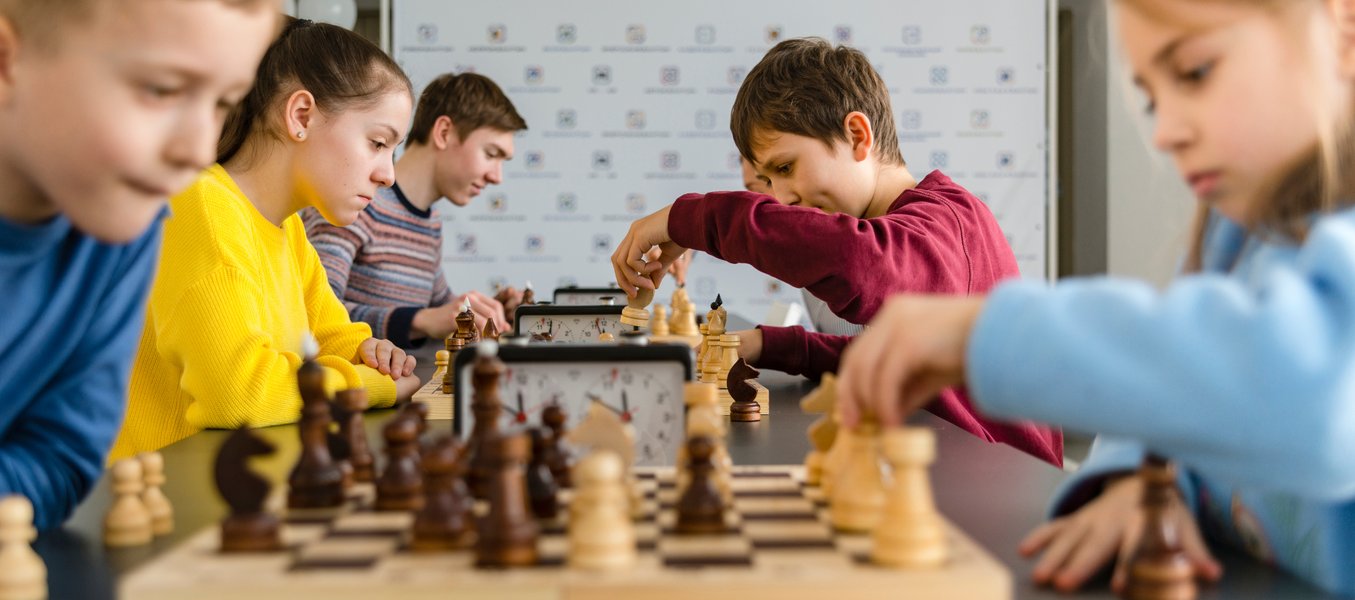
Students engaged in a game of chess, highlighting the social aspect of a school chess club.
Participating in Tournaments
School or local scholastic tournaments are prime opportunities to display your skills under competitive pressure. Actively participate in any such events. If you're competing, focus on playing openings you are familiar and comfortable with. This reduces the chance of early mistakes and allows you to focus on the middlegame and endgame. Beyond individual performance, demonstrating good sportsmanship, both in victory and defeat, leaves a lasting positive impression.
Mentoring and Engaging Peers
One of the most effective ways to show off your expertise is to share it. Offer to teach classmates or younger students the basics of chess. Walking them through game scenarios, explaining your thought process, and solving puzzles together not only reinforces your own understanding but also positions you as a knowledgeable and helpful resource. This engagement fosters a broader interest in chess within the school, giving you more opportunities to play and demonstrate your proficiency.
Strategic and Tactical Execution
When playing, especially in casual settings where you want to impress, combining solid strategic principles with sharp tactical awareness is key. Your play should be confident, decisive, and insightful.
Playing Confidently and Demonstrating Impressive Moves
Confidence in your abilities is palpable. When playing, aim for solid strategic play that naturally leads to tactical opportunities. While complex theoretical openings aren't necessary for casual games, understanding basic opening principles—controlling the center, developing pieces, and king safety—will make your play look polished and purposeful. For advanced players, performing feats like blindfold chess or simultaneous exhibitions (playing multiple opponents at once) can be incredibly impressive to bystanders.
This video, "How To WIN Every Chess Game At Your School," offers practical advice on improving your game and strategies for excelling in school chess settings. It is highly relevant as it directly addresses the user's query, providing actionable tips for aspiring school chess players to enhance their skills and achieve victory.
Balancing Academics and Chess
To maintain peak performance in both chess and school, it's crucial to strike a balance. Create a structured schedule that allocates dedicated time for chess study and practice without compromising your academic responsibilities. This discipline reflects maturity and dedication, traits that are inherently impressive and transferable to all aspects of life.
The Mindmap of Chess Skills and Social Engagement
The following mindmap illustrates the interconnectedness of improving your chess skills and effectively showcasing them within a school environment. It highlights the central role of skill development, club involvement, and interpersonal engagement.
Comprehensive Table of Chess Improvement and Demonstration Strategies
This table synthesizes key strategies for both improving your chess skills and effectively showcasing them in a school environment. It combines learning methodologies with practical application and social engagement, providing a holistic approach to becoming an impressive chess player.
| Category | Strategy/Action | Benefit/Impact | Key Resources/Tips |
|---|---|---|---|
| Skill Development | Master Tactical Patterns (Pins, Forks, Skewers, Discovered Attacks) | Spot winning opportunities quickly, execute decisive moves. | Daily 20-30 min puzzle practice, "Chess Tactics for Students" |
| Skill Development | Understand Basic Strategic Principles (Center Control, Piece Development, King Safety) | Build strong positions, create conditions for tactics, demonstrate thoughtful play. | Chess.com lessons, "Weapons of Chess", analyze Grandmaster games. |
| Skill Development | Utilize Online Platforms (Chess.com, Lichess) | Access free lessons, tactics trainers, and playing opportunities. | Explore structured study plans, review game analysis features. |
| School Engagement | Join or Initiate a School Chess Club | Provides a structured environment for play, learning, and leadership. | Approach administration, gather interested students, organize meetings. |
| School Engagement | Participate in School/Local Tournaments | Competitive platform to test skills, gain recognition, and learn from stronger players. | Prepare familiar openings, focus on sportsmanship, analyze tournament games. |
| School Engagement | Teach and Mentor Peers/Younger Students | Reinforces your understanding, demonstrates expertise, fosters community interest. | Explain basic rules, solve puzzles together, offer friendly game analysis. |
| Display & Impact | Play Confidently and Decisively | Impresses observers with purposeful and strong moves. | Focus on solid strategic play over risky flashy moves, maintain composure. |
| Display & Impact | Demonstrate Good Sportsmanship | Earns respect and admiration, regardless of game outcome. | Be gracious in winning, humble in losing, offer handshake. |
| Display & Impact | Balance Chess with Academic Responsibilities | Shows maturity and discipline, ensuring sustained performance in both areas. | Create a structured schedule, prioritize homework, avoid burnout. |
Assessing Your Chess Proficiency and Strategic Approach
To provide a clearer picture of how different aspects contribute to your overall "impressiveness" in chess at school, we can visualize key areas using a radar chart. This chart reflects an opinionated analysis of how various factors, from tactical prowess to social engagement, influence your ability to stand out and inspire others through chess.
The radar chart illustrates the multi-faceted nature of becoming an impressive chess player at school. It highlights that while strong tactical and strategic understanding forms the core, factors like active engagement in the chess club, the ability to teach others, and exemplary sportsmanship significantly contribute to your overall impact and ability to "show off" your skills in a positive and influential manner. The "Current Skill Assessment" line indicates hypothetical strengths and areas for growth, while "Aspirational Impressiveness" suggests the desired level across all attributes to maximize your impact.
Frequently Asked Questions (FAQ)
How important are openings for beginners trying to impress?
What's the quickest way to improve my chess skills?
How can I encourage my friends to play chess?
Is it better to focus on tactics or strategy first?
Conclusion
Becoming an impressive chess player at school is a journey that combines dedicated skill development with active community engagement and exemplary conduct. By consistently honing your tactical and strategic understanding, participating enthusiastically in school chess activities, and sharing your passion with others, you can not only elevate your own game but also inspire a greater appreciation for chess among your peers. Remember, true impressiveness comes from a blend of mastery, sportsmanship, and the ability to foster a positive environment for the game.
Recommended Further Exploration
- Advanced chess tactics for intermediate players
- How to organize a successful school chess tournament
- Benefits of chess in academic performance
- Top chess openings for aggressive play
