
Unlock Connection & Joy: Design Your Own Gratitude Card Game!
A step-by-step guide to creating a meaningful game that fosters thankfulness and brings people closer.
Expressing gratitude is a powerful practice that boosts happiness, strengthens relationships, and improves overall well-being. What if you could make this practice interactive, fun, and deeply connecting? Designing a card game centered around gratitude offers a unique way to encourage reflection and sharing among friends, family, or colleagues. This guide provides a comprehensive design for a gratitude card game, synthesizing effective ideas to help you create an engaging and meaningful experience.
Highlights: Key Features of Your Gratitude Game
- Focus on Connection, Not Competition: The primary goal is to encourage open sharing, active listening, and mutual appreciation, fostering empathy and stronger bonds.
- Flexible & Adaptable Gameplay: Designed with various card types and simple rules, the game can be easily tailored for different age groups, settings (family nights, classrooms, team building), and desired levels of interaction.
- Rooted in Positive Psychology: The game mechanics are inspired by practices known to enhance emotional intelligence, promote positive mindsets, and build resilience through the conscious act of recognizing and expressing gratitude.
Introducing: Grateful Gathering - A Card Game of Connection
Game Overview
Grateful Gathering is designed to be a heartwarming and engaging experience for 2 to 8 players, generally suitable for ages 8 and up (with easy modifications for younger participants). The game uses a deck of prompt and activity cards to guide players in reflecting upon and sharing aspects of their lives for which they are thankful. It's not about winning points, but about cultivating presence, appreciation, and understanding within the group.
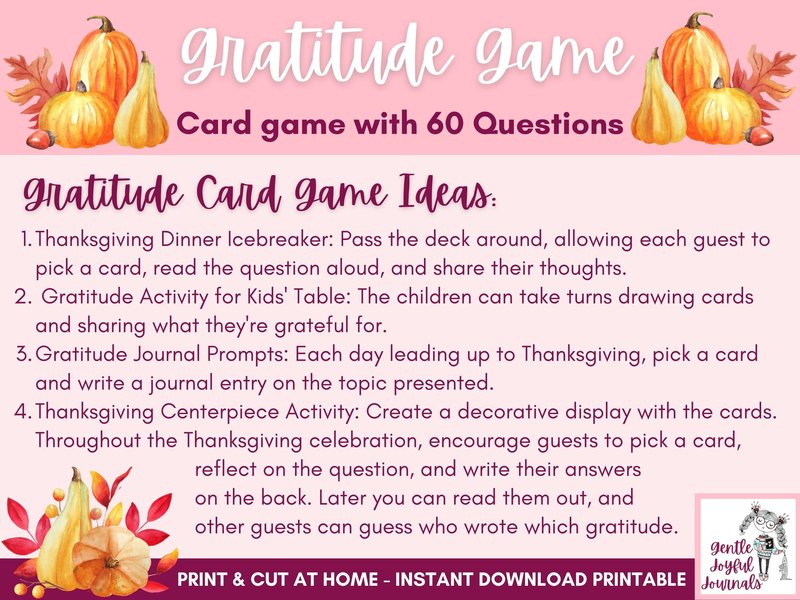
Example of printable question cards used in gratitude games.
Objective
To foster a comfortable and positive environment where players can easily reflect on, articulate, and share their feelings of gratitude, thereby strengthening personal well-being and interpersonal connections.
Players & Age Range
- Players: 2 - 8
- Age: 8+ (See variations for adapting to younger children)
Game Components
Creating your Grateful Gathering game is simple. You can make the cards yourself using cardstock or use printable templates. The core components are:
The Gratitude Deck (60 Cards Total)
The deck is divided into different types of cards to keep the game dynamic and encourage various forms of reflection and interaction:

Simple card designs are effective, especially for younger players.
Card Type Breakdown
This table outlines the different card types and their purpose within the game:
| Card Type | Quantity | Purpose & Examples |
|---|---|---|
| Reflection Prompts | 30 | Encourage personal reflection on specific areas of gratitude. Examples: "Share something in nature you appreciated today." "Name a person who taught you something valuable." "What's a simple comfort you're grateful for?" "Describe a skill you are thankful to possess." |
| Connection Challenges | 15 | Foster interaction and appreciation between players. Examples: "Share something you admire about the player to your right." "Ask the player to your left a thoughtful follow-up question about their last share." "Silently listen to the next person's share and then offer a brief, positive affirmation." |
| Kindness Actions | 10 | Incorporate small, physical, or creative acts of gratitude. Examples: "Give a 'gratitude high-five' to someone." "Quickly sketch something you feel thankful for." "Do a short 'thankful wiggle' or happy dance." |
| Group Reflection | 5 | Engage the entire group in a shared moment of gratitude. Examples: "Everyone briefly shares one positive thing that happened this week." "Together, name three things the group is collectively grateful for right now." |
Optional Materials
- Gratitude Tokens: Small objects like smooth stones, glass beads, or buttons. These aren't for scoring but can serve as tangible reminders of shared moments. A player might take one after sharing, or others might offer one as acknowledgement.
- Timer: A simple sand timer or phone app can help keep turns flowing smoothly, especially in larger groups (e.g., 1-2 minutes per turn).
- Talking Stick/Object: A designated object passed to the person whose turn it is can help focus attention.
Gameplay: Step-by-Step
The rules are designed to be simple and intuitive, allowing players to focus on the experience of sharing.
1. Setup
Prepare the Space
Arrange seating in a circle, if possible, to facilitate eye contact and a sense of community. Place the shuffled deck of Gratitude Cards face down in the center.
Set the Tone
Briefly explain the game's purpose: to share and listen with open hearts, celebrating the good things, big and small. Emphasize that there are no right or wrong answers and no winners or losers.
Choose a Starting Player
You can let the youngest player start, the oldest, or someone whose birthday is coming up next.
2. Taking a Turn
Draw a Card
The player whose turn it is draws the top card from the deck.
Read and Respond
The player reads the card aloud to the group. Depending on the card type:
- Reflection Prompt: The player shares their thoughts and feelings related to the prompt.
- Connection Challenge: The player performs the action involving another player(s).
- Kindness Action: The player completes the small act described.
- Group Reflection: The player initiates the group activity as instructed on the card.
Sharing should feel natural, not forced. Encourage brief, genuine responses.
3. Group Interaction & Listening
Active Listening
Encourage all players to listen attentively and respectfully when someone is sharing. Avoid interruptions.
Positive Acknowledgement
After a player shares, others can offer simple, supportive acknowledgements like "Thank you for sharing," "That resonates with me too," or a nod of understanding. This reinforces the positive atmosphere.
Using Tokens (Optional)
If using tokens, the player who shared can take one, or another player can offer one as a gesture of appreciation for their contribution.
4. Ending the Game
The game can conclude in several ways:
- After a predetermined amount of time (e.g., 30 minutes).
- Once everyone has had a certain number of turns (e.g., 3-5 turns each).
- When the draw pile runs out.
- Simply when the group feels a natural sense of completion and connection.
Closing Reflection (Optional but Recommended)
End the game by going around the circle one last time, inviting each person to share one word or phrase about how they feel after playing, or one thing they appreciated about the experience.
Visualizing Gratitude Categories
The prompts in the Grateful Gathering game often touch upon various facets of life where gratitude can be found. This mindmap illustrates some common themes to inspire reflection:
Understanding these categories can help players access different kinds of memories and feelings, enriching their responses during the game.
Gauging Game Dynamics Across Different Groups
The effectiveness and feel of the Grateful Gathering game can vary depending on the group playing it. This chart offers an opinionated visualization of how different aspects of the game might resonate with various player groups. The axes represent key game characteristics, rated on a scale where higher numbers indicate a stronger presence of that characteristic (minimum axis value is 3 for clarity).
As the chart suggests, the game's adaptability allows it to serve different needs: prioritizing ease and safety for younger children, fostering deeper reflection in therapeutic settings, or enhancing interaction within teams. The 'Fun Factor' may be perceived differently depending on the group's primary goal (e.g., connection vs. pure entertainment).
Enhancing the Experience: Variations & Adaptations
One of the strengths of Grateful Gathering is its flexibility. You can easily modify it to suit your specific group and setting:
For Younger Children (Ages 5-7)
- Simplify Prompts: Use very concrete prompts (e.g., "Name a toy you like," "What food makes you happy?").
- Visual Aids: Incorporate drawing or acting out gratitude instead of only talking. Use cards with pictures.
- Shorter Playtime: Keep sessions brief (10-15 minutes) to match attention spans.
- Focus on Actions: Use more Kindness Action cards (hugs, smiles, thank yous).
For Work Teams or Professional Settings
- Tailor Prompts: Focus on workplace gratitude (e.g., "Acknowledge a colleague's helpful contribution," "Share a recent team success you appreciate," "What resource are you thankful for?").
- Emphasize Connection Challenges: Use cards that encourage peer-to-peer recognition and positive feedback.
- Keep it Concise: Integrate short rounds into team meetings or retreats.
Adding Depth
- Journaling Component: Provide notebooks for players to privately jot down reflections after sharing or at the end of the game.
- Themed Decks: Create specialized decks focusing on specific themes like nature gratitude, overcoming adversity, or relationship appreciation.
- DIY Cards: Include blank cards for players to write their own prompts, making the game even more personalized.
Integrating Gratitude Activities: Inspiration
Looking for more ideas on how to structure gratitude practices in group settings? This video offers several simple yet effective activities that can complement or inspire variations of your card game, especially for educational environments.
This video explores various classroom gratitude activities, offering inspiration for interactive formats.
The video discusses concepts like "Appreciation, Apology, A-ha!", an "Unusual Gratitude Game," and other no-prep activities that align with the spirit of Grateful Gathering – fostering positive communication and reflection in an accessible way.
Why Play? The Benefits of Cultivating Gratitude
Playing Grateful Gathering is more than just a game; it's an intentional practice with tangible benefits rooted in positive psychology:
- Boosts Positive Emotions: Regularly focusing on thankfulness counteracts negative thought patterns and increases feelings of happiness and optimism.
- Strengthens Relationships: Sharing gratitude builds empathy, trust, and deeper connections between players as they learn more about each other's perspectives and values.
- Improves Mental Well-being: Gratitude practices have been linked to reduced stress, increased resilience, and greater life satisfaction.
- Enhances Social Skills: The game encourages active listening, thoughtful articulation of feelings, and giving/receiving positive feedback.
- Creates Lasting Memories: Sharing moments of appreciation can create warm, positive memories for families, friends, or teams.
By incorporating this game into regular routines (e.g., family dinners, weekly team check-ins), you can cultivate a lasting culture of appreciation.
Frequently Asked Questions (FAQ)
Can I make my own gratitude cards?
Absolutely! Creating your own cards is highly encouraged. You can tailor the prompts and challenges to be perfectly suited for your specific group or occasion. Use index cards, cardstock, or online design tools. You could even include blank cards in your deck for players to add their own prompts during the game.
Is this game competitive?
The core design of Grateful Gathering is cooperative and non-competitive. The focus is entirely on sharing, listening, and connecting. While some gratitude games incorporate optional scoring (like earning tokens), this design emphasizes the intrinsic rewards of the practice itself over winning. The optional Gratitude Tokens are meant as acknowledgements, not points.
How long does a typical game take?
A typical game session can last anywhere from 20 to 45 minutes, depending on the number of players and how much time each person takes to share. You can easily adjust the length by deciding on a set number of rounds per player or playing for a specific duration. Flexibility is key!
What if someone feels uncomfortable sharing?
It's important to create a safe and pressure-free environment. Establish at the beginning that participation is voluntary and players always have the option to "pass" or draw a different card if they feel uncomfortable with a particular prompt. The goal is positive connection, not forced disclosure. Some designs include specific "PASS" cards for this purpose.
Recommended Further Exploration
If you found this guide helpful, you might be interested in exploring related topics:
- What are some creative gratitude prompts suitable for kids, teens, and adults?
- How can families integrate simple gratitude activities into their daily routines?
- What are the specific benefits of practicing gratitude within work teams?
- Where can I find printable templates for making gratitude cards or journals?
References
This game design was informed by concepts and examples found in the following resources:
 amazon.com
Last updated May 4, 2025