
Comprehensive Critique of the HTTP Protocol Design
Analyzing the strengths and weaknesses of HTTP's foundational architecture
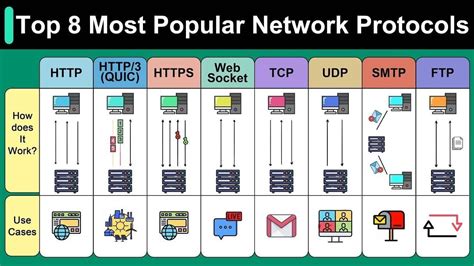
Key Takeaways
- Performance Limitations: HTTP's initial design leads to latency and inefficiency in data transfer.
- Scalability Challenges: The protocol struggles with managing numerous connections, impacting server resources.
- Security and Modern Demands: Inherent security vulnerabilities and lack of support for contemporary web applications necessitate extensions and newer protocols.
Introduction
The HyperText Transfer Protocol (HTTP) has been the cornerstone of web communication since its inception in the early 1990s. Designed as a simple client-server protocol for transferring hypertext documents, HTTP has evolved through various iterations to meet the growing demands of the internet. Despite its widespread adoption and foundational role, HTTP's original design presents several limitations and inefficiencies that have prompted continuous refinements and the development of subsequent versions like HTTP/2 and HTTP/3.
Performance Limitations
Latency and Inefficient Data Transfer
One of the primary criticisms of HTTP, particularly in its HTTP/1.1 incarnation, is the significant latency introduced by its design. The protocol's requirement to open a single connection per request results in repeated connection setups, which are time-consuming due to the TCP three-way handshake and slow-start mechanisms inherent in TCP connections. This design choice leads to increased wait times, where clients spend a disproportionate amount of time establishing connections rather than transferring data efficiently (W3C Analysis).
Head-of-Line Blocking
HTTP/1.1 enforces a single request per connection model, which results in head-of-line (HOL) blocking. In this scenario, if a particular resource is delayed, subsequent resources queued behind it must wait, causing significant delays in page rendering. This sequential loading of resources, such as JavaScript and CSS files, hampers user experience by increasing the time it takes for web pages to become interactive (Performance Analysis).
Verbose Headers and Performance Overhead
HTTP headers in version 1.1 are text-based and often include redundant and verbose information. This verbosity leads to larger header sizes, which consume more bandwidth and increase the payload size of each request and response. Such inefficiencies are particularly problematic for mobile devices and environments with limited connectivity, where bandwidth is at a premium (W3C Design Issues).
Scalability Challenges
Connection Management and Resource Allocation
HTTP's reliance on TCP connections necessitates that servers maintain state information for each active and recently closed connection. The TIME_WAIT state, which persists for several minutes after a connection is closed, can lead to resource exhaustion on busy servers. Managing thousands of such connections simultaneously poses significant scalability challenges, limiting the protocol's efficiency in high-load environments (MDN Overview).
Chatty Protocol Nature
The necessity for multiple requests to fetch web resources leads to a "chatty" protocol, where numerous small data exchanges occur between client and server. Each request-response pair incurs overhead, contributing to inefficiencies and increased latency. While HTTP/2 introduced multiplexing to address this issue, HTTP/1.1's inherent design still imposes significant scalability constraints (HTTP/2 Performance Solutions).
Security and Modern Demands
Inherent Security Vulnerabilities
Originally, HTTP transmits data in plaintext, making it susceptible to eavesdropping, man-in-the-middle attacks, and data breaches. While the introduction of HTTPS (HTTP over TLS) mitigates these vulnerabilities, it requires additional implementation efforts. Misconfigurations and the overhead of establishing secure connections can still pose security risks and performance penalties (W3C Security Concerns).
Limited Support for Modern Web Applications
HTTP was initially designed for simple document exchanges. As web applications evolved to become more dynamic and interactive, HTTP's capabilities fell short in supporting real-time data exchange and advanced features. Although extensions like WebSockets and newer protocol versions like HTTP/2 and HTTP/3 have been developed to bridge this gap, the necessity of these additions underscores the limitations of HTTP's original design in addressing modern web requirements (W3C Modern Demands).
Centralization Through CDNs and Gateways
The scalability and performance demands of HTTP-based services have led to the widespread adoption of Content Delivery Networks (CDNs) and intermediate proxies. While these infrastructures enhance performance and scalability, they also centralize control around major service providers, potentially impacting the openness and decentralization that the web initially championed (MDN on Scalability).
Lack of Built-in Error Recovery
HTTP's error handling mechanisms are relatively basic, relying on status codes like 404 or 500 to indicate issues. These mechanisms do not provide innate capabilities for error recovery or enhanced user experiences, placing the onus on application-level handling. This limitation can lead to suboptimal user experiences when dealing with network faults or server-side issues (W3C Error Handling).
Architectural Limitations
Statelessness and Session Management
HTTP's stateless nature means that each request is treated independently, without awareness of previous interactions. While this simplifies the protocol and improves scalability, it necessitates additional mechanisms like cookies, sessions, or tokens to maintain stateful interactions. These added layers increase application complexity and can introduce security vulnerabilities if not managed properly (W3C on Statelessness).
Extensibility vs. Complexity
While HTTP was designed to be extensible, allowing for the integration of new features over time, this flexibility has led to increased protocol complexity. The addition of features like persistent connections, chunked transfer encoding, and various extensions can complicate implementation and interoperability between different client and server software (MDN on Extensibility).
Layered Design and Abstraction Limitations
HTTP operates at the application layer, abstracting away the intricacies of lower network layers. While this separation of concerns promotes modularity, it can also obscure relevant network characteristics from applications, potentially hindering performance optimizations and fine-grained control over data transmission (MDN on Layered Design).
Responses and Evolution of HTTP
Introduction of HTTP/2
To address many of the performance and scalability issues inherent in HTTP/1.1, the HTTP/2 protocol was developed. Key features include:
- Multiplexing: Allows multiple requests and responses to be sent simultaneously over a single TCP connection, reducing latency and eliminating head-of-line blocking.
- Header Compression: Utilizes the HPACK algorithm to compress HTTP headers, significantly reducing the overhead associated with verbose headers.
- Server Push: Enables servers to proactively send resources to clients without awaiting explicit requests, improving load times and user experience.
These advancements aim to enhance performance, decrease resource consumption, and provide a more efficient communication framework for modern web applications (HTTP/2 Performance Solutions).
Emergence of HTTP/3
Building upon the improvements of HTTP/2, HTTP/3 integrates the QUIC transport protocol, which operates over UDP. QUIC introduces features such as reduced connection establishment times, improved congestion control, and more robust handling of packet loss. This evolution seeks to further minimize latency, enhance security by default, and provide a more resilient foundation for web communications (W3C on HTTP/3).
Conclusion
The HyperText Transfer Protocol has undeniably played a pivotal role in the development and proliferation of the World Wide Web. Its original design, simplicity, and extensibility facilitated rapid growth and adoption. However, as the web has matured into a complex, dynamic ecosystem demanding high performance, security, and scalability, the limitations of HTTP's foundational architecture have become increasingly apparent. Issues such as performance overhead, scalability challenges, security vulnerabilities, and insufficient support for modern web applications have driven the evolution of the protocol through versions like HTTP/2 and HTTP/3.
While these newer iterations address many of the original protocol's shortcomings, the critiques of HTTP's design underscore the importance of adaptive and forward-thinking protocol development. Understanding these limitations is crucial for developers and engineers aiming to optimize web performance, enhance security, and build scalable applications in an ever-evolving digital landscape.
Recap: HTTP's design, while foundational and highly influential, presents several performance and scalability challenges, security concerns, and limitations in supporting modern web applications. Continuous improvements and the development of newer protocol versions like HTTP/2 and HTTP/3 are essential to addressing these issues and meeting the demands of contemporary web technologies.
Last updated January 11, 2025