
Unlock the Secrets of the Psalms: A Journey Through Ancient Poetry and Timeless Worship
Embark on a self-paced exploration of the Psalms, uncovering their rich poetic structure, historical roots, and profound spiritual depth.
Key Insights to Guide Your Study
- Poetic Mastery: The Psalms utilize unique Hebrew poetic devices like parallelism, rhythmic beats, and semantic momentum, rather than rhyme or strict meter, to convey deep emotional and theological truths.
- Ancient Connections: Discover the influence of earlier Ancient Near Eastern cultures, such as the Ugaritic texts from Syria, which share linguistic and thematic parallels with biblical psalms like Psalm 92:10.
- A Structured Collection for Worship: The 150 Psalms are intentionally organized into five distinct "books," mirroring the Pentateuch, each with overarching themes guiding personal and communal worship.
Introduction: The Heartbeat of Ancient Israel's Worship
The Book of Psalms is a cherished collection of 150 ancient Hebrew poems, songs, and prayers that form a cornerstone of Judeo-Christian spirituality. These texts arose from diverse periods in Israel's history, capturing a wide spectrum of human emotion and experience before God – from joyous praise to profound lament, from confident trust to desperate pleas. The very name "Psalm" in Hebrew, mizmor (מִזְמוֹר), means "something sung" and is related to the verb zamer (זָמַר), "to sing" or "to hymn." This linguistic root underscores the Psalms' original function as musical compositions integral to worship and personal devotion. This self-paced study will guide you through their intricate poetic forms, their historical and cultural backdrop, and their enduring relevance.
The Poetic Landscape of the Psalms
Understanding the Psalms requires an appreciation for the unique characteristics of ancient Hebrew poetry. It's a world away from much Western poetry, relying on rhythm, parallelism, and vivid imagery to convey its powerful messages.
Echoes of Ugarit: Ancient Literary Crosscurrents
Archaeological discoveries have shed light on the broader cultural milieu from which the Psalms emerged. Texts found at Ugarit, an ancient city on the coast of modern-day Syria, predate much of the biblical writings and reveal fascinating literary connections. Ugaritic, a Northwest Semitic language, shares linguistic features and poetic conventions with biblical Hebrew.
A striking example of this connection is found in Psalm 92:10, "For behold, Your enemies, O LORD, For behold, Your enemies shall perish; All the workers of iniquity shall be scattered." A very similar line exists in Ugaritic epic poetry, highlighting a shared poetic tradition or influence. Studying these parallels doesn't diminish the uniqueness of the Psalms but enriches our understanding of their historical context and the common literary forms of the ancient Near East. These connections often relate to themes of divine kingship, cosmic battles, and the celebration of deities, which are reinterpreted and reframed within Israel's monotheistic worship of Yahweh.
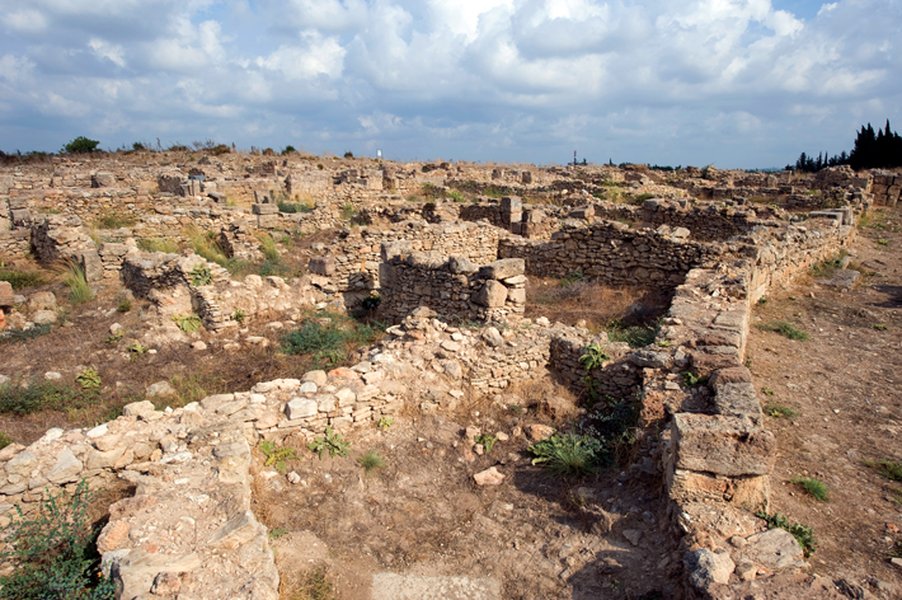
The excavated ruins of Ugarit, providing a window into the ancient world that influenced biblical texts.
Core Characteristics of Hebrew Poetry
Biblical poetry, especially in the Psalms, is distinct from many Western poetic traditions. Its beauty and power lie not in rhyme or consistent meter, but in other sophisticated literary devices.
Rhythmic Compactness and Beats
Hebrew poetry derives its force from what's often termed "rhythmic compactness." Lines are typically characterized by a certain number of stressed syllables or "beats." While a typical line often has three beats, this can vary, with some lines containing two or even four beats. This creates a rhythm that is felt rather than strictly counted, lending itself to musical chanting and recitation. This free rhythm focuses on the weight and emphasis of key words, contributing to the poem's overall impact.
Parallelism of Meaning: The Cornerstone
The most fundamental feature of Hebrew poetry is parallelism. This involves the relationship of meaning between two (or sometimes three) successive lines, or parts of lines, known as cola or versets. Instead of rhyming sounds, Hebrew poetry "rhymes" ideas. As you noted, lines are often triadic in their conceptual structure, though bicola (two-part lines) are very common.
Bishop Robert Lowth in the 18th century identified several key types of parallelism, which later scholars expanded upon:
- Synonymous Parallelism: The second colon restates or reinforces the idea of the first colon using different but equivalent words. (e.g., Psalm 19:1: "The heavens declare the glory of God; / and the firmament shows His handiwork.")
- Antithetical Parallelism: The second colon presents a contrasting thought to the first, often highlighting wisdom and folly, righteousness and wickedness. (e.g., Proverbs 10:1: "A wise son makes a glad father, / but a foolish son is the grief of his mother.")
- Synthetic Parallelism (or Developmental/Constructive): The second colon develops, completes, or expands upon the thought of the first. The lines build on each other to create a fuller picture. (e.g., Psalm 1:3: "He shall be like a tree / Planted by the rivers of water, / That brings forth its fruit in its season...")
- Emblematic Parallelism: One colon presents a literal statement, while the other presents a figurative one (an emblem or simile) to illustrate it. (e.g., Psalm 42:1: "As the deer pants for the water brooks, / So pants my soul for You, O God.")
- Climactic or Stair-like Parallelism: Parts of the first colon are repeated in the second, leading to a climax. (e.g., Psalm 29:1: "Give unto the LORD, O you mighty ones, / Give unto the LORD glory and strength.")
- Introverted Parallelism (Chiasm): A pattern where lines are arranged in an A-B-B-A (or more complex) structure, creating a mirror effect around a central point.
This parallelism means there's no strict requirement for rhyme (as understood in English poetry) and no regular, predictable meter or pace. The rhythm flows from the logical relationship and balance of ideas.
Semantic Momentum: The Unfolding Thought
Biblical poetry often exhibits what is called "semantic momentum." This refers to the way a poem's meaning and emotional force build and progress from one line to the next. The thought doesn't remain static but develops, intensifies, or shifts as the poem unfolds. A clear example is Psalm 27:3: "Though an army may encamp against me, My heart shall not fear; Though war may rise against me, In this I will be confident." Notice how the psalmist moves from a hypothetical threat to an internal state of fearlessness, and then to an assertion of confidence, showcasing this dynamic progression of thought and emotion. This "forward movement" is a distinctive power of biblical poetry.
Imagery and Symbolism: Familiar Yet Profound
The Psalms are rich in imagery, often drawing from the natural world, everyday life, and significantly, the context of temple worship. For instance, Psalm 69:3-4 ("I am weary with my crying; My throat is dry; My eyes fail while I wait for my God. Those who hate me without a cause Are more than the hairs of my head; They are mighty who would destroy me, Being my enemies wrongfully...") employs familiar images of physical distress and overwhelming opposition. Rather than startling or obscure imagery, the Psalms often use accessible metaphors that resonate with communal experiences of faith, suffering, and deliverance. This supports the "temple worship drive," making the Psalms relatable and suitable for congregational use, expressing shared human experiences before God.
Structure of the Psalter: The Five Books
The Book of Psalms is not a random assortment of poems but is carefully organized into five distinct "books." This division is thought to mirror the five books of the Torah (Pentateuch), suggesting that the Psalms were also seen as a form of divine instruction and a guide for Israel's life of worship and covenant faithfulness. Each book concludes with a doxology (a liturgical formula of praise to God), marking its end.
Here’s a breakdown of the five books and their general characteristics:
| Book | Psalms | Concluding Doxology | General Themes & Characteristics |
|---|---|---|---|
| Book I | 1–41 | Psalm 41:13 | Predominantly personal laments and expressions of trust in Yahweh, with many psalms attributed to David. Focus on the individual's relationship with God, cries for help, and confidence in divine deliverance. Uses "Yahweh" (LORD) as the primary name for God. |
| Book II | 42–72 | Psalm 72:18–19 | Contains a mix of individual and communal laments, royal psalms, and songs of Zion. Psalms of the "Sons of Korah" and Asaph feature prominently. Shows a greater use of "Elohim" (God) as the divine name. Themes of longing for God's presence, God's kingship, and hope for the Davidic king. |
| Book III | 73–89 | Psalm 89:52 | Primarily communal laments, reflecting periods of national crisis and questioning. Psalms of Asaph are prominent. Grapples with difficult theological questions like the suffering of the righteous (Psalm 73) and the apparent failure of God's covenant promises (Psalm 89). Darker in tone than the first two books. |
| Book IV | 90–106 | Psalm 106:48 | Responds to the crises of Book III with an emphasis on Yahweh's eternal sovereignty and kingship over all creation and history. Includes enthronement psalms ("The LORD reigns") and reflections on God's faithfulness despite Israel's failures. Psalm 90 (attributed to Moses) sets a reflective tone. |
| Book V | 107–150 | Psalm 150:6 (the entire psalm is a doxology) | A collection largely characterized by praise and thanksgiving. Includes the "Egyptian Hallel" (Psalms 113-118) used at Passover, pilgrim songs (Songs of Ascents, Psalms 120-134), and culminates in a crescendo of praise psalms (Psalms 145-150). Reaffirms hope and calls for universal worship of Yahweh. |
This five-fold structure provides a narrative arc to the Psalter, moving from individual distress and reliance on God, through national crisis and questioning, to an ultimate reaffirmation of God's sovereignty and a universal call to praise.
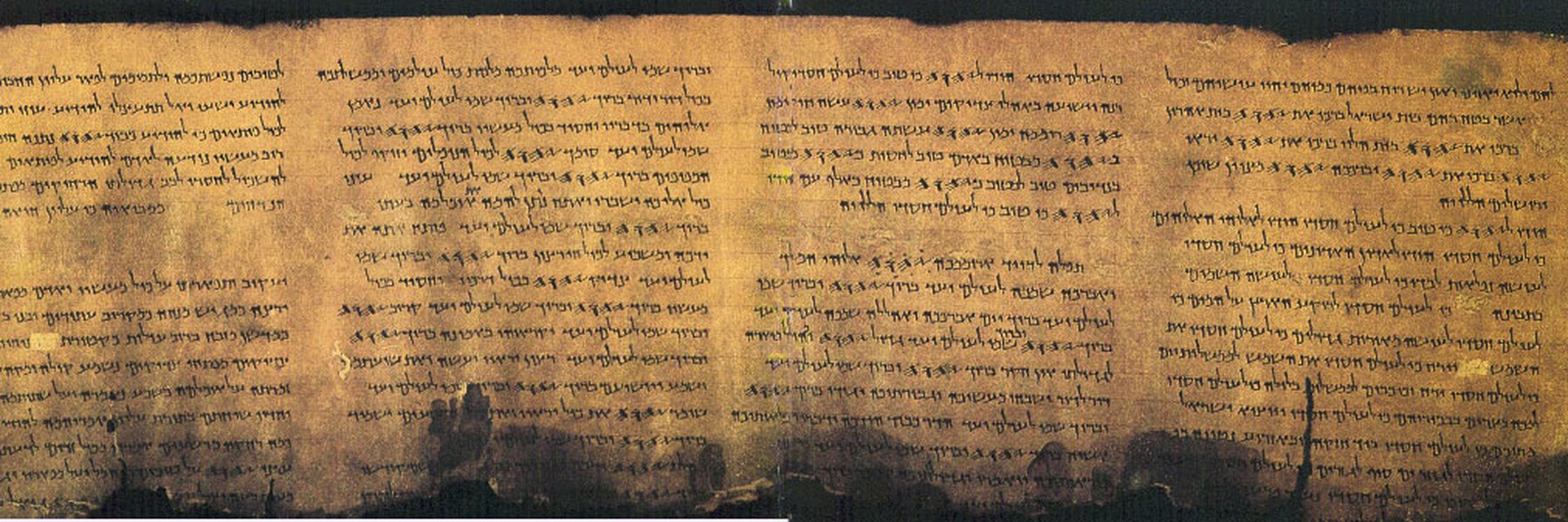
A portion of a Psalms scroll from the Dead Sea Caves, showcasing the ancient textual tradition of the Psalms. These scrolls sometimes show variations in order or content compared to the later Masoretic Text, offering insights into the Psalter's formation.
Self-Paced Study Plan: Journeying Through the Psalms
This study plan is designed for flexibility, allowing you to delve into the Psalms at your own pace. The goal is not just academic understanding but also personal engagement with these ancient prayers and songs.
Module 1: Laying the Foundation
Focus: Introduction, Historical Context, and Poetic Basics
- Reading: Psalms 1-2. Introductory articles on the Psalms (overview, purpose).
- Understand the Context:
- Research the meaning of "mizmor" and "zamer."
- Read about the discovery of Ugaritic texts and their general relationship to Old Testament literature, specifically the example of Psalm 92:10.
- Poetic Elements:
- Familiarize yourself with the concept of parallelism (synonymous, antithetical, synthetic). Try to identify examples in Psalms 1 and 2.
- Notice the beat/rhythm as you read aloud. Don't aim for perfection, just awareness.
- Reflection: What is your initial impression of the Psalms? What are you hoping to gain from this study?
Module 2: Book I – The Voice of the Individual (Psalms 1–41)
Focus: Personal Lament, Trust, and Davidic Psalms
- Reading: Read through Psalms 1-41, perhaps 3-5 psalms a day. Pay special attention to Psalms like 8, 19, 23, 27, 32.
- Poetic Analysis:
- In Psalm 27:3, trace the "semantic momentum." How does the thought progress and build?
- Identify different types of parallelism in several psalms from this book.
- Note the frequent use of "I" and personal expressions of distress and faith.
- Thematic Exploration: What are the common situations or emotions expressed? How does the psalmist express trust in God amidst adversity?
- Reflection: Choose one psalm from Book I that resonates with a personal experience. How do the psalmist's words give voice to your own feelings or prayers?
Module 3: Book II – Community, Kingship, and Crisis (Psalms 42–72)
Focus: Elohistic Psalms, Korahite and Asaphite collections, Royal Ideology
- Reading: Read through Psalms 42-72. Key psalms include 42-43, 46, 51, 72.
- Linguistic Note: Observe the more frequent use of "Elohim" (God) instead of "Yahweh" (LORD) in many of these psalms.
- Poetic Analysis:
- Examine the imagery in psalms like Psalm 42 ("As the deer pants..."). How does it convey longing for God?
- Look for psalms that speak from a communal "we" perspective.
- Thematic Exploration: Explore themes of God's kingship, justice for the oppressed, and the role of the Davidic king. Psalm 51 is a profound psalm of repentance; analyze its structure and emotional depth.
- Reflection: How do these psalms address times of communal struggle or the need for righteous leadership?
Module 4: Book III – The Depth of Lament and Theodicy (Psalms 73–89)
Focus: National Laments, Questioning God, Covenant Faithfulness
- Reading: Read through Psalms 73-89. Pay close attention to Psalm 73, 74, 78, 88, 89.
- Poetic Analysis:
- Psalm 88 is one of the darkest psalms. Analyze its structure and the raw honesty of its lament. How does its poetic form contribute to its impact?
- In Psalm 73, trace the psalmist's emotional and theological journey regarding the prosperity of the wicked.
- Thematic Exploration: This book contains some of the most intense questioning of God's justice and faithfulness, particularly in light of national suffering (e.g., destruction of the Temple). Explore how these psalms wrestle with doubt and despair while still addressing God.
- Reflection: Have you ever felt like the psalmists in this book, questioning God's presence or actions? How can these psalms help in processing such experiences?
Module 5: Book IV – Yahweh Reigns: Reaffirming Sovereignty (Psalms 90–106)
Focus: God's Eternal Rule, Historical Reflection, Praise
- Reading: Read through Psalms 90-106. Key psalms include 90, 91, 92, 93, 95, 100, 103, 105, 106.
- Poetic Analysis:
- Notice the recurring theme "The LORD reigns" (e.g., Psalm 93, 96, 97, 99). How is God's kingship portrayed?
- Consider Psalm 92 again in light of its Ugaritic parallel (verse 10). How does this psalm celebrate God's power and justice?
- Examine the use of familiar imagery in Psalm 69:3-4 (though in Book II, it’s a good example of imagery related to temple worship drives and can be compared to imagery in Book IV). How does this type of imagery make worship accessible?
- Thematic Exploration: This book often serves as an answer to the laments of Book III, emphasizing God's enduring sovereignty, faithfulness, and involvement in Israel's history. Explore themes of creation, refuge, and thanksgiving.
- Reflection: How does reflecting on God's sovereignty and past faithfulness (as in Psalms 105-106) provide comfort or perspective in current situations?
Module 6: Book V – A Symphony of Praise (Psalms 107–150)
Focus: Thanksgiving, Hallel Psalms, Songs of Ascents, Wisdom, Final Hallelujah Choruses
- Reading: Read through Psalms 107-150. Highlights include Psalms 107, 113-118 (Hallel), 119 (Torah Acrostic), 120-134 (Songs of Ascents), 136, 139, 145-150.
- Poetic Analysis:
- Explore the structure of an acrostic psalm like Psalm 119 (each section begins with a successive letter of the Hebrew alphabet).
- Notice the refrains and calls to praise in psalms like 136 ("For His mercy endures forever") and the concluding "Hallelujah" psalms (146-150).
- Thematic Exploration: This book is rich in themes of pilgrimage, communal thanksgiving for deliverance, the beauty of God's law, God's intimate knowledge of humanity (Psalm 139), and culminates in an exuberant, universal call to praise God with all of creation.
- Reflection: How can the Psalms of praise and thanksgiving shape your own worship and gratitude? Psalm 150 calls for praise with various instruments; how can you express praise creatively?
Ongoing Practical Exercises and Reflections:
- Read Aloud: Regularly read the psalms aloud to better sense their rhythms and emotional tone.
- Journaling: Keep a journal of your reflections, questions, and insights. Note verses that particularly strike you.
- Identify Poetic Devices: Actively look for examples of parallelism, specific imagery, and the development of themes.
- Contextualize: Consider the likely original setting or purpose of different psalms (e.g., personal prayer, temple liturgy, royal ceremony).
- Pray the Psalms: Use the psalms as a springboard for your own prayers. Adapt their words to your own situations.
Visualizing Psalm Themes Across the Five Books
The five books of the Psalms, while diverse, exhibit certain thematic concentrations. The radar chart below offers an opinionated visualization of how prominent various themes might be across these divisions. Themes like "Praise," "Lament," "Thanksgiving," "Wisdom," "Royal Ideology," and "Trust in God" are central to the Psalter. This chart is an interpretive guide to help you see potential patterns and shifts in emphasis as you move through the collection.
Interpretation: This chart suggests, for example, that Book I might be stronger in individual laments and expressions of trust, Book III in communal lament, and Book V culminating in extensive praise and thanksgiving. Royal themes might be more prominent in Books II and IV. This is a general guide; individual psalms within each book will vary.
Interconnectedness of Psalm Concepts: A Mindmap
The study of Psalms involves understanding various interconnected elements. The mindmap below illustrates how concepts such as the nature of Hebrew poetry, historical influences like Ugaritic texts, the structural divisions of the Psalter, and its ultimate use in worship all relate to the central subject: the Book of Psalms itself. Each branch represents a key area of exploration necessary for a comprehensive understanding.
This mindmap shows how the definition of Psalms, their unique poetic features, historical connections (like Ugaritic parallels), their overarching five-book structure, and their intended use in worship are all interwoven aspects of studying this profound biblical book.
The Art of Biblical Poetry: A Visual Introduction
To further appreciate the distinctive nature of the poetry found in the Psalms, it's helpful to understand its broader context within the Bible. About one-third of the Old Testament is poetry, and it employs artistic forms that can be unfamiliar to modern readers accustomed to Western poetic traditions. The following video provides an excellent overview of how to approach biblical poetry, which will be directly applicable to your study of the Psalms. It explains how these ancient literary styles communicate truth and evoke emotion in powerful ways.
This video, "The Art of Biblical Poetry," delves into the literary techniques used by biblical poets, including those who composed the Psalms. It highlights how features like parallelism and imagery work to convey deep meaning and helps viewers understand why biblical poetry is structured the way it is. Understanding these artistic conventions is key to unlocking the richness of the Psalms.
Frequently Asked Questions (FAQ)
What makes Hebrew poetry in the Psalms different from English poetry? ▼
Hebrew poetry, as found in the Psalms, primarily relies on parallelism of meaning rather than sound-based rhyme and consistent meter typical of much English poetry. It uses rhythmic beats (usually 2-4 per line segment) and various forms of parallelism (synonymous, antithetical, synthetic) to create its structure and impact. The focus is on the relationship and development of ideas between lines or parts of lines.
What is the significance of the Ugaritic texts for studying the Psalms? ▼
Ugaritic texts, discovered in modern Syria, date from an earlier period than much of the Old Testament. They are written in a Semitic language related to Hebrew and share literary forms, vocabulary, and thematic elements with biblical poetry, including the Psalms (e.g., a line in Psalm 92:10 has a close parallel in Ugaritic). This helps scholars understand the broader cultural and linguistic context of the Psalms, showing shared ancient Near Eastern poetic traditions, even as the Psalms adapt these for Israelite worship.
Why is the Book of Psalms divided into five "books"? ▼
The division of the Psalms into five books (Psalms 1-41, 42-72, 73-89, 90-106, 107-150) is an ancient feature of the Psalter. It's widely believed to be intentional, mirroring the five books of the Torah (Genesis-Deuteronomy). This structuring suggests that the Psalms were considered not just a songbook but also a form of divine instruction (a "second Torah") guiding Israel's worship, faith, and life. Each book often has distinct thematic emphases and concludes with a doxology.
What does "semantic momentum" mean in the context of Psalms like Psalm 27:3? ▼
Semantic momentum refers to the way the meaning and emotional intensity of a psalm build or progress from one line or section to the next. In Psalm 27:3 ("Though an army may encamp against me, My heart shall not fear; Though war may rise against me, In this I will be confident."), the thought moves dynamically from acknowledging a threat to an internal resolution of fearlessness, and finally to a positive assertion of confidence. This forward progression of thought is a key feature of biblical poetry's power.
How should I approach reading the Psalms for personal spiritual growth? ▼
Read them slowly and reflectively. Pay attention to the emotions expressed – joy, sorrow, anger, trust – and see how they resonate with your own experiences. Use the Psalms as a model for your own prayers; you can often pray the words of a psalm directly or adapt them. Reading them aloud can help you connect with their rhythm and feeling. Consider journaling your thoughts and prayers as you read. Remember that the Psalms cover the whole range of human experience before God.
Recommended Further Exploration
- How do the different types of parallelism shape meaning in the Psalms?
- Explore the specific historical contexts of royal psalms and their connection to Israelite kingship.
- What is the role of lament in the Psalms and how does it contribute to a healthy spirituality?
- Investigate the musicality of the Psalms: what do we know about how they were performed in ancient Israel?
References

Last updated May 16, 2025